
Insurance may cover physical therapy for plantar fasciitis in Aventura, but coverage depends on the benefits and terms of your individual plan. Your out-of-pocket costs also depend on how your plan applies coverage to care.
It’s understandable to want a clearer picture before starting treatment, especially when heel pain makes walking or standing uncomfortable. This guide explains how insurance may apply, what physical therapy can involve, and how cushions, insoles, and tape may support your foot as part of a care plan.
You’ll also learn what a therapist may assess and how treatment can be tailored to your movement, symptoms, and daily activities. Understanding the process can help you approach your next steps with more confidence and work toward comfortable movement.
Key Takeaways
- Insurance coverage depends on your plan’s benefits and terms, while your treatment needs can affect what you pay out of pocket.
- Physical therapy may combine stretching, strengthening, hands-on care, and movement assessment to address heel pain and foot function.
- Running habits, calf tightness, foot mechanics, and footwear can contribute to plantar fasciitis; recognizing possible factors can help guide care.
- Cushions, insoles, and tape may support the foot in different ways, and the right option depends on how you move and where pressure occurs.
- Learn how an individualized physical therapy plan can help you work toward more comfortable walking and standing.
Is physical therapy covered by insurance?
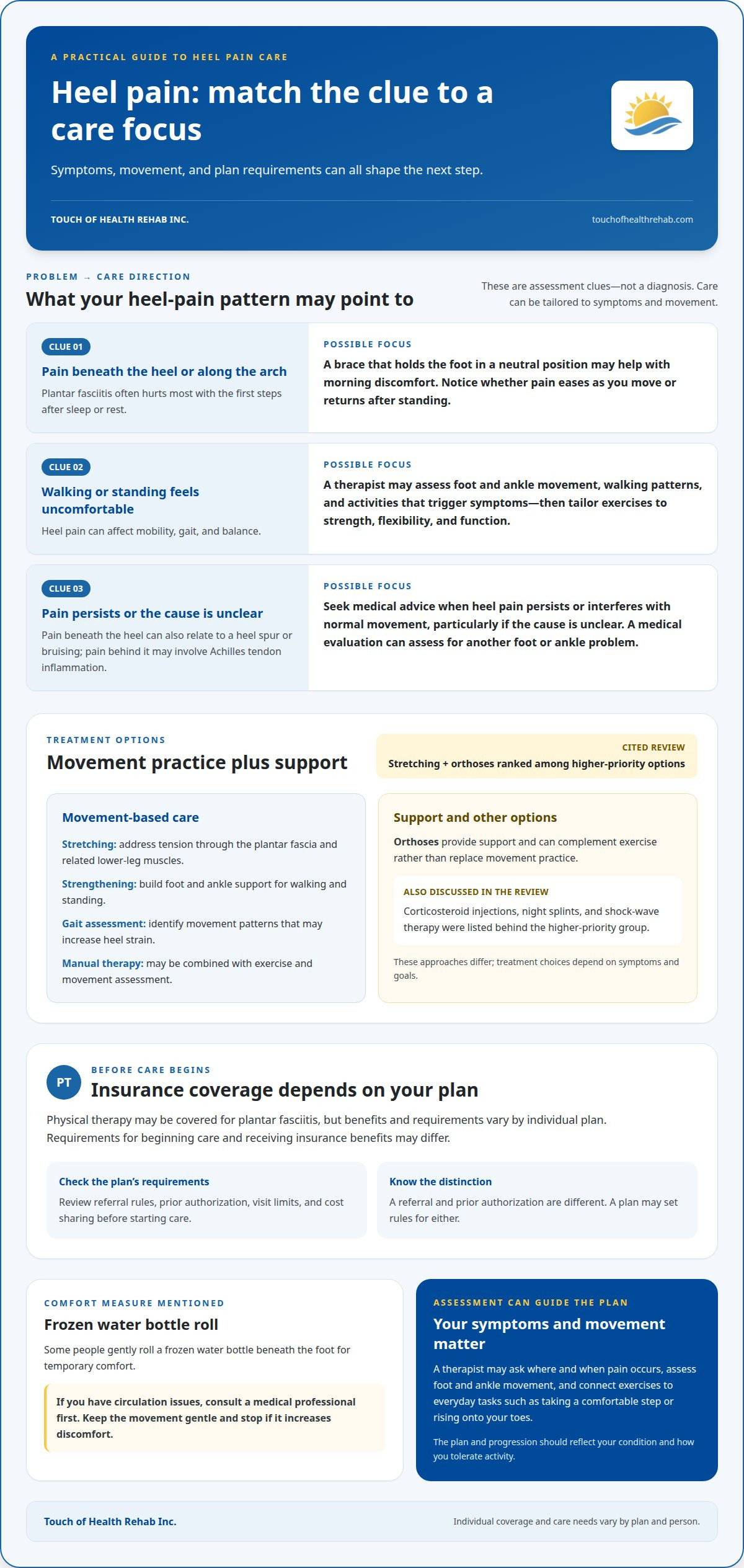
Insurance may cover physical therapy for plantar fasciitis, but coverage depends on your plan’s benefits and requirements. A referral and prior authorization are different, and a plan may set rules for either. Before starting care, review requirements for referrals, authorization, visit limits, and cost sharing.
Plantar fasciitis is one condition that can affect the foot and ankle. The plantar fascia runs along the bottom of the foot, and irritation can make walking or standing uncomfortable. Physical therapy for foot disorders can address strength, flexibility, and everyday function with exercises selected for your symptoms and movement.
Does plantar fasciitis physical therapy in Florida require a doctor’s referral? A referral isn’t universally required to begin physical therapy, but your insurance plan may require one or prior authorization for coverage. Review your plan’s terms before scheduling, since the requirements for beginning care and receiving insurance benefits may differ.
A physical therapy evaluation helps identify how your foot and ankle move and which activities bring on symptoms. Depending on the situation, a clinical assessment may include a physical exam or imaging, such as X-rays, an MRI, or a CT scan. These tools can help assess foot and ankle pain, but they aren’t automatically needed for every patient.
After assessing your movement, a therapist may develop an exercise program to strengthen muscles around the foot and ankle, improve flexibility, and support function. Exercises may focus on controlled foot movement and ankle strength, while stretches address tightness that limits motion. The specific movements and progression should reflect your condition and how you tolerate activity.
- Strength work: Practice controlled foot and ankle movements to build support for walking and standing.
- Flexibility work: Use guided stretches to address restricted movement in the foot or lower leg.
- Function practice: Connect exercises to a task, such as taking a comfortable step or rising onto your toes.
When should plantar fasciitis pain be evaluated by a doctor instead of a physical therapist? Seek medical advice when heel pain persists or interferes with normal movement, particularly if the cause isn’t clear. A medical evaluation can assess whether another foot or ankle problem may be contributing.
For temporary comfort, some people roll a frozen water bottle beneath the foot. If you have circulation issues, consult a medical professional before trying this method. Keep the movement gentle and stop if it increases discomfort. A therapist can help determine whether exercises or other approaches suit your symptoms and daily activities.
Physical therapy treatment for heel pain
Heel pain can affect mobility, and its location and timing offer useful clues. Treatment may combine guided movement, activity adjustments, and support selected for your symptoms.
Heel and Arch Pain Symptoms
Plantar fasciitis often causes pain beneath the heel and along the arch, especially with the first steps after sleep or rest. The plantar fascia remains relaxed during sleep, and a brace holding the foot in a neutral position may help morning discomfort. Notice whether pain eases as you move or returns after standing.
Pain beneath the heel can also relate to a heel spur or bruising; pain behind it may involve Achilles tendon inflammation. Persistent heel pain can change your gait and affect balance. During an evaluation, describe the pain’s location and timing, along with the activities that trigger it. These details help guide assessment and care.
Comparing Plantar Fasciitis Treatments
Physical therapy can combine plantar stretching, strengthening, manual therapy, and gait assessment. Orthoses provide support and can complement exercise rather than replace movement practice. A review discussed by the National Center for Biotechnology Information ranked plantar stretching and orthoses among higher-priority treatments, ahead of corticosteroid injections, night splints, and shock-wave therapy. These approaches differ, so treatment choices depend on symptoms and goals.
A therapist may examine your walking pattern, then adjust activities and select stretches to address foot mobility. Bring an older pair of shoes if available, as wear patterns can offer context about your gait and support. A guided plan can also help you practice exercises with consistent form between appointments.
- Stretching: Ease tension through the plantar fascia and related lower-leg muscles.
- Strengthening: Build foot and ankle support for walking and standing.
- Gait assessment: Identify movement patterns that may increase strain on the heel.
How does physical therapy compare with orthotics, injections, or other plantar fasciitis treatments? Physical therapy focuses on movement, flexibility, strength, and gait, while orthoses provide support. Injections and shock-wave therapy are distinct options. The approach should reflect your symptoms and functional needs.
How many physical therapy sessions are usually needed for plantar fasciitis? There isn’t one session count for every patient. The plan depends on symptom severity, mobility, progress with exercises, and the activities you’re working to resume.
If heel pain is limiting everyday movement, explore physical therapy guidance as a step toward a plan focused on your mobility and function.
Common causes and risk factors for plantar fasciitis
Plantar fasciitis can develop alongside several factors that affect the foot’s load during walking and other activities. Noticing patterns, such as a recent increase in running or shoes that lack support, can help you describe your daily demands during an evaluation.
Age is one consideration: plantar fasciitis typically presents in people aged 40 to 60. That range isn’t a diagnosis by itself. Someone in this age group can compare symptoms with activity and footwear, while people outside it can still develop the condition.
Running is a common cause, particularly when someone runs excessively in poorly fitting or unsupportive shoes. For example, a runner might increase training while wearing worn or uncomfortable shoes. Considering both activity and footwear is more useful than assuming one factor explains every case.
Over-pronation is another common cause. It describes the foot rolling inward excessively during movement. A clinician assessing your walking pattern can consider whether foot mechanics may contribute, alongside calf tightness, activity, and shoe support.
Tight calf muscles, being overweight, and footwear without appropriate support or cushioning are also risk factors. These details are useful to share, not reasons for blame. For example, note whether your shoes feel supportive during a typical walk and whether calf tightness is part of your experience.
- Activity: Record running and walking patterns, including changes in how much you do.
- Footwear: Note which shoes you wear for exercise and daily errands, and whether they feel supportive.
- Movement: Mention any observed inward rolling of the foot or tight calf muscles.
- Personal context: Include relevant weight changes and when heel symptoms occur.
A brief activity and footwear log can make these details easier to discuss. For several days, note your activity, the shoes you wore, and whether heel symptoms appeared during or afterward. Include ordinary walking as well as running, since both contribute to your foot’s daily demands.
These factors are clues to discuss, not a checklist that proves the cause. Several may overlap: a runner might have tight calves and wear shoes with limited support, while another person’s activity and footwear may differ. Relating your own pattern to walking, exercise, and shoe choice can clarify what may be straining the bottom of your foot.
Use the same observations when considering changes to your routine. Note which activities coincide with symptoms and which shoes feel supportive, then share those examples during an evaluation. A specific account of your running, walking, and footwear gives a more useful picture than simply saying your heel hurts.
Insurance coverage
Physical therapy coverage depends on your health plan’s benefits and terms. To understand how coverage may apply to heel care, identify the plan’s physical therapy benefit, cost-sharing terms, and any conditions for using that benefit.
Start with your summary of benefits or policy documents. Look for terms such as deductible, copayment, coinsurance, visit limits, referral, and prior authorization. These describe different parts of coverage. A deductible, for example, affects what you pay before plan benefits apply, while a copayment is a set patient charge described by the plan.
Next, connect the benefit to the reason for care. A plan may describe coverage for treating an injury or condition, and plantar fasciitis is a foot condition that can affect walking and standing. The plan’s definition of covered physical therapy and its documentation requirements determine how the benefit applies to your treatment.
- Benefit: Find the section explaining physical therapy coverage.
- Cost sharing: Review the deductible, copayment, or coinsurance terms.
- Limits: Look for visit limits or authorization requirements.
- Documentation: Note what the plan requires to support care for your condition.
Referral and prior authorization are not interchangeable. A referral is a recommendation or direction for care, while prior authorization is an insurer’s review before certain services. Whether either affects coverage depends on your plan. Review these as separate questions rather than assuming a referral alone establishes payment.
For example, imagine your plan covers physical therapy but applies a deductible and requires prior authorization. The coverage benefit and your out-of-pocket responsibility are separate considerations. Your deductible status, authorization decision, and plan terms shape the final amount, so “covered” doesn’t necessarily mean care has no patient cost.
Keep a simple record before treatment. Save the plan page describing therapy benefits, note any authorization steps, and write down the cost-sharing terms. If the insurer provides information by phone, record the date, the representative’s name, and the explanation. This gives you a reference when a claim or bill arrives.
Ask how your plan processes therapy for plantar fasciitis, including which services fall under the benefit and what documentation applies. A treatment plan may include exercises to stretch the foot and support strength, but insurance coverage follows the plan’s terms. Understanding those terms can make bills less confusing and help you plan for care aimed at relief and function.
Cushions, insoles, and tape
Cushions, insoles, and tape can support a plantar fasciitis care plan in different ways. The right option depends on where pressure occurs, what shoes you wear, and how long you spend standing or walking. A therapist can assess your movement and advise how these supports fit your daily routine.
A cushion adds softness between your foot and shoe, which may make standing more comfortable. An insole sits inside the shoe and can provide support, help distribute weight, and relieve pressure on painful areas. The options aren’t identical: a soft cushion focuses on comfort, while an orthotic insert may also influence how the foot is supported.
Orthotic inserts and braces can support alignment and reduce stress on affected tissue. For example, someone who stands for long periods may notice pressure in a particular part of the heel. A therapist can consider that pattern, the person’s shoes, and walking mechanics when discussing an insert or brace. Fit matters: support should work with the shoe and the person’s activity.
Footwear is part of the same decision. Ergonomic shoes shaped to support the foot can cushion it, absorb shock, and reduce strain on joints and tendons. Compare the shoes you wear for work, exercise, and errands. Notice whether the heel feels supported and whether the shoe stays comfortable during activities that usually bring on symptoms.
Tape offers another form of support. A therapist can advise where and how to apply it based on foot movement and the areas needing support. Rather than copying a generic taping pattern, discuss its placement and purpose during care. This helps connect the technique to a real activity, such as walking through a work shift.
- Cushion: Consider how added softness feels during standing and walking.
- Insole or brace: Discuss support, alignment, and pressure across the foot.
- Tape: Learn placement suited to your movement and activity.
- Footwear: Compare the shoes you use for work, exercise, and daily errands.
Try one change at a time and observe how your foot responds during a familiar task. For example, compare comfort during the same walk in your usual shoes and a pair with supportive cushioning. Track the activity, footwear, and pressure points, then share those details with a therapist. This can help determine whether a support improves your function or needs adjustment.
Pairing an appropriate support with healthy movement habits can help reduce strain while you work toward comfortable activity. If you’d like guidance connecting footwear, inserts, or tape with your movement goals, connect with a physical therapy professional.
Touch of Health Rehab: Physical Therapy
Touch of Health Rehab Inc. offers Physical Therapy to help address heel pain and support comfortable movement. If plantar fasciitis affects your walking, standing, or daily activities, a physical therapy plan can focus on your symptoms, foot function, and movement goals.
At your visit, share when the pain appears, which activities aggravate it, and what footwear or supports you use. These details help guide the conversation about your needs and next steps. Postural Education may also build awareness of how posture and movement relate to daily function.
For a supportive next step, contact Touch of Health Rehab Inc. or visit touchofhealthrehab.com.
Take Your Next Step Toward Comfortable Movement
Start with a clear personal goal: returning to a morning walk, managing a workday on your feet, or enjoying daily activities with greater ease. If you’re considering physical therapy for plantar fasciitis in Aventura, focus on care that connects your goals with the movements and routines that matter to you.
Touch of Health Rehab Inc. offers Physical Therapy, Postural Education, and Vestibular Rehabilitation. These services address different needs, so focus the conversation on support relevant to your movement and well-being. Sharing what you hope to return to helps make the discussion specific and personal.
Choose a next step that feels manageable, and let your goals guide the discussion. Contact Touch of Health Rehab Inc. to discuss your physical therapy needs. Each step toward understanding your options can help you move forward with greater confidence.
Frequently Asked Questions
What is heel pain?
Heel pain is discomfort beneath, behind, or around the heel, and its location can offer clues about the cause. Pain under the heel may relate to plantar fasciitis, a heel spur, or bruising, while pain behind it may involve the Achilles tendon. Notice where it hurts and which activities bring it on. Persistent pain or difficulty with normal movement merits medical attention.
What is plantar fasciitis?
Plantar fasciitis is irritation of the plantar fascia, the connective tissue extending from the heel along the bottom of the foot. It can make the first steps after sleep uncomfortable or affect walking and standing. Symptoms can overlap with other heel problems, so the location and timing of pain matter. A healthcare professional can assess your symptoms and help distinguish plantar fasciitis from other possible causes.
Which physical therapy clinics in Aventura, FL treat plantar fasciitis?
Touch of Health Rehab Inc., based in Sunny Isles Beach, serves the Aventura area and offers physical therapy. If you’re looking for physical therapy for plantar fasciitis in Aventura, consider whether care addresses your movement goals, daily activities, and heel symptoms. When you first speak with the therapist, describe what makes walking or standing difficult and when discomfort occurs. This gives useful context for discussing your needs.
What plantar fasciitis treatments do Aventura physical therapists offer?
Treatment may combine stretching, strengthening exercises, manual therapy, and gait assessment. A therapist might observe how you walk, then select exercises to address movement or flexibility needs. Cushions, insoles, or tape may also be discussed as supportive options. The combination depends on your symptoms and functional goals, such as returning to regular walks or spending more time comfortably on your feet.
Which insurance plans do Aventura physical therapy clinics accept for plantar fasciitis?
Plan acceptance and coverage vary, so no single insurance plan applies to every clinic or patient. Review your plan’s network information and physical therapy benefit, then check any deductible, copayment, visit limits, referral, or prior authorization terms. Coverage for therapy doesn’t necessarily mean every visit or service has no out-of-pocket cost. Your plan documents explain how benefits apply to care.
What exercises and stretches do physical therapists recommend for plantar fasciitis?
Exercises can include plantar fascia stretching and foot or ankle strengthening. One example is the great toe stretch: hold it for 30 seconds, relax for 10 seconds, and repeat it 10 times, three times per day. The movement should match your symptoms and ability. A therapist can demonstrate the stretch and help you use proper form, rather than relying on a description alone.
What should I expect at a first plantar fasciitis physical therapy appointment?
Expect to discuss when heel discomfort began, where you feel it, and how it affects your routine. For example, explain whether it appears during a morning walk, after standing at work, or during exercise. The therapist may assess your foot and ankle movement and observe your gait. Sharing goals, such as walking comfortably or returning to a favorite activity, helps shape a relevant care plan.