
Persistent running pain deserves attention, especially if it worsens, changes your stride, or doesn’t ease after a few days of rest. Physical therapy for preventing running injuries can help identify movement or strength issues and guide a safer training plan before discomfort becomes harder to manage.
It makes sense to hope rest will be enough, but pain that continues or affects how you move is a reason to seek a physical therapist’s assessment. You can learn which strength and mobility exercises may support your running, how gradual training changes and recovery can reduce strain, and when professional care is a sensible next step. The guidance below covers common injury warning signs, practical ways to adjust your routine, and how physical therapy can support your return to running.
Key Takeaways
- Build strength in your hips, glutes, core, and lower legs to support stable, efficient running mechanics.
- Recognize patterns such as persistent heel, shin, knee, or outer-knee pain, and adjust your training rather than pushing through pain that affects your stride.
- Increase running distance and intensity gradually, balance harder sessions with easier or rest days, and consider cross-training to vary the load on your body.
- Use dynamic movement to prepare for a run and gentle static stretches afterward; recovery, including sleep and rest, also matters.
- Seek a physical therapist’s assessment when pain persists or changes how you run, so you can address contributing movement or strength issues and plan a gradual return.
1. Strength and mobility exercises
Runners benefit from strength work that supports the movements repeated with every stride. Focus on your hips, core, legs, ankles, and feet rather than training only the muscles that feel tired after a run. Strong glutes and hips help control pelvic movement, while the hamstrings and quadriceps contribute to leg control. Calf and foot strength supports the lower part of the running chain. A balanced routine builds strength across these areas and complements your mileage.
Use familiar exercises to build that foundation. Squats and lunges work the hips and legs; bridges target the glutes and support pelvic stability. For core conditioning, try a plank, dead bug, or controlled rotational movement. Keep your trunk steady during each repetition instead of letting your lower back take over. Add calf raises, then practice toe movements to engage your feet. Move deliberately and maintain control. If your form changes as you fatigue, pause and reset before continuing.
Strength training should also address balance and mobility. A single-leg stance challenges your balance while asking the hip and ankle to stabilize your body. Gentle ankle movements help you explore a comfortable range of motion, while controlled leg swings prepare your hips for running. These exercises develop different qualities: squats build strength, a single-leg stance challenges balance, and mobility drills encourage freer movement. Choose exercises that match your ability, and increase the challenge only while you can maintain steady, controlled form.
Stretching has a place alongside strength work, but timing and purpose matter. Before running, use active movements such as leg swings to prepare for the stride. After a run, static stretches can target areas that feel tight, including the calves, hamstrings, and hip flexors. Hold each stretch for 20-30 seconds after a run, using a comfortable position rather than forcing greater range. Stretching supports flexibility; it doesn’t replace strength training, balance practice, or gradual changes to your running routine.
A physical therapist can tailor a strength program to your event, movement patterns, and injury history. A runner returning from an ankle sprain, for example, may need different progressions from someone building general conditioning. After the acute phase of a muscle strain or ligament sprain, guided exercises can gradually strengthen affected muscles and restore flexibility. For knee injuries, rehabilitation commonly includes quadriceps and hamstring strengthening to support the joint.
In the United States, physical therapy costs depend on the case and are provided after a quote request; cost factors include the treatment plan and care needed. Insurance coverage depends on your specific plan’s terms and benefits, so review your policy for physical therapy coverage.
2. Common running injuries
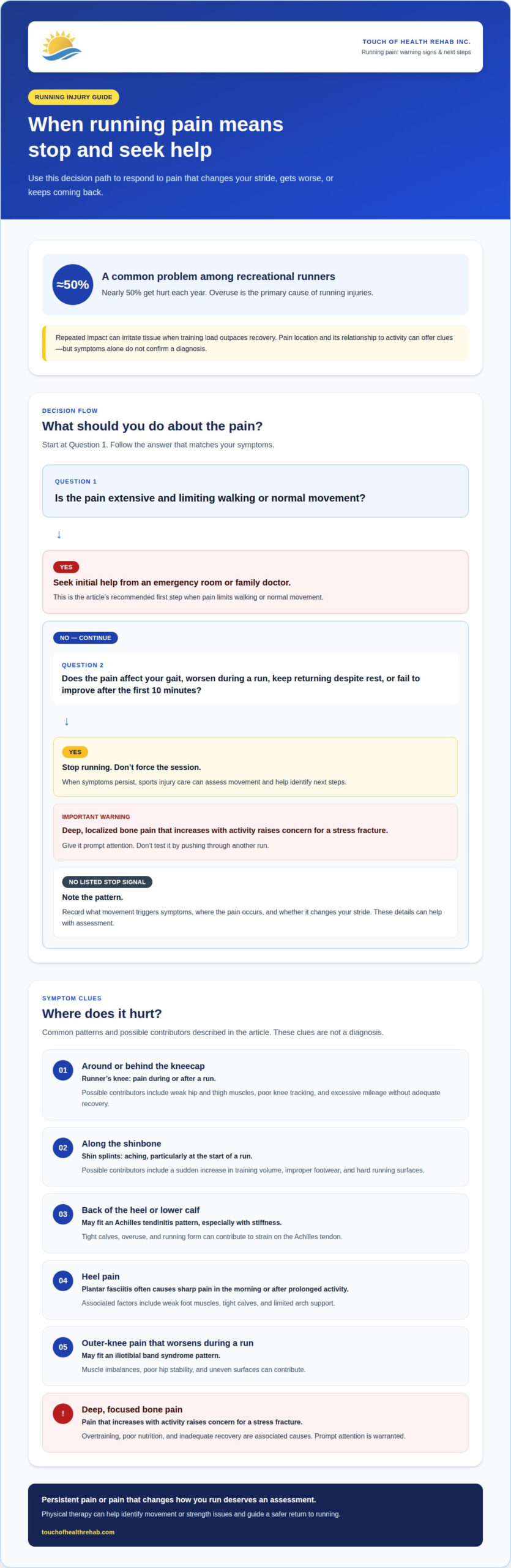
Nearly 50% of recreational runners get hurt each year, and overuse is the primary cause of running injuries. Repeated impact can irritate tissue when training load outpaces recovery. The risk of injury can also rise when running motion changes under fatigue or when a sudden workload increase exceeds what the body has adapted to. A runner’s pain location and its relationship to activity can offer useful clues, but symptoms alone don’t confirm a diagnosis.
Runner’s knee often causes pain around or behind the kneecap during or after a run. Weak hip and thigh muscles, poor knee tracking, and excessive mileage without adequate recovery can contribute. Shin splints, by contrast, commonly cause aching along the shinbone, particularly at the start of a run. Sudden increases in training volume, improper footwear, and hard running surfaces are possible contributors. Notice whether discomfort settles as you move or returns more strongly after running.
Pain at the back of the heel or lower calf may fit the pattern of Achilles tendinitis, especially when accompanied by stiffness. Tight calves, overuse, and running form can contribute to strain on the Achilles tendon. Plantar fasciitis tends to cause sharp heel pain, often in the morning or after prolonged activity. Weak foot muscles, tight calves, and limited arch support are associated factors. These examples show why the same training change can affect different tissues.
Outer-knee pain that worsens during a run may point to iliotibial band syndrome. Muscle imbalances, poor hip stability, and uneven surfaces can contribute, particularly for long-distance runners. Deep, localized bone pain that increases with activity raises concern for a stress fracture. Overtraining, poor nutrition, and inadequate recovery are associated causes. Unlike ordinary post-run soreness, focused pain like this deserves prompt attention. Don’t test it by pushing through another run.
Track and field athletes can also experience hamstring, quadriceps, and calf strains, as well as sprains involving ankle ligaments. Sprinting and jumping place high-impact demands on tissues, while repeated events can expose developing imbalances. Stress fractures may affect the shin, foot, or pelvis in high-impact sports. Record which movement triggers symptoms, where the pain occurs, and whether it changes your stride. Those details help distinguish a temporary ache from a pattern that needs assessment.
Stop running if pain affects your gait, worsens during the run, or keeps returning despite rest. Pain or stiffness that doesn’t improve after the first 10 minutes is another reason to stop rather than force the session. For extensive pain that limits walking or normal movement, seek initial help from an emergency room or family doctor. Otherwise, sports injury care can help assess movement and identify next steps when symptoms persist.
3. Running frequency and gradual training progression
A weekly program needs to balance running stress and recovery. Aim to run three or four times weekly on non-consecutive days, leaving space between sessions for your body to adapt. Keep most runs at a conversational pace, where you can speak comfortably, and add harder efforts selectively. Increase duration or intensity gradually instead of sharply changing both in the same week. This approach helps manage overuse risk while keeping regular running part of a sustainable routine.
Track weekly mileage as your schedule develops. Increase it by no more than 10% per week, and avoid adding extra distance simply because one run felt easy. For example, if your current weekly distance is established, plan a modest increase for the next week rather than jumping to a much longer route. Allow at least one easy training day or rest day for every heavy training day. A demanding interval session, for instance, should not be followed by another hard workout without an easier day in between.
New runners can use a run-and-walk program to build time on their feet. One example is running for 30 seconds, walking for one minute to recover, then repeating the pattern. Keep the effort controlled and extend the running portion gradually as your capacity develops. If running every day feels difficult, substitute biking, elliptical training, or swimming for some sessions. These activities vary the workload and reduce repeated strain on areas used heavily during running.
Cross-training works best when it supports rather than competes with your running plan. Swimming offers a different movement pattern; biking and elliptical training let you maintain aerobic activity without another run. Strength training can complement road mileage by building capacity beyond the repeated running motion. Choose the option that fits your training phase and recovery needs. If a session leaves you too fatigued for a planned run, reduce its intensity or adjust its place in the week.
Race-specific training should reflect the event you’re preparing for. Sprinters, distance runners, and track athletes face different demands, so the balance of running, recovery, and cross-training should suit the event. Build toward race pace gradually rather than making every run intense. Finish sessions feeling strong, not worn out, and note how your body responds before increasing the next workout. After an injury, a physical therapist can guide a gradual return to running by monitoring pain and progress, then adjusting activity as your tolerance changes.
4. Recovery timelines and treatment approaches
Recovery depends on the tissue involved, injury severity, and how symptoms respond to activity. General muscle soreness after running is common when it resolves within 24 hours. Pain that persists beyond that window, worsens during or after a run, or returns despite rest deserves attention. If pain continues for 3-5 days, seek assessment by a physical therapist. A professional can evaluate movement, identify contributing factors, and shape treatment around your running goals.
Recovery estimates differ by condition. Plantar fasciitis may take 4-6 weeks; runner’s knee, 6-8 weeks; Achilles tendinitis, 6-12 weeks; and IT band syndrome, 4-8 weeks. These ranges help set expectations, but they aren’t a schedule for restarting training. Your pain, mobility, strength, and ability to perform everyday movement all matter. Returning before an injury has recovered can prolong symptoms, so resume training only after you’ve fully recovered.
Rehabilitation builds capacity in stages. After the acute phase of a muscle strain or ligament sprain, guided exercise can gradually strengthen affected muscles and restore flexibility. Depending on the healing stage, weight-bearing exercises after a stress fracture may need to be introduced gradually. After ACL repair, physical therapy can address mobility, function, and confidence before a return to running. Each plan should reflect the injury and the runner’s progress, not simply a target date.
Post-run recovery starts with practical habits. Aim for 8-10 hours of sleep per night, and refuel with carbohydrates and protein within 30-60 minutes after a race or workout. Hydrate before and after running. A cool-down can include light jogging or walking to transition out of harder effort. Ice, heat, or massage may soothe muscle discomfort, while a foam roller or massage gun can be part of recovery routines. These measures don’t replace assessment when pain persists.
Rest also means noticing changes beyond one sore muscle. Excessive fatigue, a higher resting heart rate, increased soreness, irritability, difficulty sleeping, or decreased motivation are reasons to check in with your primary care provider. If pain changes your gait or worsens while running, stop the session. A physical therapist can monitor pain and progress during a gradual return, adjusting activity as mobility and function improve. For ongoing running-related symptoms, sports injury treatment can help guide assessment and rehabilitation.
5. Stretches and training exercises for injury prevention
Prepare for each run with movement rather than starting at full speed. Begin with three to five minutes of walking or easy jogging, then add running-specific dynamic movements. Leg swings, marching, and controlled walking lunges take your hips, knees, and ankles through active ranges of motion. Increase your effort gradually after this warm-up. These steps prepare your body for the activity ahead without turning the warm-up into another demanding workout.
Choose movements that reflect your planned session. Before a relaxed run, try leg swings and a few minutes of brisk walking. Before faster intervals, include controlled skips or short, easy accelerations after your initial warm-up. Keep each movement smooth, and reduce its range if it causes pain. A physical therapist can guide dynamic warm-ups and mobility exercises to prepare your muscles for more intense activity while accounting for your fitness and movement patterns.
Static stretching fits best after running, when you can focus on flexibility without rushing into the next activity. Hold each comfortable stretch for 20-30 seconds after a run. For example, stretch your calves against a wall, then target the hamstrings with a gentle seated stretch. Avoid bouncing or forcing a deeper position. A stretch should create mild tension, not sharp pain. Consistent, controlled practice helps you work on flexibility while keeping recovery comfortable.
Stretching is only one part of an injury-prevention routine. Pair warm-ups and post-run flexibility work with strength and balance exercises on appropriate training days. For example, a single-leg balance drill helps you practice control, while calf raises work the lower legs. These activities support different aspects of movement. They don’t replace gradual training progression, which remains important for reducing overuse injuries and avoiding excessive strain that can irritate tissue or contribute to inflammation.
Choose running shoes that feel comfortable and suit your running needs; there isn’t one shoe that fits every runner. Track mileage and replace shoes every 300-500 miles, since worn footwear may no longer provide the same support. Check for uneven wear or a change in comfort as practical signs to reassess your pair. If a new shoe causes pain or changes your stride, stop using it for running and address the discomfort before increasing training.
Build a repeatable routine: warm up with dynamic movement, complete your run, then use comfortable static stretches. If pain persists or affects your form, get guidance for your running movement before adding more intensity.
Touch of Health Rehab Inc.
Touch of Health Rehab Inc. can help you address running concerns through physical therapy focused on your movement, strength, and goals. If pain persists, affects your stride, or returns as you increase training, an assessment can help identify what may be contributing and guide next steps. Postural education can also support awareness of alignment and movement during activity. Your care can be shaped around your symptoms, training history, and progress, helping you work toward comfortable, confident movement. For support with a running concern, contact Touch of Health Rehab Inc..
Build a running plan that adapts with you
Injury prevention is an ongoing process, not a fixed checklist. Your needs can shift as your training goals, movement patterns, and symptoms change. Physical therapy for preventing running injuries can help you understand those changes and make informed adjustments instead of relying on a routine that no longer fits.
Touch of Health Rehab Inc. offers physical therapy and postural education to support movement awareness and your individual goals. If balance concerns affect your running, vestibular rehabilitation may also be relevant. A conversation can help you identify a useful next step, whether you’re managing a recurring concern or refining how you move during training.
Take the next step with Touch of Health Rehab Inc. and keep working toward a confident, sustainable return to the activities you value.
Frequently Asked Questions
When Should You See a Physical Therapist?
See a physical therapist when running pain keeps returning, limits your stride, or interferes with everyday movement. For example, pain that makes stairs or walking uncomfortable deserves attention, even if it eases between runs. An assessment can help identify strength, mobility, or movement factors that may contribute. If pain is severe enough to limit walking or proper movement, seek initial help from an emergency room or family doctor.
What is a Gait Analysis?
A gait analysis assesses how you move while walking or running. A physical therapist may observe your stride, foot strike, posture, and alignment to understand how your body handles each step. For example, the assessment might examine whether your knee tracks consistently as your foot lands. The findings can guide practical movement adjustments and help shape a running plan around your symptoms and goals.
What are the most common running injuries and their causes?
Common running injuries include runner’s knee, shin splints, Achilles tendinitis, plantar fasciitis, iliotibial band syndrome, and stress fractures. Their contributing factors differ: knee pain may relate to tracking or hip strength, while heel pain may involve foot strength or calf tightness. Training changes, recovery, footwear, and running surfaces can also affect how tissues handle repeated impact. The location and pattern of pain help guide a useful assessment.
How can physical therapy help prevent running injuries?
For preventing running injuries, physical therapy can identify movement patterns or strength limitations that may increase strain, then guide an injury-prevention plan. For example, a therapist may assess how your posture, alignment, and stride change as you move. Runners in Sunny Isles Beach, Aventura, Bal Harbor, North Miami Beach, and Miami Beach can build a plan around their training history and needs instead of relying on generic exercises that may not address their movement patterns.
What strength and mobility exercises help prevent running injuries in runners?
Useful options include bridges for hip control, dead bugs for trunk stability, and single-leg balance practice for coordinated movement. Calf raises can build lower-leg strength, while controlled ankle mobility drills explore a comfortable range. Select exercises based on the demands you want to address, such as stability on uneven paths or control during faster running. A physical therapy assessment for preventing running injuries can help adapt exercises to your ability and injury history.
How should runners increase mileage and intensity safely to avoid injury?
Increase training demands gradually, and avoid making every run faster or longer at once. A practical approach is to record distance, pace, and how you feel during recovery, then review the pattern before changing your program. Keep most runs at a conversational effort, and schedule easier activity after demanding sessions. If a planned increase brings back pain or changes your running form, scale back and reassess instead of pushing through.
What running gait or form changes can reduce injury risk, and what does evidence say?
Running-form cues include keeping your arms relaxed with elbows bent around 90 degrees and considering a midfoot strike to distribute impact. These are recommendations, not automatic fixes for every runner. A physical therapist can assess your stride and foot strike, then decide whether a change suits your movement and symptoms. Avoid forcing a new technique if it causes discomfort or makes your running feel less controlled.
What are early warning signs that a running injury needs medical or physical therapy care?
Warning signs include pain that persists after rest, worsens during activity, or changes how you walk or run. Deep, localized bone pain that increases with activity also warrants prompt evaluation. Notice whether discomfort appears at a consistent point in a run, returns afterward, or affects daily movement. Severe pain that limits walking or proper movement calls for an initial assessment by an emergency room or family doctor.