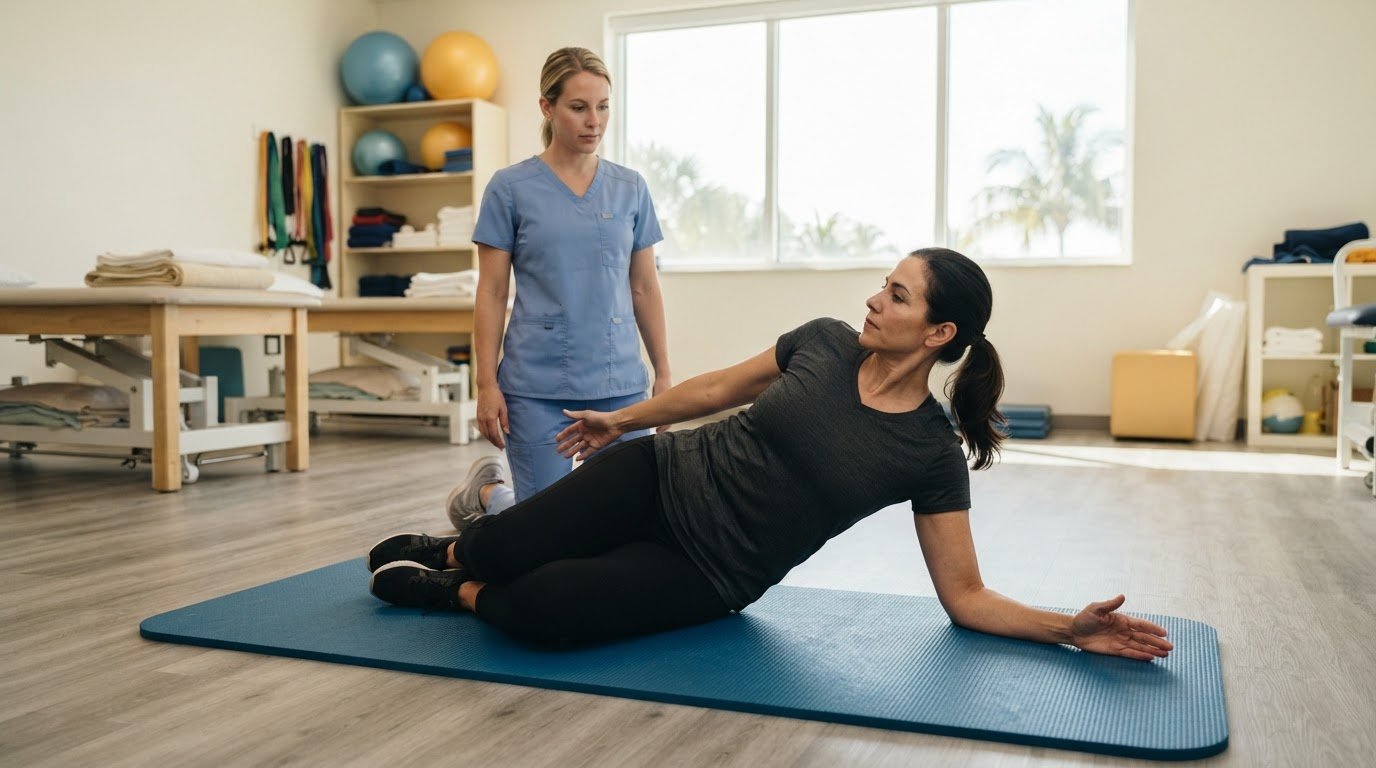
Years of slouching don’t have to define how you move. Exercises for better posture in Sunny Isles Beach can combine mobility work, gentle strengthening, and more supportive work habits; for example, cat-cow can be repeated for 10-12 repetitions, as comfortable. Progress is built through steady practice, not a single stretch.
If you’ve spent years sitting or standing in ways that encourage slouching, you may wonder whether change is still possible. Consistent movement and mindful adjustments to your work setup can help you practice a more upright, comfortable position, though results vary from person to person.
This guide walks you through stretches and exercises for your chest, upper back, and core, with ideas for fitting movement into your workday. You’ll also learn how postural education and physical therapy can support a more personalized approach when posture concerns affect your comfort or daily activities.
Key Takeaways
- Build a posture routine by moving from comfortable mobility work toward strengthening, and adjust the exercises to your ability.
- Use chest-opening and gentle spinal movements to practice a more open, upright position.
- Try the Open Book stretch to work on upper-back rotation while keeping your hips and legs steady.
- Include wall presses to practice shoulder and upper-back control that can support less-slouched positioning.
- Pair exercise with workday changes, such as adjusting your chair and adding regular movement breaks.
What exercise is the best at improving your posture?
No single exercise is right for everyone. For exercises for better posture in Sunny Isles Beach, start with controlled mobility, then add strength work you can perform comfortably.
-
Progress from Mobility to Strength
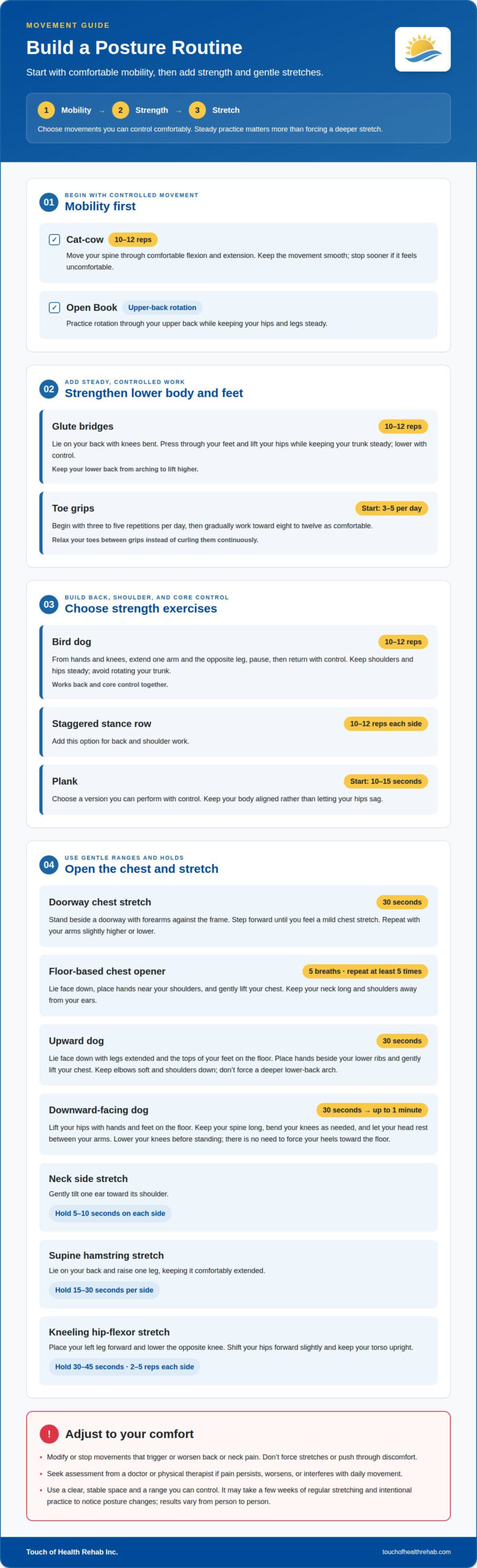
Start with cat-cow to move your spine through comfortable flexion and extension. Repeat for 10-12 repetitions, or stop sooner if the movement feels uncomfortable. Then add strengthening without forcing a deeper stretch. A beginner routine can pair cat-cow with toe grips; start with three to five repetitions per day. Keep movements smooth and use a range you can control.
For a balanced sequence, begin with mobility, then choose one lower-body and one upper-body exercise. Bird dog works back and core control; perform 10-12 repetitions before switching sides. Keep your shoulders and hips steady rather than rushing.
-
Strengthen the Glutes, Hips, and Feet
Add glute bridges to work the muscles supporting hip extension. Lie on your back with knees bent, press through your feet, and lift your hips while keeping your trunk steady. Lower with control for 10-12 repetitions. Avoid arching your lower back to lift higher. For toe grips, begin with three to five repetitions per day and gradually work toward eight to 12 repetitions as comfortable.
These exercises for better posture in Sunny Isles Beach target different areas: bridges strengthen your glutes and hips, while toe grips encourage active foot control. Relax your toes between grips instead of curling them continuously.
-
Build Back, Shoulder, and Core Strength
Choose bird dog to challenge your back and core together. From hands and knees, extend one arm and the opposite leg, pause, then return with control. Complete 10-12 repetitions before switching sides. Keep your shoulders level and avoid rotating your trunk. A staggered stance row adds back and shoulder work; perform 10-12 repetitions on each side.
Planks are another core option. Begin with a 10 to 15 second hold, keeping your body aligned rather than letting your hips sag. Select a version you can perform with control.
-
Adapt Exercises to Pain and Progress
Modify or stop movements that trigger or worsen back or neck pain. Don’t force stretches or push through discomfort. Seek assessment from a doctor or physical therapist if pain persists, worsens, or interferes with daily movement. A professional can consider your symptoms and movement control when guiding your exercise choices.
Practice consistently and notice how comfortably you sit, stand, and move. It may take a few weeks of regular stretching and intentional practice to notice posture changes. If you’re exploring exercises for better posture in Sunny Isles Beach, keep repetitions comfortable and adapt movements to your response. Exercise in a clear, stable space; you don’t need a particular park or gym.
Chest, upward dog, and downward dog stretches
- Open your chest with a gentle stretch before moving into floor poses. Stand beside a doorway, place your forearms against its frame, and step forward until you feel a mild stretch across your chest. Hold for 30 seconds, then repeat with your arms positioned slightly higher or lower. For a floor-based chest opener, lie face down, place your hands near your shoulders, and gently lift your chest. Keep your neck long and shoulders away from your ears. Hold for five breaths and repeat at least five times, staying within a comfortable range.
- Try upward dog as a separate chest and front-body stretch. Lie face down with your legs extended straight behind you and the tops of your feet resting on the floor. Place your hands beside your lower ribs, then press gently through your palms to lift your chest. Keep your elbows soft and draw your shoulders down rather than squeezing them toward your ears. Hold the position for 30 seconds, then lower with control. Keep the movement smooth; don’t force your lower back into a deeper arch.
- Move into downward dog by placing your hands and feet on the floor, then lifting your hips. Keep your spine long, bend your knees as needed, and press your hands down while lengthening through your back. Let your head rest between your arms instead of looking forward. Hold for 30 seconds, building toward up to one minute if the position remains comfortable. To transition, lower your knees before standing. The aim is a steady stretch, not forcing your heels to reach the floor.
- Include the neck, hip, and hamstring stretches as distinct movements. For a neck side stretch, gently tilt one ear toward its shoulder and hold for 5-10 seconds on each side. For a supine hamstring stretch, lie on your back and raise one leg, keeping it comfortably extended; hold for 15-30 seconds per side. For a kneeling hip-flexor stretch, place your left leg forward and lower the opposite knee. Shift your hips forward slightly, keep your torso upright, and hold for 30-45 seconds. Repeat for 2-5 repetitions on each side.
If you want help refining your alignment through these stretches, postural education can provide a guided next step.
Treat the move from upward dog to Downward-Facing Dog as a controlled change rather than a race to reach a final shape. Set your hands securely, lift your hips, and choose a knee bend that lets your back stay long. The recommended time in Downward-Facing Dog is up to 1 minute, so leave the pose sooner if holding it stops feeling comfortable. Keep your breathing easy and let the stretch remain gentle; there is no need to press harder or chase a particular heel position. When you finish, lower your knees and pause before standing, then notice whether your chest, back, and legs feel comfortable before continuing.
Open Book for thoracic mobility
Use the Open Book stretch to practice upper-back rotation while keeping your lower body steady. Follow it with cat-cow to move your spine slowly through a comfortable range.
- Lie on your side with your hips and legs bent to 90-degree angles, knees stacked. Extend both arms in front of your chest, palms together. Slowly sweep your top arm across your body, turning your upper chest toward the floor behind you. Keep your knees together so the movement comes mainly from your upper back. Follow your hand with your eyes only if your neck stays comfortable. Return the arm to the starting position with control. Complete at least five repetitions on each side.
Keep the motion smooth rather than pulling your shoulder down. If your knees separate, reduce the rotation and reset your position.
- Set up for cat-cow on your hands and knees, with your wrists below your shoulders and knees below your hips. For cow, gently tilt your pelvis, let your belly lower, and lift your chest without forcing your neck. For cat, round your back and draw your abdomen inward. Move slowly between the positions for at least one minute, pairing each change with an easy breath. Keep your hands grounded and elbows soft. This sequence lets you explore spinal movement without adding a balance challenge.
Use a smaller range if your back feels strained. Aim for fluid movement, not the deepest curve.
- Connect the two exercises by noticing where each movement occurs. Open Book emphasizes rotation through the upper back; cat-cow moves the spine through rounding and arching. Keep your hips stable during Open Book, then allow your pelvis to move naturally during cat-cow. This contrast helps you practice distinct movements instead of turning every stretch into one large twist. Notice whether your shoulders stay relaxed and your breathing remains easy throughout both exercises.
- Fit the mobility sequence around time spent sitting or standing. After sitting, do Open Book on each side, then move through cat-cow before returning to other activities. During standing tasks, gently turn your chest to look toward each side while keeping your feet grounded. Move slowly and maintain your balance. If your shoulders or trunk compensate, make the turn smaller. Controlled repetitions help you focus on the intended area without rushing.
Keep each repetition smooth and controlled, performing at least five on each side. Keep your knees aligned as you return to the starting position.
What exercises fix slouching?
Practice wall presses, wall angels, chin tucks, and shoulder blade squeezes with controlled movements. Keep your weight balanced, move within a comfortable range, and stop if an exercise causes pain.
Press the Wall for Thoracic and Shoulder Support
Stand facing a wall, place your palms against it, and gently press while keeping your ribs steady. Hold for 5 to 10 seconds, then release; repeat for 5 to 10 repetitions. Keep your shoulders relaxed and avoid leaning your full body weight toward the wall. This controlled press engages the upper back without requiring large movements.
Practice Wall Angels, Chin Tucks, and Shoulder Blade Squeezes
Stand with your back near a wall and move your arms slowly through a comfortable range. For chin tucks, gently draw your chin back without looking toward the ceiling. For shoulder blade squeezes, bring your shoulder blades toward each other, then relax. Keep your neck long and avoid shrugging or forcing your arms overhead.
- Try Snow Angels against a wall or while lying on the ground. Begin with your arms low, then slide them upward and back down as if making a snow angel. Keep your ribs from lifting and your shoulders away from your ears. Start with at least five repetitions. If your hands can’t stay near the wall, use a smaller range rather than arching your back.
- Use a shoulder blade squeeze as a brief posture reset while sitting. Sit tall, let your arms rest by your sides, and gently draw your shoulder blades together. Hold briefly, then release fully before repeating. Keep your head level and avoid forcefully pulling your shoulders down. This simple movement helps you notice whether one shoulder hikes or moves forward.
- Add thoracic rotation to address stiffness that can accompany rounded shoulders. Sit or stand with your feet grounded, cross your arms over your chest, and turn your upper body toward one side. Return to center slowly, then rotate the other way. Repeat the movement 5 to 10 times before changing sides. Keep your hips facing forward so the turn comes from your trunk.
- Pair these exercises and stretches with a relaxed standing position. Keep your weight evenly distributed over both feet, then let your arms hang naturally. Practice a chin tuck, followed by a gentle shoulder blade squeeze, without holding your breath. Use a wall for support if needed, and keep every movement controlled. A steady, pain-free range matters more than reaching the ceiling.
Posture and work habits
Exercise supports posture, but your work setup and movement habits matter too. Use these adjustments to break up long static positions and practice comfortable alignment throughout the day.
- Adjust your chair so your knees form a 90-degree angle and your feet rest steadily. Position the screen where you can look straight ahead instead of bending your neck toward it. Keep your shoulders relaxed, elbows comfortable, and lower back supported by the chair. If your feet don’t reach the floor, use a stable footrest to help maintain the knee angle.
- Break up sitting with movement before a fixed position begins to feel uncomfortable. Muscles can tighten after 40 minutes in a static posture, so stand, stretch, or walk around the room at the top of the hour. A short walk gives your hips and hamstrings a change of position, while a few shoulder rolls can loosen the pulling sensation across your upper back.
- Set a posture reminder alarm to vibrate every 30 minutes if you tend to lose track while working. Treat the signal as a prompt to notice your position, not as a demand to hold yourself rigidly. Relax your jaw, let your shoulder blades settle, and place both feet firmly on the ground. Then return to work in a comfortable position.
- Keep your gaze level while standing or walking. Looking too far upward can place pressure on your back, while looking down may encourage you to hinge forward. Choose a point ahead at a natural eye level, and keep your head balanced over your trunk. This cue is useful during a walk between work tasks or while standing at a counter.
- Alternate work positions when your tasks allow, but don’t replace prolonged sitting with prolonged standing. Shift your weight between both feet, keep your knees relaxed, and take a brief walk when your body feels stiff. A position change works best when it includes movement, rather than simply transferring the same still posture to a different setup.
- Pair a workday break with one simple movement you already know. For example, walk around the room, then gently draw your shoulder blades together before sitting again. Keep the squeeze light and release fully. If you’re practicing posture exercises for better everyday alignment, explore postural education support for guidance that connects movement with work habits.
Touch of Health Rehab: Post Surgery Physical Rehabilitation
Touch of Health Rehab Inc. provides post-surgical physical rehabilitation to support recovery and a return to everyday movement. If posture changes are connected to surgery, or you’re unsure how to adapt exercises safely, guided physical therapy can tailor movement to your needs. Postural education can also help you understand alignment and practice supportive positions during daily activities.
For posture concerns unrelated to surgery, Postural Education may be a relevant next step, while Vestibular Rehabilitation addresses balance and dizziness concerns. Choose support that matches what you’re working through rather than forcing exercises that increase discomfort. To discuss your next step, contact Touch of Health Rehab Inc..
Make Posture Practice Part of Your Next Step
Better posture is something you practice in ordinary moments, not a position you need to hold perfectly all day. Choose movements you can perform with control, then notice how your body responds during work, walking, and rest. If you’re continuing exercises for better posture in Sunny Isles Beach, a plan shaped around your comfort and daily activities can help you build a sustainable routine.
Touch of Health Rehab Inc. provides physical therapy and postural education to support movement awareness and posture-focused goals. Vestibular rehabilitation is also available for people whose balance or dizziness concerns affect how they move. The right next step depends on what you want to address and how posture affects your daily life.
Take the next step at a pace that feels manageable. Contact Touch of Health Rehab Inc. to discuss support for your movement goals, and keep building confidence one comfortable practice at a time.
Frequently Asked Questions
Can you correct years of bad posture?
Yes, posture can be addressed even after years of established habits. Start by noticing the positions you return to during everyday tasks, such as leaning toward a laptop or shifting your weight onto one leg. Practice comfortable alternatives during those activities and build strength and mobility gradually. Longstanding stiffness or pain calls for an individualized assessment, especially if it limits work, sleep, or daily movement.
Why Is Good Posture Important?
Good posture helps you move through everyday tasks with more control and balance. For example, keeping your head comfortably aligned while reading can make it easier to turn and look around without repeatedly bending your neck. Posture isn’t about holding one rigid shape. It’s the ability to change positions comfortably, whether you’re carrying groceries, walking, or working at a desk.
What Causes Bad Posture?
Poor posture can develop through repeated habits and the way daily tasks are set up. A screen positioned too low, leaning toward a phone, or standing with your weight shifted onto one hip can encourage slouching. Limited movement during the day may also make certain positions feel familiar. Look at the activity and setup that precede a posture change, then adjust one factor at a time.
What stretches help relieve tight chest, neck, and hip flexor muscles?
Try a gentle doorway chest stretch, a small neck side tilt, and a supported half-kneeling hip-flexor stretch. Keep each movement easy to control, breathe normally, and avoid pulling your head or forcing your hips forward. You can use a chair or wall for balance during the kneeling stretch. Adjust your position so you feel a mild stretch, not sharp or increasing pain.
Where can you find posture-focused physical therapy or fitness classes in Sunny Isles Beach, Florida?
For posture-focused physical therapy in Sunny Isles Beach, Touch of Health Rehab provides physical therapy and postural education. These services can connect movement practice with the demands of your daily routine. The local area served also includes Aventura, Bal Harbour, North Miami Beach, and Miami Beach. If you’re looking for a fitness class, choose one that fits your abilities and emphasizes controlled movement.
What posture exercises should be avoided with back or neck pain?
Avoid or modify any exercise that triggers or worsens back or neck pain, and don’t force stretches or push through discomfort.