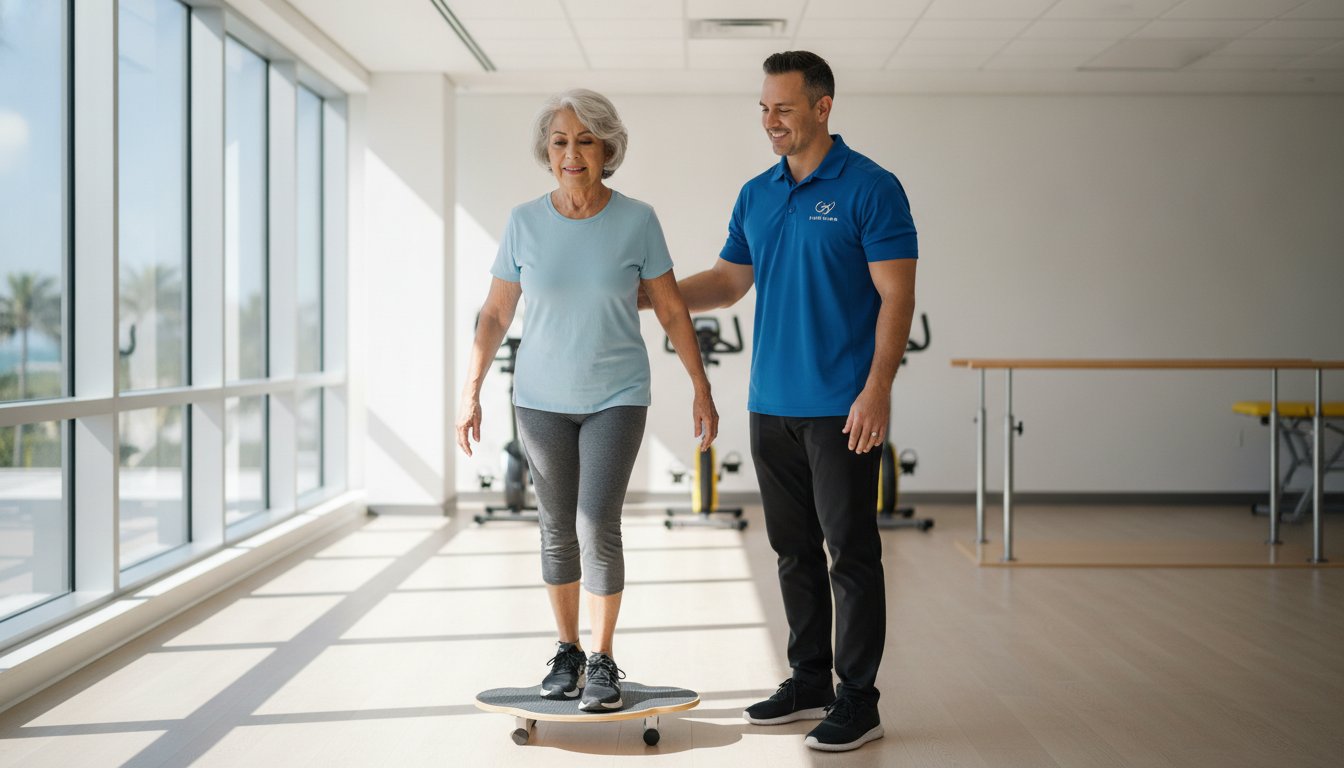
What if the secret to managing joint pain isn’t pushing through the discomfort, but learning how to move around it? Many seniors believe that chronic stiffness and a growing dependence on anti-inflammatories are inevitable parts of aging. You might find yourself hesitant to walk to the mailbox or worried that a trip to the park could lead to a dangerous fall. However, specialized physical therapy for arthritis in seniors offers a clinical path to reclaim your mobility without the need for constant medication. It’s a collaborative process that focuses on recalibrating your body mechanics to protect your joints from further wear.
We understand that your goal isn’t just to feel less pain, but to live more fully. Whether you want to walk without a cane or spend an afternoon playing with your grandkids in Sunny Isles Beach parks, restoration is possible. This guide will show you how personalized physical therapy can reduce joint inflammation, improve your stability, and restore your independence through a compassionate, expert-led approach. We will explore specific techniques in balance and gait rehabilitation that empower you to move with confidence and vitality once again.
Key Takeaways
- Shift your focus from simply managing pain to restoring functional movement through clinical joint recalibration.
- Master the science of “joint unloading” to protect your cartilage and improve body awareness during your favorite daily activities.
- Discover why specialized physical therapy for arthritis in seniors is most effective when delivered through a personalized partnership rather than a one-size-fits-all exercise program.
- Learn actionable strategies for navigating the Sunny Isles Beach climate, including how to manage joint swelling caused by coastal heat and humidity.
- Build the confidence to walk without assistance and enjoy long-term vitality by prioritizing balance, gait, and postural education.
Understanding the Role of Physical Therapy for Arthritis in Seniors
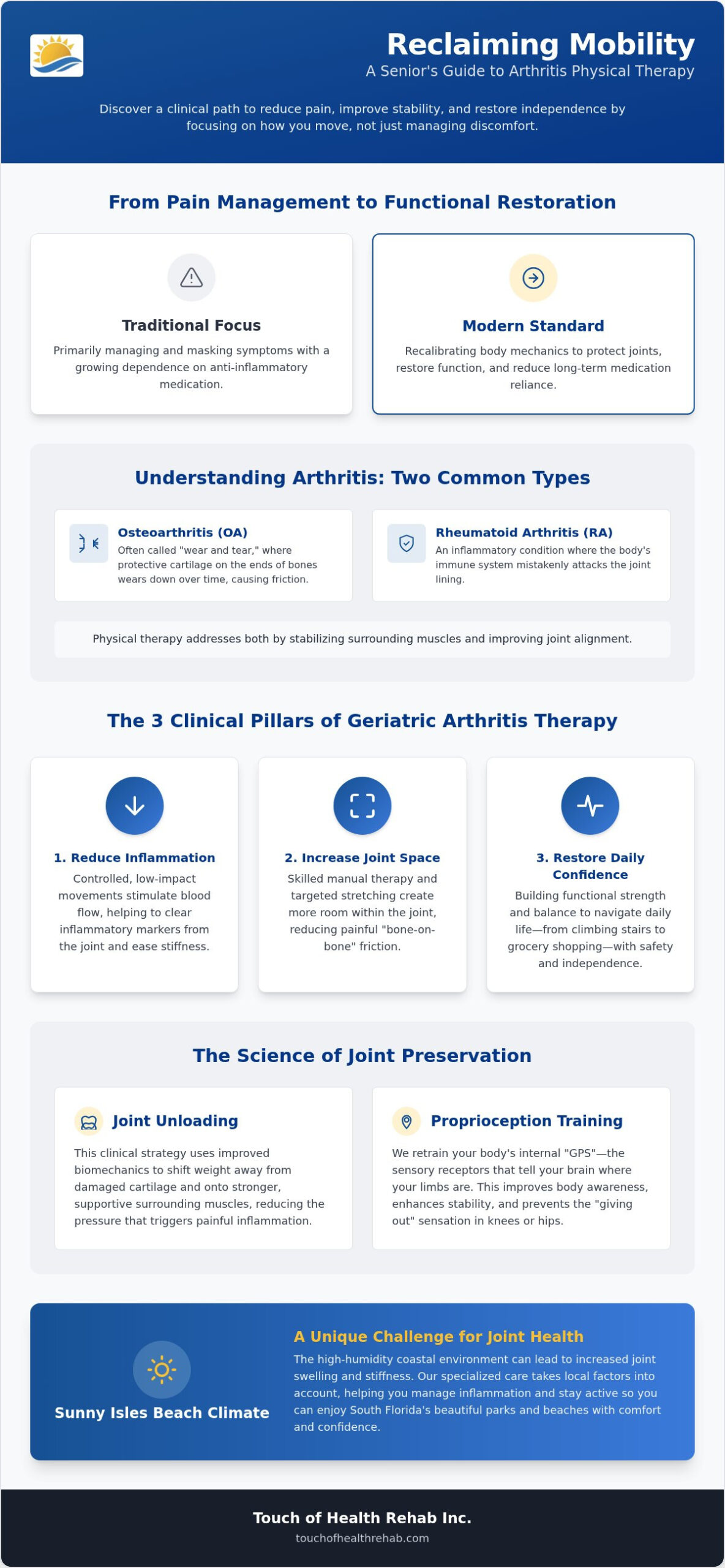
Physical therapy for arthritis in seniors isn’t just a series of exercises to keep you moving; it’s a precise clinical intervention designed to recalibrate how your joints interact. While traditional approaches often focused on masking symptoms, modern 2026 standards emphasize functional restoration. This means we don’t just want you to hurt less. We want your body to work better. By optimizing your biomechanics, we can reduce the mechanical stress that causes joint degradation in the first place, allowing you to move with a renewed sense of ease.
It’s vital to distinguish between types of arthritis to create an effective, personalized plan. Osteoarthritis (OA) is often described as “wear and tear,” where the protective cartilage on the ends of your bones wears down over time. In contrast, Rheumatoid Arthritis (RA) is an inflammatory condition where the immune system attacks the joint lining. While the underlying causes differ, physical therapy for arthritis in seniors addresses both by stabilizing the surrounding musculature and improving joint alignment. This non-pharmacological approach is now prioritized as the first line of defense for senior joint health, reducing the long-term reliance on anti-inflammatory medications.
The Goals of Geriatric Arthritis Therapy
Our primary objective is to help you move without fear. We achieve this by focusing on three clinical pillars that prioritize your long-term vitality:
- Reducing Systemic Inflammation: Controlled, low-impact movements stimulate blood flow and help clear inflammatory markers from the joint capsule, which naturally eases morning stiffness.
- Increasing Joint Space: Through skilled manual therapy and targeted stretching, we can create more room within the joint. This reduces the “bone-on-bone” friction that often causes sharp, stabbing pain.
- Restoring Daily Confidence: We focus on the specific movements you need for daily life. Whether it’s climbing the stairs in your home or navigating a busy grocery store, we build the strength and balance you need to remain independent.
Why Seniors in South Florida Benefit from Specialized Care
Living in Sunny Isles Beach offers a beautiful lifestyle, but the high-humidity coastal environment presents unique challenges for joint health. High humidity can influence barometric pressure, which often leads to increased joint swelling and stiffness for those with chronic arthritis. Our approach to geriatric physical therapy takes these local environmental factors into account. We help you stay active in the South Florida heat while managing the inflammatory response that often follows outdoor activity. By aligning your rehabilitation goals with your local lifestyle, we ensure you can enjoy our city’s parks and beaches with comfort and ease. We view ourselves as your dedicated guides, ensuring every step you take is one toward a more active and empowered future.
The Science of Joint Preservation: Beyond Simple Exercise
Many general health guides suggest that you simply need to “stay active” to manage arthritis. However, for those living with chronic joint pain, activity without a clinical strategy can often lead to more discomfort. Effective physical therapy for arthritis in seniors moves beyond general movement by focusing on the concept of joint unloading. This approach uses improved biomechanics to shift mechanical weight away from damaged, thinning cartilage and onto the surrounding supportive musculature. By recalibrating how your body carries its own weight, we can significantly reduce the pressure that triggers painful inflammation.
We also prioritize the development of proprioception, which acts as your body’s internal GPS. When arthritis affects a joint, the sensory receptors that tell your brain where your limb is in space often become less reliable. This loss of body awareness is why many seniors feel a sense of instability or “giving out” in their knees or hips. Through targeted exercises, we retrain these sensors so your body can protect itself automatically during movement. If you’re curious about how these specialized techniques can help your specific situation, you can meet our team of dedicated specialists who guide this collaborative process.
Manual therapy is another essential component of our clinical approach. Unlike general massage, this involves precise, hands-on mobilization of stiff, arthritic tissues and joints. It helps restore the natural glide of the joint, making every movement feel smoother and less restricted. When combined with clinical guidance, these techniques provide a foundation for long-term joint health rather than just a temporary fix.
Postural Alignment and Joint Stress
When your posture is out of alignment, your body compensates by shifting weight to the wrong places. Poor spinal positioning often forces your knees and hips to carry loads they aren’t designed for, which accelerates wear and tear. Through postural education, we help you realign your frame to ensure weight is distributed evenly across your skeletal system. Correcting your postural habits serves as a long-term “joint-saver” by preventing the uneven mechanical stress that leads to chronic flare-ups and compensatory injuries in other parts of the body.
Balance and Gait: The Fall Prevention Connection
Stiff joints and chronic pain are leading contributors to fall risks among seniors. When a joint is painful, your natural walking pattern, or gait, changes instinctively to avoid discomfort, often making you less stable. We utilize specialized balance and gait rehabilitation to stabilize your lower body and build your confidence on various surfaces. This process also integrates your vestibular system, which helps you maintain stability even when your joints feel less responsive than usual. By improving the way you walk, we don’t just reduce your pain; we significantly lower your risk of injury. Seniors managing other neurological conditions that affect movement, such as those who benefit from physical therapy for Parkinson’s balance, often find that these same gait recalibration principles play a central role in restoring their confidence and stability.
Creating Your Personalized Arthritis Recovery Plan: A Step-by-Step Approach
Recovery isn’t something that happens to you; it’s a journey we take together. When you begin physical therapy for arthritis in seniors, we start by listening to your specific story and understanding how joint stiffness affects your daily life. One-size-fits-all programs often fail because they don’t account for your unique joint geometry or your personal lifestyle goals. Our clinical approach is grounded in a “pain-neutral” philosophy. This means we prioritize movements that build strength and stability without triggering a painful flare-up. We measure your progress through functional milestones, like your ability to stand up from a low chair or walk comfortably through your neighborhood, rather than just looking at numbers on a pain scale.
We view our role as your dedicated guide, providing the clinical expertise you need to move with confidence. This collaborative partnership ensures that your plan evolves as you get stronger. We don’t just give you a list of exercises; we teach you how to listen to your body and adjust your movements to protect your joints for the long term. This personalized attention is what transforms a standard clinical visit into a sanctuary for healing and restoration.
Step 1: The Comprehensive Clinical Evaluation
Before we design your plan, we need a detailed map of your current physical state. We analyze your range of motion, muscle strength, and ligament stability to see exactly where your body needs the most support. We also look for “fear-avoidance” behaviors. These are the subtle ways you might be limiting your own movement to avoid anticipated pain, which can actually lead to more stiffness over time. By identifying these patterns early, we can integrate specific arthritis-related pain therapy techniques that address both the physical stiffness and the mental hesitation that often accompanies chronic joint issues.
Step 2: Designing the Physical Conditioning Program
Once we have a clear baseline, we move into the conditioning phase. This isn’t about high-intensity training; it’s about building “shock-absorbing” muscle that protects your joints from impact. We use a mix of isometric exercises, which strengthen muscles without moving the joint, and isotonic exercises that improve your functional range. This specialized physical conditioning is carefully calibrated to your specific tolerance levels. Our goal is to prepare you for real-world activities, like a day of shopping at the Aventura Mall or a walk along the Sunny Isles shoreline, ensuring your body is resilient enough to handle the demands of your favorite South Florida pastimes.
Navigating Daily Life with Arthritis in Sunny Isles Beach
Living in Sunny Isles Beach offers unparalleled access to beautiful shorelines and vibrant outdoor spaces, but the coastal environment presents unique challenges for your joints. High humidity and intense South Florida heat can lead to increased vasodilation, which often results in noticeable joint swelling and morning stiffness. Specialized physical therapy for arthritis in seniors provides you with the clinical strategies needed to manage these environmental triggers. By understanding how barometric pressure and temperature affect your body, you can plan your day to maximize comfort and maintain your active lifestyle without unnecessary flare-ups.
Joint protection principles are essential for enjoying local activities like golf or social outings at the park. We teach you how to use larger, stronger joints to perform tasks that typically strain smaller ones. For example, when carrying groceries or beach gear, distribute the weight across your forearms rather than gripping tightly with your fingers. Your choice of footwear also plays a critical role in joint preservation. While cushioned, shock-absorbing shoes are necessary for the hard pavement of Collins Avenue, navigating the soft, uneven sand of the beach requires footwear that prioritizes lateral stability to prevent micro-strains in your ankles and knees.
Environmental Safety and Joint Protection
Safety in our coastal community starts with awareness of your surroundings. Wet pool decks and inclined beach access ramps can be hazardous if your balance is compromised by joint stiffness. We work with you to master specific gait patterns that keep your center of gravity stable on slippery or sloped surfaces. If you enjoy gardening or spending time outdoors, using ergonomic, long-handled tools can prevent excessive bending that stresses the spine and hips. Additionally, staying hydrated is vital for your joint health. Water intake directly influences the volume of synovial fluid, which acts as the natural lubricant and shock absorber within your joint capsules. If you’re ready to move with more freedom, you can explore our wellness and preventative care options to keep your joints resilient.
When to Use Assistive Devices
There is often a hesitation to use assistive devices, but the right tool can be a powerful instrument for independence. Whether it’s a specialized brace for a thumb joint or a trekking pole for longer walks, these devices reduce the mechanical load on your arthritic tissue. It’s essential that a professional fits and trains you on these tools; an improperly sized cane can actually cause shoulder or back pain. Through orthopedic physical therapy, we ensure your equipment is calibrated to your body’s specific needs. This professional guidance ensures that any device you use serves as a bridge to better mobility rather than a source of new discomfort.
The Touch of Health Rehab Approach: Your Sanctuary for Healing
At Touch of Health Rehab Inc., we’ve designed our Sunny Isles Beach clinic to be more than just a medical facility; it’s a human-centered sanctuary dedicated to your restoration. We understand that clinical settings can sometimes feel cold or detached, which is why our environment prioritizes warmth and personal connection. Led by Lead Physical Therapist Berlin, our team operates on a “Compassionate Expert” model. This means you receive the highest level of clinical physical therapy for arthritis in seniors while being treated as a valued partner in your own recovery. We serve the vibrant communities of Sunny Isles Beach, Aventura, and North Miami Beach, ensuring that local seniors have access to world-class rehabilitative care right in their neighborhood.
Our philosophy extends beyond temporary relief. We focus heavily on wellness and preventative care to actively slow the progression of arthritis and protect your long-term vitality. By addressing the root causes of joint stress early, we help you maintain your independence for years to come. We invite you to explore the success stories of your neighbors who have reclaimed their mobility through our specialized approach. These real-world results demonstrate that with the right guidance, a life defined by movement rather than limitation is entirely possible.
A Collaborative Journey to Restoration
We believe that effective healing requires a deep understanding of your unique lifestyle and goals. Your path begins with a personalized physical therapy plan that is specifically calibrated to your body’s needs. This isn’t a pre-packaged set of exercises; it’s a dynamic strategy that evolves as you gain strength and confidence. By providing physical therapy for arthritis in seniors that accounts for your personal history and physical tolerance, we ensure that every session moves you closer to your peak health. Our commitment is to the long-term well-being of our South Florida senior community, providing the steady, reassuring support you need to thrive.
Take the First Step Toward Pain-Free Living
It’s a common misconception that chronic joint pain is simply something you must accept as you age. We’re here to tell you that it’s never too late to start your journey toward restoration. Whether you’ve been managing arthritis for decades or are just beginning to notice morning stiffness, there is a path forward. We encourage you to meet our team of dedicated specialists and schedule an initial consultation to discuss your goals. We aren’t just your practitioners; we are your partners in returning to the activities and the life you love. Let’s work together to restore your confidence and empower your every step.
Embrace a Future Defined by Movement and Vitality
Arthritis doesn’t have to be a permanent barrier to the active South Florida lifestyle you love. By focusing on clinical joint preservation and recalibrating your body’s unique mechanics, you can transition from simply managing pain to truly restoring your function. We’ve seen how specialized physical therapy for arthritis in seniors empowers you to walk with confidence, reduce your reliance on medication, and return to the activities that bring you joy. Our expert geriatric physical therapists in Sunny Isles Beach have spent over a decade helping residents in Aventura, Sunny Isles, and North Miami Beach reclaim their independence through personalized care plans focused on long-term vitality.
You don’t have to navigate this journey alone. We’re here to act as your dedicated guides, providing a professional sanctuary where your recovery is our primary mission. It’s time to trade the fear of instability for the freedom of fluid, comfortable movement. Take the first step toward a more empowered version of yourself today. Schedule Your Arthritis Mobility Assessment at Touch of Health Rehab and discover what’s possible when you have a partner who believes in your potential for healing. Your best days are still ahead, and we’re ready to help you reach them.
Frequently Asked Questions
Is physical therapy painful for seniors with severe arthritis?
Physical therapy for arthritis in seniors is designed to be a restorative experience rather than a painful one. While you might feel a gentle therapeutic stretch or mild muscle fatigue, we prioritize a pain-neutral approach that respects your joint sensitivity. Our goal is to reduce your existing discomfort by improving your body’s mechanics, ensuring that every movement you perform in the clinic leads to greater ease in your daily life.
How long does it take to see results from physical therapy for arthritis?
Most seniors notice improvements in joint stiffness and mobility within four to six weeks of consistent therapy. While immediate relief can sometimes occur after manual therapy sessions, lasting functional changes require time for your muscles to strengthen and your gait to stabilize. We track your progress through specific milestones, ensuring you see tangible evidence of your restoration as you move through your personalized program.
Will Medicare or private insurance cover my arthritis rehabilitation in Florida?
Medicare and most private insurance plans in Florida typically provide coverage for physical therapy when it’s deemed medically necessary to treat arthritis symptoms. Coverage details can vary by year, so we recommend verifying your specific benefits for 2026 to understand your co-pays or deductibles. Our team can assist you in navigating these requirements to ensure your focus remains on your healing journey rather than administrative paperwork.
Can physical therapy help me avoid joint replacement surgery?
Physical therapy is a highly effective tool for delaying or even avoiding joint replacement surgery by optimizing the health of your existing joints. By strengthening the shock-absorbing muscles around your knees or hips, we reduce the bone-on-bone friction that often makes surgery feel inevitable. Many patients find that improved biomechanics provide enough relief and stability to maintain their quality of life without undergoing invasive procedures.
What is the difference between physical therapy and simple home exercise?
The primary difference lies in clinical precision and professional supervision. While home exercises are a valuable supplement, physical therapy for arthritis in seniors involves skilled manual mobilization and real-time postural corrections that you cannot perform alone. We use specific diagnostic tools to ensure your movements are protecting your joints rather than inadvertently causing compensatory strain, which is a common risk with unsupervised exercise.
How many times a week should a senior attend therapy for arthritis?
Most seniors benefit from attending therapy sessions two to three times per week during the initial phases of rehabilitation. This frequency allows for consistent muscle retraining and regular manual therapy to address persistent stiffness. As your stability improves and you become more confident in your home program, we may transition to a maintenance schedule that supports your long-term vitality and independence.
What should I wear to my first geriatric physical therapy session?
You should wear loose, comfortable clothing that allows for a full range of motion in your joints. Athletic wear or flexible trousers and a comfortable shirt are ideal choices. It’s also essential to wear supportive, closed-toe shoes, such as sneakers, to ensure your safety during balance and gait exercises. Avoid flip-flops or sandals, as these don’t provide the stability needed for clinical movement.
Is physical therapy effective for both Osteoarthritis and Rheumatoid Arthritis?
Physical therapy is beneficial for both conditions, though the clinical approach differs slightly for each. For Osteoarthritis, we focus on mechanical unloading and strengthening to protect thinning cartilage. For Rheumatoid Arthritis, we prioritize gentle range-of-motion exercises and techniques to reduce systemic inflammation during flare-ups. In both cases, the goal remains the same: empowering you to move with less pain and more confidence.