You reach for your morning coffee and a sharp, electric jolt radiates from your neck down to your fingertips, turning a simple movement into a moment of intense frustration. It’s more than just discomfort; it’s the nagging fear that this persistent tingling might mean permanent damage or a long road of physical limitations. When every hour at your computer feels like a battle against your own body, seeking specialized physical therapy for pinched nerve in neck issues is the first step toward reclaiming your comfort. We understand that you don’t just want the pain to stop; you want your vibrant, active life back.
We agree that living in a state of constant physical guardedness is exhausting and entirely unnecessary. This guide promises to show you how professional intervention resolves the root cause of nerve compression to restore your mobility and eliminate radiating pain for good. We will preview the collaborative journey of recovery, focusing on how clinical mobilization and expert postural education create a personalized plan to prevent future recurrence. Your path to restoration starts with understanding the mechanics behind the compression and moving toward a future of peak physical health and lasting vitality.
Key Takeaways
- Gain a clear understanding of cervical radiculopathy and how the anatomy of your spinal canal influences your path to healing.
- Discover why targeted physical therapy for pinched nerve in neck recovery provides a more effective, long-term solution than simple rest or surgical intervention.
- Learn how postural education reduces significant structural pressure on your neck, preventing the recurrence of nerve compression through better alignment.
- Identify the specialized manual therapy and nerve gliding techniques that professional therapists use to release muscle guarding and restore fluid movement.
- Understand the value of a personalized recovery plan that treats your unique condition within a supportive, high-end clinical environment.
Understanding Cervical Radiculopathy: Why Your Neck Nerve is Pinched
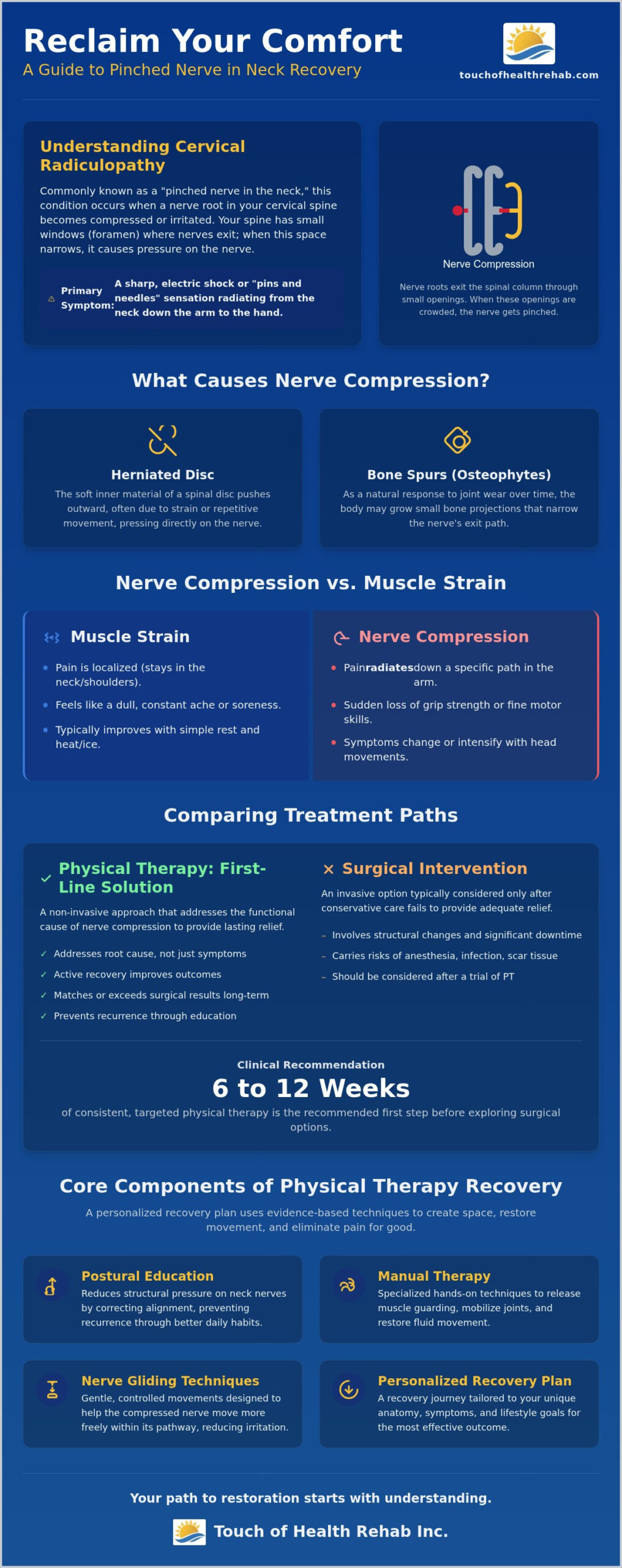
The clinical term for a pinched nerve in your neck is cervical radiculopathy. It’s a condition that disrupts your daily rhythm, but it’s also something we can address together through a collaborative healing journey. Your spine is a sophisticated structure where the spinal canal protects your spinal cord. Branching off this canal are nerve roots that exit through small windows called intervertebral foramen. When these windows become crowded, the nerve experiences pressure. This compression often feels like “pins and needles” or an electric shock that travels from your neck down into your hand. If you’re struggling with these sensations, physical therapy for pinched nerve in neck relief offers a proven path back to pain-free living.
Two main factors usually cause this crowding. In many cases, a herniated disc is the primary culprit. This happens when the soft material inside a spinal disc pushes outward, often due to sudden strain or repetitive movement. In other instances, bone spurs, also known as osteophytes, develop over time as your body’s response to joint wear. Both conditions lead to the same result: a nerve that doesn’t have enough room to function properly. Seeking physical therapy for pinched nerve in neck symptoms allows you to address these structural issues through movement and specialized care rather than just masking the symptoms.
The Mechanics of Nerve Compression
Space is a premium within your spine. When local tissues become inflamed, the already narrow intervertebral foramen becomes even tighter. This inflammatory response often follows an injury, reducing the available clearance for your nerve roots. For aging adults, disc desiccation plays a significant role; as discs lose water content and shrink, the vertebrae move closer together, which further reduces the size of the nerve exits. Foraminal stenosis is the clinical term used to describe this specific narrowing of the nerve’s exit path. Our approach to orthopedic physical therapy focuses on creating space and reducing this mechanical tension through targeted intervention.
Recognizing Early Warning Signs
It’s vital to distinguish between a simple muscle strain and true nerve involvement. A muscle strain usually stays localized in the neck or shoulder blades. True nerve compression, however, follows a specific path down the arm. You might notice a sudden loss of grip strength or find it difficult to perform fine motor tasks like typing or buttoning a shirt. These symptoms often change based on your posture. Many people find that tilting their head toward the painful side or looking up intensifies the electric sensation. Identifying these patterns early ensures your recovery journey is targeted, effective, and tailored to your unique anatomy.
Physical Therapy for Pinched Nerve in Neck vs. Surgery
When you’re facing the sharp, radiating pain of a compressed nerve, the prospect of surgery can feel both daunting and inevitable. However, choosing physical therapy for pinched nerve in neck relief is widely considered the gold standard of conservative care. Unlike surgical interventions that involve structural changes and significant downtime, physical therapy addresses the functional environment surrounding your spine. It’s a non-invasive partnership where we work to create space for your nerves without the risks associated with anesthesia or scar tissue. Statistics show that a vast majority of patients with herniated cervical discs find lasting relief through dedicated rehabilitation, often matching or exceeding the long-term outcomes of surgery.
The “Wait and See” approach is a common myth that often does more harm than good. While it’s tempting to think that total rest will allow the nerve to heal, active recovery is actually the catalyst for restoration. Research into Cervical Radiculopathy Treatment indicates that specific, controlled movements are far more effective at reducing symptoms than sedentary behavior. By engaging in a structured program, you’re not just waiting for the pain to fade; you’re actively teaching your body how to decompress the area and support your spine’s natural alignment.
When Conservative Care is the Right Choice
Most clinical guidelines suggest a 6 to 12 week window of consistent physical therapy before even considering more invasive options. During this time, your body has the opportunity to reduce inflammation and stabilize the affected segment naturally. The benefits of physical therapy for pinched nerve in neck management go far beyond mobility. It significantly reduces your reliance on long-term medications by addressing the source of the irritation. If you’re looking for sustainable Pain Management Solutions, starting with a conservative, movement-based plan is the most empowering choice you can make for your long-term vitality.
The Limitations of Passive Recovery
There’s a significant difference between resting and recovering. “Just resting” often leads to muscle atrophy and stiffer joints, which can actually increase the pressure on your nerve over time. Controlled movement promotes essential blood flow to the nerve root, delivering the oxygen and nutrients required for cellular repair. While old-fashioned cervical collars once aimed to immobilize the neck, modern mobilization techniques focus on restoring fluid, pain-free motion. This proactive approach ensures your joints stay lubricated and your muscles stay supportive. If you’re ready to move toward a life without limitations, you can begin your expertly guided recovery today by focusing on active, clinical solutions.
Postural Education: The Key to Long-Term Nerve Decompression
Alignment isn’t just about how you stand; it’s about how your body manages the constant force of gravity. When your head shifts forward from its natural center, the mechanical load on your cervical spine increases exponentially. Every inch of forward lean adds approximately 10 lbs of pressure to your neck. For someone already experiencing nerve compression, this extra weight acts like a constant clamp on sensitive tissues. Our clinical approach to postural education focuses on teaching you how to redistribute this weight, effectively opening the windows where your nerves exit the spine. By mastering these adjustments, you transition from a state of constant irritation to one of sustained relief.
We view alignment as a learned skill that you can refine over time with the right guidance. Effective physical therapy for pinched nerve in neck recovery must address these structural habits to ensure the pain doesn’t simply return the moment you leave the clinic. According to the Physical Therapy Guide to Cervical Radiculopathy, addressing postural deficits is a cornerstone of professional intervention. At our Sunny Isles Beach sanctuary, we partner with you to identify the specific movements that trigger your symptoms, providing you with the tools to decompress your spine throughout your busy day.
Correcting the “Tech Neck” Epidemic
The South Florida lifestyle often involves long hours of remote work, leading to a common condition known as Tech Neck. When you slump over a laptop or phone, you’re not just straining muscles; you’re physically closing the foramen and pinching existing protrusions against your nerve roots. This repetitive stress is a primary trigger for radiating pain. We help you reorganize your workstation and your movement patterns, ensuring that your environment supports your recovery rather than hindering it. Small, sophisticated changes in how you sit can provide immediate relief to a crowded nerve root.
Building a Structural Foundation
Neck health depends heavily on the support of your mid-back and core. If your thoracic spine is stiff, your neck has to overcompensate, which leads to increased tension and nerve vulnerability. We focus on enhancing thoracic mobility and core strength to create a stable base for your cervical spine. A neutral spine alignment creates maximum space for nerves, allowing inflammation to subside and healing to begin. This holistic view ensures your entire body works in harmony to protect your spinal health and restore your long-term vitality.
Evidence-Based Exercises and Manual Therapy Techniques
While many online resources suggest aggressive stretching, professional physical therapy for pinched nerve in neck rehabilitation prioritizes precision over intensity. An inflamed nerve is hypersensitive; pulling on it too hard can actually trigger more guarding and pain. Instead of generic stretches, we utilize specific clinical techniques designed to restore movement without aggravating the delicate nerve roots. This phase of your recovery is about gentle progression and respect for your body’s current limitations. We focus on creating a supportive environment where your nervous system feels safe enough to release tension.
Clinical cervical traction is another valuable tool we use to create immediate relief. By gently and precisely separating the vertebrae, we can temporarily decompress the nerve root and reduce the intensity of radiating symptoms. This window of comfort allows us to introduce other therapeutic movements more effectively. Throughout every session, your therapist ensures you stay within a pain-free range of motion. Pushing through sharp pain is counterproductive in nerve recovery, as it can increase local inflammation and delay your restoration to peak health.
Manual Therapy and Joint Mobilization
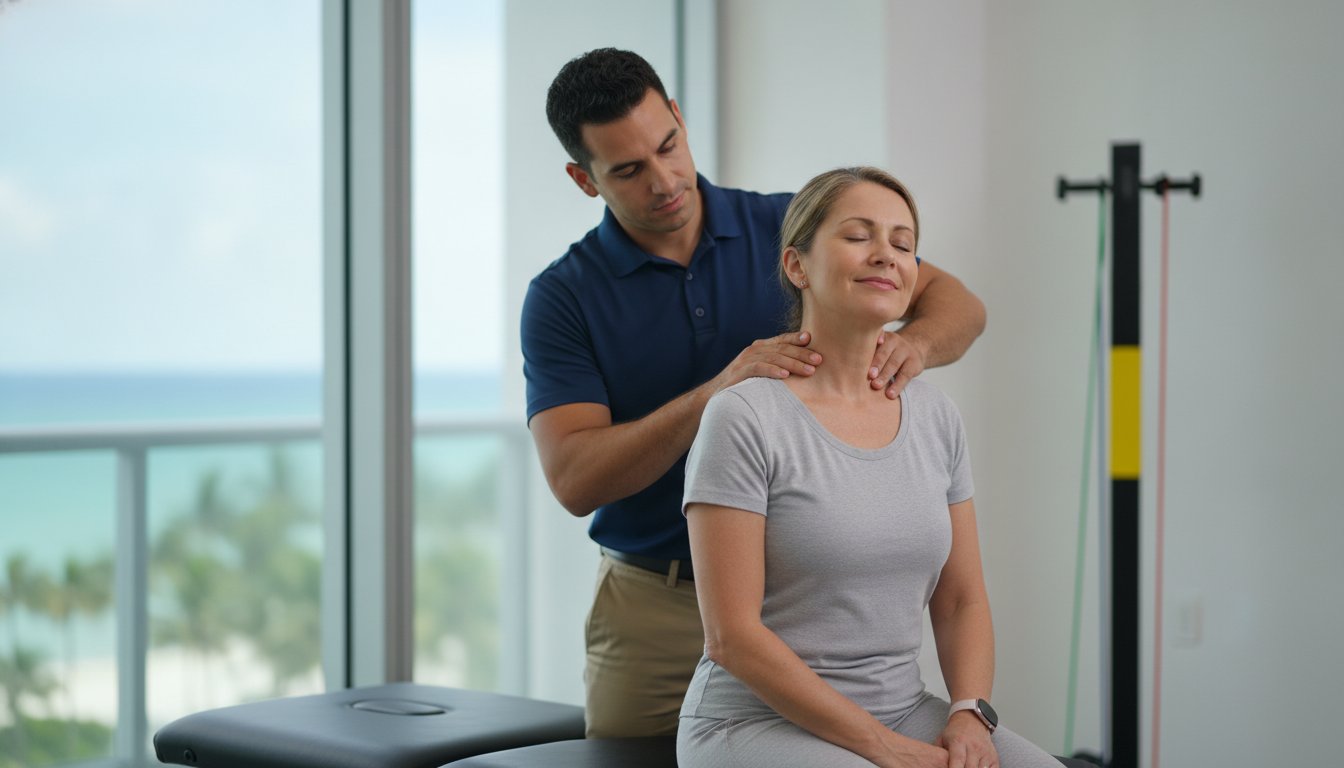
Manual therapy allows your therapist to provide the immediate relief that exercise alone sometimes cannot achieve. By using skilled, hands-on techniques, we address the muscle guarding in your scalenes and trapezius muscles that often develops as a protective response to nerve pain. We also incorporate joint glides to restore normal vertebral motion, which helps decompress the affected area. This specialized Orthopedic Physiotherapy approach ensures that your joints and soft tissues are moving in harmony, creating a more hospitable environment for your nerves to heal and thrive.
The Science of Nerve Gliding
Nerve gliding, often called neural flossing, is a sophisticated technique used to improve the mobility of your nerves through the surrounding soft tissue. Unlike a muscle stretch that holds a position, nerve sliders for the Median or Ulnar nerves involve rhythmic, coordinated movements. These exercises floss the nerve, helping it slide smoothly through the anatomical tunnels of your arm and neck. It’s vital to remember that you should never over-stretch an inflamed nerve. If a movement causes a sharp jolt or increased tingling, it’s a sign to scale back. We guide you through these patterns to ensure they remain therapeutic rather than provocative.
If you’re ready to experience the difference that expert clinical techniques can make for your recovery, connect with our dedicated team today to begin your personalized path to mobility.
Personalized Recovery at Touch of Health Rehab
Your recovery journey deserves more than a standard medical office; it requires a sanctuary designed for healing and restoration. Located in the heart of Sunny Isles Beach, Touch of Health Rehab Inc. offers a sophisticated, human-centered environment where your well-being is our highest priority. Our lead therapists embody the “Compassionate Expert” philosophy, acting as your dedicated guides rather than distant practitioners. We believe that effective physical therapy for pinched nerve in neck relief is a collaborative effort. From your very first visit, we conduct a thorough initial assessment to understand the unique nuances of your condition, translating those findings into a personalized roadmap for your restoration.
We provide a convenient, high-end clinical experience for residents in Sunny Isles Beach, Aventura, and Miami Beach. You don’t have to travel far to find world-class care that respects your time and your need for a life without limitations. Our facility is designed to feel like a sanctuary, stripping away the cold, detached atmosphere of traditional clinics to focus on your long-term vitality and comfort. It’s a place where expertise meets empathy, ensuring you feel supported at every stage of your rehabilitation.
Our Multi-Disciplinary Approach
At our clinic, we recognize that true healing involves the whole person. We combine specialized physical conditioning with clinical rehabilitation to ensure your body is resilient against future strain. By utilizing evidence-based modalities tailored specifically to your needs, we move beyond simple symptom management. Our ultimate goal is to facilitate your return to peak vitality, ensuring that you can work, play, and live with total confidence. This comprehensive approach is what makes our physical therapy for pinched nerve in neck programs so successful for our clients.
Start Your Journey in Sunny Isles Beach
The first step toward a life free from sharp, radiating pain is often the most empowering choice you can make. You don’t have to accept physical guardedness as your new normal. Our Success Stories reflect the collaborative results we achieve every day with people who were once fearful that their nerve damage was permanent. We invite you to experience a different kind of care in our welcoming sanctuary. When you’re ready to reclaim your mobility and eliminate discomfort for good, schedule your personalized consultation with our team and begin your journey toward lasting health.
Reclaiming Your Path to Peak Physical Health
You’ve discovered that resolving the electric, radiating pain of a compressed nerve requires more than just waiting for symptoms to fade. It demands a sophisticated approach that combines clinical manual therapy with sustainable postural habits. By choosing physical therapy for pinched nerve in neck relief, you’re opting for a non-invasive journey that addresses the structural environment of your spine while empowering you with the tools to prevent future recurrence. Active rehabilitation is the catalyst for restoration, moving you away from a life of physical guardedness and back toward your daily rhythm.
Led by Lead Physical Therapist Berlin, our team has served the Sunny Isles Beach and Aventura communities since 2026 with specialized postural education and orthopedic care. We’re dedicated to acting as your compassionate guide, ensuring your recovery is thorough, patient, and personalized to your unique needs. You don’t have to navigate this path alone. Schedule Your Personalized Neck Recovery Assessment Today and take the first step toward a future of fluid, pain-free motion. Your return to peak vitality is a collaborative journey, and we’re honored to help you achieve the long-term health you deserve.
Frequently Asked Questions
How long does physical therapy take for a pinched nerve in the neck?
Most patients experience significant results within a 6 to 12 week window of consistent physical therapy for pinched nerve in neck recovery. While you might feel initial relief within the first few sessions, restoring the structural environment of your spine requires a methodical, step-by-step approach. This timeframe allows for inflammation to subside naturally and for your muscles to adapt to new, supportive patterns that protect your nerve roots from future compression.
Can physical therapy make a pinched nerve worse?
Clinical rehabilitation is designed to be restorative, not provocative, when performed by a trained professional. While you may feel mild muscle soreness as you begin new movements, a skilled therapist ensures you stay within a pain-free range to avoid aggravating the nerve. We prioritize your comfort and safety by adjusting each technique to match your body’s unique tolerance and specific healing pace.
What exercises should I avoid with a pinched nerve in my neck?
You should avoid high-impact activities, heavy overhead lifting, and aggressive, unguided stretching during the acute phase of recovery. Movements that force your neck into extreme ranges of motion can increase the pressure on an already sensitive nerve. It’s vital to listen to your body’s signals; if an exercise causes sharp, radiating jolts, stop immediately and consult your therapist for a safer, more controlled alternative.
Is it better to use heat or ice for a pinched nerve in the neck?
Ice is typically best for the first 48 to 72 hours to reduce acute inflammation around the nerve root. After the initial swelling subsides, heat can be incredibly soothing for the secondary muscle guarding in your shoulders and upper back. We often recommend alternating these modalities in 15 to 20 minute intervals to promote both cellular repair and deep muscle relaxation.
Can a pinched nerve in the neck cause dizziness?
Yes, a pinched nerve can lead to cervicogenic dizziness if the compression affects the proprioceptive signals sent from your neck to your brain. When the nerves responsible for sensing your head’s position are irritated, it can create a disorienting sense of imbalance. Addressing the root cause of the nerve tension through clinical rehabilitation often resolves these dizzy spells and restores your steady gait and confidence.
Do I need an MRI before starting physical therapy for neck pain?
You don’t usually need an MRI before starting physical therapy for pinched nerve in neck symptoms. Most patients can begin a conservative treatment plan based on a thorough clinical evaluation and a detailed physical assessment. If your symptoms don’t improve as expected or if there are specific red flags, your therapist will collaborate with your physician to determine if advanced imaging is necessary.
How do I sleep with a pinched nerve in my neck?
Sleeping on your back or your side with a pillow that maintains your neck’s natural curve is the most supportive position. Avoid sleeping on your stomach, as this forces your neck into a rotated position for hours, which can significantly increase nerve tension. Using a contoured pillow or a small rolled towel inside your pillowcase can help keep your spine in a neutral, pain-free alignment throughout the night.
Will a pinched nerve in my neck heal on its own?
While some minor nerve irritations might seem to fade with rest, the underlying structural cause often remains unaddressed. Without professional intervention, you may find yourself in a cycle of recurring pain whenever you return to your normal activities. Proactive physical therapy ensures that you don’t just wait for the pain to stop, but actively resolve the compression to protect your long-term mobility and vitality.