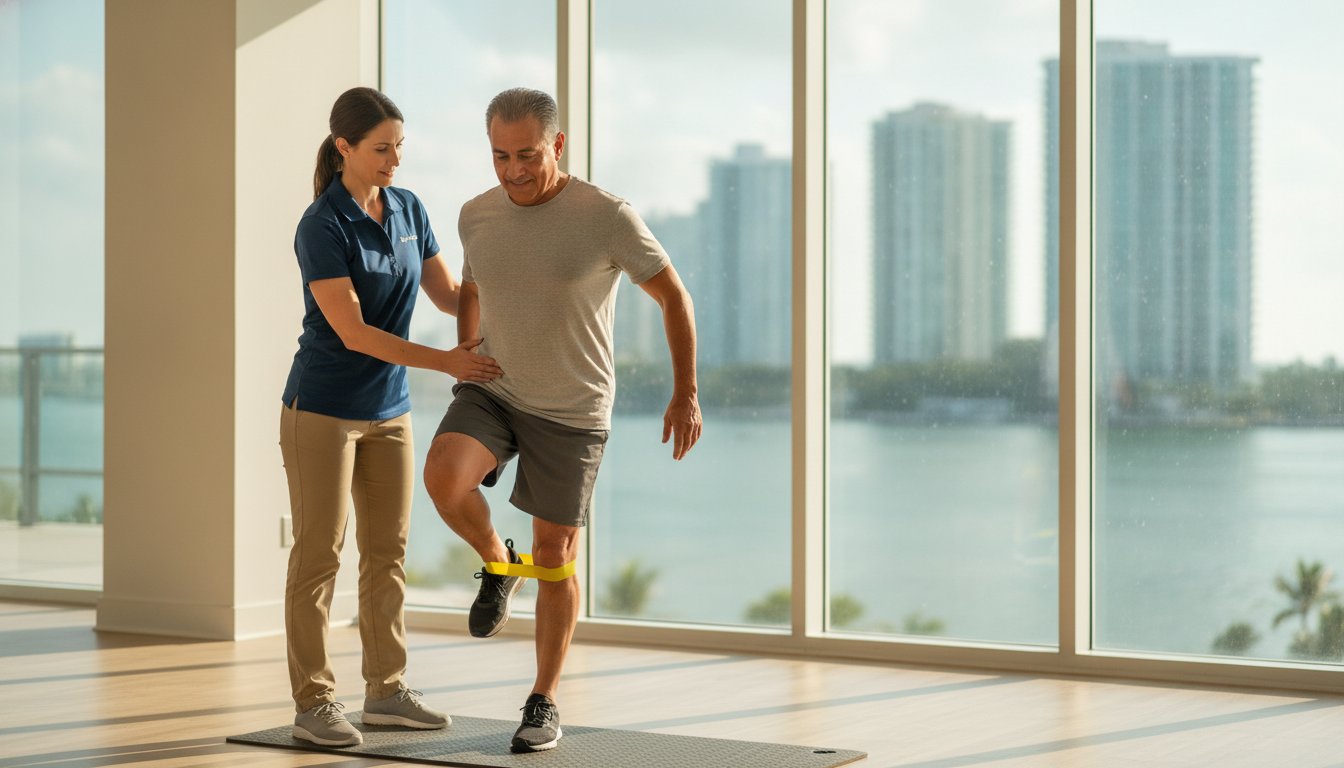
What if the most critical phase of your healing isn’t the surgery itself, but the deliberate, clinical steps you take to reclaim your vitality afterward? It’s natural to feel a sense of hesitation as you navigate the fog of post-surgical fatigue or the frustration of muscle atrophy after weeks of bed rest. You want to move, yet the fear of a “wrong” step often keeps you stationary, stuck between a desire for your old life and a concern for your safety. Learning how to regain strength after surgery requires more than just effort; it requires a partnership with experts who understand your unique physiological timeline.
We believe that recovery is a collaborative journey, not a solitary struggle. This guide provides a professional, phase-based roadmap to rebuilding your body, ensuring every movement serves your long-term mobility and eliminates pain through clinical conditioning. You’ll discover a structured timeline that transitions you from basic stability to high-level sports and hobbies, all under a framework of expert guidance and postural education. By replacing inconsistent advice with a clear, clinical path, you can confidently return to the activities you love with renewed energy and lasting physical health.
Key Takeaways
- Grasp the clinical reasons behind post-surgical fatigue and muscle atrophy to better prepare your body for the restoration process.
- Master a phased approach on how to regain strength after surgery, moving safely from gentle activation to full functional mobility.
- Implement targeted nutritional strategies that fuel tissue repair and reduce the systemic inflammation caused by surgical procedures.
- Avoid the “boom and bust” cycle by learning why consistent, professional physical conditioning is more effective than pushing through pain.
- Understand how personalized physical therapy plans provide the specific postural education and clinical guidance needed for long-term vitality.
Understanding Why Strength Fades After Surgery
Surgery acts as a profound shock to your system. While the surgeon focuses on the structural repair, your body enters a high-alert state that often leads to rapid muscle loss. This decline isn’t just about being “out of shape.” It’s a complex physiological reaction to anesthesia, trauma, and the subsequent postoperative period. Understanding this biological shift is essential when you’re looking for how to regain strength after surgery effectively.
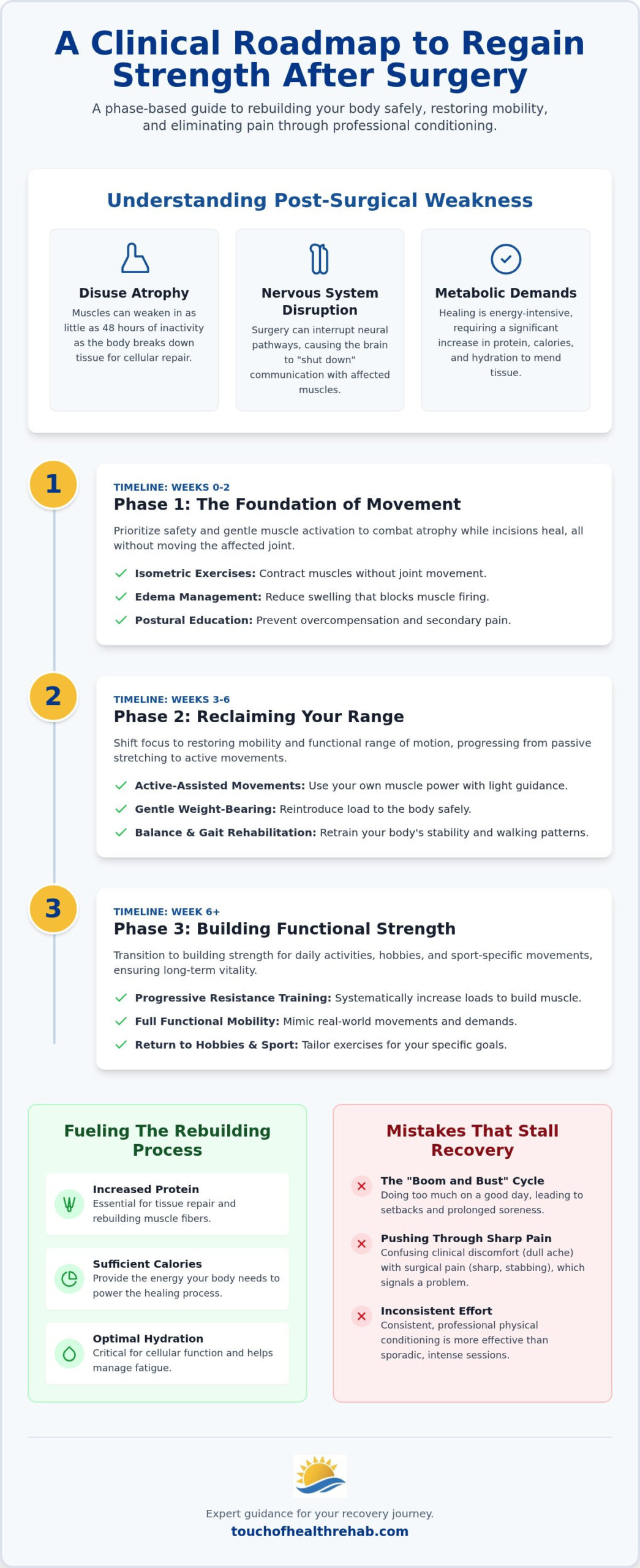
Disuse atrophy is a primary culprit in this process. In a hospital setting, your muscles can begin to waste away in as little as 48 hours of inactivity. This happens because the body, under the stress of healing, begins to break down muscle tissue to find the amino acids it needs for cellular repair. Additionally, post-surgical inflammation creates a “chemical blockade” that prevents muscles from firing correctly. You might feel a general sense of exhaustion, which is systemic fatigue, but localized weakness is a specific failure of the muscle fibers to contract. Distinguishing between the two is vital; systemic fatigue requires rest, but localized weakness requires the specialized post-surgical rehabilitation we provide to prevent permanent loss of function.
The Role of the Nervous System in Recovery
Your muscles don’t move in a vacuum; they follow commands from your brain. Surgery often disrupts these neural pathways, leading to what clinicians call “shut down.” Your brain may struggle to “see” the muscle groups near the surgical site, causing them to remain dormant even when you try to move. This lack of communication is why balance and gait rehabilitation are frequently the first functions to decline. We use targeted clinical stimulation to “wake up” these dormant connections, ensuring your nervous system and muscles work in harmony once again.
Metabolic Demands of Healing
Healing is an energy-intensive process that significantly raises your metabolic rate. Your body requires a substantial increase in protein and calories to mend tissues and fight off potential infections. For our geriatric physical therapy patients in South Florida, maintaining a “nutritional reserve” is a safeguard against the rapid depletion that leads to frailty. You must also stay vigilant about hydration. The intense Florida heat can cause dehydration, which mimics post-surgical weakness and makes the journey of how to regain strength after surgery feel much harder than it needs to be.
The 3 Phases of Regaining Strength Safely
Recovery isn’t a linear race; it’s a series of clinical milestones designed to protect your surgical results while restoring your vitality. Understanding how to regain strength after surgery involves respecting your body’s biological clock and moving through specific phases of healing. A vital rule for every stage is distinguishing between clinical discomfort and surgical pain. Discomfort is often a dull, manageable ache that signals muscle engagement. Sharp, stabbing, or breath-stopping pain is a clear signal to stop and consult your specialist immediately. By following a structured path, you ensure that every movement builds toward long-term health without risking your recovery.
Phase 1: The Foundation of Movement
The first two weeks following your procedure prioritize safety and gentle activation. During this phase, we use isometric exercises, which allow you to contract specific muscle groups without moving the joint itself. This is a powerful way to combat atrophy while your incisions are still healing. We also focus heavily on managing edema, as excessive swelling can physically block your muscles from firing correctly. Integrating postural education during these early days ensures you aren’t overcompensating with other parts of your body, which prevents secondary aches in your back or neck as you begin to move again.
Phase 2: Reclaiming Your Range
Between weeks three and six, your rehabilitation shifts toward restoring mobility and functional range of motion. You’ll progress from passive stretching to active-assisted movements, where you use your own muscle power with light guidance from a therapist. This is the period where we introduce gentle weight-bearing exercises tailored specifically to your surgery and physical goals. It’s also the ideal time to start balance and gait rehabilitation. These sessions help you regain confidence on your feet, correcting any limps or instabilities to ensure you can walk safely and without assistance.
Phase 3: Building Real-World Power
Once you pass the six-week mark, the focus turns to restoration of peak physical health and power. This phase utilizes progressive overload, which means gradually increasing the resistance or duration of your movements to build lasting muscle mass. This is often the most rewarding part of learning how to regain strength after surgery, as you begin to feel your energy returning. Whether you want to return to golf, swimming, or simply daily walks in the Florida sun, we tailor your conditioning to your lifestyle. Transitioning into a long-term physical conditioning program helps maintain these gains and prevents future injuries. If you’re ready to take the next step in your healing, our team is here to provide the expert post-surgical support you deserve.
Nutrition and Lifestyle: Fueling the Rebuilding Process
Reclaiming your vitality involves more than just physical effort; it requires a strategic approach to what you put on your plate. While the exercises you perform in the clinic provide the stimulus for growth, your nutrition provides the actual building blocks. Learning how to regain strength after surgery requires a holistic view of your metabolic health, especially when your body is under the stress of tissue repair. Integrating anti-inflammatory foods like leafy greens, berries, and omega-3 rich fish can significantly reduce the surgical swelling and stiffness that often limit your range of motion. In our humid Miami Beach climate, hydration becomes a clinical necessity rather than a suggestion. Dehydration can cause muscle cramps and mimic post-surgical fatigue, making your recovery feel unnecessarily difficult. Prioritizing electrolyte balance ensures your muscles have the fluid environment they need to contract and strengthen effectively.
The Protein-Muscle Synthesis Connection
During the rebuilding phase, your protein requirements can nearly double. This isn’t just for athletes; it’s a physiological requirement for anyone recovering from the trauma of a surgical procedure. Your body uses amino acids to repair incisions and synthesize new muscle fibers to combat the atrophy discussed in earlier sections. Focus on leucine-rich foods such as eggs, lean poultry, or soy, as leucine is the specific amino acid that “turns on” muscle growth. Timing is just as vital as the amount. Consuming a protein-rich snack or meal within 60 minutes of your physical therapy session maximizes the benefit of the exercise, ensuring your body has the resources it needs exactly when it’s ready to use them. This proactive approach is a cornerstone of our Wellness and Preventative Care philosophy.
Sleep and Circadian Rhythm
The heavy lifting of recovery actually happens while you’re asleep. Deep sleep cycles are the primary time your body releases growth hormone, which is essential for repairing the micro-tears created during rehabilitation exercises. If post-surgical pain is keeping you awake, it can stall your progress and leave you feeling depleted. Implementing effective Pain Management Solutions before bed can help you reach those restorative stages of rest. To maintain steady energy levels throughout the day, focus on natural restoration rather than over-caffeinating. Caffeine can interfere with your sleep architecture and lead to a “crash” that makes your afternoon therapy sessions feel daunting. By aligning your lifestyle with your body’s natural healing rhythm, you create an environment where strength can return naturally and sustainably.
Common Mistakes That Stall Post-Surgical Strength
Progress isn’t just about how hard you work; it’s about avoiding the pitfalls that can quietly derail your healing. Even with the best intentions, many people struggle with how to regain strength after surgery because they fall into predictable traps. One of the most frequent hurdles is the “Boom and Bust” cycle. On days when you feel surprisingly energetic, you might push yourself to do twice as much as your protocol suggests. This often leads to a “bust” the following day, where increased inflammation and fatigue force you to stop moving entirely. Consistency, rather than intensity, is what truly restores muscle mass and energy levels over time.
Another common error is neglecting your core. It’s easy to focus only on the limb or joint that was operated on, but distal strength, such as the power in your legs or arms, actually starts with proximal stability in your trunk. Without a stable foundation, your movements become inefficient and taxing. Additionally, relying solely on passive treatments like massage or ice can stall your progress. While these provide temporary relief, they don’t rebuild muscle fibers. For older adults, skipping specialized Geriatric Physical Therapy protocols can be particularly risky, as these tailored plans are essential for maintaining bone density and preventing secondary complications during the recovery window.
The Danger of Compensatory Movements
Your body is incredibly clever at finding ways to “cheat” to avoid using a weak or tender surgical site. You might unconsciously shift your weight to your “good” side or change your stride to avoid full engagement. These uncorrected gait or postural shifts create long-term risks, such as hip or back pain, that persist long after the original incision has healed. Professional supervision is vital to spot these subtle errors. Our therapists analyze your movement patterns to ensure every step you take builds genuine power rather than straining your other joints. Correcting these habits early ensures your return to sports or hobbies is safe and sustainable.
Ignoring the “Mind-Muscle” Connection
The psychological barriers to recovery are often as significant as the physical ones. Fear-avoidance behavior, where you stop moving because you worry about reinjury or pain, can lead to permanent strength deficits and a loss of confidence. This mental hesitation prevents you from fully “waking up” the muscles around the surgical site. Biofeedback provides real-time data to help you consciously re-engage muscles that have gone dormant after surgical trauma. By overcoming these mental blocks, you can move with the fluid, natural grace you had before your procedure. If you’re ready to avoid these common mistakes and follow a proven path, our team is ready to guide your post-surgical physical rehabilitation today.
Personalized Rehabilitation in Sunny Isles Beach
Leaving the hospital with a generic, photocopied exercise sheet can feel isolating and overwhelming. Those “one-size-fits-all” instructions often fail to account for your unique pain thresholds, your specific surgical outcome, or your personal lifestyle goals. In our Sunny Isles Beach clinic, we provide a human-centered sanctuary that moves beyond basic checklists. We believe that learning how to regain strength after surgery should be a collaborative journey where you feel heard and supported at every step. Our one-on-one care ensures that your therapist is focused entirely on your form, your progress, and your comfort, providing the immediate feedback necessary to prevent the compensatory movements that often stall recovery.
By integrating specialized Post-Surgical Rehabilitation into your daily life, we help you transition from the clinical setting back to the activities you love. We’ve seen residents from the Sunny Isles and Aventura community return to their morning beach walks and weekend tennis matches through this dedicated approach. This isn’t just about restoring muscle; it’s about reclaiming your independence and confidence. When your therapy is tailored to your actual environment and goals, the process of rebuilding becomes a steady, reassuring progression toward long-term vitality.
Our Clinical Approach to Strength
When you Meet Our Team, you’ll find dedicated experts who prioritize your individual path to health. We combine orthopedic expertise with deep postural education to ensure your body remains balanced as it heals. This holistic view is essential because true strength requires a stable foundation. If you’ve recently undergone a joint procedure, you can explore our Physical Therapy After Joint Replacement Pillar to see how we specifically address the mobility challenges of those complex recoveries. Our goal is to position you as a partner in your own care, empowering you with the knowledge to maintain your health long after your sessions are complete.
Getting Started with Your Recovery
Your first visit is a comprehensive evaluation where we listen to your story and assess your current function. Please bring your surgical reports and a list of the specific milestones you wish to achieve, such as walking without assistance or returning to a favorite hobby. We’ll spend the first 90 days setting realistic targets that move you safely from stability to power. This methodical rhythm creates a sense of calm, ensuring you never feel rushed or uncertain about how to regain strength after surgery. If you’re ready to begin your restoration under expert clinical guidance, schedule your personalized recovery assessment today.
Reclaim Your Vitality and Peak Physical Health
Your recovery is a specialized process. It requires patience, clinical precision, and a commitment to your long-term wellness. By following a phased clinical approach and fueling your body with the right nutrition, you replace the fear of movement with the confidence of progression. You now understand that avoiding common pitfalls is an essential step in learning how to regain strength after surgery safely.
At Touch of Health Rehab, we provide a human-centered sanctuary for healing. Our personalized therapy plans, designed by Lead Physical Therapist Berlin, ensure that every session moves you closer to restoration. We specialize in Orthopedic Physiotherapy and complex recoveries. Conveniently located for residents in Sunny Isles Beach, Aventura, and Miami Beach, our team is ready to partner with you on this collaborative journey. Start your safe path to strength at Touch of Health Rehab and rediscover the joy of effortless movement today.
Frequently Asked Questions
How soon after surgery can I start regaining strength?
You can often begin gentle activation exercises within 24 to 48 hours of your procedure, depending on your surgeon’s specific protocol. While high-intensity training is weeks away, early isometric movements prevent the rapid atrophy that begins almost immediately. Starting early ensures your nervous system stays connected to your muscles. This foundational work is the first step in how to regain strength after surgery without compromising the integrity of your surgical site.
Is it normal to feel weaker a week after surgery than I did the first day?
Feeling a dip in strength or energy approximately one week after surgery is a common clinical occurrence. During the first 24 hours, residual anesthesia may mask fatigue, but as it leaves your system and the inflammatory response peaks, you might feel more depleted. This is a sign that your body is diverting all its metabolic resources toward cellular repair. Don’t be discouraged by this temporary plateau; it’s a natural part of the healing rhythm.
What are the best exercises to regain leg strength after knee surgery?
The most effective early exercises for knee recovery are quad sets and straight leg raises, which activate the muscles without straining the joint. These movements focus on waking up the quadriceps, which often go dormant after trauma. As you progress into the later phases of your recovery, your therapist will introduce more dynamic weight-bearing tasks. These targeted actions provide the necessary stimulus to restore your leg’s functional power and stability for daily activities.
Can I regain muscle mass after surgery if I am over 70?
You can absolutely rebuild muscle mass and vitality well into your 70s and 80s through a dedicated, clinical approach. While the rate of muscle synthesis may be different than in younger years, the biological capacity for restoration remains. By utilizing specialized geriatric physical therapy, you can safely apply progressive resistance that stimulates growth. Combining this physical stimulus with a high-protein diet helps you reclaim the independence needed for a vibrant, active lifestyle.
How do I know if I am pushing myself too hard during rehab?
Signs of overexertion include sharp, localized pain, increased swelling at the surgical site, or a significant drop in your range of motion the next day. If your discomfort prevents you from sleeping or requires more pain medication than usual, you’ve likely pushed beyond your current physiological capacity. It’s better to maintain a steady, methodical pace. Adjusting your intensity ensures you stay on a path of consistent progression rather than risking a painful setback.
Why is my balance so poor after a non-leg-related surgery?
Poor balance after surgery is often caused by the systemic effects of anesthesia and pain medications on your vestibular system. Even if the surgery wasn’t on your legs, your body’s natural postural alignment often shifts to protect the injured area, which alters your center of gravity. We use vestibular and gait rehabilitation to recalibrate these internal sensors. This helps you move with confidence and prevents falls as you navigate your home and community.
Do I need a referral for post-surgical physical therapy in Florida?
In Florida, you can often start physical therapy through direct access for up to 30 days without a referral, though most post-surgical cases include a specific script from the surgeon. This referral ensures your therapist follows the exact protective boundaries required for your specific procedure. We work closely with your surgical team to ensure your plan is perfectly aligned with their clinical goals. This collaborative approach maximizes your safety and ensures a seamless transition.
What should I eat to speed up muscle recovery after an operation?
To accelerate your recovery, prioritize lean proteins like poultry, fish, or plant-based alternatives that provide the amino acids needed for tissue synthesis. Incorporating anti-inflammatory foods, such as berries and leafy greens, helps manage the internal swelling that causes stiffness. Don’t forget the importance of hydration; drinking enough water is essential for metabolic health. These nutritional choices provide the fuel your body needs to understand how to regain strength after surgery effectively and sustainably.