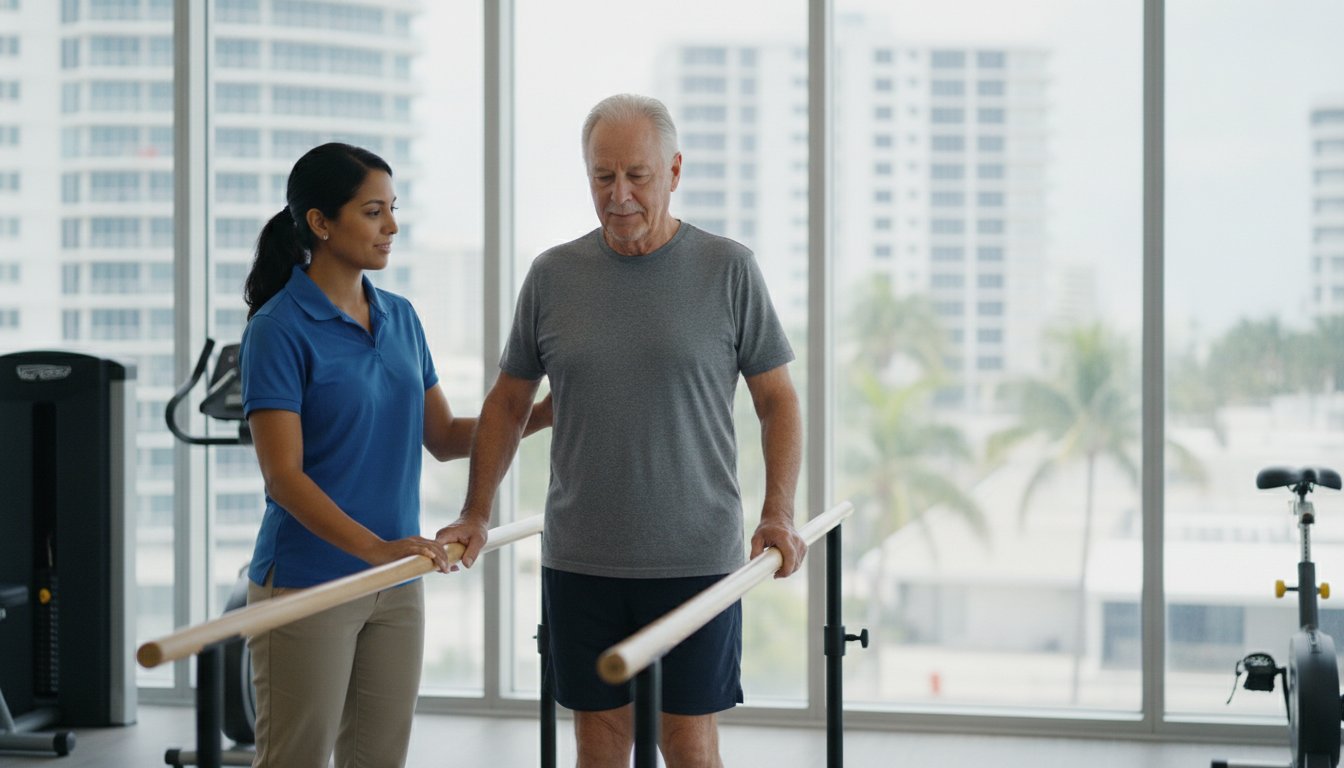
What if the persistent fear of falling isn’t an inevitable part of aging, but a signal that your body’s internal navigation system simply needs a professional recalibration? You might find yourself hesitating before stepping off a curb or feeling a confusing wave of dizziness when you stand up too quickly. It’s natural to feel anxious about losing your independence, especially when seeking physical therapy for seniors to prevent falls has become a vital proactive step for the millions of older Americans who face balance challenges each year. You deserve to move through your day without the constant weight of uncertainty holding you back.
In this 2026 guide, you’ll discover how specialized geriatric physical therapy targets the root causes of instability, from vestibular issues to muscle conditioning. We’ll demystify the clinical reasons behind your dizziness and show you how professional care acts as a collaborative journey toward restoration. We’ll also preview the latest healthcare updates, such as the potential for free fall risk assessments under the SAFE Act, and provide a clear roadmap to help you return to walking with absolute confidence and vitality.
Key Takeaways
- Recognize “near-falls” as critical medical warning signs and understand why early clinical intervention is essential for maintaining long-term independence.
- Explore the “Three Pillars of Balance” and learn how your inner ear, vision, and foot sensitivity coordinate to keep you upright and steady.
- Understand why specialized physical therapy for seniors to prevent falls offers safer, more effective results than general gym workouts through clinical biofeedback.
- Identify specific environmental hazards common in South Florida homes, such as high-gloss tile flooring and humidity-related slips, and how to adapt your living space.
- Get a step-by-step preview of what to expect during a professional balance and gait assessment designed to restore your walking confidence.
Understanding the Clinical Science of Fall Risks in Older Adults
Falling isn’t a random event or an unavoidable consequence of getting older. It’s often the result of specific, treatable physiological changes that affect how you interact with the world around you. We view fall prevention therapy as a proactive clinical intervention rather than a reactive safety measure. By choosing physical therapy for seniors to prevent falls, you’re engaging in a specialized program that identifies hidden vulnerabilities before they lead to an injury. Our team works as your dedicated guide to ensure every step you take is backed by clinical stability and personal confidence.
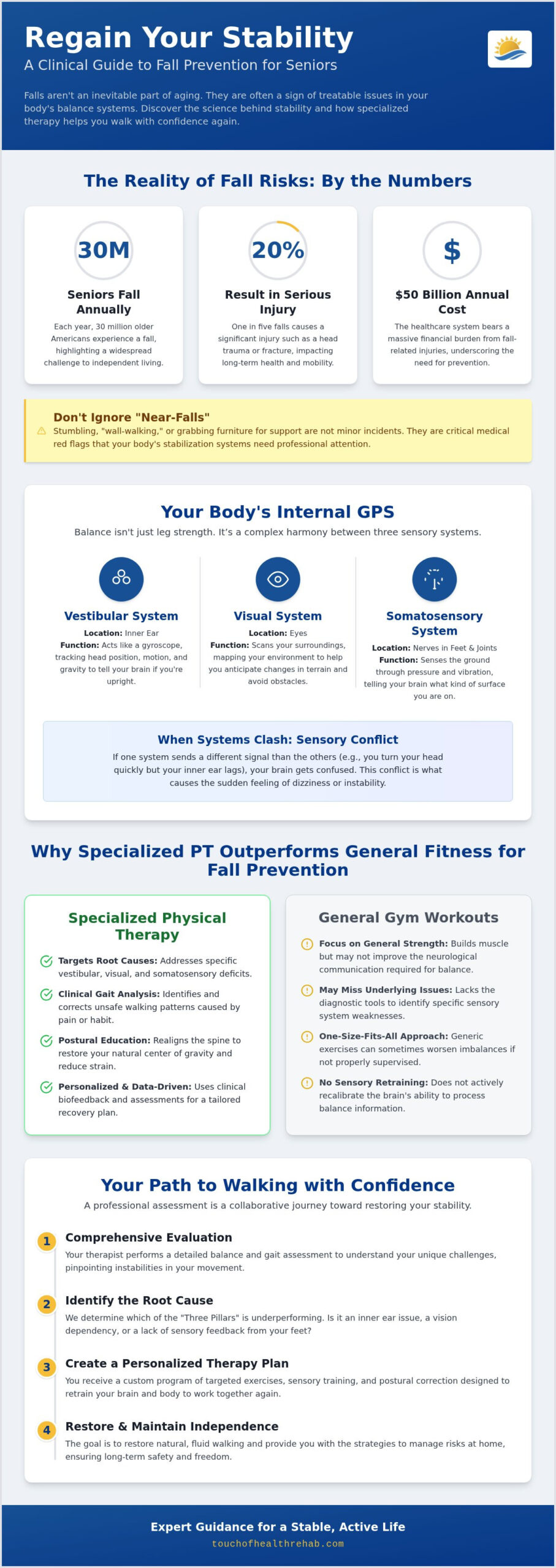
Many seniors overlook the “near-fall” as a simple trip or a moment of clumsiness. However, stumbling is a significant medical red flag. Research for 2026 indicates that 30 million elderly Americans fall each year, with 20% of those incidents resulting in serious injuries like head trauma or fractures. These events often follow a pattern of smaller, unaddressed balance lapses. If you find yourself reaching for furniture or “wall walking” to navigate your home, your body is signaling that its internal stabilization systems are struggling. Addressing these signs early through clinical assessment prevents the $50 billion annual healthcare burden associated with fall-related injuries and, more importantly, protects your quality of life.
Chronic pain also plays a silent role in your risk profile. When you deal with persistent discomfort in your hips or knees, your brain naturally alters your walking pattern to avoid pain. These compensatory gait changes, such as shuffling or a shortened stride, actually make you less stable. Our therapists perform comprehensive gait analysis to pinpoint these shifts, giving you a clear roadmap to safer movement and helping you return to a natural, fluid walking style.
The Role of Postural Education in Stability
Your posture is the foundation of your balance. When your head drifts forward, your center of gravity moves with it, forcing your muscles to work harder just to keep you upright. We utilize postural education to realign your spine and shoulders. This professional correction reduces musculoskeletal strain and ensures your weight is distributed evenly over your feet. By restoring your natural alignment, we empower you to move with greater ease and less fatigue during your daily activities.
Medical Risk Factors Beyond Muscle Weakness
Balance is a complex dialogue between your brain, your eyes, and your environment. Your Vestibular System acts as the primary sensor for motion and head position, providing the data your brain needs to keep you steady. When this system is compromised, or when vision changes blur your spatial awareness, your risk of a fall increases. We also look closely at proprioception, which is how your joints “talk” to your brain about their position. If you’re managing multiple medications that cause dizziness or orthostatic hypotension, our clinical approach helps you manage these symptoms through targeted physical conditioning and sensory training.
The Three Pillars of Balance: Vestibular, Visual, and Somatosensory Systems
Many people assume balance is solely a matter of leg strength. In reality, your brain relies on a complex triad of systems to keep you upright and moving. The vestibular system in your inner ear tracks head position; your visual system maps your surroundings; and your somatosensory system uses nerves in your feet and joints to sense the ground. When these work in harmony, you move with ease. However, when one system lags, it creates “Sensory Conflict.” This is often why you feel dizzy when turning your head quickly. Your eyes see the turn, but your inner ear or joints might not report the change at the same speed, leading to a momentary loss of stability.
It’s common to feel the urge to sit down and rest after a dizzy spell. While this feels safe in the moment, prolonged inactivity can actually make your balance worse over time. Your brain needs consistent, controlled movement to recalibrate these three systems. Effective physical therapy for seniors to prevent falls focuses on retraining this vital neurological communication. By avoiding movement, you miss the opportunity for your body to practice Preventing Falls through active adaptation. Our clinical approach ensures this recalibration happens in a supportive, controlled environment.
Vestibular Rehabilitation: Solving Vertigo at the Source
Inner ear disorders like Benign Paroxysmal Positional Vertigo (BPPV) are frequent causes of instability that general exercise won’t fix. We use targeted vestibular rehabilitation to address these issues at the source. Through gaze stabilization exercises, we help you improve your focus while moving. This ensures your vision remains clear even when your head is in motion, significantly reducing the “swimming” sensation that often leads to a stumble.
Gait Training: Relearning How to Move Safely
Safe walking requires more than just moving forward; it involves proper stride length and adequate foot clearance. Many seniors develop shuffling patterns as a subconscious way to stay “closer” to the ground, but this actually increases the risk of tripping on rugs or thresholds. Our balance and gait rehabilitation programs analyze your specific stride. We help you correct these patterns, ensuring you lift your feet confidently and maintain a steady rhythm. If you’re ready to explore these systems further, our team at Touch of Health Rehab is here to partner with you on your journey to recovery.
Why Specialized Physical Therapy Outperforms General Senior Fitness
While local community centers often provide general fitness classes, these workouts lack the clinical diagnostic depth required for high-risk individuals. General exercise aims for overall health, but physical therapy for seniors to prevent falls is a targeted medical intervention. A gym instructor might encourage you to “keep moving,” but a physical therapist analyzes why your movement changed in the first place. This distinction is vital because unsupervised exercise can accidentally increase fall risk if your form isn’t perfectly aligned with your specific physiological needs.
During a clinical session, you receive real-time biofeedback and immediate postural correction. We don’t just watch you walk; we monitor how your weight shifts and how your joints respond to different surfaces. This level of precision is especially important when dealing with age-specific bone density issues. Through specialized geriatric physical therapy, we design loading exercises that strengthen bone health without placing undue stress on fragile joints. This clinical oversight ensures that your path to restoration is as safe as it is effective.
Personalized Therapy Plans vs. One-Size-Fits-All
Your journey begins with diagnostic testing to identify your unique balance deficits. We don’t believe in generic routines. Instead, we adjust the intensity of your physical conditioning based on your cardiovascular health and endurance levels. If you’re managing chronic discomfort, we integrate pain management techniques directly into your sessions. This holistic approach ensures that pain doesn’t become a barrier to your progress. By following the Physical Therapy Guide to Falls, we utilize evidence-based protocols that prioritize your long-term vitality over temporary gains.
Addressing Fear of Falling (FOF)
The psychological aspect of balance is just as critical as the physical one. Many seniors suffer from “Fear of Falling” (FOF), which creates a subconsciously stiff gait. When you’re afraid, your muscles tense up, your stride shortens, and your risk of a trip actually increases. We use gentle desensitization techniques in our controlled Sunny Isles Beach clinic to help you break this cycle. As you master difficult movements under expert supervision, your anxiety fades. This restored confidence allows you to enjoy public outings, beach walks, and social gatherings without the constant worry of an accidental slip.
Practical Fall Prevention Strategies for South Florida Seniors
Living in Miami Beach or Sunny Isles Beach brings unique joys, but coastal life also presents specific environmental risks that generic safety guides often overlook. Many luxury residences in our area feature high-gloss marble or porcelain tile flooring. When South Florida’s intense humidity meets these cool surfaces, a thin layer of condensation can form, creating an invisible slip hazard. Integrating physical therapy for seniors to prevent falls into your lifestyle ensures you can enjoy our beautiful local environment while staying protected from these hidden dangers.
Your choice of footwear is a critical first line of defense. While flip-flops are the standard for a day near the water, they offer no lateral support and poor traction on wet tile. We recommend supportive shoes with non-slip soles even for indoor use. Additionally, hydration is vital for maintaining blood pressure stability in the Florida heat. Dehydration can lead to sudden dizzy spells when navigating the uneven sand of our beaches or the high curbs along Collins Avenue. Our clinical approach helps you stay mindful of these factors so you can move through your community with absolute confidence.
Home Modification Checklist for 2026
Safety in your home doesn’t mean you have to sacrifice aesthetic appeal. You can apply transparent, non-slip coatings to marble and porcelain that provide essential traction without dulling the stone’s natural shine. We also suggest installing motion-activated LED lighting along the path to your bathroom to prevent trips during night-time hours. Modern grab bars are now available in sophisticated finishes that match high-end fixtures, offering a clinical safety benefit that blends seamlessly with your home’s design.
Daily Habits for Stability
Small, consistent actions are the key to long-term safety. We teach our clients the “Pause and Stand” technique to prevent the dizziness associated with sudden movement. Before rising from your bed or a favorite chair, sit upright for thirty seconds to allow your circulation to stabilize. You can also perform simple ankle pumps while seated to keep your blood flowing and your joints responsive. Learning how physical therapy helps with balance empowers you with these practical tools for daily life. If you’re ready to secure your independence, our experts at Touch of Health Rehab are here to help you build a safer, more active future.
Restoring Confidence: Personalized Fall Prevention at Touch of Health Rehab
At Touch of Health Rehab, we believe that every senior deserves to move through their community with absolute certainty and grace. Our clinic in Sunny Isles Beach serves as a welcoming sanctuary for healing, where we combine high-end clinical expertise with a warm, human-centered approach. When you choose our physical therapy for seniors to prevent falls, you aren’t just signing up for a series of exercises; you’re entering into a dedicated partnership with our Lead Physical Therapist, Berlin. This collaborative journey is designed to respect your unique path to health while providing the professional authority needed to restore your independence.
Your experience begins with a comprehensive balance and gait assessment that looks far beyond basic muscle strength. We analyze how your neurological and musculoskeletal systems interact in real-time, identifying the specific gaps in your stability. We’ve seen remarkable transformations from residents in Aventura and North Miami Beach who arrived feeling anxious about simple public outings but left with a clear, actionable roadmap to physical conditioning. These success stories are a testament to our deep commitment to individualized care and our firm belief that recovery is always possible when you have the right guide by your side.
Comprehensive Care Beyond Just Balance
Our expertise extends into specialized areas that often overlap with fall risks, ensuring you receive a truly holistic treatment plan. For those managing the long-term effects of neurological events, our stroke recovery programs focus on gait stabilization and motor control to prevent future trips. We also provide vital post-surgical support for individuals recovering from hip or knee replacements, ensuring that your new joints are supported by correct alignment and strong postural habits. This integration of orthopedic care and preventative wellness ensures your long-term vitality remains our primary focus throughout your time with us.
Taking the First Step Toward Safety
Proactive intervention is the most effective way to prevent a life-altering injury before it occurs. You don’t need to wait for a significant “near-fall” or a painful stumble to begin your journey toward clinical stability. Booking a consultation at our facility near Miami Beach is a powerful choice that prioritizes your future well-being and keeps you active in the Florida lifestyle you love. We invite you to join us in a space where clinical precision meets compassionate care. If you’re ready to walk without fear and reclaim your active lifestyle, schedule your fall prevention assessment today and discover the difference that expert, one-on-one therapy can make for your confidence.
Reclaim Your Independence and Walk with Confidence
Restoring your stability is a collaborative journey that begins with understanding your body’s unique needs. You’ve learned that balance isn’t just about strength; it’s a complex coordination between your vestibular, visual, and somatosensory systems. By choosing specialized physical therapy for seniors to prevent falls, you’re opting for a clinical approach that uses real-time biofeedback and expert postural correction to ensure your safety. Whether you’re navigating the humid tile floors of a Sunny Isles Beach home or the uneven sands of the coast, professional guidance provides the tools you need to move without hesitation.
Led by Lead Physical Therapist Berlin, our team utilizes specialized vestibular and gait equipment to provide precise, effective care. We’re proud to serve the residents of Sunny Isles Beach and Aventura, offering a sanctuary for healing where your long-term vitality is our highest priority. Don’t let the fear of a stumble dictate your lifestyle. Secure Your Stability: Schedule a Fall Prevention Consultation at Touch of Health Rehab. You have the power to return to the activities you love with a renewed sense of empowerment and peace of mind.
Frequently Asked Questions
How many sessions of physical therapy are needed to improve balance?
Most patients require between eight and twelve sessions to see a significant improvement in their stability. Your specific plan depends on the initial clinical assessment conducted at our Sunny Isles Beach facility. While some notice a difference in just a few visits, a consistent four to six-week program allows your brain and muscles to fully integrate new movement patterns. We focus on steady, sustainable progress to ensure you feel secure during your daily activities.
Can physical therapy help with dizziness when I turn my head?
Yes, specialized vestibular rehabilitation is highly effective for treating dizziness triggered by head movements. This sensation often stems from inner ear issues like BPPV, where small crystals displace within the vestibular system. Our lead therapist, Berlin, uses targeted repositioning maneuvers and gaze stabilization exercises to resolve these symptoms. By addressing the root cause of your vertigo, we help you return to moving your head freely without the fear of sudden instability.
Is fall prevention therapy covered by insurance for seniors?
Most seniors find that physical therapy for seniors to prevent falls is covered by Medicare Part B and private insurance plans when it’s deemed medically necessary. For 2026, the Medicare threshold for combined therapy services is $2,480 before a KX modifier is required. Our team helps you navigate these clinical requirements to ensure you receive the care you need. We prioritize your long-term health while keeping the administrative process as clear and reassuring as possible.
What should I wear to my first balance rehabilitation appointment?
You should wear loose, comfortable clothing that allows for a full range of motion, such as athletic pants and a breathable shirt. It’s especially important to wear supportive, closed-toe sneakers with good traction. Please avoid wearing flip-flops or high-gloss dress shoes, as these can interfere with our gait analysis. Choosing the right attire ensures that your first balance rehabilitation appointment in Sunny Isles Beach is both productive and safe from the very first step.
Can I do balance exercises at home if I have vertigo?
We strongly advise against starting new balance exercises at home until you’ve received professional instruction and a safety clearance. Performing these movements without supervision while experiencing vertigo can lead to an accidental fall. Once you’ve mastered the techniques in our controlled clinical environment, we’ll provide a personalized home program. This collaborative approach ensures you’re practicing safely and effectively, gradually building your confidence for independent movement in your North Miami Beach home.
How do I know if my balance issues are neurological or muscular?
Determining whether your instability is neurological or muscular requires a professional clinical evaluation. Muscular issues often involve weakness or joint stiffness, while neurological causes typically stem from the inner ear, brain, or nerve communication. During your assessment at Touch of Health Rehab, we use specialized diagnostic tools to pinpoint the exact source of your deficit. This clarity allows us to create a precise roadmap for your recovery, targeting the specific system that needs recalibration.
Does physical therapy help with arthritis-related fall risks?
Physical therapy is a vital tool for managing fall risks associated with arthritis-related pain. When your joints hurt, you naturally change how you walk to avoid discomfort, which often leads to a less stable gait. We address these compensatory patterns by improving joint mobility and strengthening the supporting muscles. By reducing your pain and restoring natural movement, we help you navigate your Aventura community with much greater ease and significantly lower risk.
What is the difference between balance training and gait training?
Balance training focuses on your ability to maintain your center of mass over your base of support, whether you’re standing still or moving. Gait training specifically addresses the mechanics of your walking, including stride length, foot clearance, and rhythm. While they’re closely related, both are essential components of physical therapy for seniors to prevent falls. We integrate these two disciplines to ensure you can stand steady and walk with a fluid, confident motion.