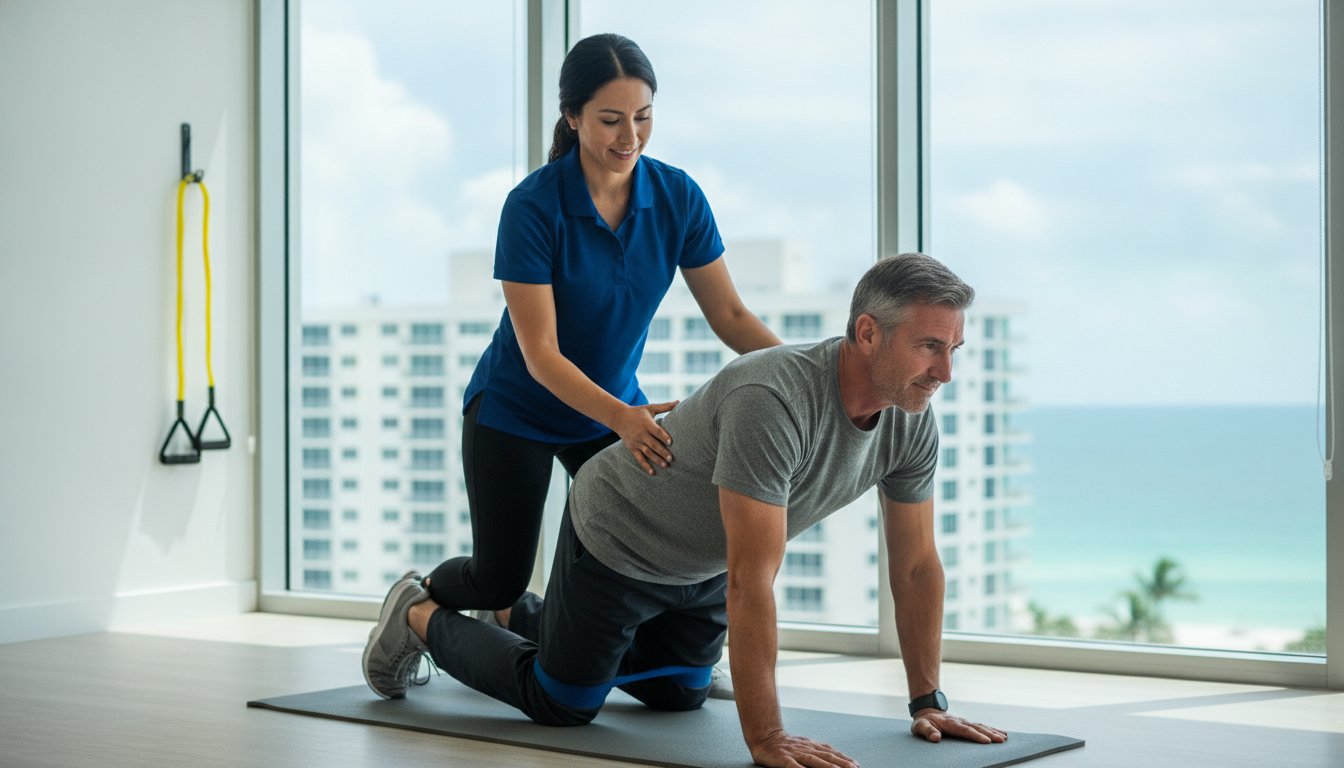
What if the most critical part of your spinal recovery doesn’t actually happen in the operating room? While a surgeon can expertly repair the physical structures of your spine, the true restoration of your lifestyle begins with specialized rehabilitation after back surgery. It’s common to feel a sense of protective fear as you navigate the early days of healing. You might worry about damaging the surgical site or feel overwhelmed by the post-operative stiffness that limits your world. We recognize these concerns and believe that your path to wellness should be as unique as you are.
You deserve to return to the activities that define your happiness, whether that’s walking along the shoreline or safely lifting your grandchildren. This guide offers a clinical roadmap for your 2026 recovery, providing the clarity you need to move from pain to power. We’ll preview the essential milestones of physical therapy and explain how a structured, expert-led approach eliminates reliance on medication. By following this collaborative journey, you’ll gain the strength and mobility required to reclaim your long-term vitality and live without limits.
Key Takeaways
- Identify the “golden window” for clinical movement to prevent excessive scar tissue and accelerate your natural healing process.
- Master the principles of spinal stability and core engagement to protect your surgical site while restoring daily function.
- Overcome the psychological barrier of kinesiophobia by learning why a guided approach to rehabilitation after back surgery is safer than total rest.
- Navigate a clear 12-week recovery timeline that moves you safely from initial protection to regained flexibility and total body strength.
- Discover how personalized, one-on-one care ensures your therapy plan aligns with your unique goals for long-term vitality.
The Critical Role of Early Rehabilitation After Back Surgery
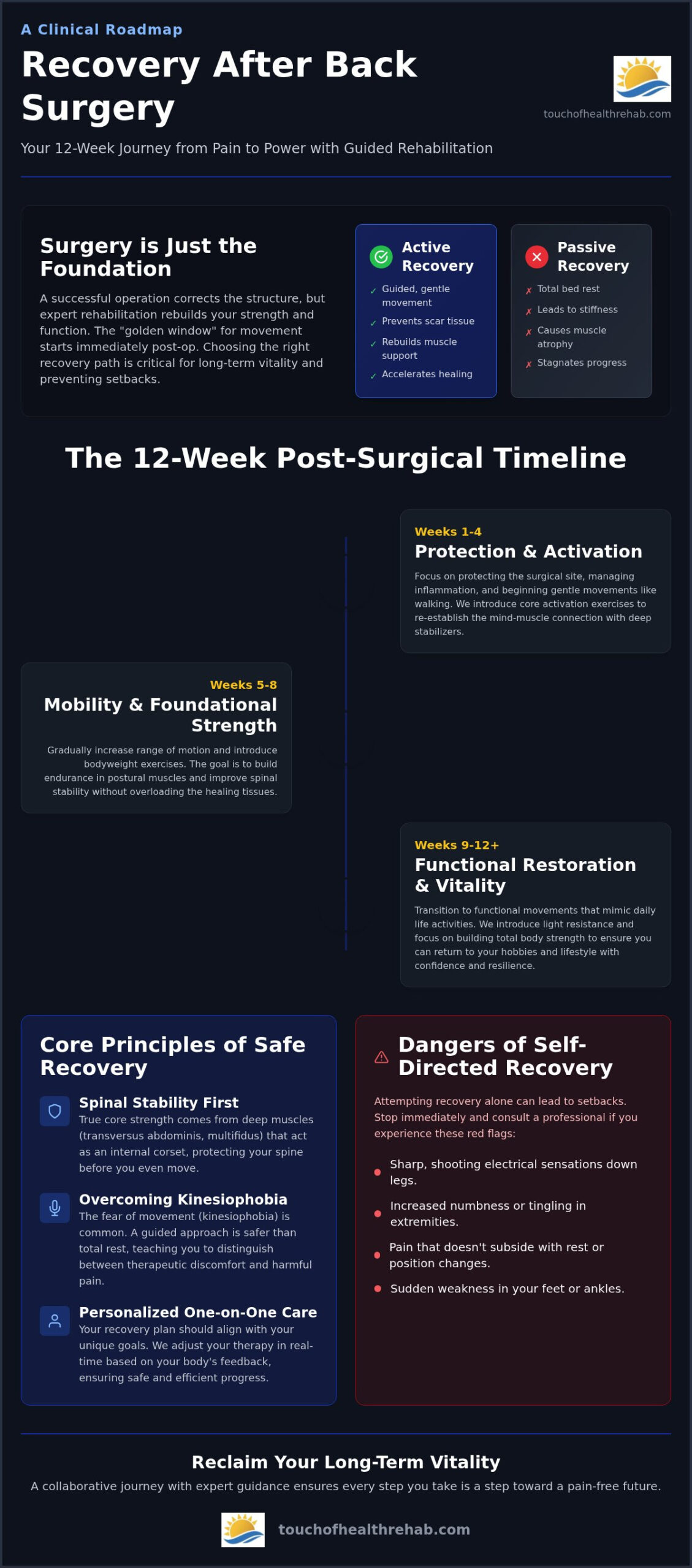
You’ve completed your surgery, which is a massive milestone on your journey toward health. But the surgical procedure is just the foundation. To truly reclaim your life, you must engage in structured rehabilitation after back surgery. There’s a specific “golden window” for movement that begins almost immediately after your procedure. During this time, gentle, clinical movement helps guide the healing process. Without it, your body may produce excessive scar tissue that can bind to nerve roots, leading to long-term stiffness or even recurring pain.
Many people believe that total bed rest is the safest path. This is “passive recovery,” and it often leads to stagnation and increased muscle tension. We advocate for “active rest” instead. This means engaging in controlled, low-impact movements that promote blood flow and tissue elasticity without stressing the surgical site. A professional physical therapist ensures these movements stay within safe boundaries, protecting your progress while pushing you toward restoration.
Why Surgery is Only Half the Battle
It’s helpful to remember that while a surgeon corrects the anatomy, they don’t automatically retrain your muscles. Whether you’ve undergone a microdiscectomy or a Spinal Fusion Recovery process, your body’s initial response is to guard the area. This guarding often leads to muscle atrophy within the first 14 days post-op. Rehabilitation is the vital bridge between your surgical procedure and your return to long-term vitality. We focus on rebuilding the strength that supports your spine, ensuring your new structural alignment lasts a lifetime.
The Dangers of Self-Directed Recovery
Trying to navigate this process alone often leads to setbacks. Many patients unintentionally perform “safe” exercises with poor form, which places undue stress on the vertebrae above or below the surgical site. At our clinic in Sunny Isles Beach, we provide the clinical monitoring necessary to distinguish between “therapeutic discomfort” and “red flag” pain. If you try to push through the wrong type of pain at home, you risk damaging the very work your surgeon performed.
Guided sessions allow us to adjust your plan in real-time. We watch for specific indicators that your body is ready for more, or if we need to slow down. Look out for these red flags if you’re attempting movement on your own:
- Sharp, shooting electrical sensations down the legs.
- Increased numbness or tingling in the extremities.
- Pain that doesn’t subside with rest or position changes.
- Sudden weakness in your feet or ankles.
Professional rehabilitation after back surgery gives you the confidence to move without the paralyzing fear of re-injury. We act as your dedicated guides, ensuring every step you take is a step toward a pain-free future.
Understanding the Clinical Framework of Spine Recovery
A successful surgery creates the opportunity for movement, but it doesn’t provide the blueprint for how your body should function in its new state. Clinical rehabilitation after back surgery focuses on the complex mechanics of how your spine interacts with your entire musculoskeletal system. When a surgeon performs a decompression, the pressure on the nerve is removed, yet the communication between your brain and your muscles often requires a “reset.” This mind-muscle connection is essential for restoring the natural, automatic reflexes that keep you upright and stable during daily activities.
Restoring this framework involves more than just lifting weights or stretching. It requires a deep understanding of spinal loading and the forces that act upon your vertebrae. By focusing on these clinical foundations, we ensure that your recovery is built on a base of structural integrity rather than just temporary pain relief. This methodical approach allows you to progress through the post-surgical rehabilitation timeline with confidence, knowing each movement is purposefully designed to protect your spine.
The Core-Spine Connection
Many people assume a strong core simply means having visible abdominal muscles. In a clinical setting, we recognize that true functional stability comes from the deep stabilizer muscles, such as the multifidus and transversus abdominis. These muscles act like an internal corset, engaging milliseconds before you move your arms or legs to shield your surgical site from sheer forces. Through specialized Postural Education, we teach you how to align your pelvis and ribcage to minimize vertical pressure on your discs. This training helps you maintain optimal alignment while sitting, standing, and transitioning between movements, which is the primary defense against future disc issues.
Gait Rehabilitation and Balance
Chronic back pain often forces the body to adopt a “guarded” walking pattern. You may have developed a shorter stride, a slight limp, or a tendency to lean forward to avoid discomfort. Even after surgery, these compensation patterns can persist, leading to uneven wear on your joints and increased lower back pressure. Our targeted Balance and Gait Rehabilitation focuses on normalizing your stride length and restoring your natural center of gravity. By correcting these patterns, we reduce the risk of falls and secondary injuries in the hips or knees. This restoration of fluid movement is what allows you to return to the activities you love, like walking on the beach or navigating uneven terrain with ease.
By refining these fundamental movement patterns, we move beyond simple recovery and into the territory of peak physical health. If you are ready to begin this collaborative journey toward lasting mobility, our dedicated team at Touch of Health Rehab is here to provide the expert guidance you deserve.
Overcoming the Fear of Re-Injury: Movement vs. Rest
It’s completely natural to feel a deep sense of hesitation when you first consider moving after a spinal procedure. This psychological barrier, clinically known as kinesiophobia, often stems from a desire to protect the surgical site at all costs. While your instincts tell you to remain still, effective rehabilitation after back surgery relies on the understanding that movement, when controlled and purposeful, is your greatest ally. We work with you to dismantle the “No Pain, No Gain” myth. In spinal recovery, pushing through sharp pain is counterproductive; instead, we focus on gentle, progressive activities that signal to your nervous system that it’s safe to let go of protective tension.
Within the first 30 days, your body is in a state of high alert. Controlled movement helps to dampen this response by flushing out post-operative inflammation. By engaging in small, frequent bouts of activity, you prevent the stiffness that often leads to secondary discomfort in the hips and neck. Our goal is to guide you through these early stages so that you can move with confidence rather than caution.
Movement as Medicine
Think of gentle movement as a natural pump for your body’s healing systems. Simple exercises, such as ankle pumps or short, clinical walks, increase circulation to the spinal tissues, delivering the oxygen and nutrients required for cellular repair. This process also stimulates lymphatic drainage, which is essential for reducing the internal swelling that can press on sensitive nerves. While bed rest was once the standard advice, we now know that structured walking is far superior for maintaining muscle tone and preventing the complications of immobility. These small steps accelerate your recovery and help you feel more like yourself again.
Safe Lifting and Daily Ergonomics
Your daily habits play a massive role in protecting your spine as it heals. We teach you specific techniques, such as the “Log Roll” method, to transition in and out of bed without twisting your lumbar spine. This involves moving your shoulders, hips, and knees as a single unit to eliminate sheer forces on the vertebrae. Beyond basic movement, we help you optimize how you sit and reach for items in your home, ensuring your environment supports your recovery. Integrating these habits with our specialized Pain Management Solutions allows you to stay comfortable and active without relying solely on heavy medication. By mastering these ergonomic foundations, you empower yourself to navigate your home safely and return to your routine with peace of mind.
The 12-Week Post-Surgical Rehabilitation Timeline
Recovery is a methodical progression rather than a race to the finish line. While every patient heals at a different pace, a structured 12-week timeline provides the clinical milestones necessary for a safe return to activity. This roadmap ensures you don’t skip the foundational steps that prevent long-term complications. By following this phased approach, your rehabilitation after back surgery becomes a predictable journey toward peak physical health.
Weeks 1 to 6: Foundations of Stability
The initial six weeks are dedicated to protecting the integrity of the surgical site while encouraging the nervous system to calm down. During Phase 1 (Weeks 1-2), we focus on gentle nerve gliding exercises. These movements ensure that nerves move freely within the spinal canal without being tugged or irritated. We also prioritize walking tolerance, gradually increasing your time on your feet to improve circulation and endurance.
As you enter Phase 2 (Weeks 3-6), we introduce specialized Orthopedic Physical Therapy techniques to improve flexibility in the hips and mid-back. This prevents the lower back from taking on too much load. The goal of the first six weeks is stabilization over strength. We want your deep supporting muscles to fire correctly before we add any significant resistance to your routine.
Weeks 7 to 12: Returning to Your Life
Phase 3 (Weeks 7-12) marks the transition from protection to performance. This is when the hard work of the first six weeks begins to pay off in the form of increased mobility. Under close supervision, you’ll start to reintroduce more complex movements, including light lifting and controlled twisting. We simulate daily tasks to ensure your spine remains neutral and supported during real-world activities.
For our active patients in Sunny Isles, this phase often includes preparing for the physical demands of beach walks or light sports. If you’re an athlete or a weekend warrior, we may integrate Sports Injury Treatment protocols to refine your mechanics and boost your confidence. We want you to feel empowered as you return to the lifestyle you love.
Beyond Week 12, Phase 4 focuses on long-term physical conditioning. This is where we transition from “rehab” to “wellness,” ensuring you have the endurance to prevent future issues. If you’re ready to start your custom recovery plan, our dedicated specialists are here to guide your path to mobility.
Personalized Post-Surgical Care at Touch of Health Rehab
Choosing the right environment for your rehabilitation after back surgery is a decision that impacts your long-term vitality. At Touch of Health Rehab, we believe that one-on-one attention isn’t just a luxury; it’s a clinical necessity for spinal patients. In high-volume settings, small but critical errors in posture can go unnoticed, potentially compromising your surgical results. Our approach ensures that every movement you perform is monitored by a specialist who understands the unique nuances of your case. We provide a human-centered sanctuary where clinical expertise meets genuine compassion, allowing you to focus entirely on your restoration.
Your journey toward mobility shouldn’t feel like a series of generic exercises. Instead, it’s a collaborative partnership between you and our dedicated team. We recognize the courage it takes to start moving again after a major procedure, and we’re here to guide you with patience and thoroughness. This personalized focus helps to build the confidence you need to reclaim your daily life in North Miami Beach and beyond.
Our Sunny Isles Beach Clinical Standards
Led by Lead Physical Therapist Berlin, our clinic maintains a sophisticated standard of care that prioritizes your individual path to health. We serve residents in Aventura, Bal Harbor, and the surrounding Miami area with tailored therapy plans that respect the specific requirements of your surgery. By utilizing state-of-the-art equipment for Post-Surgical Rehabilitation, we help you move safely through each phase of recovery. Our facility is designed to be a welcoming space that encourages progression while ensuring your comfort and safety at every step.
Booking Your Initial Consultation
Starting your recovery journey is a seamless process designed to put you at ease. During your first session, we’ll conduct a comprehensive evaluation and review your surgical reports to ensure our plan aligns perfectly with your surgeon’s goals. We take pride in coordinating directly with your medical team, creating a unified front for your healing. To prepare for your first visit, we recommend bringing:
- Your surgeon’s specific post-operative protocols or discharge instructions.
- Any recent imaging reports or surgical notes.
- Comfortable clothing that allows for easy movement and site inspection.
- A list of your current medications and recovery goals.
We invite you to Meet Our Team online to learn more about the professionals dedicated to your success. Our goal is to see you return to the activities that bring you joy, from lifting your grandchildren to enjoying a sunrise walk on the beach. By choosing a partner who values your unique path, you’re investing in a future of peak physical health and lasting mobility.
Reclaim Your Strength and Vitality Today
Your journey from the operating room back to your favorite activities requires more than just time; it demands a purposeful strategy. By understanding the 12-week recovery roadmap and the importance of clinical movement, you’ve already taken the first step toward a successful outcome. Starting your rehabilitation after back surgery with a professional plan ensures that your body heals with the structural integrity needed for long-term health. You don’t have to navigate the complexities of nerve glides and core stabilization alone.
Led by Lead Physical Therapist Berlin, our team provides the expert-led guidance you need to move with confidence. We combine deep expertise in post-surgical spine rehab with a compassionate approach in our convenient Sunny Isles Beach location. Whether your goal is lifting your grandchildren or walking along the shoreline, we’re here to support your progression. Schedule your post-surgical evaluation at Touch of Health Rehab today and take the next step toward your peak physical health. Your path to a pain-free life is a collaborative journey, and we’re honored to be your dedicated guides.
Frequently Asked Questions
How soon can I start physical therapy after back surgery?
Usually, you can begin a formal program within 1 to 2 weeks after your procedure, though some gentle movement often starts while you’re still in the hospital. The “golden window” for clinical movement begins early to prevent the formation of excessive scar tissue. At our Sunny Isles Beach clinic, we coordinate with your surgeon to determine the exact day your rehabilitation after back surgery should begin to ensure your safety and progress.
Is it normal to have nerve pain after back surgery and physical therapy?
Yes, it’s common for nerves to remain sensitive or “irritable” as they heal from decompression. Post-operative inflammation can cause temporary flares in discomfort during the first few weeks of your recovery. We monitor these sensations closely to distinguish between normal healing and potential red flags. While some discomfort is expected, we focus on gentle movement to flush out inflammatory markers and restore your comfort without relying on heavy medication.
Can physical therapy help if I still have numbness in my legs?
Physical therapy is highly effective for managing residual numbness after nerve decompression. While the surgeon removes the physical pressure, your nervous system often needs a “reset” to restore full communication between the brain and limbs. We use specific nerve gliding techniques and balance exercises to stimulate these pathways. This process helps your body reconnect with the affected muscles, gradually improving sensation and strength as you progress through your recovery.
How many sessions of physical therapy will I need after a discectomy?
Most patients require 2 to 3 sessions per week for a period of 6 to 12 weeks to achieve optimal results. The exact number depends on your pre-operative strength and the complexity of your specific procedure. A typical discectomy recovery involves an initial phase of protection followed by a month of intensive stabilization. We continuously evaluate your progress at our Sunny Isles Beach facility, adjusting the frequency of your visits as you regain independence.
What exercises should I avoid after spinal fusion surgery?
You must strictly avoid the “BLT” movements: bending, lifting, and twisting, especially during the first six weeks of healing. High-impact activities like running or jumping are also prohibited until the vertebrae have sufficiently fused. We teach you how to move your body as a single unit to protect the hardware and bone graft. Our team provides a list of safe alternatives that keep you active without compromising the structural integrity of your spinal fusion.
Will insurance cover my post-surgical rehabilitation in Sunny Isles Beach?
Most insurance plans, including Medicare and private PPO providers, cover rehabilitation after back surgery when it’s deemed medically necessary. For 2026, Medicare Part B typically covers 80% of outpatient therapy costs after your deductible has been met. We serve residents in Aventura and North Miami Beach and can help you verify your specific benefits. Our administrative team works with your provider to ensure your focus remains entirely on your healing and long-term vitality.
What is the difference between physical therapy and chiropractic care after surgery?
The primary focus of physical therapy is restoring movement, strength, and stability through active exercises and postural education. Unlike chiropractic adjustments that involve rapid spinal manipulation, physical therapy emphasizes the muscles that support and protect your spine. This is critical after surgery, as we need to build a “muscular corset” to shield the surgical site. We act as your dedicated guides, ensuring your recovery is based on functional restoration and safety.
How do I know if I am overdoing it during my recovery?
Listen for signals like increased throbbing at the incision site or pain that lingers for more than two hours after exercise. If you experience a sudden return of leg weakness or sharp, shooting sensations, you’ve likely pushed your body too far. We teach you to distinguish between “therapeutic discomfort” and “red flag” pain during your sessions. If you’re ever unsure, it’s safer to rest and consult with our team in Sunny Isles Beach.