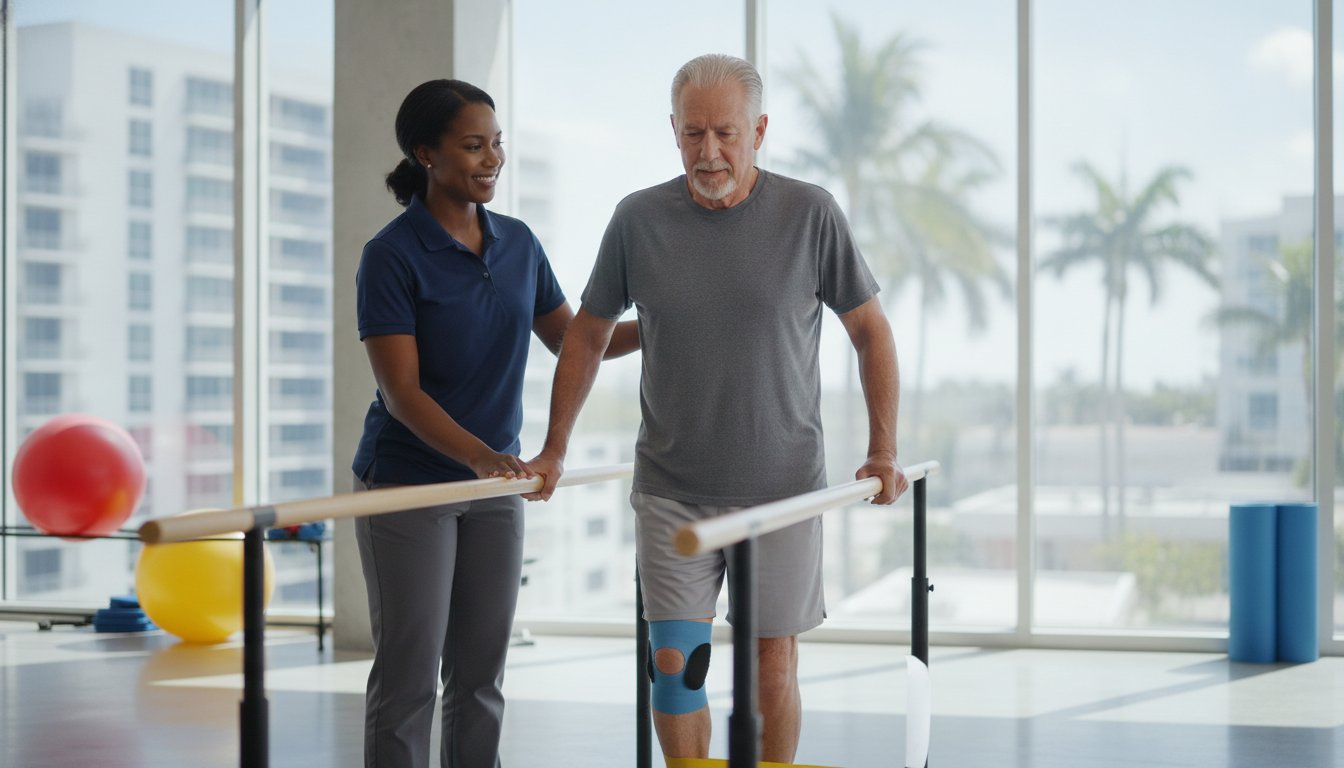
True recovery from a hip or knee replacement doesn’t happen in a medicine cabinet; it happens when you reclaim your natural rhythm of movement. You’ve likely spent long nights staring at the ceiling, wondering if the swelling will ever subside or if one wrong step might undo your surgeon’s hard work. It’s completely normal to feel a sense of hesitation as you balance the need for rest with the fear of accidentally damaging your new joint. Managing pain after joint replacement Aventura requires a sophisticated blend of clinical expertise and patient-centered movement, turning a daunting recovery into a collaborative journey toward vitality.
We’re here to help you move beyond the cycle of discomfort and regain your confidence. You’ll discover professional, active strategies designed to reduce post-surgical swelling and accelerate your mobility through personalized, one-on-one care. This clinical guide explores how targeted orthopedic physical therapy and postural education can improve your sleep quality and restore your full range of motion. By following these evidence-based steps, you’ll find yourself back on your feet and walking through Aventura Mall pain-free sooner than you thought possible.
Key Takeaways
- Understand the natural 12-week inflammatory healing response and what to expect during each phase of your recovery journey.
- Learn how active movement “re-wires” your brain’s pain signals and restores the proprioception needed for a more stable, confident gait.
- Discover why physical therapy offers a mechanical solution for managing pain after joint replacement Aventura, reducing the reliance on long-term medication.
- Master a simple five-step daily framework that balances at-home care with clinical visits to ensure steady, safe progress.
- Explore the benefits of a personalized rehabilitation plan that addresses your unique goals, from improved sleep to walking pain-free through Aventura Mall.
Navigating Pain After Joint Replacement in Aventura: What to Expect
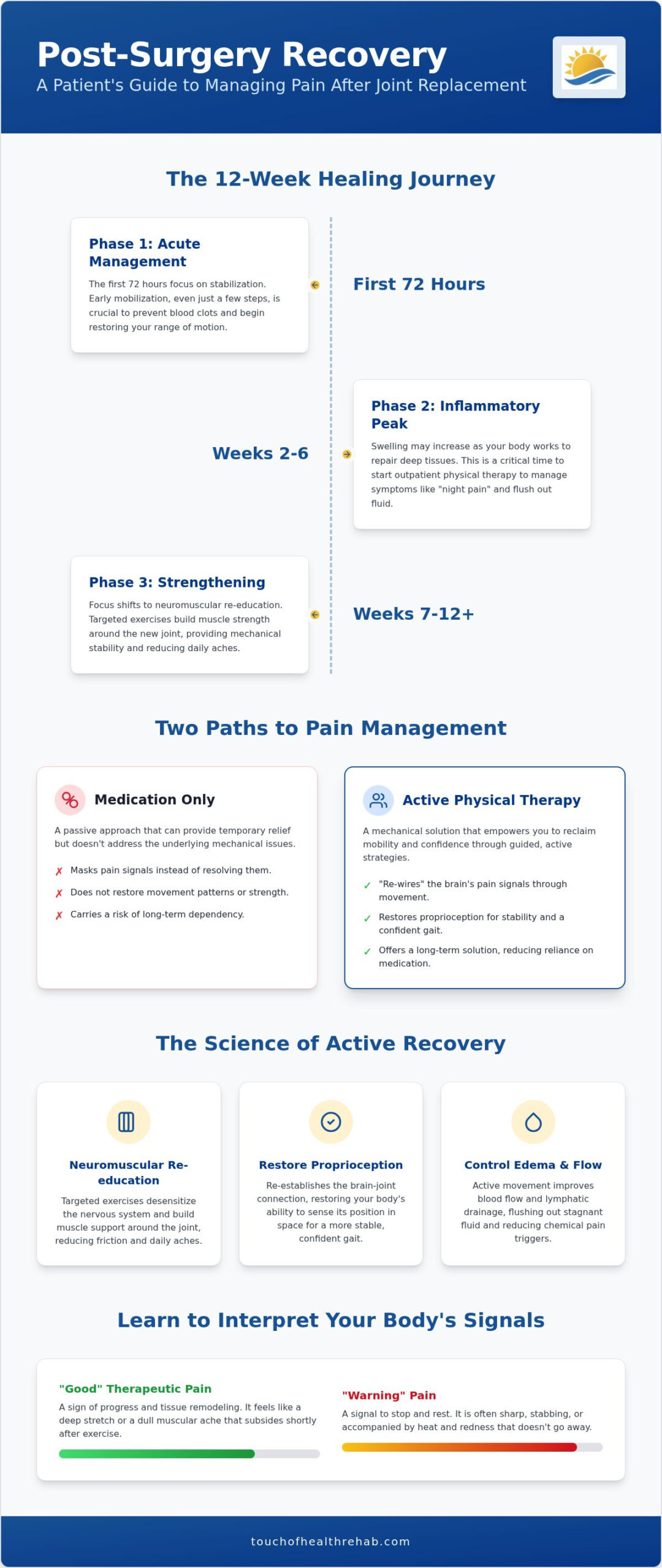
Understanding that pain is a natural inflammatory response is the first step toward a successful recovery. When you undergo surgery, your body initiates a healing cascade that involves swelling and discomfort as it integrates the new joint. Residents in our community often find that specialized post-surgical rehabilitation is essential to handle this phase effectively. Managing pain after joint replacement Aventura isn’t about eliminating every sensation; it’s about distinguishing between the “good” pain of tissue remodeling and “warning” pain that suggests overexertion or complications.
The First 72 Hours: Acute Phase Management
The immediate days following surgery are defined by acute trauma and the body’s reaction to the procedure itself. While you are in the hospital, the clinical focus remains on stabilization and post-operative pain control. Early mobilization is the gold standard for preventing blood clots. By standing or taking a few steps within hours of your procedure, you activate the circulatory system and begin the process of restoring your range of motion. This early activity is vital for your long-term success, though it often feels challenging due to the initial surgical inflammation.
Week 2 to Week 6: The Inflammatory Peak
Once you leave the clinical setting and return to your home in Aventura, you might notice that swelling actually increases. This is the inflammatory peak, a period where the body is working hardest to repair deep tissues. During this time, many patients struggle with “night pain,” a persistent ache that disrupts sleep cycles and can make the recovery feel slow. This phase is exactly when transitioning to outpatient orthopedic physical therapy becomes critical. A professional guide helps you manage these symptoms through specific movements that flush out fluid and settle the nervous system.
Differentiating sensations is a skill you’ll develop with your therapist during your visits. “Good” therapeutic pain usually feels like a deep stretch or a dull muscular ache that subsides shortly after exercise. In contrast, “warning” pain is often sharp, stabbing, or accompanied by heat and redness that doesn’t go away with rest. Recognizing these signals ensures you don’t “overdo it” while still making the necessary progress toward full mobility and managing pain after joint replacement Aventura with confidence.
The Clinical Science of Post-Surgical Pain Recovery
Managing pain after joint replacement Aventura involves more than just waiting for tissues to knit back together. It requires restoring the sophisticated communication between your brain and your new joint. During surgery, the sensory receptors responsible for proprioception, your body’s ability to sense its position in space, are temporarily disrupted. This disruption often leads to a feeling of instability or “learned” pain, where your brain continues to send distress signals even as healing progresses. By engaging in specific, controlled movements, you help “re-wire” these neural pathways, teaching your nervous system that movement is safe and productive.
Proper blood flow and lymphatic drainage play a vital role in this biological restoration. While initial inflammation is necessary for healing, stagnant fluid can become a barrier to your progress. Ensuring that your circulatory system efficiently removes metabolic waste helps lower the chemical triggers that cause discomfort. Additionally, focusing on postural alignment ensures that your new joint carries weight as intended. When you move with correct form, you prevent compensatory strains on your back or opposite hip, allowing the prosthetic to wear evenly and function at its peak physical health.
Neuromuscular Re-education and Pain
Neuromuscular re-education is a cornerstone of orthopedic physical therapy. This process uses targeted exercises to desensitize a hypersensitive nervous system. As you build muscle strength around the surgical site, you provide the joint with the mechanical stability it needs to move without friction. This increased support directly correlates to a reduction in daily aches. Over time, these clinical strategies transform your recovery from a period of limitation into a collaborative journey of empowerment.
The Role of Edema Control
Controlling swelling is a practical necessity for both comfort and mobility. Techniques such as compression, elevation, and consistent icing are your first line of defense at home. Within a clinical setting, manual therapy can further accelerate the removal of inflammatory byproducts. Excess fluid increases intra-articular pressure and pain. By reducing this internal pressure, you unlock a greater range of motion and make managing pain after joint replacement Aventura a much more manageable task. If you’re ready to move toward a more active lifestyle, our team is here to provide the personalized care you deserve to reach your goals.
Active Physical Therapy vs. Medication: Finding the Right Balance
While medication plays a vital role in early recovery, relying solely on opioids or NSAIDs has significant limitations. These substances mask symptoms without addressing the underlying mechanical issues. Physical therapy is a mechanical solution to a mechanical problem. By restoring joint mechanics, you treat the root cause of discomfort rather than just dulling the sensation. Premier clinics in our area use a multimodal approach. This strategy combines judicious medication use with active movement to ensure you’re comfortable enough to participate in your own healing.
A common concern we hear from patients is the idea that they should wait until the pain stops before starting their exercises. In reality, movement is the very thing that stops the pain. Waiting only allows the joint to tighten, making future progress more difficult. Managing pain after joint replacement Aventura is most effective when you start moving safely and early. This proactive stance prevents the “stiffening” that many patients fear and sets the stage for a smoother, faster return to your favorite local activities.
The Risks of Passive Recovery
Prolonged rest isn’t the sanctuary it seems. It often leads to joint stiffness, known clinically as arthrofibrosis, where scar tissue restricts your movement. During the first month of recovery, your muscles can atrophy quickly if they aren’t engaged. This weakness makes every step more painful because your joint lacks necessary support. Seeking professional post-surgical rehabilitation provides you with a guided path to avoid these pitfalls. It’s about finding the “sweet spot” of activity that promotes healing without causing undue stress.
Long-Term Outcomes: PT vs. Medication
When we look at long-term success, patients who prioritize early physical therapy report higher satisfaction at the one-year mark compared to those who rely primarily on pharmaceutical relief. Active recovery reduces the risk of developing long-term chronic pain by preventing the nervous system from becoming “stuck” in a pain cycle. Beyond the physical gains, there’s a profound psychological benefit to reclaiming your independence. Every step you take on your own terms builds confidence. You aren’t just managing pain after joint replacement Aventura; you’re actively taking back your quality of life.
Your Step-by-Step Guide to Managing Post-Replacement Pain
Managing pain after joint replacement Aventura requires a structured daily rhythm that balances activity with intentional recovery. It isn’t enough to simply perform a list of exercises; you must listen to your body’s signals and adjust your intensity based on daily feedback. This framework integrates clinical expertise with at-home diligence to ensure your recovery remains on a steady, upward trajectory. By following a clear plan, you remove the guesswork and replace it with a sense of control over your healing process.
Step 1: The R.I.C.E. Protocol Revisited
Modern recovery has updated the traditional Rest, Ice, Compression, and Elevation protocol to better suit joint replacements. Rest today means “active rest,” which involves scheduled periods of downtime between bouts of movement to prevent overexertion. Ice is most effective when applied for 20 minutes immediately following your therapy sessions or home exercises to calm the nervous system and reduce heat. For knee replacements, elevate the leg with pillows under the calf and heel to keep the joint straight. For hip replacements, ensure the leg is slightly elevated while strictly respecting the specific range-of-motion precautions provided by your surgeon.
Step 2: Gentle Range of Motion (ROM) Exercises
Movement is the primary tool for maintaining circulation and preventing the stiffness that leads to chronic discomfort. Begin your day with ankle pumps and heel slides to act as a natural pump for your lymphatic system. Consistency is far more valuable than intensity in these early weeks. Pushing into sharp pain can spark unnecessary inflammation, while steady, frequent movement keeps the joint lubricated. You’ll refine these patterns during your balance and gait rehabilitation sessions, ensuring every step you take is safe and serves your long-term mobility goals.
Step 3: Professional Manual Therapy and Postural Education
Hands-on care from a skilled therapist is irreplaceable because it addresses soft tissue restrictions that exercises alone cannot reach. Your therapist helps identify and correct gait compensations, such as limping or leaning, which often lead to secondary back or hip pain if left unaddressed. By integrating postural education into your routine, you learn how to protect your new joint during everyday tasks like sitting, standing, and reaching. This specialized training ensures that your body moves as a cohesive unit, reducing the mechanical stress on your surgical site.
While discomfort is a natural part of the process, you should call your physical therapist or surgeon if you experience a sudden increase in calf pain, redness at the incision, or a fever. Safety is our priority as we guide you through this journey. If you’re ready to move from surviving to thriving, contact us today to begin your personalized recovery plan and reclaim your active lifestyle in Aventura.
Personalized Rehabilitation at Touch of Health: Your Partner in Aventura Recovery
Touch of Health Rehab Inc. serves as a high-end sanctuary for those navigating the complexities of post-surgical life. We understand that managing pain after joint replacement Aventura is a deeply personal process that requires more than just generic exercises. Led by Lead Physical Therapist Berlin, our clinic provides a welcoming, human-centered environment where your recovery is our primary mission. By focusing on one-on-one personalized therapy plans, we ensure that every movement you make is purposeful and aligned with your specific healing timeline.
Our “Compassionate Expert” approach means we function as your dedicated guide rather than distant practitioners. We believe that every person’s path to health is unique, which is why we don’t use a one-size-fits-all methodology. Instead, we listen to your concerns and celebrate your milestones, from the first time you sleep through the night without discomfort to the day you walk through the neighborhood with total confidence. You’re invited to join our community of success stories, where local residents have reclaimed their vitality through our specialized care.
Why Local Care Matters for Joint Recovery
Choosing a clinic near Aventura is a strategic decision that supports the frequency of care needed during the early phases of joint recovery. Being just minutes away from Aventura Mall and the surrounding residential areas reduces the stress of travel, allowing you to focus entirely on your rehabilitation. We have a deep understanding of South Florida lifestyle goals, whether you’re aiming to return to the golf course, enjoy long walks at Founders Park, or simply navigate the beach with ease. Our dedicated team of specialists integrates postural education and gait training to ensure your new joint remains healthy for years to come.
Start Your Journey to Pain-Free Mobility
Reclaiming your mobility begins with a comprehensive initial evaluation. During this first visit at our Sunny Isles Beach location, we’ll assess your current range of motion, discuss your pain levels, and establish clear goals for your recovery. Please bring your surgical discharge papers, a list of current medications, and wear comfortable clothing that allows for easy movement. We’ll work together to build a roadmap that moves you from acute discomfort to peak physical health. Schedule your personalized pain management evaluation today and take the first step toward a future of unrestricted movement.
Reclaim Your Active Lifestyle with Confidence
You’ve taken the first step toward a successful recovery by learning that healing is an active process of restoration rather than just a period of waiting. By focusing on movement as medicine and understanding the biological science of healing, you’re now equipped to move past the limitations of post-surgical discomfort. Managing pain after joint replacement Aventura is most effective when clinical expertise meets your personal commitment to long-term vitality. Our specialized post-surgical physical rehabilitation programs are designed to provide the compassionate, one-on-one personalized care you need to thrive.
We are conveniently located for residents throughout Aventura and Sunny Isles Beach, offering a high-end sanctuary where your progress is our only priority. Our team is ready to help you transition from the first steps of recovery to the full range of motion required for your favorite South Florida activities. It’s time to trade hesitation for confidence and start your journey toward peak physical health. We look forward to being your dedicated guide as you return to the activities you love with strength and stability.
Start Your Pain-Free Recovery in Aventura Today
Frequently Asked Questions
How long does the worst pain last after a total knee or hip replacement?
The most intense discomfort typically subsides within the first two to four weeks as the initial surgical trauma begins to heal. While every person’s timeline is unique, you’ll notice a significant shift toward manageable aches as you progress through your first month of recovery. Consistent participation in your specialized therapy plan ensures that this acute phase transitions smoothly into a period of restoration and increased mobility. Our team provides the steady, reassuring guidance needed to navigate this transition with total confidence.
Is it normal for my joint to feel hot and swollen 4 weeks after surgery?
It is normal to experience localized warmth and swelling for up to twelve weeks post-surgery as your body integrates the new joint. This inflammatory response is a sign that your tissues are actively remodeling and healing. However, if the heat is accompanied by a fever or spreading redness, you should contact your clinical team immediately. We use manual therapy techniques to help manage this swelling and improve your comfort levels, ensuring your healing journey remains on a positive and predictable track for restoration.
Can physical therapy actually reduce my need for pain medication?
Physical therapy serves as a mechanical solution that can significantly decrease your reliance on pharmaceutical pain management. By restoring proper joint mechanics and strengthening supporting muscles, you address the root cause of discomfort rather than simply masking the symptoms. Managing pain after joint replacement Aventura through active movement helps “re-wire” your nervous system, often allowing for a faster transition away from opioid or NSAID medications under your doctor’s guidance, promoting a healthier and more sustainable recovery journey.
What are the best sleeping positions to manage pain after joint surgery?
For knee replacements, sleeping on your back with a pillow under your calf or heel helps keep the joint straight and reduces swelling. If you’ve had a hip replacement, sleeping on your back or the non-surgical side with a pillow between your knees is often recommended to maintain proper alignment. These positions protect your new joint while you rest, ensuring you wake up feeling refreshed and ready for your next rehabilitation session.
How soon can I start physical therapy after being discharged from the hospital?
Most patients begin their outpatient physical therapy within twenty-four to seventy-two hours after being discharged from the hospital. Early mobilization is the gold standard for a successful recovery, as it prevents blood clots and reduces the risk of joint stiffness. Our clinic near Aventura is designed to provide a seamless transition from hospital care to a personalized, one-on-one rehabilitation environment that prioritizes your long-term vitality and health, ensuring you reach your peak physical health safely.
What happens if I don’t do my physical therapy exercises after a joint replacement?
Skipping your prescribed exercises can lead to a condition called arthrofibrosis, where excessive scar tissue causes permanent joint stiffness. Without the guided movement provided by professional therapy, your muscles may also undergo atrophy, leaving your new joint without the support it needs to function correctly. This lack of engagement often results in a cycle of chronic pain and limited range of motion that can be difficult to reverse later in your recovery, hindering your return to peak physical health.
Does Touch of Health Rehab accept Medicare or insurance for post-surgical rehab?
Touch of Health Rehab works with various insurance providers to ensure our residents have access to high-end clinical care. Since insurance requirements and Medicare thresholds can change, we recommend contacting our Sunny Isles Beach office for a personalized verification of your benefits. Our team is dedicated to making your path to health as transparent as possible, allowing you to focus entirely on your recovery and return to an active lifestyle. We handle the details so you can focus on your healing.
Why is my other leg hurting after my joint replacement surgery?
It’s common to feel discomfort in your non-surgical leg due to compensatory gait patterns developed while protecting your new joint. When you favor one side, you inadvertently place extra stress on the opposite hip, knee, and lower back. Our focus on balance and gait rehabilitation helps correct these imbalances early. By restoring your natural rhythm of movement, we ensure that managing pain after joint replacement Aventura includes protecting your entire musculoskeletal system and promoting long-term joint health for your whole body.