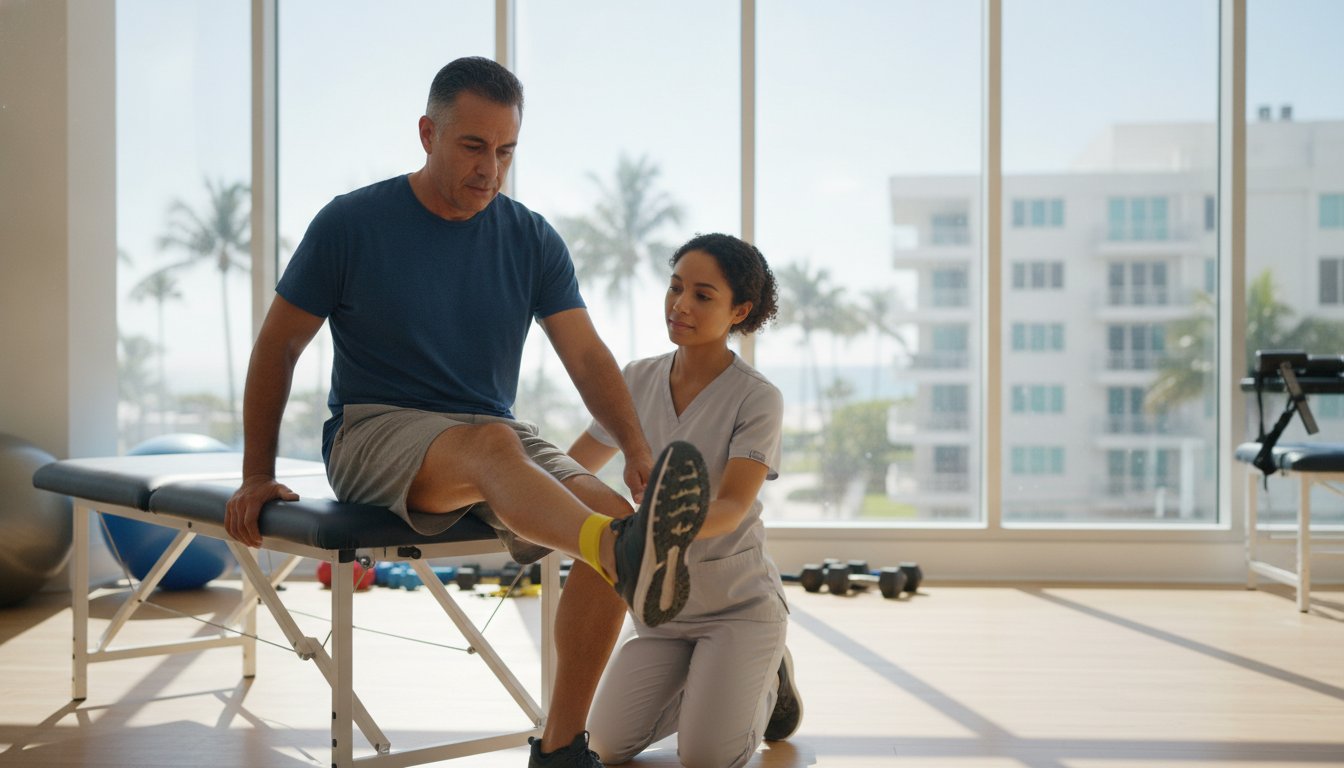
Did you know that between 30% and 70% of patients struggle to follow their prescribed recovery regimens? This data proves that learning how to get motivated for rehab after surgery is often the most difficult part of the healing process. When physical pain makes every movement feel like a chore, it’s natural for your initial drive to waver under the weight of slow, invisible progress. You aren’t alone if you feel frustrated by the gap between your current limitations and your long-term goals.
We recognize that post-surgical recovery is a deeply personal journey, and it’s normal to feel isolated during those quiet weeks of home recovery. You deserve a path that leads you back to the activities you love, whether that’s walking along Sunny Isles Beach or teeing off in Aventura. This article provides the psychological strategies and expert clinical insights you need to overcome the post-surgery slump. We’ll explore a clear mental framework for handling difficult days and provide tools to track your milestones, helping you move from frustration to functional vitality. Through these practical steps, you can reclaim your strength and return to the active lifestyle you cherish.
Key Takeaways
- Acknowledge that post-operative fatigue is a biological response to trauma, allowing you to replace self-criticism with a focused plan for restoration.
- Discover how to get motivated for rehab after surgery by implementing the “1% Rule,” which prioritizes micro-wins to build consistent momentum.
- Partner with a dedicated guide to receive real-time clinical adjustments that prevent improper form and help you bypass frustrating progress plateaus.
- Create a low-friction recovery space in your North Miami Beach or Sunny Isles Beach home to make daily exercises a seamless part of your environment.
- Shift your perspective from simple pain management toward a comprehensive return to function, ensuring you reclaim the active lifestyle you cherish.
Why Motivation Falters After Surgery: Normalizing the Struggle
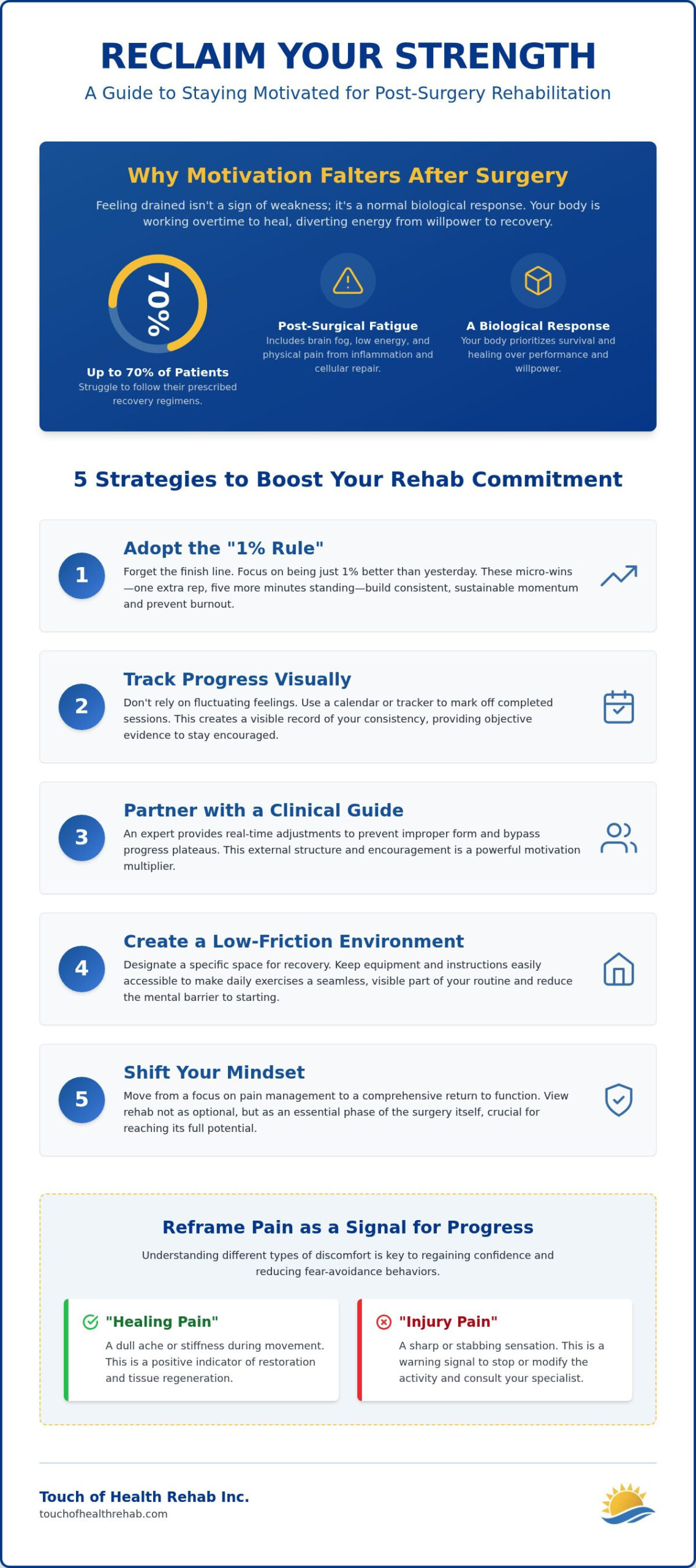
Feeling a sense of lethargy or “brain fog” after a major procedure is often more than just a bad mood. It’s a physiological response to the trauma your body has endured. Many patients wonder how to get motivated for rehab after surgery when their energy levels are at an all-time low. It’s vital to recognize that the post-op slump isn’t a sign of weakness; it’s a sign that your body is working overtime to heal. Surgery is a controlled trauma, and your nervous system reacts by entering a protective, low-energy state.
Understanding how to get motivated for rehab after surgery begins with acknowledging that your brain and body are currently prioritizing survival over performance. When you’re dealing with the cognitive drain of constant physical pain, your capacity for decision-making and self-discipline naturally shrinks. This isn’t a permanent change, but a temporary phase of your recovery that requires a different approach to movement and mindset.
The Biology of Post-Surgical Fatigue
Your body is a master of resource management. After surgery, it diverts a massive amount of metabolic energy toward cellular repair and tissue regeneration. This leaves very little “fuel” for complex cognitive tasks or sustained willpower. Inflammation, a necessary part of the healing process, can also affect your mental clarity and mood. The field of Rehabilitation psychology highlights how these physical changes directly impact your emotional resilience. The first fourteen days are typically the most taxing, as your system balances anesthesia recovery with the acute phase of healing.
Reframing Pain as a Signal for Progress
Distinguishing between different types of discomfort is a key step in regaining your confidence. “Healing pain” often feels like a dull ache or stiffness during movement, which differs significantly from the sharp, stabbing “injury pain” that signals a problem. When you understand that specific discomforts are actually indicators of restoration, you reduce fear-avoidance behaviors. This clarity helps you see post-surgical rehabilitation as a bridge to your former self rather than a source of distress.
Motivation often disappears because of external factors you can’t control. Sleep deprivation from uncomfortable resting positions and the side effects of pain medications can drain your mental reserves. To combat this, you must reframe your perspective. Rehab is not an optional “add-on” to your procedure. It is the active, essential phase of the surgery itself. Without it, the surgeon’s work cannot reach its full potential. By viewing every leg lift or stretch as a vital surgical step, you empower yourself to push through the temporary fog.
5 Psychological Strategies to Boost Your Rehab Commitment
While your surgeon focuses on the structural integrity of your repair, your recovery’s success depends heavily on your mental stamina. Discovering how to get motivated for rehab after surgery isn’t about finding hidden willpower; it’s about building a system that makes movement feel inevitable. When you’re facing months of recovery, the sheer distance to the finish line can feel paralyzing. By shifting your focus from the destination to the immediate process, you can maintain a steady rhythm of progress.
The “1% Rule” is a cornerstone of sustainable recovery. Instead of worrying about when you’ll be back to 100%, commit to being just 1% better than you were yesterday. This might mean one extra repetition, five more minutes of standing, or a slightly improved range of motion. Because approximately 50% of patients with chronic conditions struggle to stick to treatment plans, these tiny, incremental gains are vital for preventing burnout and ensuring long-term success.
Visual progress tracking provides the objective evidence your brain needs when you’re feeling discouraged. Don’t rely on “how you feel” each morning, as pain levels can fluctuate wildly. Use a dedicated calendar or a digital tracker to mark off completed sessions. Seeing a physical record of your consistency transforms abstract effort into a visible win, reinforcing your identity as someone who is actively healing. Partnering with compassionate clinical experts can provide the external structure and encouragement you need to keep these records consistent.
The Micro-Goal Framework
Setting a goal to “walk normally again” feels overwhelming when you’re currently using a walker. Instead, create a micro-goal for the next sixty minutes. Maybe it’s completing one set of ankle pumps or sitting upright for ten minutes. These non-scale victories, such as reaching for a cup without assistance, trigger a dopamine release in your brain. This chemical reward makes it easier to tackle the next task, effectively fueling your own momentum. It’s a simple way to master how to get motivated for rehab after surgery by winning the hour, not the month.
Visualizing Your Return to Sunny Isles Life
Mental rehearsal is a powerful tool used by elite athletes and successful rehab patients alike. Close your eyes and picture yourself walking along Sunny Isles Beach or browsing the shops at Aventura Mall. When you connect a repetitive leg lift to the specific goal of visiting your favorite local spots with friends, the exercise gains new meaning. You’re not just moving a limb; you’re reclaiming your place in the community. This “Future Self” visualization provides the emotional bridge needed to get through the most difficult sets of your day.
Why Professional Clinical Support is a Motivation Multiplier
When you’re recovering alone at home, every minor twinge or unexpected ache can feel like a sign of failure. This is where professional post-surgical rehabilitation changes the dynamic. Instead of guessing if a specific pain is “good” or “bad,” you have a dedicated guide to provide immediate clarity. This expert guidance reduces the fear-avoidance behavior that often stalls progress. You’ll find that having a clinician to validate your effort makes it much easier to understand how to get motivated for rehab after surgery when your energy is flagging. Having someone to catch improper form in real-time ensures you’re building strength safely rather than reinforcing compensatory habits.
Personalized Plans vs. Generic Exercises
Generic handouts often fail because they don’t account for your body’s unique biological response to trauma. A personalized physical therapy plan adapts to your specific needs in real-time. On days when inflammation is high, your therapist adjusts the intensity to prevent mental and physical burnout. On high-energy days, they challenge you to reach new milestones, effectively preventing the frustration of plateauing. Incorporating postural education allows you to experience immediate “alignment wins,” helping you feel taller and more balanced after just one session. These personalized adjustments ensure that your path to restoration is as unique as your own health history.
The Accountability Factor
It’s much harder to skip a session when you’ve committed to a scheduled appointment in Sunny Isles Beach. This external structure provides a safety net during the “recovery dip”-that middle phase where the novelty of surgery has worn off, but full function is still weeks away. Professional feedback acts as a powerful psychological fuel by showing you exactly how far you’ve come through objective data. Meet our team of experts who specialize in bridging this gap between clinical necessity and personal empowerment. When you have a partner who is genuinely invested in your success, mastering how to get motivated for rehab after surgery becomes a collaborative and steady process. This partnership transforms the isolation of recovery into a shared journey toward peak physical health.
Creating a Recovery-Friendly Environment in South Florida
Environment is a silent but powerful partner in your healing process. While we’ve discussed the internal biology of fatigue, your external surroundings in North Miami Beach play an equally vital role in your success. When you’re determining how to get motivated for rehab after surgery, your physical space should act as a bridge to your goals rather than an obstacle. By intentionally curating a “recovery sanctuary,” you reduce the cognitive load required to start your daily movements and replace it with a sense of calm purpose.
Designing Your “Recovery Sanctuary”
A successful home setup minimizes the mental friction that often leads to skipped sessions. Keep your equipment, such as resistance bands or foam rollers, in a visible and accessible area of your living room. When these tools are tucked away in a closet, the extra step of retrieving them can become a significant mental barrier on low-energy days. Use the abundant natural light common in Sunny Isles Beach homes to boost your mood and alertness during your exercises. Adding a specific playlist of music or opening the windows to let in the ocean breeze can transform a clinical task into a revitalizing daily ritual of restoration.
The Social Side of Recovery
Your social network in Aventura and Bal Harbor provides the accountability that keeps you consistent over the long term. Recovery shouldn’t be a solitary endeavor; communicating your specific needs to family and friends allows them to offer targeted encouragement rather than just general sympathy. Consider planning small social rewards to celebrate your weekly milestones. A short visit to a favorite quiet spot in Bal Harbor or a coffee date with a neighbor after completing a full week of exercises creates a positive feedback loop. This social support is particularly helpful for those following a plan for Physical Therapy After Joint Replacement, where long-term adherence is essential for total mobility.
Leverage the unique South Florida climate by taking your lighter movements outdoors once your therapist approves. The change of scenery at a quiet local park or even a shaded balcony can break the monotony of indoor recovery and lower your stress levels. Fresh air and a new perspective often provide the mental reset needed to push through a difficult afternoon. If you’re unsure how to best organize your home space or routine for maximum efficiency, you can schedule your personalized evaluation to receive expert guidance tailored specifically to your lifestyle and environment.
Your Path to Peak Health at Touch of Health Rehab Inc.
At Touch of Health Rehab Inc., we believe that clinical excellence is only half of the recovery equation. The other half is the human connection that turns a medical plan into a life-changing transformation. We bridge the gap between being a high-end clinical provider and a welcoming sanctuary for healing. Our focus extends far beyond simple pain management; we prioritize your complete return to function and peak physical health. Understanding how to get motivated for rehab after surgery becomes much simpler when you realize you aren’t just a patient on a table, but a partner in a specialized restoration process. We act as your dedicated guide, ensuring every step you take is purposeful and safe.
A Collaborative Journey in Sunny Isles Beach
We treat you as a whole person, not just a collection of surgical sites or symptoms. Our commitment to your long-term vitality includes specialized postural education and physical conditioning to ensure your recovery lasts well beyond your final session. By focusing on your unique path, we help you regain the strength needed for daily life in Bal Harbor or North Miami Beach. Whether your goal is playing a full round of golf or simply walking without assistance, our team is invested in your success. Read our success stories to see how we’ve helped your neighbors in the local community return to the activities they love with confidence and grace.
Next Steps: Booking Your Assessment
Preparing for your first session is a vital step in your mental preparation. When you visit us in Sunny Isles Beach, bring your surgical reports, a list of current medications, and any specific instructions from your surgeon. We coordinate directly with your surgical team to ensure a seamless transition from the operating room to our clinic. This clinical partnership removes the guesswork and reduces the anxiety often associated with early movement. By preparing your mind for a successful first session, you set a positive tone for the weeks ahead. We’ll work together to define what “peak health” looks like for you, creating a roadmap that feels both achievable and inspiring.
Once you’ve reached your initial milestones, our focus shifts toward wellness and preventative care. This proactive approach ensures you maintain your gains and avoid future setbacks. We want you to feel empowered, knowing that your recovery has built a foundation for a more active, vibrant future in Aventura and beyond. Don’t let the post-surgery slump dictate your future or limit your potential. Start your personalized recovery journey today and rediscover what your body is truly capable of achieving with the right support at Touch of Health Rehab Inc.
Step Into Your Future With Confidence
Reaching the final stage of your initial recovery phase is about maintaining the momentum you’ve built through consistency and resilience. By applying the psychological tools and environmental adjustments discussed, you’ve learned how to get motivated for rehab after surgery even when the path feels long. This journey is ultimately about reclaiming your independence and returning to the active lifestyle you’ve designed for yourself in South Florida. Every small victory in the clinic translates to greater freedom in your daily life.
At Touch of Health Rehab Inc., we specialize in turning these functional goals into reality. Led by Lead Physical Therapist Berlin, our clinic provides the expert guidance and compassionate support necessary for a safe, thorough return to your daily activities. We have dedicated ourselves to serving the residents of Sunny Isles Beach and Aventura, ensuring every patient receives a personalized roadmap to restoration that accounts for their unique health history. Our team is here to act as your partner, providing the clinical expertise needed to ensure your progress remains steady.
Ready to take the next step in your recovery? Request Your Post-Surgical Consultation in Sunny Isles to partner with a team that values your long-term vitality. Let’s work together at Touch of Health Rehab Inc. to ensure your journey back to peak health is thorough, steady, and successful.
Frequently Asked Questions
Is it normal to feel depressed or unmotivated after surgery?
It’s completely normal to experience a dip in mood or drive after a major procedure. Your body is navigating significant physiological stress and inflammation, which naturally drains your mental energy. Many people wonder how to get motivated for rehab after surgery when they feel this way. Recognizing that this “post-op slump” is a temporary biological phase rather than a personal failure is the first step toward reclaiming your long-term vitality.
How do I stay motivated when physical therapy is painful?
Staying consistent when you’re in pain requires a clear understanding of your body’s signals. Focus on the fact that therapeutic discomfort is often a sign of tissue remodeling and restoration. We help you distinguish between “good” healing pain and sharp “injury” pain. When you see each movement as a necessary step toward your functional return, it’s easier to maintain your commitment even on the most challenging days of your recovery.
What should I do if I feel like I am hitting a plateau in my recovery?
Plateaus are a common part of the non-linear recovery process. If you feel stuck, it’s time to consult your clinical guide to adjust your therapy plan. Our experts in Sunny Isles Beach specialize in identifying compensatory patterns that might be stalling your progress. By fine-tuning your exercises or introducing new physical conditioning techniques, we can help you bypass these stagnant periods and continue moving steadily toward your peak physical health.
How can I track my progress if I don’t see big changes every day?
Shift your focus toward objective data rather than subjective feelings. Use a dedicated journal or app to record specific milestones, such as standing for an extra two minutes or reaching for a high shelf without assistance. These non-scale victories provide the visual evidence your brain needs to stay engaged. Tracking these small, measurable wins ensures you see the steady progression that might otherwise be masked by day-to-day fluctuations in pain.
Can my physical therapist help me with the mental side of rehab?
Your physical therapist acts as a dedicated guide for both your physical and mental restoration. We provide the professional validation and feedback necessary to build your confidence during the isolation of home recovery. By offering a clear mental framework for handling difficult days, we help you manage the frustration of slow progress. This collaborative partnership ensures that you feel supported and empowered throughout your entire journey back to an active lifestyle.
What are some “micro-goals” I can set for my first week of rehab?
During your first week, focus on small, low-friction targets that build momentum. Effective micro-goals include:
- Completing your prescribed ankle pumps every hour while awake.
- Sitting upright in a sturdy chair for ten minutes twice a day.
- Walking to the end of the hallway and back once with your assistive device.
These tiny wins trigger dopamine releases that help you learn how to get motivated for rehab after surgery by making the process feel manageable and rewarding.
How do I get back to walking on the beach after knee or hip surgery?
Returning to the uneven sands of Sunny Isles Beach requires specialized balance and gait rehabilitation. We start with physical conditioning on stable surfaces to build foundational strength before progressing to more challenging environments. Our team focuses on postural education to ensure your form is correct, preventing future issues. With a personalized plan, you can safely transition from indoor exercises to enjoying the ocean breeze and natural beauty of our local South Florida community.