
What if progress after hip surgery isn’t measured by how quickly you move, but by how safely you regain the movements that matter to you? It’s natural to wonder when to start walking, how much discomfort is expected, and whether everyday activities are helping or hindering recovery. Recovery after hip surgery physical therapy is guided by your procedure, your surgeon’s precautions, and how your body responds along the way.
Your rehabilitation plan should build confidence step by step. Physical therapy can help you work on mobility, strength, balance, and everyday function through practice tailored to your needs and recovery goals. Some discomfort may occur as you become more active, but tell your care team about changes or concerns so they can guide your next steps. Your surgeon’s instructions take priority because appropriate movements and precautions can differ between procedures.
This article explains what physical therapy may involve, how progress connects to daily activities such as walking and getting dressed, and which questions to discuss with your surgeon and physical therapist. Touch of Health Rehab Inc. provides personalized post-surgical physical rehabilitation in Sunny Isles Beach, supporting an individualized path forward.
Key Takeaways
- Recovery after hip surgery physical therapy is individualized, shaped by your procedure, surgeon’s instructions, health, and progress.
- Learn how therapists review precautions, assess function, set goals, and adjust your plan as you regain mobility.
- Use your care team’s guidance to understand which movements are appropriate, and share discomfort or concerns rather than pushing through them.
- Connect therapy practice with everyday tasks such as walking and transfers, while following instructions for mobility aids and home safety.
- Explore how personalized post-surgical and orthopedic physical therapy can support your recovery goals in Sunny Isles Beach.
Recovery After Hip Surgery: What Physical Therapy Helps You Regain
After hip surgery, physical therapy provides guided movement practice to help you work toward the everyday activities that matter to you. That may include standing, moving between a bed and chair, or walking with the mobility aid recommended for you. Your plan depends on the operation, your surgeon’s instructions, your overall health, and how you respond as rehabilitation progresses.
Physical therapy connects carefully guided movement practice with the everyday tasks you want to regain. Rather than following a universal schedule, therapy focuses on building function while respecting your surgical care plan and individual needs.
Which hip procedures may involve physical therapy?
Hip replacement and fracture repair are two examples of procedures that may be followed by physical therapy, but they involve different surgical goals and recovery considerations. Other hip procedures may have their own precautions as well. For an overview of the replacement procedure itself, see Hip replacement surgery.
Your operating surgeon determines which restrictions and precautions apply to your procedure. Share those instructions with your physical therapist so movement practice can be tailored accordingly. The right approach for one person may not be appropriate for another, even when their surgeries sound similar.
What are the main goals of therapy after hip surgery?
Therapy commonly focuses on safe mobility, strength, balance, and confidence with everyday movement. Your therapist may help you practise getting up from a chair, transferring safely, or walking with the mobility aid specified in your care plan. These tasks build practical skills you can use outside a therapy session.
Progress is individual. Your therapist considers how you’re moving and follows your surgeon’s guidance when adapting practice or setting the next goal. If a movement feels difficult or you’re unsure whether a restriction applies, raise the question with your care team instead of guessing. Their guidance can keep your rehabilitation aligned with both your procedure and your functional priorities.
Touch of Health Rehab Inc. provides post-surgical and orthopedic physical therapy in Sunny Isles Beach. Learn more about comprehensive physical therapy and how individualized rehabilitation can support your movement goals while respecting your surgical instructions.
How Physical Therapy Progresses After Hip Surgery
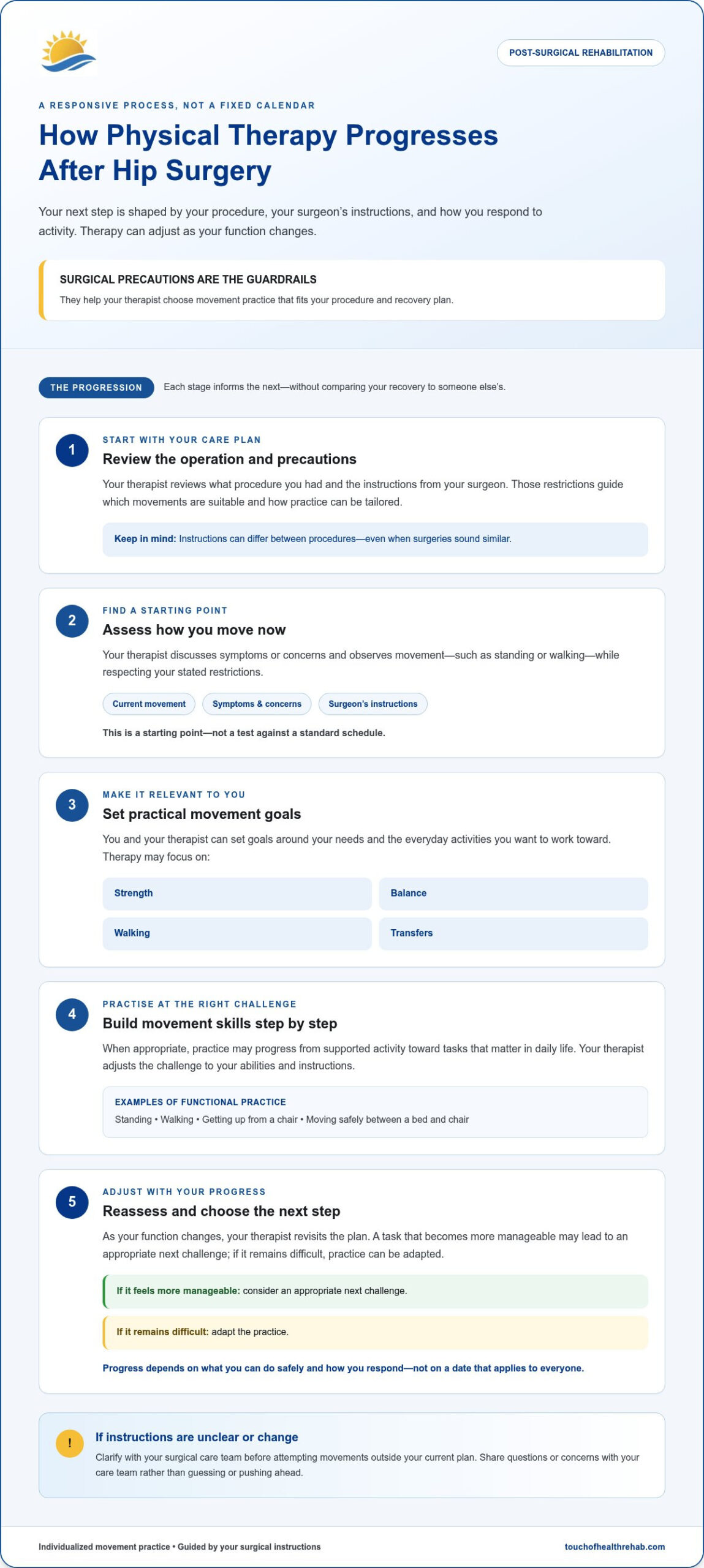
Physical therapy after hip surgery follows a responsive process, not a fixed calendar. Your therapist reviews your surgical precautions, assesses how you’re moving, and discusses what feels manageable. Together, you can set practical goals, practise relevant movements, and revisit the plan as your function changes. In recovery after hip surgery physical therapy, the next step depends on your procedure, your care team’s instructions, and your response to activity.
Surgical precautions are the guardrails for exercise progression, helping your therapist choose movement practice that fits your procedure and recovery plan. If instructions are unclear or have changed, clarify them with your surgical care team before attempting movements outside your current plan.
What happens during an early rehabilitation assessment?
Your therapist will discuss your operation, the surgeon’s instructions, and any symptoms or concerns you’ve noticed. They’ll also observe your current movement, such as how you stand or walk, while respecting stated restrictions. This helps identify a starting point and set goals around your needs. It isn’t a test against a standard schedule, and your surgeon’s precautions remain central to the plan.
How do therapy goals change as function improves?
When appropriate, movement practice may progress from supported activity toward tasks that matter in daily life. Your therapist may work with you on strength, balance, walking, or transfers, adjusting the challenge to your abilities and instructions. Progress depends on what you can do safely and how you respond, rather than a date that applies to everyone.
Reassessment helps make those adjustments purposeful. If a task becomes more manageable, your therapist can consider an appropriate next challenge. If it remains difficult, practice can be adapted. The aim is steady, functional development, not pushing ahead to keep pace with someone else’s recovery.
The American Academy of Orthopaedic Surgeons offers a total hip replacement exercise guide for general reference. Its examples are specific to hip replacement, so follow your surgeon’s restrictions and your therapist’s individualized direction rather than treating a general guide as a personal prescription.
For personalized support as you work through your rehabilitation goals, explore physical therapy at Touch of Health Rehab.
Hip Surgery Recovery Exercises: Safety, Discomfort, and Progress
It’s understandable to wonder whether discomfort during movement means you’re causing harm. The safest guide is your surgical care plan, not a general exercise list. In recovery after hip surgery physical therapy, your surgeon’s restrictions and your therapist’s instructions shape which movements are suitable, how to perform them, and when they may be adjusted.
Rehabilitation can involve effort as you practise movement, but don’t assume that pain should be pushed through or that every new sensation is harmless. Tell your therapist what you feel, when it occurs, and whether it changes with activity. That information helps your care team decide whether to modify practice or review your symptoms.
Why do hip precautions and procedure details matter?
Precautions can differ according to the procedure and your surgeon’s instructions. An exercise in an online list may not fit your situation or current restrictions. Share the instructions you’ve received with your therapist, and follow your own care plan rather than copying movements intended for someone else. Your therapist can adapt activity to the precautions provided by your surgical team.
Before trying a new movement, make sure you understand how to do it within those limits. If an instruction is unclear, ask your treating team to explain it. Clear guidance gives you a basis for practising carefully instead of guessing.
When should you pause and contact your care team?
Pause the activity and contact your treating team if you experience new, worsening, or concerning symptoms, or if discomfort makes it difficult to follow the movement instructions you were given. Describe what changed and during which activity. Don’t try to diagnose the cause yourself. Your care team can advise whether your plan needs review.
Chest pain or sudden difficulty breathing requires emergency attention. Call emergency services rather than waiting for a scheduled therapy session or routine reply. For other concerns, use the contact instructions provided by your surgical or rehabilitation team.
Keeping track of how you respond to practice can make conversations with your therapist more useful. Note which movement brought on a concern, whether it eased when you stopped, and any change since your last session. You and your care team can use that information to guide the next step safely.
Daily Life During Physical Therapy After Hip Surgery
Rehabilitation becomes meaningful when guided movement connects to the activities you want to manage in daily life. Your therapist may help you practise getting up from a chair, transferring between surfaces, or walking with the mobility aid specified in your care plan. Follow your therapist’s instructions for using that aid, and don’t change how or when you use it without clinical guidance.
How can you prepare for therapy and practise safely?
Bring your surgeon’s instructions to therapy and share any changes in symptoms or movement since your last visit. Ask your therapist to demonstrate approved movements and explain how to practise them between sessions. This helps you understand the purpose and boundaries of each activity. Avoid adding exercises from online sources or changing your mobility-aid use on your own.
A short list of questions can help you make the most of a therapy session:
- Which daily activities are appropriate for me to practise now?
- How should I use my mobility aid during these activities?
- What changes would mean I should pause and tell my care team?
- How will we decide when to adjust my practice?
These conversations help you apply recovery after hip surgery physical therapy beyond the clinic while keeping your practice aligned with your individual instructions.
How can caregivers support everyday recovery?
Caregivers can offer encouragement, help keep walking paths clear, and support the patient in following their care plan. They shouldn’t move, lift, or exercise the patient in ways the care team hasn’t recommended. Ask what assistance the patient needs, and encourage them to share concerns with their therapist rather than taking over tasks they’re practising independently.
For additional context on guided care after an operation, explore Touch of Health Rehab’s post-surgical rehabilitation. The page explains the clinic’s individualized rehabilitation, while your own surgeon’s instructions continue to guide your activity.
Looking for personalized physical therapy support as you work toward everyday movement goals? Explore physical therapy at Touch of Health Rehab.
Personalized Hip Surgery Rehabilitation in Sunny Isles Beach
Your rehabilitation should reflect the procedure you had, the precautions set by your surgeon, and the goals that matter in daily life. Personalized physical therapy can help you work on mobility, strength, balance, and functional movement while keeping practice aligned with your surgical care plan. Progress is guided by your response, not a promised timeline or a one-size-fits-all routine.
What can personalized post-surgical physical therapy address?
At Touch of Health Rehab Inc., post-surgical physical rehabilitation and orthopedic physical therapy are tailored to support your individual movement goals. Therapy can focus on practical activities such as improving walking or making transfers more manageable, with your surgeon’s instructions guiding which movements are appropriate. This keeps rehabilitation focused on your needs while respecting procedure-specific precautions.
Learn more about the clinic’s post-surgical rehabilitation. Sharing your goals, concerns, and surgical instructions with your care team helps shape therapy around your needs and the guidance you’ve received.
How can local rehabilitation support the next step?
Touch of Health Rehab provides local physical therapy in Sunny Isles Beach for people in nearby communities, including Aventura, Bal Harbor, North Miami Beach, and Miami Beach. Its orthopedic physical therapy supports individualized rehabilitation focused on function, with your surgical care plan at the center. As you consider recovery after hip surgery physical therapy, bring questions about activity, goals, and precautions to your care team so everyone can work from the same guidance.
Each person’s path forward is different. A thoughtful plan can help you understand what to practise, how it relates to daily movement, and when to discuss changes with your therapist or surgeon. For a supportive next step, Explore physical therapy at Touch of Health Rehab.
Take Your Next Step With a Guided Recovery Plan
Recovery after hip surgery physical therapy works best when movement practice reflects your procedure, your surgeon’s instructions, and your personal goals. Keep your care team informed about symptoms or changes in function, and let their guidance shape how activity progresses. Therapy can help you work toward everyday mobility with an approach tailored to your needs, rather than a universal timeline.
Touch of Health Rehab Inc. provides post-surgical physical rehabilitation and orthopedic physical therapy in Sunny Isles Beach, serving nearby communities including Aventura, Bal Harbor, North Miami Beach, and Miami Beach. With your surgical precautions in view, an individualized plan can help you focus on meaningful movement and discuss questions as they arise.
Explore physical therapy at Touch of Health Rehab to take the next step toward your rehabilitation goals. A personalized plan can help you build confidence as you work toward the activities that matter to you.
Frequently Asked Questions
How soon does physical therapy start after hip surgery?
The timing depends on your procedure, medical status, and surgeon’s instructions. Rehabilitation may begin during your initial care period, while outpatient therapy starts according to your individual plan. Follow the schedule provided by your surgical team rather than a general online timeline. Your physical therapist can use those instructions to guide appropriate movement, assess your starting point, and set goals that fit your needs.
How long does recovery after hip surgery take with physical therapy?
There isn’t one recovery timeline that applies to every person or procedure. Your progress may depend on the type of surgery, overall health, starting mobility, and how your body responds to rehabilitation. Your surgeon and physical therapist can help you track functional milestones and adjust your plan as you progress. Focus on your own goals and changes in function rather than comparing your pace with another patient’s.
Is pain normal during physical therapy after hip surgery?
Some discomfort or effort may occur during recovery, but your care team should help interpret symptoms in the context of your procedure and instructions. Don’t push through sharp, worsening, or concerning symptoms. Tell your physical therapist and surgical team what you feel, when it happens, and whether it changes with activity. They can advise whether to adjust your practice or assess the symptoms further.
What exercises are safe after hip surgery?
Safe exercises depend on your operation and the precautions provided by your surgeon. A movement that suits one person may not be appropriate for another procedure or recovery plan. Follow the exercises taught by your physical therapist, and ask for clarification before trying an online routine or changing your activity. Your care team can adapt movement practice to your symptoms, mobility, and recovery goals.
Do I need physical therapy after hip replacement?
Your surgeon can explain the rehabilitation plan recommended for your operation and health needs. Physical therapy may help you work on movement, strength, balance, and everyday function while respecting your surgical instructions. The type and schedule of therapy are individual. Discuss your goals and concerns with your surgeon and physical therapist so your care is coordinated. Touch of Health Rehab serves patients in Sunny Isles Beach and nearby communities, including Aventura, Bal Harbor, North Miami Beach, and Miami Beach.
When should I contact my doctor during hip surgery recovery?
Contact your surgical or rehabilitation team about new, worsening, or concerning symptoms, or if you’re unsure whether an activity follows your instructions. Seek emergency care for urgent symptoms such as chest pain or sudden difficulty breathing. Don’t rely on an online article to assess a possible complication. When you reach your care team, share when the symptoms began and how they have changed.
Can a physical therapist help me walk safely after hip surgery?
Yes. A physical therapist can assess your walking and help you practise in line with your procedure-specific precautions and care plan. They can also guide you in using a mobility aid when appropriate and adapt practice to your current function. Follow your surgeon’s and therapist’s instructions, and report changes in pain, balance, or walking ability so your care team can guide your next steps.