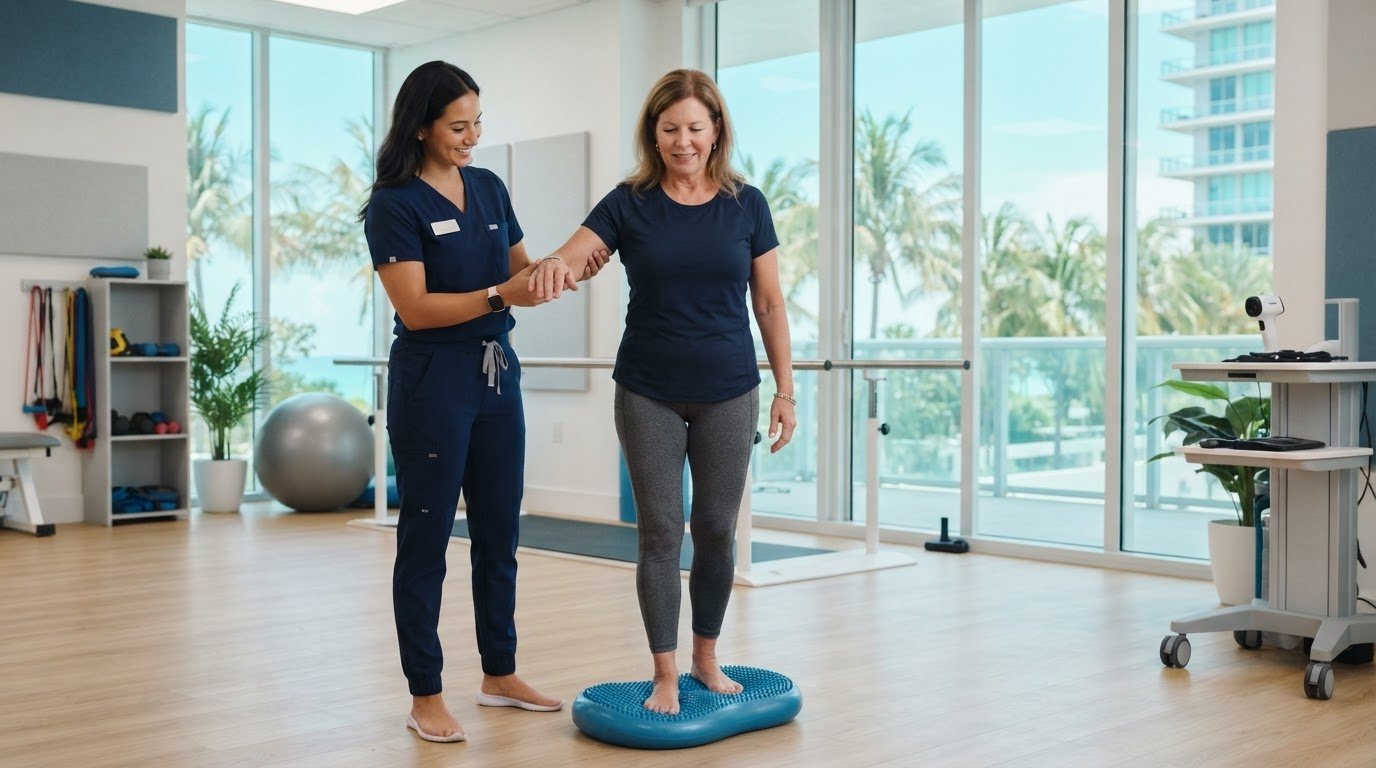
What if the right vestibular therapist is the one who starts by listening to how dizziness or imbalance affects your everyday life? If routine activities have begun to feel unpredictable, it’s understandable to want more than general physical therapy. Knowing how to find a good vestibular therapist in Sunny Isles starts with looking for care that focuses on balance and dizziness while taking your symptoms and personal goals into account.
Vestibular rehabilitation is a specialized area of physical therapy for people experiencing dizziness, vertigo, or balance and gait challenges. Look for an approach that considers what you’re experiencing, explains how the evaluation will guide care, and connects treatment to activities you want to manage more comfortably. At Touch of Health Rehab Inc., personalized therapy plans connect vestibular care with the practical needs of daily life.
This guide explains what vestibular care addresses, what to look for in an assessment and treatment plan, and how progress can be considered along the way. You’ll also learn about a local option in Sunny Isles Beach, serving people in nearby communities including Aventura, Bal Harbor, North Miami Beach, and Miami Beach.
Key Takeaways
- Vestibular rehabilitation focuses on dizziness, vertigo, and balance challenges that can make daily routines feel less steady.
- A thoughtful care plan connects your symptom history with the movements and activities that matter to you.
- Vestibular-focused rehabilitation differs from general balance conditioning because it is shaped around your symptoms and how they present.
- Prepare for an appointment by noting symptom patterns, affected activities, and questions you want to discuss.
- When considering how to find a good vestibular therapist in Sunny Isles, look for care that aligns rehabilitation with your individual needs and goals.
Why a Vestibular Therapist Can Matter When Dizziness Disrupts Daily Life
Dizziness can make familiar routines feel uncertain. You might pause before turning your head, feel unsteady while walking, or hesitate before getting up from a chair. A spinning sensation may pass quickly or return during certain movements. Even unpredictable symptoms can affect confidence and make everyday tasks harder to plan.
Vestibular rehabilitation is a specialized form of physical therapy that addresses symptoms affecting balance and movement. A concise way to distinguish it from general conditioning is this: Vestibular rehabilitation tailors physical therapy to dizziness and balance symptoms; general conditioning builds fitness without necessarily targeting those symptoms. The focus is not simply on getting stronger or exercising more. It is on understanding what you experience and whether vestibular-focused care is appropriate. Learn more about Vestibular Rehabilitation Therapy (VRT), including its general purpose and rehabilitation approach.
Dizziness can have different causes, and a symptom alone cannot identify the cause or determine the right treatment. A clinical evaluation helps put your experience in context and guide appropriate next steps. At Touch of Health Rehab Inc., vestibular rehabilitation, vertigo recovery, and balance and gait rehabilitation are part of personalized physical therapy plans shaped around each person’s needs and daily goals. This focus makes care more relevant than a one-size-fits-all exercise routine.
Which symptoms may lead someone to seek vestibular care?
People use “dizziness” to describe different sensations. It may feel like spinning, swaying, lightheadedness, or difficulty keeping steady. Some notice discomfort when moving their head or changing position, while others mainly feel uncertain on their feet. These experiences may affect walking, turning to look behind you, getting out of bed, or moving between sitting and standing. They are worth discussing with a clinician, but they don’t prove that the cause is vestibular.
When is a clinical evaluation worth discussing?
If symptoms persist, recur, or interfere with activities you need or value, consider discussing them with a healthcare professional. Share when they occur, how they feel, and which movements or routines are affected. That information can help clarify whether vestibular rehabilitation may be suitable or whether another kind of evaluation is needed.
Seek urgent medical attention for sudden, severe symptoms. This is especially important if dizziness occurs with concerning signs such as new weakness, trouble speaking, chest pain, or fainting. Don’t assume these symptoms are caused by a balance problem or wait for a therapy appointment to address a possible emergency. Once urgent concerns are addressed, a clinician can help guide next steps for ongoing dizziness or unsteadiness. This distinction is a useful first step in how to find a good vestibular therapist in Sunny Isles: look for care that takes symptoms seriously without presuming their cause.
What a Vestibular Therapist Should Assess Before Shaping Your Care
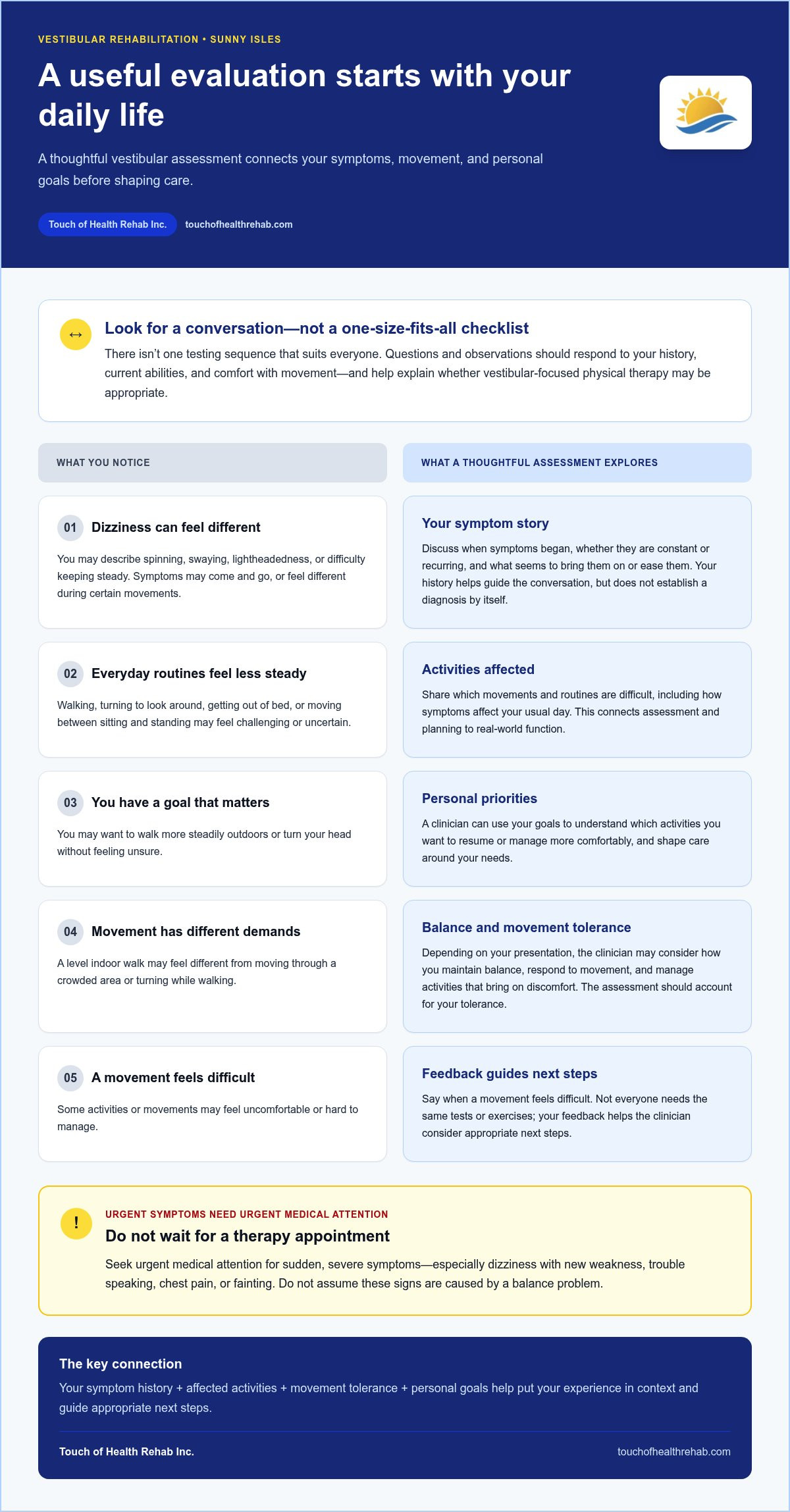
A useful evaluation is more than a checklist of balance tasks. It connects what you’ve been experiencing with how you move through daily life and what you want to do with greater confidence. That context helps the clinician consider whether vestibular-focused physical therapy is appropriate and shape a plan around your needs, rather than relying on a routine that may not fit.
There isn’t one testing sequence that suits everyone. Questions and observations should respond to your history, current abilities, and comfort with movement. If you’re exploring how to find a good vestibular therapist in Sunny Isles, look for an approach that makes room for your perspective and explains how the evaluation informs next steps.
How symptom history and daily goals inform the evaluation
Be ready to describe when symptoms began, whether they are constant or come and go, and what seems to bring them on or ease them. The clinician may also ask how they affect activities such as walking through a busy space, turning to look around, or moving through your usual routine. Your account helps guide the conversation, but history alone doesn’t establish a diagnosis.
Goals add another important layer. “I want to walk more steadily outdoors” or “I want to turn my head without feeling unsure” gives the clinician a practical picture of what matters to you. Those priorities connect the evaluation to activities you want to resume or manage more comfortably.
How balance and movement tolerance can guide care
Depending on your presentation, the clinician may consider how you maintain balance, respond to movement, and manage activities that bring on discomfort. The evaluation should be paced with attention to your tolerance; not every person needs the same tests or exercises. If a particular movement feels difficult, say so. That feedback helps the clinician understand your experience and choose appropriate next steps.
It can also help to describe where and when activities feel challenging. Walking on a level indoor surface may feel different from navigating a crowded area or turning while moving. Sharing these details keeps assessment and planning connected to real-world function, rather than focusing only on an isolated task.
How a personalized plan can reflect individual needs
An individualized assessment turns your symptoms, movement tolerance, and daily goals into a purposeful rehabilitation plan. Treatment choices should reflect what the evaluation indicates and how you respond, rather than follow a promised schedule or fixed progression. As care continues, the clinician can review your experience and adjust the plan to keep it relevant to your needs.
At Touch of Health Rehab Inc., personalized therapy plans are part of the approach to care. The clinic’s vestibular rehabilitation can be shaped around your symptoms and functional goals. Learn more about Touch of Health Rehab Inc. and its physical therapy services.
How Vestibular Therapy Differs From General Balance Training
Both vestibular rehabilitation and general balance conditioning can involve movement, but they have different starting points. General balance work may build strength, stability, or confidence with everyday movement. Vestibular-focused care first considers whether dizziness or motion-related symptoms are part of the picture, then tailors rehabilitation to the individual’s evaluation and needs.
| Vestibular-focused rehabilitation | General balance conditioning |
|---|---|
| Considers dizziness, spinning, or movement-related symptoms alongside balance and function. | Emphasizes overall balance, stability, strength, or movement confidence. |
| Activities are selected and adjusted in response to the person’s symptoms and tolerance. | Activities may focus on broader conditioning goals without specifically addressing dizziness. |
| Progress is considered in relation to symptom response and personally meaningful activities. | Progress may be considered through general functional or conditioning goals. |
Vestibular symptoms and general balance concerns are not identical
Balance relies on information from multiple parts of the body, including the inner ear, vision, and sensation from the body. A challenge with steadiness can have different contributing factors, so an exercise routine designed for general balance may not address every person’s symptoms. For example, benign paroxysmal positional vertigo (BPPV) is one possible condition associated with brief spinning sensations during certain position changes, but that symptom alone can’t confirm BPPV or determine the right care.
A vestibular-focused approach gives attention to the relationship between symptoms, movement, and daily function. That doesn’t mean everyone needs the same evaluation or exercises. A clinician considers the individual presentation before shaping care and can adapt activities if a movement feels uncomfortable or symptoms increase. Tell the clinician what you notice during and after an activity; that feedback helps guide the pace and choices.
What realistic progress can look like
Progress isn’t measured only by whether dizziness disappears. You might also track whether a daily movement feels more manageable, whether you can tolerate an activity for longer, or whether walking feels steadier in a situation that matters to you. The pace and nature of change differ from person to person, so avoid relying on a promised timeline or assuming that everyone responds in the same way.
For some people, rehabilitation may involve balance and walking practice alongside other activities selected to match their needs. Touch of Health Rehab Inc. provides balance and gait rehabilitation as well as vestibular rehabilitation, with personalized plans shaped around symptoms and daily goals. If you’re weighing how to find a good vestibular therapist in Sunny Isles, consider whether the approach distinguishes symptom-focused rehabilitation from general conditioning and adapts to your response over time.
How to Prepare for a Vestibular Therapy Appointment in Sunny Isles
A little preparation can help make your appointment more useful, especially if symptoms come and go or are difficult to describe. You don’t need to arrive with a diagnosis or a perfect account. A few notes about what you experience, what affects your routine, and what you hope to work toward can help the clinician understand your concerns and shape a conversation around your needs.
For people in Sunny Isles Beach and nearby communities such as Aventura, Bal Harbor, North Miami Beach, and Miami Beach, preparation can connect your day-to-day experience with your care goals. Keep it simple: a short written list is enough.
What to note before your visit
Before your appointment, jot down what you’ve noticed and what you want the clinician to understand. You can use your phone or a notebook. Focus on patterns rather than trying to explain the cause yourself.
- Symptom timing: Note when symptoms began, when they tend to occur, and whether they come and go.
- Possible triggers: Record movements or situations that seem connected, such as changing position or turning your head. Don’t deliberately repeat a movement to provoke symptoms.
- Daily impact: Describe activities that feel harder, such as walking, turning, or managing your usual routine.
- Relevant information: Bring prior evaluation records or related medical information if available. A current medication list can also help provide context. Don’t change or stop medication on your own to prepare for therapy.
- Questions and goals: Write down what you’d like to ask and what you hope to do more comfortably, such as walking with greater confidence or turning without feeling as unsettled.
How to make the appointment conversation useful
Share your concerns openly, even if a symptom feels difficult to describe or seems minor compared with your main concern. Mention how movement affects you, what you avoid, and what you feel comfortable trying. You can also say if you’re worried an activity may bring on dizziness. That information helps the clinician understand your experience and consider a pace and plan suited to your tolerance.
Your notes are a starting point, not a test you need to pass. The clinician can ask follow-up questions and use your history alongside the evaluation, rather than relying on one detail to decide what care should involve. Be clear about what matters most to you; an everyday goal can help make rehabilitation more purposeful. If something changes before your visit, add a brief note so you can bring it up.
If you’re considering how to find a good vestibular therapist in Sunny Isles, preparation can help you take an informed first step and communicate what you need from care. Touch of Health Rehab provides vestibular rehabilitation and personalized physical therapy plans for people in Sunny Isles Beach, Aventura, Bal Harbor, North Miami Beach, and Miami Beach. Explore vestibular care in Sunny Isles as you consider your next step.
Find Vestibular Rehabilitation in Sunny Isles With Touch of Health Rehab
Choosing where to begin care can feel like another challenge when dizziness or unsteadiness is already affecting your routine. Touch of Health Rehab is a physical therapy center in Sunny Isles Beach serving nearby communities. Its care includes vestibular rehabilitation, vertigo recovery, and balance and gait rehabilitation, bringing these related needs into a local physical therapy setting.
A local care approach centered on your goals
Touch of Health Rehab serves residents in Sunny Isles Beach, Aventura, Bal Harbor, North Miami Beach, and Miami Beach. The clinic develops personalized therapy plans around each person’s symptoms and goals. This matters because people can experience dizziness and balance difficulties differently, and the activities they want to manage may vary just as much.
A useful starting point is a conversation about how symptoms affect your function: what feels challenging, what you’d like to do more comfortably, and what matters most in your daily life. The clinician can use that context alongside an evaluation to shape appropriate care. Rather than treating a symptom description as a complete answer, an individualized approach keeps your experience and priorities in view as the plan takes form.
You can learn about the clinic and its physical therapy services before taking the next step. Understanding the care offered can help you prepare questions about how vestibular rehabilitation may connect with your needs and goals.
Take your next step toward steadier movement
Assessment-led vestibular care connects clinical understanding with practical goals, such as feeling more secure during everyday movement. Your plan can be tailored to your symptoms, function, and tolerance, then revisited as your needs and experience become clearer. Progress isn’t a guaranteed outcome or a fixed timeline; it’s a collaborative process shaped around the individual.
If you’re still considering how to find a good vestibular therapist in Sunny Isles, look for a thoughtful approach that listens to your concerns, relates care to your everyday goals, and adjusts the plan to your needs. At Touch of Health Rehab, vestibular rehabilitation, vertigo recovery, and balance and gait rehabilitation offer a local way to address those concerns and explore suitable next steps.
You don’t need to have every answer before beginning a conversation about care. Your questions and priorities are a meaningful place to start. Explore Touch of Health Rehab’s services and consider what next step feels right for you.
Take a Confident First Step Toward Care
Your next step doesn’t need to solve everything at once. Let it open a grounded conversation about what you’d like to feel more capable doing and what kind of guidance could help you move toward it. You don’t need to know the cause of your symptoms or predict how care will unfold before you begin.
As you consider how to find a good vestibular therapist in Sunny Isles, look for a conversation where your questions and priorities have a place. Understanding why care is recommended, sharing what feels manageable, and revisiting goals as your experience changes can help you take part in shaping the process. Start with one goal that matters to you.
If you’re ready to explore a local next step, Explore vestibular rehabilitation with Touch of Health Rehab. Bring your questions and priorities, and begin with a conversation shaped around what matters to you. A thoughtful first step can help you move forward with greater confidence.
Frequently Asked Questions
How long does vestibular rehabilitation usually take?
There isn’t a standard timeline; the length of care depends on your symptoms, evaluation findings, goals, and response to treatment. Your therapist can discuss how progress will be reviewed and adjust the plan as needed. For example, you might track whether a particular daily activity feels more manageable over time. If you’re considering how to find a good vestibular therapist in Sunny Isles, look for clear, ongoing communication about your individual plan rather than a promised completion date.
Is it normal to feel dizzy after vestibular therapy?
Some people may notice symptoms during or after an exercise, but responses differ, and you shouldn’t assume that strong or lingering dizziness is something to push through. Tell your therapist what you felt, which activity brought it on, and how long it lasted. The therapist can use that information to adjust the activity or discuss an appropriate next step. Sudden or severe symptoms, especially with other alarming signs, call for urgent medical attention.
Do I need a doctor’s referral for vestibular physical therapy in Florida?
Florida allows physical therapists to treat a condition for up to 30 days without a referral from a practitioner of record if that practitioner hasn’t previously assessed the condition. After that period, a practitioner of record must review and sign the plan of care. Referral rules and insurance requirements aren’t always the same, so confirm what applies to your situation before beginning. This general information isn’t a substitute for guidance about your individual circumstances.
Does insurance cover vestibular therapy in Sunny Isles Beach?
Coverage varies by insurance plan, so don’t assume vestibular therapy is covered at the same level as other physical therapy services. Before starting, review your benefits for details such as network rules, referral or authorization requirements, copayments, deductibles, and visit limits. This can help you understand potential out-of-pocket costs. These considerations apply whether you’re seeking care in Sunny Isles Beach, Aventura, Bal Harbor, North Miami Beach, or Miami Beach.
Can vestibular exercises be done at home?
Yes, home exercises may be part of a plan when a clinician recommends them for your needs and shows you how to perform them. Follow the instructions you’re given, and keep track of how you respond so you can discuss any concerns at a follow-up. Avoid copying exercises from a video or trying to trigger dizziness on your own; an exercise that suits one person may not be appropriate for another.
Can vestibular symptoms return after rehabilitation?
Symptoms can return or change, and that doesn’t automatically mean your earlier care was unsuccessful. A new episode may have a different cause or require a fresh evaluation, so note what feels different, when it began, and how it affects your routine. If symptoms recur, discuss them with a healthcare professional rather than restarting old exercises without guidance. Sudden, severe, or unusual symptoms deserve prompt medical attention.