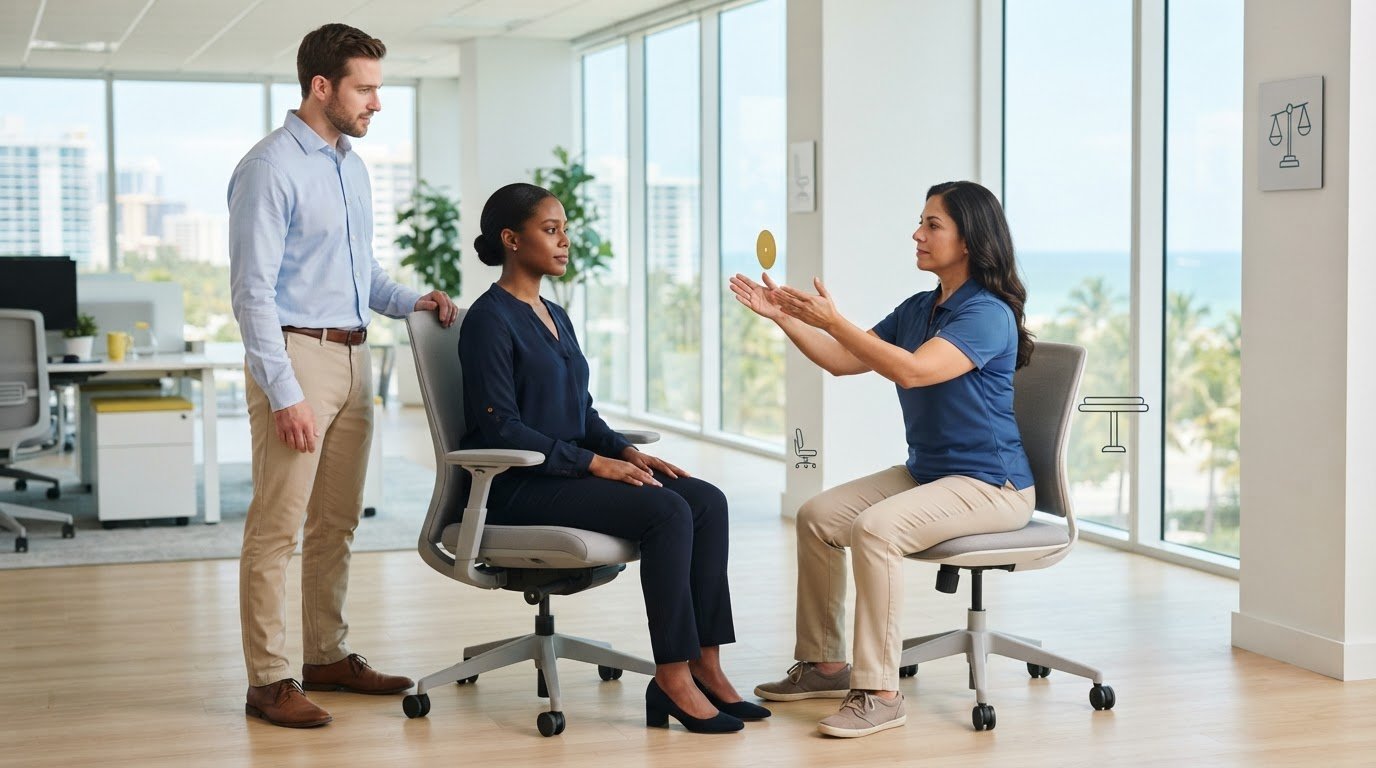
A sudden wave of spinning or unsteadiness can turn an ordinary workday into a safety concern. If you’re wondering how to manage vertigo at work, stop the task and get somewhere stable. Sit down and let a colleague know if you need help while symptoms settle.
Busy surroundings, screens, bright lighting, fatigue, or changes in position may make symptoms harder to manage. This guide covers what to do during an episode, ways to reduce avoidable demands, and how to plan practical adjustments to your work tasks. It also explains when recurring symptoms may benefit from professional assessment. Vertigo is a symptom with different possible causes and treatments.
Some symptoms need urgent attention. Vertigo accompanied by double vision, difficulty speaking, new weakness or numbness, a severe headache, or sudden hearing loss calls for immediate emergency medical care. For ongoing episodes, an individualized assessment and vestibular rehabilitation may help you understand your symptoms and work toward steadier everyday movement.
Key Takeaways
- Learn how to manage vertigo at work with a safety-first response: stop the task and find a stable place.
- Notice how work conditions may affect symptoms without trying to diagnose the cause yourself.
- Consider workspace and task adjustments separately, then discuss options that fit your symptoms and responsibilities.
- Recurring, worsening, or work-limiting symptoms may benefit from clinical assessment and personalized rehabilitation.
- Know which accompanying symptoms call for urgent medical attention, and avoid hazardous duties such as driving or operating machinery when unsteady.
How vertigo can affect you at work, and when symptoms may be urgent
A spinning sensation or sudden imbalance can make familiar tasks feel uncertain. Walking down a corridor, turning to answer a colleague, or standing at a workstation may take more care than usual. Symptoms can also affect concentration, especially when you need to follow moving information or shift your gaze between a screen and nearby papers.
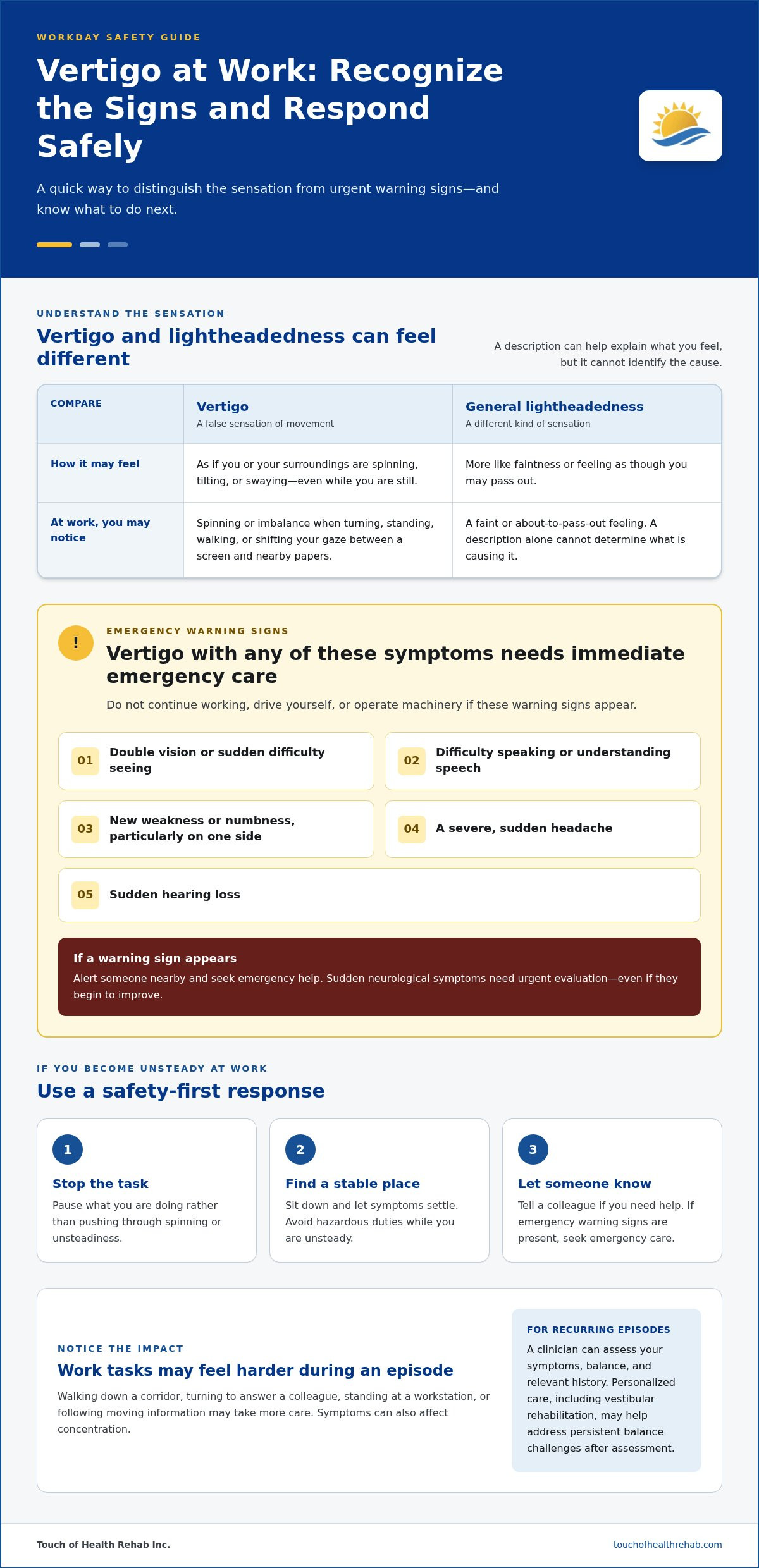
Vertigo describes a false sensation that you or your surroundings are moving. You might feel as if the room is spinning, tilting, or swaying even while you’re still. That differs from general lightheadedness, which may feel more like faintness or being about to pass out. Both can be unsettling, and a description alone can’t identify the cause. Understanding vertigo can help clarify the range of sensations associated with it.
What vertigo may feel like during a workday
Experiences vary, so don’t assume that a less intense episode is unimportant or compare your symptoms with a coworker’s. You may feel a brief spin when turning your head, become unsteady while walking across an open office, or feel as though the floor shifts when you stand. Looking quickly between screens or tracking movement on a display may also feel uncomfortable.
Notice what you were doing when symptoms began and how they affected your balance, vision, or focus. These details can help you describe the experience during a clinical assessment. Vertigo is a symptom, not a diagnosis, and different causes may need different approaches. The goal of learning how to manage vertigo at work is to respond safely, not to diagnose yourself or push through symptoms.
Which symptoms call for urgent medical attention
Most episodes aren’t a sign of a stroke, but sudden vertigo with certain new symptoms can signal a serious medical problem. Seek emergency medical attention if vertigo occurs alongside:
- Double vision or sudden difficulty seeing
- Difficulty speaking or understanding speech
- New weakness or numbness, particularly on one side of the body
- A severe, sudden headache
- Sudden hearing loss
Don’t continue working, drive yourself, or operate machinery if these warning signs appear. Alert someone nearby and seek emergency help. Sudden neurological symptoms need urgent evaluation rather than a wait-and-see approach, even if they begin to improve. If symptoms feel severe or rapidly worsen, prioritize medical help over finishing a task.
This information can guide your next step, but it can’t determine what’s causing your symptoms or replace emergency care. For recurring episodes that affect daily activities, a clinician can assess your symptoms, balance, and relevant history. Individualized care, including vestibular rehabilitation, may help address persistent balance challenges after assessment.
Why vertigo may become harder to manage during work
Work can combine movement, visual demands, and time pressure in ways that make symptoms more noticeable. That doesn’t mean your job caused vertigo, or that a task associated with an episode reveals its medical cause. Vertigo has different possible explanations. Distinguishing a possible cause from a situation that coincides with symptoms can help you describe what’s happening clearly.
Possible causes are not the same as workplace triggers
The vestibular system, which includes structures in the inner ear and the brain pathways that process balance and movement, is one possible source of vertigo. Benign paroxysmal positional vertigo, or BPPV, is one recognized condition that can involve brief spinning sensations with certain head-position changes. Migraine and other health conditions may also be relevant. Only a clinician can assess your symptoms and determine what may be contributing.
A work task may seem connected to an episode without being its underlying cause. For example, turning to respond to someone might coincide with symptoms, but that alone doesn’t confirm BPPV. A visually busy setting may also make it harder to feel steady without explaining why symptoms began. Don’t use a suspected trigger to diagnose yourself or decide on treatment.
Notice which work tasks coincide with symptoms
Patterns can offer useful context at an assessment, especially when you record them without deliberately provoking symptoms. Note what you were doing, your body position, when symptoms began, how long they lasted, and what you noticed. Keep the description simple: “felt unsteady after standing through a meeting” is more useful than guessing at a cause.
Consider whether episodes happen around rapid head turns, prolonged standing, screen use, or moving environments such as busy corridors. People respond differently to the same conditions, and your tolerance may vary from day to day. A task that feels manageable once may be difficult another time, so don’t compare your limits with someone else’s.
A brief log can help you and a clinician look for patterns across workdays. Record whether symptoms started during a task or afterward, whether sitting or pausing changed how you felt, and whether the episode affected balance, focus, or vision. These details can guide a conversation, but they aren’t a substitute for professional assessment.
Don’t test a suspected trigger by repeating a movement or continuing a task that feels unsafe. Instead, note what happened during ordinary activities and share it during a clinical evaluation. If recurring symptoms interfere with work or routine, Touch of Health Rehab’s physical therapy and vestibular rehabilitation in Sunny Isles Beach can provide personalized support for vertigo and balance concerns. The clinic serves nearby Aventura, Bal Harbor, North Miami Beach, and Miami Beach.
Vertigo at Work: A Safe Step-by-Step Response
If vertigo starts during a work task, pause before trying to finish it. The safest next step depends on your balance, the task, and nearby hazards. Use this sequence to reduce the chance of a fall or injury while you decide what support you need.
- Stop the task. Put down tools or other items safely, and stop walking or moving if you can. Don’t rush to reach a chair or continue a task that requires balance, coordination, or clear vision.
- Get stable. Sit or lie down in a safe place, away from stairs, traffic areas, or equipment. If movement makes symptoms worse, keep your head and body still and allow time for symptoms to settle. Don’t attempt an exercise or maneuver unless a clinician has advised you to do it.
- Ask for help if you need it. If standing or walking feels unreliable, tell a trusted colleague and ask them to stay with you or help you reach a safer place. Avoid walking alone while your balance feels uncertain.
- Pause hazardous duties. Don’t drive, operate machinery, work at heights, or perform another task where an episode could put you or someone else at risk. Let a supervisor or colleague know if symptoms affect your ability to do essential duties safely.
- Choose your next step. If symptoms persist, return, or make movement unsafe, arrange a safe way home and don’t drive yourself. If symptoms are sudden or accompanied by urgent warning signs, seek emergency medical attention rather than continuing the workday.
Decide whether it’s safe to resume work
Feeling a little better doesn’t automatically mean you’re ready to resume every task. Consider whether you can stand, walk, focus, and move comfortably enough for the specific demands of your job. A desk-based task may carry different risks from using machinery, climbing, or driving. Don’t return to a hazardous duty while dizzy or unsteady.
If you’re unsure, take a break and discuss the situation with a supervisor or colleague. Follow any relevant advice from your healthcare professional about work and activity. A symptom-free moment may not show whether a particular task is safe, especially if symptoms return with movement. Account for both how you feel and what the task requires.
Knowing how to manage vertigo at work includes knowing when not to push through. If episodes keep interrupting your work, a clinician can assess your symptoms and balance and help guide next steps. Personalized physical therapy and vestibular rehabilitation may support a plan suited to your needs. Touch of Health Rehab Inc. provides care for people seeking support with vertigo and balance concerns.
How to adapt your workspace and workday around vertigo
Once you’ve identified which parts of work feel difficult, consider adjustments one at a time. A change that helps one person may not suit another, and adjustments aren’t a guarantee that vertigo will stop. Think about your symptoms, the demands of your role, and what would make daily tasks safer or more manageable. You can discuss possible changes with your supervisor or HR.
Reduce avoidable visual and movement demands
If visually busy surroundings seem to coincide with symptoms, ask whether a calmer workstation or less visual clutter is practical. Consider arranging frequently used items within comfortable reach to limit unnecessary turning. Screen position, lighting, and workstation setup are other options to discuss rather than universal fixes. Change one factor at a time, then note whether it affects comfort or task performance.
Environmental changes might include choosing a less visually busy spot or adjusting your workstation. Task changes are different: they may involve planning work to reduce repeated trips across a busy area or allowing time to sit between tasks that require standing. A clinician can help you understand how balance and symptoms relate to everyday activities, making workplace planning more informed.
Communicate needs and plan safer tasks
Clear, specific descriptions can make a conversation with your supervisor more useful. Explain how symptoms affect your work rather than trying to name a cause: for example, “I feel unsteady when I turn quickly,” or “I need a brief pause after standing for a while.” Depending on your symptoms and responsibilities, you could discuss temporary task changes, planned breaks, or help with tasks that involve movement.
Agreeing on a simple plan for what to do if symptoms return may help. Decide who to notify and which tasks to pause. Consider sequencing work so movement-heavy tasks aren’t rushed, and build in breaks when appropriate. These adjustments can support safer work, but they don’t replace medical assessment or ensure symptoms won’t occur.
A short symptom-and-task record can support workplace and clinical conversations. Note the activity, body position, time, symptoms, and any changes you made. Keep it factual, and don’t deliberately repeat a task to test a suspected trigger. Sharing these observations during an individualized assessment can help connect symptoms with your daily demands. Vestibular rehabilitation can include an assessment of balance and functional challenges to inform personalized care.
If recurring vertigo affects how you move or work, connect with Touch of Health Rehab Inc. for personalized support with vertigo and balance concerns in Sunny Isles Beach, Aventura, Bal Harbor, North Miami Beach, and Miami Beach.
When recurring vertigo at work may benefit from clinical care
An episode that keeps returning, lasts longer than expected, worsens, or interferes with work and everyday activities deserves clinical attention. You don’t need to wait until symptoms make work impossible to seek an assessment. A clinician can consider your symptom history, balance, movement, and the activities that have become difficult, then help determine appropriate next steps.
Vertigo has different possible causes, so care should be guided by an individual evaluation rather than a one-size-fits-all exercise routine. If you’re learning how to manage vertigo at work, clinical guidance can help you understand how symptoms relate to daily movement and which activities may need a thoughtful, gradual approach.
What an individualized vestibular assessment can clarify
An assessment may explore when symptoms occur, how they feel, and how they affect activities such as walking, turning, or maintaining balance. A clinician may also consider relevant health history and observe movement or balance. No single test or appointment can promise a particular diagnosis or outcome; findings are considered together to guide appropriate care.
Sharing details from work can make the discussion more practical. Describe which tasks feel difficult, how symptoms affect your movement or focus, and what you’ve noticed in your symptom record. An individualized vestibular rehabilitation assessment can help connect balance concerns with everyday function and inform a plan suited to your needs.
How physical therapy can support a return to daily activities
Vestibular rehabilitation is a form of physical therapy that may be part of care for some people with vertigo or balance challenges. A tailored plan can address goals such as steadier walking, improved balance, or greater confidence with functional movement. Exercises and pace should reflect assessment findings and your tolerance, rather than relying on generic instructions or pushing through symptoms.
Progress may involve working on relevant movements in a measured way and adjusting the plan as your needs change. Balance and gait rehabilitation can support mobility goals that matter in daily routines, including moving around safely. The aim is individualized support, not a guaranteed cure or a promise that everyone will follow the same path.
Touch of Health Rehab Inc. provides vestibular rehabilitation and vertigo recovery in Sunny Isles Beach, serving nearby communities including Aventura, Bal Harbor, North Miami Beach, and Miami Beach. If recurring symptoms affect your work or daily activities, explore care at Touch of Health Rehab for personalized support with balance and movement.
Take the next step toward steadier workdays
Knowing how to manage vertigo at work can help you make safer decisions, but you don’t have to figure out every future workday on your own. If symptoms keep affecting your confidence or routines, choose a meaningful goal to work toward with professional guidance, such as feeling more secure with a movement that matters to your job. A clear, personalized goal can make progress feel more manageable and relevant to your life.
Touch of Health Rehab Inc. provides physical therapy, vestibular rehabilitation, and balance and gait rehabilitation in Sunny Isles Beach and nearby communities including Aventura, Bal Harbor, North Miami Beach, and Miami Beach. Explore personalized physical therapy and vestibular care to take a supported next step toward moving through work and daily life with greater confidence.
With the right guidance, you can approach recovery one step at a time.
Frequently Asked Questions
Can vertigo come on suddenly while I am at work?
Yes, vertigo can start suddenly, including during a familiar work activity. You might notice symptoms while seated, moving around, or changing position, and the onset alone doesn’t identify the cause. If it catches you off guard, pause and consider your immediate safety before deciding what to do next. New or severe symptoms, especially with neurological warning signs, need urgent medical attention rather than a return to routine duties.
How long can a vertigo episode last during the workday?
Episode length varies. Some bouts may be brief, while other symptoms can continue or recur over a longer part of the day. Duration depends on the cause and individual circumstances, so a single time estimate can’t predict what you’ll experience. Note when symptoms began, whether they came and went, and which activities were affected. Share that timeline with a clinician if episodes recur or disrupt daily function.
Can stress cause vertigo, or can it make symptoms feel worse?
Stress may make symptoms feel harder to cope with, but it doesn’t establish what’s causing vertigo. A demanding deadline or tense meeting can also make it harder to pause, focus, or notice changes in your balance. Try to distinguish the stress you felt from the physical sensations themselves, and note both. If symptoms persist or interfere with work, a clinician can assess possible causes instead of assuming stress is the explanation.
Can looking at a computer screen make vertigo feel worse?
It can for some people. Scrolling, moving images, glare, or quickly shifting attention between windows may feel uncomfortable when you’re already experiencing balance or visual symptoms. If this happens, pause screen work and notice whether the sensation eases, without treating that observation as a diagnosis. Discuss practical screen or workstation adjustments with your supervisor and clinician. A change may improve comfort, but it won’t necessarily address the underlying cause.
Should I drive myself home after experiencing vertigo at work?
No, don’t drive if you’re dizzy, unsteady, or having trouble focusing. Even a familiar route can become unsafe if symptoms affect your balance, vision, or ability to respond quickly. Ask someone you trust to help arrange a ride, or use another safe way home. If symptoms have improved, consider whether you feel fully steady and alert; if there’s doubt, don’t get behind the wheel. Seek urgent care for concerning sudden symptoms.
Can vestibular rehabilitation help with recurring vertigo at work?
Vestibular rehabilitation may help some people with recurring vertigo or balance difficulties, depending on an individual assessment and their needs. A physical therapist can consider your symptoms, balance, and movement goals before tailoring care; exercises and progression shouldn’t be assumed to suit everyone. Touch of Health Rehab provides vestibular rehabilitation for people in Sunny Isles Beach, Aventura, Bal Harbor, North Miami Beach, and Miami Beach.
Is vertigo always caused by an inner-ear problem?
No. Inner-ear and vestibular conditions are possible causes, but they aren’t the only ones. Migraine and other health conditions may also contribute to dizziness or vertigo-like symptoms, and similar sensations can have different explanations. It’s not possible to identify the cause from one symptom or a work situation alone. A clinician can review your history and symptoms, assess relevant function, and guide appropriate next steps rather than relying on self-diagnosis.