
What if confidence after a fall isn’t something you have to force, but something you can rebuild one safe movement at a time? If you’re wondering how to regain confidence after a fall, it’s understandable to feel wary of walking across a room, using the stairs, or returning to activities that once felt routine.
That hesitation doesn’t mean you’re weak or that you have to give up your independence. Emotional recovery can take time alongside physical healing, and avoiding every uncertain movement may make it harder to trust your body again. The goal isn’t to rush or take unnecessary risks. It’s to find a manageable pace that feels safe and fits your needs.
This guide explains why confidence can change after a fall and offers practical ways to rebuild trust in movement. You’ll learn how to choose small, meaningful steps, recognize when extra support could help, and understand how personalized physical therapy may support your progress. Depending on your needs, balance and gait rehabilitation or vestibular rehabilitation may be part of that support as you work toward feeling steadier in daily life.
Key Takeaways
- Confidence means trusting your ability to move, not expecting that a fall can never happen again.
- Notice whether uncertainty is linked to a particular movement, physical sensation, setting, or worry, without assuming what’s causing it.
- Learn how to regain confidence after a fall by setting a small, personally meaningful goal and adjusting the pace to your comfort and clinician’s guidance.
- Supported practice can offer a middle ground between avoiding movement entirely and pushing yourself too quickly.
- A physical therapist can tailor support to your movement goals, with balance and gait rehabilitation relevant when walking or steadiness feels challenging.
Why Confidence Can Change After a Fall
Feeling cautious after a fall is understandable. Even as bruises, soreness, or other physical effects improve, you may still pause before a familiar movement. That hesitation doesn’t mean recovery has failed or that you’ll always feel this way. A fall can change how predictable movement feels, especially when you’re not yet sure how your body will respond.
Post-fall confidence is trust in your ability to move through everyday activities, even without certainty that another fall can never happen. It isn’t about ignoring risk or pretending to feel completely relaxed. It may mean feeling able to make a considered choice, such as standing at a comfortable pace or taking a few steps with support when you need it. Learning how to regain confidence after a fall starts with recognizing that confidence and physical recovery may progress at different speeds.
Why a fall can affect more than the body
Healing physically doesn’t automatically make you feel ready to resume every familiar activity. You might feel able to stand but hesitate before walking across a room, or reach for a nearby surface before getting up from a chair. Those pauses can reflect uncertainty about the movement, the surroundings, or what might happen next. Some people feel wary after a fall; others don’t. There’s no single emotional response or timetable for feeling ready again.
The phrase fear of falling describes a concern that can influence how someone approaches movement, but it shouldn’t be treated as a diagnosis based on one moment of hesitation. Notice what feels difficult in your own experience: is it the first few steps, turning, standing, or moving through a particular space? Naming the concern can make it easier to discuss and address without judging yourself.
How fear and reduced activity can reinforce each other
If a movement feels worrying, you may avoid it or change your routine to steer clear of uncertain situations. That can bring short-term relief. But with fewer opportunities to practice familiar movements, you might feel less sure when they come up again. This is a possible pattern, not an inevitable result of feeling cautious, and it doesn’t mean you should move before it feels appropriate.
There’s a middle ground between avoiding every challenging movement and rushing back into all your usual activities. You can begin with manageable practice that suits your comfort, current abilities, and any guidance from your clinician. For example, a first goal might be to stand, pause, and decide whether to walk farther. Small, considered experiences can help you notice what feels steady and where you’d like more support.
It’s also okay to ask for help. A person nearby, an appropriate aid, or guidance from a healthcare professional can make a movement feel more manageable without taking away your independence. The aim is to build trust at a pace that respects your needs, not to prove you can do everything alone. If uncertainty continues to limit everyday activities, discuss it with a clinician to identify an appropriate next step.
What Can Make Movement Feel Uncertain After a Fall?
Uncertainty after a fall can have more than one influence. The experience itself may make a movement feel less predictable, while physical sensations or features of your surroundings can add to your concern. Noticing what happens and when can help you explain your experience clearly without having to work out the cause on your own.
Fear is your response; the movements, sensations, health changes, and surroundings affecting your sense of safety are separate factors worth describing. Feeling worried doesn’t tell you by itself why a movement feels difficult or what support would be most useful.
Notice which movements or situations trigger worry
Instead of judging yourself for feeling unsure, look for patterns. Does concern arise when you turn, stand from a chair, begin walking, or move through a particular room? Is it stronger at a certain time or when you feel tired? You don’t need to test yourself or repeat a movement that feels unsafe. Simply noting what brings on uncertainty can give you and your clinician a clearer starting point.
Pay attention to what you experience alongside the worry. For example, you might notice soreness, weakness, dizziness, or a sense of unsteadiness. These observations don’t identify a diagnosis, but they can help you describe what’s happening. Share new, persistent, or changing symptoms with an appropriate healthcare professional, especially if they affect your daily movement.
Consider the person and their surroundings together
A familiar route can feel different if the lighting is dim, the floor is cluttered, or your footwear feels unstable. A change in your health or how your body feels can also affect the same route, even if the surroundings haven’t changed. Factors can interact: you might feel more hesitant turning in a narrow space when you’re already unsteady. Reviewing the environment can help, but it may not address every concern.
To make the situation easier to discuss, note details such as:
- Which movement or part of a route feels uncertain, such as turning near a doorway.
- What you notice physically before, during, or after the movement.
- Whether lighting, clutter, footwear, or an unfamiliar route seems relevant.
This description can guide a more personalized conversation about movement and support. If steadiness or walking is a concern, a physical therapist may help you explore it through balance and gait rehabilitation. The team at Touch of Health Rehab Inc. can discuss your movement goals and the support that may fit them.
Does Regaining Confidence Mean Pushing Through Fear?
No. Rebuilding confidence doesn’t mean forcing yourself to do a movement that feels unsafe, and you don’t have to wait until every worry disappears before taking a manageable step. A useful approach respects both your comfort and your current health. If a movement brings new, worsening, or concerning symptoms, pause and seek clinical guidance rather than treating the discomfort as something to push through.
There’s a difference between gently expanding what feels manageable and testing yourself under pressure. Advice to “just stay active” can be hard to apply when your concern is specific, such as turning toward a doorway or walking on an unfamiliar route. The aim is to find an appropriate next step for your situation, not to match someone else’s pace.
Avoidance, rushing, and gradual practice: what is different?
Each response can feel protective in the moment, but lead to a different experience over time. Consider the contrast below as general education, not a personalized exercise prescription. Your health, symptoms, surroundings, and clinician’s guidance all matter when deciding what movement is appropriate.
- Complete avoidance: Skipping a movement may bring short-term reassurance, but if avoidance spreads, your usual routines can become more limited.
- Rushing ahead: Trying to resume everything at once can feel overwhelming and may make it harder to trust your judgment about what feels manageable.
- Supported, gradual practice: Choosing a small, relevant step and adjusting it to your comfort can create a considered way to return to an activity.
For example, if walking to a familiar room feels daunting, the useful question isn’t “How far should I make myself go?” It’s “What part feels uncertain, and what support or guidance would make this goal appropriate?” A clinician can help shape a plan that takes your individual needs into account. If symptoms change or you feel unsafe, stop and discuss what happened with a healthcare professional.
What a realistic confidence goal looks like
A meaningful goal is often functional and personal: feeling steadier while getting up to prepare a meal, for instance, or feeling more comfortable during one familiar daily activity. The goal isn’t to guarantee that nothing can go wrong. It’s to notice whether you’re participating with greater comfort, making choices that feel right for you, or needing less reassurance in a particular situation.
Progress may be uneven. A movement that feels manageable one day might feel harder in a different setting or when you’re tired. That doesn’t erase what you’ve achieved. Recognize small signs of progress, such as approaching an activity with more clarity or completing an agreed step with suitable support. There’s no universal timeline, and comparing your pace with another person’s won’t tell you what’s right for your recovery.
Learning how to regain confidence after a fall is less about conquering fear and more about building a thoughtful relationship with movement. Personalized physical therapy can help you explore movement goals with professional guidance. Touch of Health Rehab Inc. offers a supportive setting for that conversation.
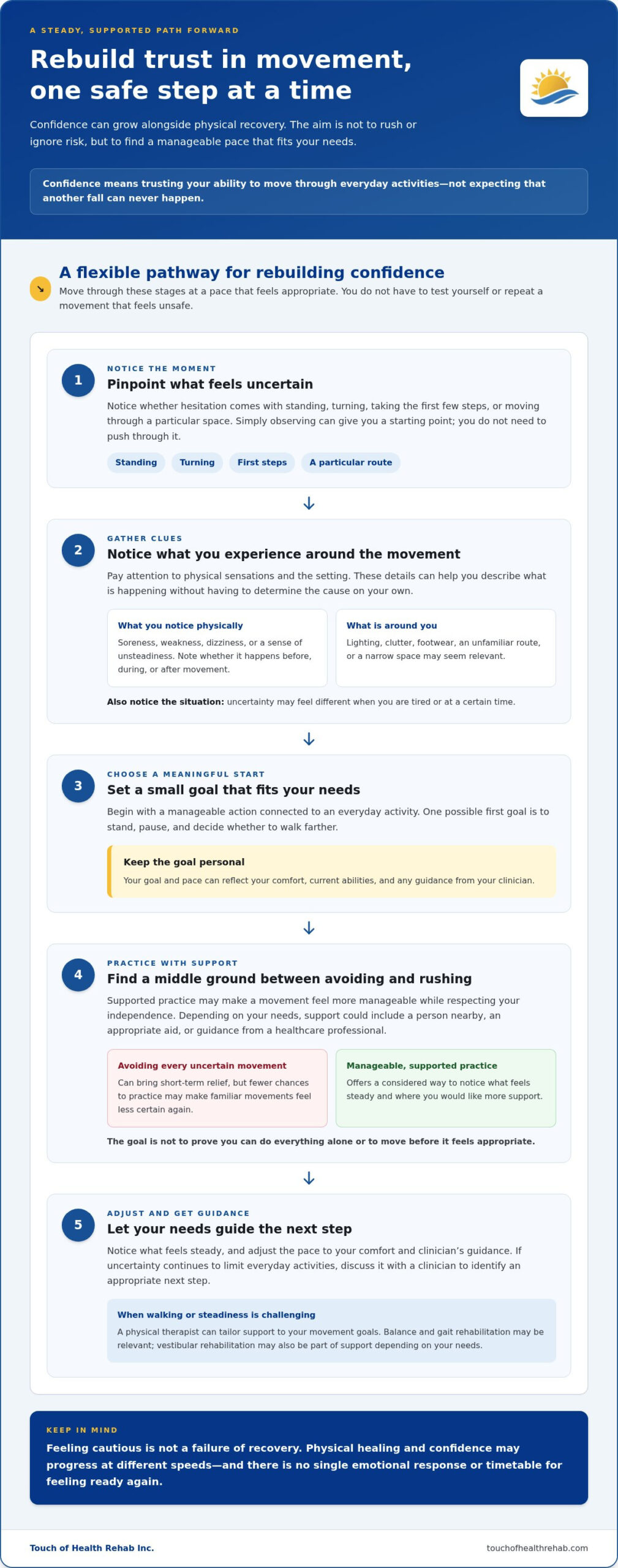
How to Rebuild Confidence After a Fall, One Step at a Time
A flexible plan can make returning to movement feel more considered and personal. The steps below are starting points, not a prescribed exercise program. Adapt them to your health, your clinician’s guidance, and what feels comfortable. If symptoms change or a movement feels unsafe, pause and seek clinical advice before continuing.
- Name the concern. Be specific about what feels difficult, such as standing, turning, or beginning a familiar walk. Describing the movement helps clarify what you want to work toward.
- Choose one meaningful goal. Pick an everyday activity that matters to you, rather than trying to resume everything at once.
- Make the setting manageable. Consider whether lighting, clutter, footwear, or the route affects your comfort. Change what you reasonably can, while remembering that surroundings may not be the only factor.
- Decide what support feels right. Depending on your needs and professional guidance, this might include having a trusted person nearby or working with a clinician on an appropriate approach.
- Reflect and adjust. Afterward, notice what felt easier, what remained uncertain, and whether you’d like to repeat, adapt, or discuss the step.
Choose a first step that feels achievable
Make the goal small enough to feel approachable, but relevant to your life. If your larger aim is to feel more comfortable moving around your home, you might first focus on one familiar part of a routine, with room to pause or stop. The exact step should fit your abilities and clinician’s advice. If having company would help you feel more at ease, invite someone you trust to be present.
Personalized physical therapy can connect a movement concern with goals that matter to you. If you’d like professional guidance as you consider your next step, explore physical therapy support and discuss an approach suited to your needs.
Notice progress and adjust the plan
Progress isn’t measured only by distance, speed, or how many times you repeat an activity. A few personal notes can capture whether you felt more comfortable, needed different support, or took part in an activity that had felt difficult. Record what helped, too. These details can make changes easier to recognize.
Review your plan when your symptoms, circumstances, or confidence change. A step that once felt manageable may need adjusting, and a goal may become easier with time or guidance. A physical therapist can tailor support around your movement goals; fall prevention therapy may also help you discuss movement safety and confidence. Asking for support is part of shaping a plan, not a loss of independence.
When Physical Therapy Can Help You Feel Steadier Again
If uncertainty about moving is making everyday activities harder, a physical therapist can help you talk through your concerns and connect them with practical, personalized rehabilitation goals. Describe what feels difficult, such as walking across a room, changing direction, or feeling steady while standing. Your therapist can consider your movement needs when discussing an appropriate focus, so the plan reflects you rather than a one-size-fits-all routine.
Seeking support doesn’t mean giving up independence. It can help you understand your movement, identify suitable next steps, and work toward activities that matter to you. The right approach depends on your circumstances, symptoms, health, and goals.
What individualized rehabilitation may address
If steadiness or walking is a concern, balance and gait rehabilitation may be relevant. A physical therapist can consider how you move during everyday tasks and discuss goals such as feeling more secure as you walk or turn. Depending on your needs, rehabilitation may also focus on balance or functional movement. The specific focus follows your needs and personal goals, not a fixed sequence everyone must complete.
Be ready to share what you’ve noticed, including movements you avoid, situations that feel difficult, and any symptoms that accompany them. This conversation helps your therapist understand what you hope to regain and what support feels appropriate. If dizziness or vestibular concerns are part of your experience, vestibular rehabilitation may be relevant to your individual care. It isn’t automatically needed for every person after a fall.
Asking for help is compatible with making your own choices. Discuss which daily activities matter most and ask how rehabilitation might support them. A personalized plan can take those priorities into account as you work collaboratively with your therapist.
Finding support in Sunny Isles Beach and nearby communities
Touch of Health Rehab Inc. is a physical therapy clinic based in Sunny Isles Beach, Florida, serving nearby communities including Aventura, Bal Harbour, North Miami Beach, and Miami Beach. Its physical therapy support can be tailored to movement goals, with balance and gait rehabilitation, fall prevention, or vestibular rehabilitation included when relevant to your needs.
Recovery doesn’t have to mean figuring out every step by yourself. If you’re ready to discuss your movement concerns and goals with a physical therapy team, take the next step toward steadier movement.
Let Support Meet You Where You Are
You don’t need to feel completely fearless before taking a thoughtful next step. Confidence can grow alongside uncertainty, and asking for guidance can help you make choices that honor both your independence and your wellbeing. There’s no need to measure your progress against anyone else’s pace.
If you’re still considering how to regain confidence after a fall, start by giving yourself permission to seek support that fits your needs. A conversation with a physical therapist can help you explore your concerns and consider a path forward that feels collaborative, not pressured.
Touch of Health Rehab provides personalized physical therapy support, including balance and gait rehabilitation, fall prevention, and vestibular rehabilitation when relevant to your needs. Take the next step toward steadier movement and start a conversation about your goals. Each step you take with care can bring you closer to moving through daily life with greater trust in yourself.
Frequently Asked Questions
Is it normal to feel afraid of falling again after a fall?
Yes, feeling cautious or anxious can happen after a fall, and it doesn’t mean you’ve failed to recover. Familiar movements may bring up questions about whether you feel steady or ready. Note which situations prompt the concern and how it affects your routine. If worry keeps you from activities that matter to you, share that with a healthcare professional, who can help you consider suitable support.
How can I regain confidence walking after a fall?
Start by identifying the walking situation that feels most challenging, then choose a goal that fits your current abilities and clinical guidance. You might plan for a familiar, uncluttered route and decide in advance where you can pause. Consider having someone you trust nearby if that helps you feel at ease. Keep track of what feels more comfortable, and adjust rather than forcing progress. A physical therapist can personalize balance and gait rehabilitation.
Can physical therapy help with fear of falling?
Physical therapy may help address movement concerns that affect your confidence. A physical therapist can learn what activities feel difficult and consider how balance, walking, or functional movement relates to your personal goals. For example, if turning or changing direction feels uncertain, describe that concern during a discussion about your needs. The purpose is to support participation through individualized rehabilitation, not to promise that another fall can never happen.
What should I do if I feel dizzy after a fall?
Contact an appropriate healthcare professional about dizziness after a fall, especially if it’s new, persistent, changing, or concerning. Dizziness can have different causes, so don’t assume it’s anxiety or a balance issue. A clinician can advise what evaluation is suitable. If an assessment identifies a vestibular concern, vestibular rehabilitation may be relevant. Avoid trying exercises you haven’t been advised to do for your situation.
How long does it take to feel confident again after a fall?
There’s no single timeline for feeling confident again. Your experience may depend on your health, what happened during the fall, the activities you want to return to, and the support available to you. Rather than setting a deadline, notice changes in how comfortable you feel taking part in daily routines. If worry continues to restrict activities you value, discuss a personalized way forward with a healthcare professional.
Should I avoid activities because I am worried about falling again?
It’s generally more useful to consider which activities feel appropriate than to avoid every movement or push yourself to do everything. Your health and recovery should guide those choices. If you’re uncertain about a specific task, such as carrying items while walking, ask a healthcare professional to help you think through a suitable approach. Temporary changes or support may help you stay involved in valued routines while you work out what feels manageable.
How can family members support someone who is afraid of falling?
Listen first, and ask what kind of help the person would welcome. Instead of urging them to “just try,” offer a choice, such as accompanying them or giving them space while they complete a familiar task. Notice and acknowledge effort without setting the pace for them. If concern is limiting daily life, encourage a conversation with a healthcare professional. For families in Sunny Isles Beach, Aventura, Bal Harbour, North Miami Beach, and Miami Beach, local physical therapy support can be one option to discuss.