
Doing more isn’t always the fastest way back to your usual routine. If you’re wondering how to speed up recovery after surgery, focus on following your care instructions, protecting your incision, moving safely, eating and drinking enough, and getting practical help at home. Your recovery pace depends partly on the procedure and your overall health, so let your surgical team’s guidance shape each step.
It’s understandable to want to feel like yourself again as soon as possible. Small, steady choices can support healing without asking your body to do more than it’s ready for. Rest is part of progress, not a setback.
This article explains how blood sugar management, bathing precautions, careful walking, nourishing meals, and a comfortable recovery space can help you care for yourself. You’ll also learn when to follow up with your care team and which changes need prompt attention, so you can approach recovery with greater confidence and a clear daily plan.
Key Takeaways
- Track blood sugar and take prescribed medicines as directed, since high blood sugar can slow wound healing.
- Keep your incision clean and follow your care team’s directions before showering or soaking in a bath or pool.
- Start moving when your physician says you’re able; after endovascular surgery, MedlinePlus advises short walks on flat surfaces and limiting stair use to around 2 times daily for 2 to 3 days.
- Support healing with enough fluids and balanced meals, including protein, while following your provider’s guidance on foods and supplements.
- Make home recovery safer and easier by keeping essentials close and asking family or friends for help with daily tasks.
1. Blood sugar management for wound healing
Blood sugar is one daily factor you can monitor while your incision heals. High blood sugar can slow wound healing or prevent a wound from healing. If you have diabetes, track your readings and take diabetes medicine or insulin as prescribed by your healthcare provider. Keep your care team informed about readings that concern you, especially if nausea, fatigue, or pain makes your usual routine difficult.
How much sleep and rest do you need after surgery? Rest when you feel tired, and take quiet breaks between necessary tasks. Rest helps your body conserve energy for healing, and fatigue can be stronger after a major operation or general anesthesia. Follow your discharge instructions about activity, and tell your doctor if pain repeatedly prevents you from sleeping or resting.
To help keep blood sugar steady, follow your healthy eating plan, limit sweet foods and drinks, and be active only to the level your healthcare provider recommends. A short walk may suit some people, while others need different guidance. Your care team can help adapt your routine if reduced appetite or limited movement affects glucose management.
Nausea, fatigue, and pain can make eating less appealing. Try small, manageable portions and choose foods that fit the meal plan your provider gave you. If you have diabetes, keep tracking your blood sugar even when your meals change; tell your care team if you can’t eat or drink as usual. This information can help them review your recovery plan.
Take prescribed medications as directed, and record each dose and its timing. A written log or phone reminder can help you stay on schedule when you’re tired. Take pain medicine as your doctor directs, since effective pain management can help you rest and take part in recommended recovery activities. Contact your doctor promptly if severe pain isn’t relieved by the medicine you were instructed to take.
If you’re receiving IV fluids in the hospital, follow the nurse’s instructions and tell a member of your care team if you have questions or discomfort around the IV. Don’t adjust the equipment yourself. Once you’re home, drink plenty of fluids as advised, and contact your care team if drinking becomes difficult. Clear communication helps your team understand changes in appetite, medication routines, and fluid intake.
These practical steps support a careful approach to how to speed up recovery after surgery: track glucose, follow medication directions, and report obstacles early. Keep your notes together so you can describe changes clearly at follow-up visits, even if you’re feeling better.
2. Bathing and swimming while healing
What should you eat and drink to support healing after surgery? Choose fluids and balanced meals with protein, fiber, and nutrients such as vitamins C and D, iron, and B12. Eggs, fish, beans, Greek yogurt, whole grains, fruits, and vegetables are practical options. Follow your provider’s guidance about when to reintroduce foods, especially after procedures affecting digestion. If eating or drinking becomes difficult, contact your care team.
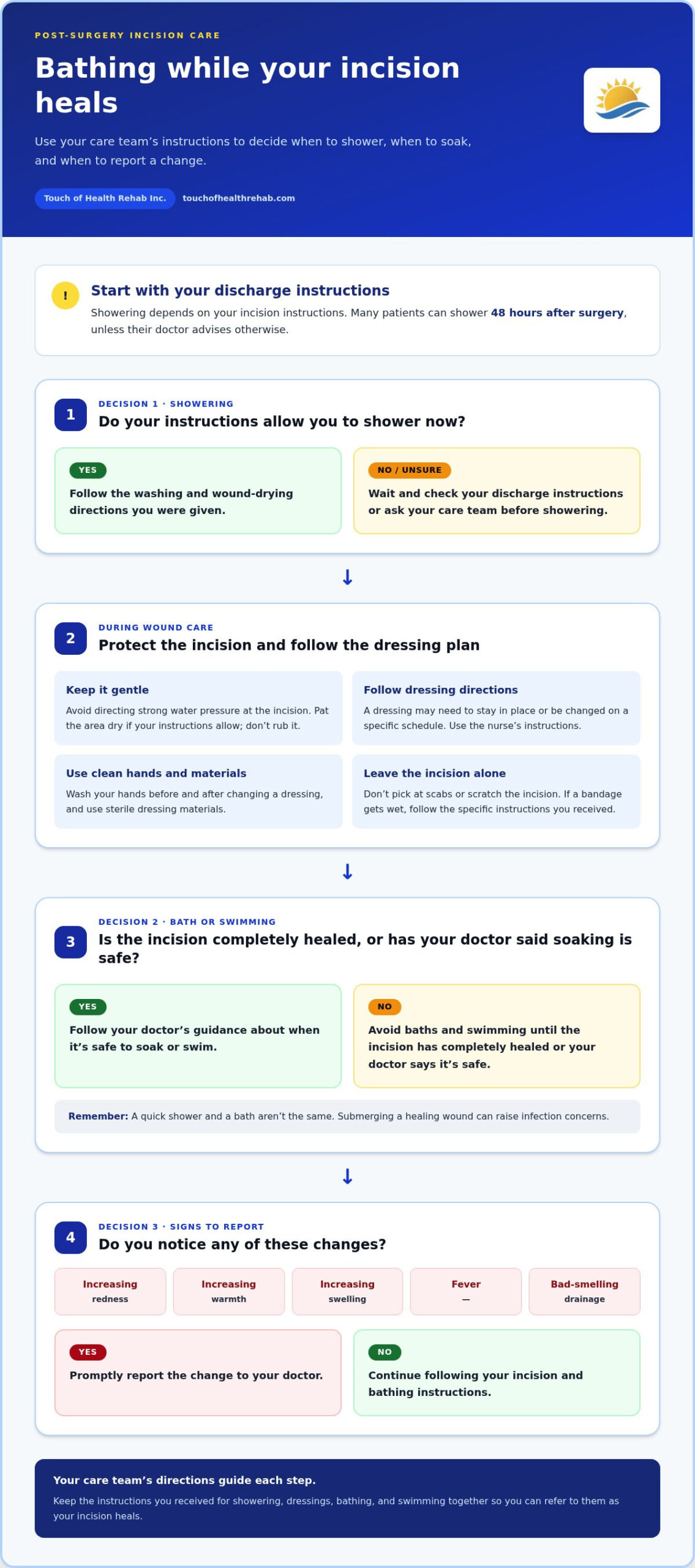
Showering depends on your incision instructions. Many patients can shower 48 hours after surgery unless their doctor advises otherwise. Follow the directions for washing and keeping the wound dry, and avoid directing strong water pressure at the incision. Pat the area dry if your instructions allow, rather than rubbing it. A dressing may need to stay in place or be changed on a specific schedule, so use the nurse’s directions for your wound.
How can you care for a surgical incision and prevent infection? Keep it clean and dry as instructed, wash your hands before and after changing a dressing, and use sterile dressing materials. Don’t pick at scabs or scratch the incision. Promptly report increasing redness, warmth, swelling, fever, or bad-smelling drainage to your doctor.
Wait to soak in a bath or swim until the incision has completely healed or your doctor says it’s safe. Submerging a healing wound can expose it to water and raise infection concerns. A quick shower and a bath aren’t the same, so follow your surgeon’s directions for each. If a bandage gets wet, follow the specific instructions you received instead of improvising a replacement.
Protein supports wound healing because your body uses it to build tissue. Include a protein source at each meal or snack, such as eggs at breakfast, beans with lunch, or fish at dinner. If your appetite is low, smaller portions more often can help you get protein and calories. Fiber from fruits, vegetables, and whole grains can also support digestion during recovery.
Magnesium helps heal broken tissue and reduce swelling, but that doesn’t mean a supplement is right for everyone. Ask your healthcare provider before taking magnesium, vitamins, minerals, or other supplements. Food choices and supplement needs depend on your health and procedure. If a nutrition plan feels hard to manage, discuss practical options with your care team; your recovery plan may also include support for safe movement as you heal.
3. Careful walking to prevent complications
Begin walking when your physician says you’re able, and follow your discharge instructions for distance and assistance. Gentle movement supports blood flow, wound healing, and muscle strength; it can also help get your bowels moving. If you feel unsteady, use the support recommended by your care team and ask someone nearby to stay with you. Keep early walks short, then increase activity gradually as your doctor advises.
Some patients are advised to take a short walk every hour or two to reduce complication risks. Your schedule depends on the procedure and your recovery instructions, so don’t apply that interval automatically. After endovascular surgery, MedlinePlus says patients can walk short distances on flat surfaces and should limit stair use to around 2 times a day for 2 to 3 days. Follow the instructions for your specific procedure.
Choose a clear, level route and wear stable footwear. Pause if pain, dizziness, or unusual fatigue makes walking difficult, and tell your care team about changes. Excessive pain can raise the risk of blood clots or pneumonia, so report pain that keeps you from moving as instructed. Stay hydrated according to your care plan, and don’t add stretching, yoga, or other physical activity until your medical team approves it.
Recognize warning signs instead of trying to walk through them. Contact your doctor promptly about increased incision pain, redness, swelling, warmth, fever, or bad-smelling drainage. Trouble breathing requires immediate medical attention. Leg pain or swelling, hot or discolored leg skin, or enlarged surface veins also need immediate medical help. These symptoms need attention, not a longer walk or a change to your activity plan.
Enhanced Recovery After Surgery, or ERAS, is associated with shorter hospital stays in the cited research. A study in the Journal of the American Medical Association found ERAS reduced hospital stays by about 2.2 days. The research also reports that the share of patients requiring narcotics fell from 63% to 15% under the ERAS protocol. These findings describe a protocol, not a promise about an individual’s recovery.
Treat walking as one part of a coordinated recovery plan, not a test of willpower. Your procedure, symptoms, and care instructions determine how activity progresses. Ask your doctor which movements are appropriate, and report new pain or swelling instead of pushing through it. Staying active within those limits can help preserve strength while giving your body time to heal.
4. Eating and drinking enough during recovery
What factors affect recovery time after surgery? The procedure, your age, overall health, and the amount of tissue affected all play a part. Those factors also shape eating and drinking guidance, so follow instructions tailored to your operation rather than assuming every recovery follows the same plan.
Build meals around protein, fiber, and a variety of nutrients. Protein helps your body build tissue, while iron and vitamin B12 help bone marrow form new blood cells. Choose options such as eggs, fish, lean meat, beans, or Greek yogurt, and add whole grains, fruits, and vegetables for fiber. Fiber-rich foods can help prevent constipation, while fiber and probiotics can support digestion and the immune system.
If your appetite is low, try smaller amounts more often and include protein at each meal or snack. Nausea, fatigue, and pain can make eating difficult, so choose manageable foods and tell your care team if you can’t eat or drink enough. After some procedures, a provider may recommend soft foods such as yogurt, applesauce, oatmeal, mashed potatoes, scrambled eggs, soup, cottage cheese, or smoothies.
Drink plenty of fluids, choosing water or other unsweetened drinks as appropriate for your care plan. Ask a clinical dietitian nutritionist how much fluid is right for you. Follow your provider’s instructions about when to reintroduce foods; after certain operations, food type and texture may need to change gradually. Don’t start vitamins, minerals, or other supplements without discussing them with your healthcare provider.
Eating guidance before surgery depends on your procedure and clinical instructions. The recommendations described in the research include eating carbohydrates up to six hours before surgery and drinking clear liquids, including sports drinks, up to two hours before surgery. Follow the specific preoperative instructions you received, since guidance before an operation differs from advice during recovery. After surgery, sports drinks may not suit everyone because their sodium can contribute to water retention and make swelling harder to reduce.
Early walking and eating may be part of a coordinated recovery plan, but neither replaces instructions specific to your procedure. Begin moving only as your doctor recommends, and choose meals that fit your recovery plan. A balanced diet can support healing, while smoking and alcohol can slow healing and increase the risk of complications. If you smoke, ask your healthcare provider for help stopping; avoid alcohol during recovery as your care team advises.
5. Home care support after surgery
A safe recovery at home starts before you leave the hospital. Set up a resting area with water, your phone, medication notes, and wound-care supplies within easy reach. Clear loose rugs and cords from walking paths, and ask family or friends to help with meals, laundry, or bathing if those tasks feel difficult. After general anesthesia or a major operation, you may feel very tired at home, so arrange practical help rather than packing your schedule.
Follow your discharge instructions for incision care, medication, and activity. If you change a dressing, wash your hands before and after, and use sterile materials as directed. Keep the incision clean and dry, change bandages as often as your doctor instructs, and don’t pick at scabs. Contact your medical team about unusual wound color, odor, or drainage, or increasing redness, warmth, or swelling, which may signal infection.
Make a simple medication record with each medicine’s dose and timing. Take prescriptions as directed, and speak with your care team before changing or skipping a dose. Tell them how well pain medicine is working, since uncontrolled pain can interfere with rest and movement. Use heat or cold for wound pain only when your instructions say to do so, and contact your doctor about severe pain or severe nausea and vomiting.
Respect lifting and driving restrictions, even if you feel ready to resume normal tasks. After some surgeries, instructions may prohibit lifting anything over 10 pounds. Driving restrictions can also vary; patients may be told to avoid driving for two weeks or two months. Ask someone to handle errands or transportation while restrictions apply, and don’t test your limits by carrying groceries or lifting laundry baskets.
Rest helps your body conserve energy for healing, but recovery also means gradually returning to routine. Do only as much as you feel able to manage, and avoid high-intensity workouts or activities that strain the surgical site. If your doctor recommends physical therapy, follow the prescribed program. Post-surgery physical rehabilitation can support a structured return to movement when it’s part of your recovery plan.
Keep follow-up appointments, even when you feel better. A clinician may notice concerns you can’t see, and visits give you a chance to discuss pain, swelling, appetite, or wound changes. Keep water nearby and write down questions as they arise, so you can describe specific changes clearly during your appointment.
Thoughtful home preparation turns recovery instructions into manageable daily steps. If you’re ready to explore support for rebuilding movement after surgery, learn about post-surgery recovery support.
Touch of Health Rehab: Physical Therapy
Touch of Health Rehab Inc. offers Post Surgery Physical Rehabilitation to support your return to movement after an operation. If your doctor recommends physical therapy, a rehabilitation program can help you work toward strength, mobility, and daily function while respecting your surgical precautions.
Turn to physical therapy when you’re ready to progress beyond basic home instructions or need guidance with safe movement. Your recovery plan should follow your surgeon’s restrictions and reflect your current abilities. Touch of Health Rehab Inc. also provides Physical Therapy, Postural Education, and Vestibular Rehabilitation for related rehabilitation needs.
For support with your next steps after surgery, contact Touch of Health Rehab Inc.
Build your next step into your recovery plan
Recovery isn’t a race to resume everything at once. Choose one practical goal that reflects your next milestone, such as moving more comfortably or returning to a familiar daily activity. Keep your surgical team involved as your abilities change, and use its guidance to shape what comes next. A steady, supported approach is central to how to speed up recovery after surgery while respecting your body’s needs.
If guided rehabilitation fits your plan, Touch of Health Rehab offers Physical Therapy, Postural Education, and Vestibular Rehabilitation. These services can support different movement and balance needs as you work toward greater confidence in daily life. Let your surgical team’s advice guide when rehabilitation begins and which activities are appropriate for you.
Take the next step at a pace that feels manageable. Contact Touch of Health Rehab to explore support for your recovery. Each thoughtful step can help you move forward with greater confidence.
Frequently Asked Questions
How can I safely manage pain after surgery?
Use pain medicine as prescribed, and tell your care team if it isn’t controlling your symptoms. Before surgery, discuss pain-management options and any medicines you already take. Afterward, note when pain worsens, what you were doing, and whether medication helped; these details can guide your care team’s response. Don’t change doses or apply heat or cold to the incision unless your instructions permit it. Severe pain that medicine doesn’t relieve needs prompt medical attention.
How soon should I walk or exercise after surgery?
Start walking when your physician says you’re able, then build activity gradually within your recovery instructions. Exercise isn’t automatically safe just because walking feels manageable; ask which movements suit your procedure and incision. Stop and report new or worsening pain, dizziness, or unusual symptoms instead of pushing through. If physical therapy is prescribed, follow its planned progression. For people in Sunny Isles Beach, Aventura, Bal Harbor, North Miami Beach, or Miami Beach, local rehabilitation can help apply movement guidance to daily activities.
Which medications and supplements can slow healing or interact with postoperative prescriptions?
Don’t add supplements or change prescribed medicines without discussing them with your healthcare provider. Before taking vitamins, minerals, herbal products, or over-the-counter medicine, share a complete list of your prescriptions and usual supplements. This helps your care team consider your procedure, health conditions, and possible interactions together. Keep a written record of doses and timing, and contact the prescriber before skipping or adjusting any medication. Don’t assume a product is safe just because it’s sold without a prescription.
What are warning signs of complications after surgery, and when should I seek urgent care?
Contact your doctor promptly for fever, increasing incision redness or swelling, warmth, or bad-smelling drainage. Trouble breathing requires immediate medical attention. Seek urgent help for leg pain or swelling, hot or discolored skin on the leg, or enlarged surface veins. Severe nausea or vomiting also needs a prompt call to your doctor. If symptoms are rapidly worsening, don’t wait for a routine follow-up appointment; describe what changed and when it began.
When can I return to work, driving, and normal activities after surgery?
Resume work, driving, and everyday tasks according to your surgical restrictions and the demands of each activity. Driving instructions may vary: some patients are told to avoid it for two weeks or two months. After some procedures, lifting anything over 10 pounds may be restricted. Consider whether your work involves lifting, prolonged standing, or commuting, and discuss those demands with your doctor. Increase routine activities progressively, and don’t treat feeling better as permission to ignore restrictions.