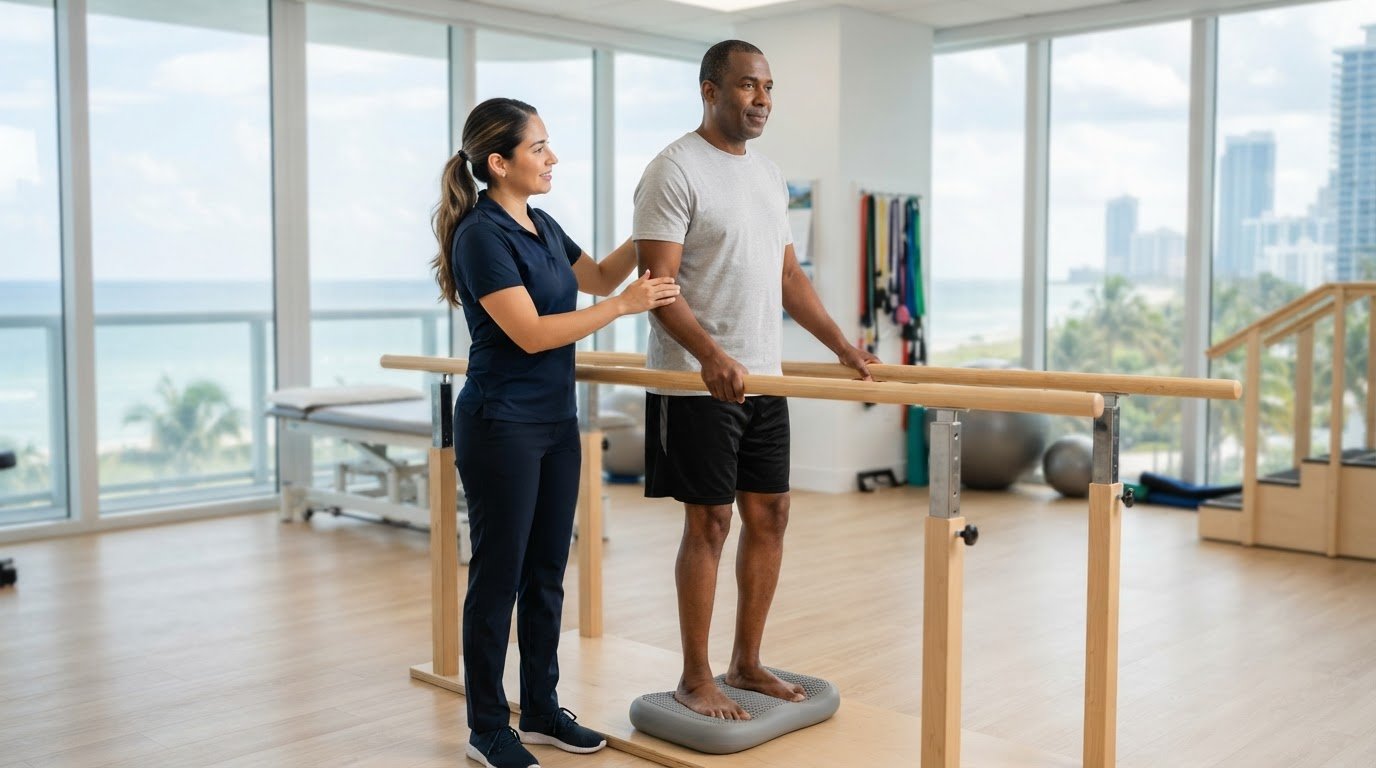
The most severe pain after spinal fusion is generally felt in the days immediately following surgery, and returning to usual activities can take 6 months to 1 year or longer. Spinal fusion recovery physical therapy in Sunny Isles can support a gradual return to movement and everyday function, with progress paced to your recovery plan. Healing takes time, so early discomfort doesn’t tell the whole story.
It’s understandable to wonder how much pain to expect, when to start moving, and which symptoms need prompt attention. Recovery isn’t a race: fused vertebrae need time to heal, while guided rehabilitation can help you rebuild strength and move safely.
This article explains what recovery may feel like, how physical therapy can support healing and long-term spinal health, and why your surgeon’s instructions determine when and how you increase activity. You’ll also learn which changes call for prompt medical attention, so you can approach recovery with greater clarity.
Key Takeaways
- Pain is often strongest in the days immediately after surgery; recovery progresses gradually as the fused bones heal.
- Your rehabilitation plan should reflect the surgical technique, diagnosis, healing progress, and your surgeon’s instructions.
- Static stabilization exercises build control by moving your arms or legs while keeping your trunk steady.
- Physical therapy can help restore strength, movement, and body mechanics that support long-term spinal health.
- Recovery timelines vary, so learn which milestones may guide your return to walking, exercise, work, and everyday activities.
How painful is spinal fusion recovery?
The most severe pain after spinal fusion is generally felt in the days immediately following surgery. The operation joins vertebrae so they heal as one solid bone, while implants stabilize the area. Pain may come from the incision, irritated tissues, or your body adjusting to changed movement. Its intensity and pattern vary with the procedure and diagnosis.
Rehabilitation should reflect your surgical technique and diagnosis, not follow a generic exercise list. A therapist considers the fused area, your movement, strength, pain response, and surgeon’s instructions. For example, after a lower-back fusion, you may practice getting out of bed without twisting. A different fusion or diagnosis may call for a different progression.
A personalized assessment turns these details into practical recovery steps. Your therapist can observe how you sit, stand, walk, and reposition, then identify movements that need support. Your plan may start with safe transfers and short walks, advancing as your tolerance and function improve. Record pain changes and difficult activities to discuss at therapy visits.
Outpatient therapy takes place in a clinic, with planned, supervised exercise as you regain function. Hospital therapy focuses on early mobility during your surgical stay, while home-based therapy brings rehabilitation into your living space and routines. The setting affects access and opportunities to practice; the right choice depends on your mobility, care needs, and stage of recovery.
Florida insurance coverage for physical therapy after spinal fusion depends on your plan’s benefits and conditions. Your out-of-pocket costs may be affected by coverage rules, provider network status, authorization requirements, and visit limits. Review your plan terms before scheduling, and consider how prescribed therapy fits its covered benefits.
Therapy frequency and duration vary with your surgeon’s recommendations, healing, and functional goals. Most patients start physical therapy 2 to 4 weeks after surgery, depending on their doctor’s recommendations, and many attend 2-3 times a week during the initial stages. Most patients undergo therapy for about 3 to 6 months, with the plan adjusted as recovery progresses.
Home-based rehabilitation can connect exercises to everyday tasks, such as moving safely between a bed and chair. A therapist can also observe how your home setup affects posture, walking, and daily movement. This differs from outpatient care in a clinic and hospital therapy, which supports mobility during the immediate postoperative stay.
Don’t push through sharp pain. During early recovery, stop walking if sharp pain occurs, and walk only up to minor aching. Stop a stretch if it causes pain, and balance activity with rest. Follow your surgeon’s instructions before changing exercises: appropriate techniques and progression depend on your procedure and healing.
Static stabilization exercises
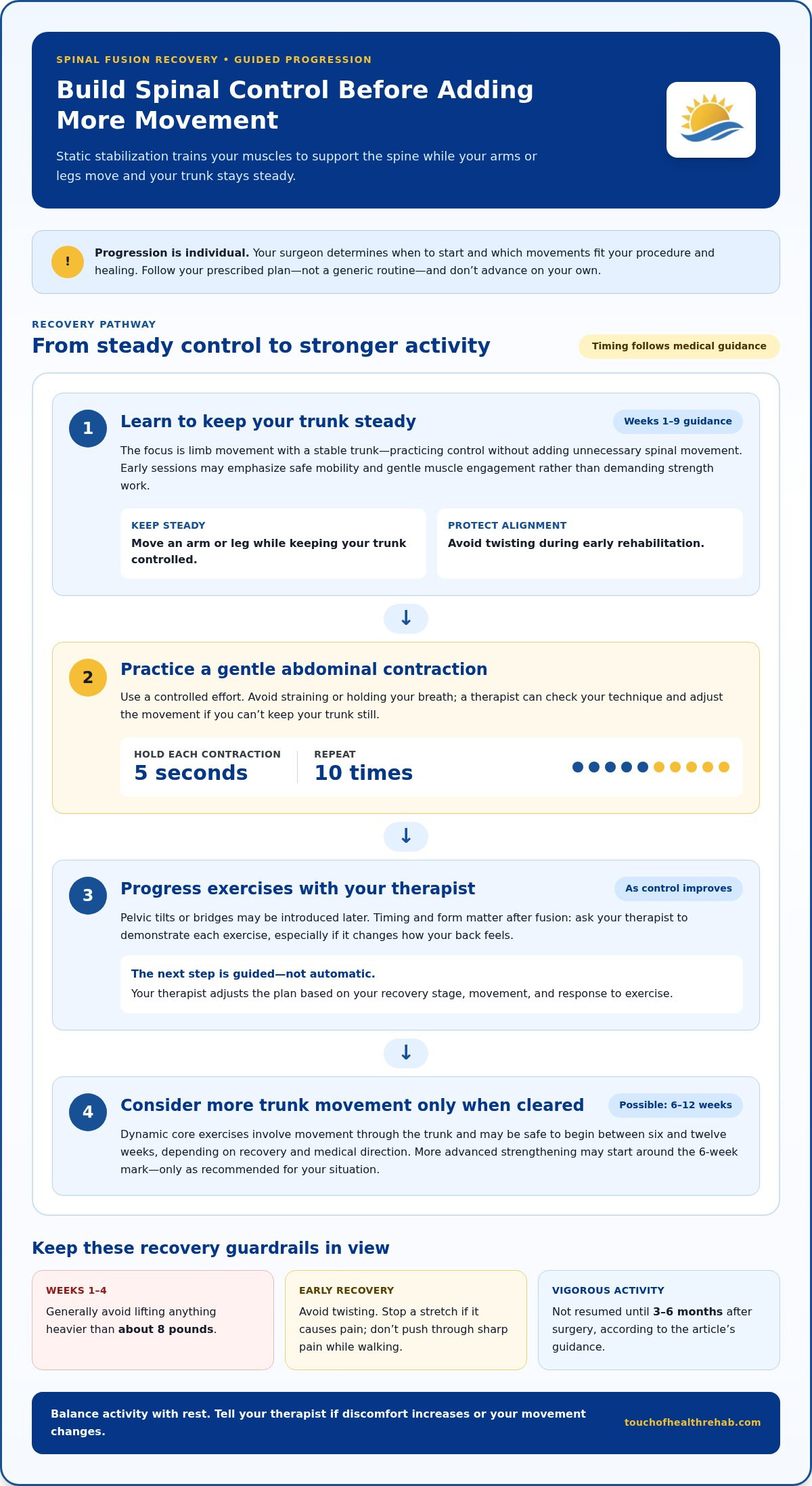
Static stabilization trains your muscles to support the spine while your arms or legs move. In rehabilitation guidance for weeks 1 through 9 after spinal fusion surgery, the goal is to move your limbs while keeping your trunk steady. This lets you practice control without adding unnecessary spinal movement. Follow the exercises prescribed for your recovery stage, not a generic online routine.
The timing of physical therapy can vary during recovery, so follow recommendations for your individual situation. Your surgeon approves when to start and which movements fit your procedure and healing. Early sessions can focus on safe mobility and gentle muscle engagement, rather than demanding strength work.
A simple abdominal contraction can help you learn to stabilize your trunk. The listed exercise involves holding the contraction for 5 seconds and repeating it 10 times. Keep the effort controlled, and avoid straining or holding your breath. Your therapist can observe your technique and adjust the movement if you cannot keep your trunk still.
As your control improves, your therapist may progress your exercises. Later in recovery, they may guide pelvic tilts or bridges. These movements build strength, but timing and form matter after fusion. Ask your therapist to demonstrate each exercise before practicing it at home, especially if it changes how your back feels.
Dynamic core exercises involve movement through the trunk, unlike static stabilization. They may be safe to begin between six and twelve weeks after surgery, depending on recovery and medical direction. More advanced strengthening exercises may start around the 6-week mark. These milestones are not a reason to advance on your own; your surgeon’s recommendations and therapy assessment guide the progression.
After spinal fusion, avoid twisting the spine during early rehabilitation and maintain alignment when sitting, standing, walking, or repositioning. During the 1-to-4-week recovery stage, patients are generally advised to avoid lifting anything heavier than about 8 pounds. Vigorous activities are not resumed until 3-6 months after surgery. Follow any additional restrictions in your surgical instructions.
Even a gentle exercise can become painful if you overdo it. Stop a stretch if it causes pain, and don’t push through sharp pain while walking. Balance exercise with rest, and tell your therapist if discomfort increases or your movement changes. That feedback helps shape your next session and avoid repeating a movement that exceeds your current tolerance.
For home practice, keep the written exercise plan nearby and use a stable surface for support when needed. Work slowly through each prescribed movement, checking that your trunk stays controlled during limb motion. If you need help building safe exercise habits after surgery, guided recovery support can help you progress with structure.
Pain management
Spinal fusion is designed to stabilize the spine and reduce pain, but discomfort can remain during recovery. The most severe pain is generally felt in the days immediately following surgery. Pain may relate to the incision, the operated area, or activity during healing. Tracking where discomfort occurs and what you were doing gives your care team useful context.
Pain medicines prescribed after spinal fusion may include opioids, nonsteroidal anti-inflammatory drugs, or local anesthetics. These medicines work in different ways, and a prescribed plan may use more than one type. Follow your medication instructions, and note whether a dose changes your pain or ability to move. Don’t adjust the plan on your own.
Combining pain medicines may improve pain relief and reduce opioid use after spinal fusion surgery. However, not every combination is appropriate for every patient. Your prescriber determines which medicines belong in your plan based on your treatment and health needs. Keep an up-to-date list of medicines, including prescribed pain relievers, so your care team can review your full regimen.
Self-management works best when you notice patterns early. Record whether standing, walking, sitting, or changing position affects your discomfort, along with the activity and how you felt afterward. These observations can help identify movements that need adjustment and tasks you can gradually resume. Share changes at follow-up appointments so your care team can address concerns.
Treat movement and rest as complementary parts of recovery. During early recovery, walk only up to minor aching, and stop if sharp pain occurs. This gives you a practical limit without treating every mild ache as a reason to stop moving. Break daily activities into manageable steps, then pause when your body needs time to recover.
Protect the incision and maintain spinal alignment during everyday tasks. Move slowly when getting out of bed, and avoid twisting as you reposition. When sitting or standing, maintain good posture as your care team has instructed. Deliberate movements can make routine tasks more controlled and help avoid unnecessary strain during recovery.
Stretch with a clear pain boundary: stop if a stretch causes pain rather than holding the position or forcing extra range. Tell your therapist which movement triggered symptoms, where you felt them, and whether discomfort eased after stopping. This specific feedback can guide safer activity modifications and keep rehabilitation within your current tolerance.
Contact your surgical team about concerning changes rather than trying to manage them with extra exercise or medication. Keep your prescribed follow-up appointments so your care team can monitor progress and address concerns early. A steady record of pain, medicines, and daily activities can make those discussions more useful throughout recovery.
Physical therapy and long-term spinal health
Spinal fusion changes motion at the treated segment, but it doesn’t make your whole body rigid. The fused vertebrae no longer move independently, while the rest of your spine, hips, and surrounding muscles still contribute to flexibility. Long-term mobility depends on rebuilding strength, flexibility, and core stability, not just on implants supporting the treated area. A spinal fusion recovery physical therapy Sunny Isles plan should focus on function as well as healing.
A personalized rehabilitation plan changes as your condition and function progress. Your therapist can adjust exercises to address your strength, movement, and everyday goals. If standing is manageable but reaching a low shelf feels difficult, for example, practice can focus on safer ways to bend and reach. Follow your doctor’s recommendations as treatment advances, and report changes in symptoms or ability.
Body mechanics matter beyond therapy sessions. Early rehabilitation teaches you to sit, stand, walk, and reposition while maintaining spinal alignment and avoiding twisting. At home, pause before turning, move your feet to face the new direction, and keep your trunk aligned. These small steps make daily movement more deliberate while healing continues.
Bending from your hips is a practical technique for everyday tasks. To pick up a light object, bend at your hips and knees rather than rounding or twisting your spine. A therapist can coach this movement during functional practice and help you apply it to tasks such as dressing or reaching toward a countertop. Follow your surgical instructions about which movements are allowed.
Posture is a skill to use throughout daily routines. Check your alignment while sitting, standing, and walking, not just during exercises. Adjust your sitting position before a meal, for instance, or straighten your posture before walking across a room. Your therapist can teach body mechanics to protect your spine during familiar activities.
Follow-up appointments help your care team monitor progress and address concerns early. Bring specific examples, such as a task that has become easier or a movement that remains challenging. This information can guide rehabilitation adjustments and clarify which activities suit your recovery stage. A spinal fusion recovery physical therapy Sunny Isles approach can keep functional goals central as your strength and movement develop.
Healthy habits support healing alongside prescribed rehabilitation. A balanced diet with calcium-enriched foods, vitamins, and minerals is recommended to support recovery. Avoid smoking, because nicotine can interfere with vertebral fusion. Bone healing may continue for up to 18 months after spinal fusion, so follow your doctor’s recommendations throughout recovery.
Long-term activity guidance varies by person and procedure. Some people with fusion in multiple places may have lasting restrictions, including advice to avoid contact sports. Discuss specific activities with your doctor and follow recommendations for your condition. The practical priorities are to protect spinal alignment, build strength progressively, and use sound movement habits beyond the clinic.
What is the typical recovery timeline after spinal fusion surgery?
Recovery unfolds in stages, and each milestone depends on healing, symptoms, and surgical instructions. A hospital stay commonly lasts about 2 to 4 days after spinal fusion surgery. On the first day after surgery, patients are generally encouraged to get out of bed and walk, as the surgeon allows. That first walk helps establish safe movement before discharge planning begins.
During the first week, short walks and gentle stretching may be part of recovery, following your surgical team’s recommendations. Early activity should fit your comfort and instructions. For example, take a short walk, rest, then notice whether pain or fatigue changes. Share your response at follow-up so your care team can adjust activity guidance.
Physical therapy becomes especially important during weeks 5 to 9 after spinal fusion surgery. The focus is not simply doing more repetitions. Sessions can reinforce controlled movement, posture, and strength while the therapist observes how your body responds. A useful milestone is completing a familiar task, such as standing from a chair, with steadier movement.
At 10 weeks after surgery, exercise and physical activity become a focus of recovery. Progression still depends on your surgeon’s recommendations and healing. Keep a simple record of activities, symptoms, and recovery afterward. For example, note whether a walk or household task caused increased pain. This helps distinguish gradual improvement from a pattern that deserves discussion.
Around the 6-month mark, an orthopedic specialist checks whether spinal fusion has succeeded. This review provides an important point to discuss pain, movement, and next activity goals. Most people aren’t ready to resume all usual activities until at least 6 months after surgery. Some recovery plans extend beyond that, especially when complications or additional health issues affect healing.
Many people feel fully recovered about 1 year following spinal fusion, though returning to every activity can take longer. Some activities may not be attempted until 1 year or more after surgery. Treat each return as a progression: review the activity, follow medical guidance, and increase demands only as directed. A calendar milestone alone doesn’t establish readiness.
Use appointments to ask specific questions, such as whether work duties, exercise, or a longer walk fit your current stage. Regular follow-ups allow your care team to monitor progress and address concerns early. If symptoms change between visits, contact your surgical team rather than advancing activity without guidance. Recovery is measured by healing and function, not a date.
To discuss a structured next step for your recovery, connect about your rehabilitation plan.
Touch of Health Rehab: Physical Therapy
Touch of Health Rehab Inc. offers Physical Therapy and Post Surgery Physical Rehabilitation to support your return to everyday movement after spinal fusion. Start therapy when your surgical team clears you to begin rehabilitation, or when you need guidance progressing through your recovery plan.
Sessions can help you work toward practical goals, such as improving strength, moving with better control, and building habits that support spinal alignment. Postural Education can also help you apply safer positioning to daily activities. Your recovery plan should follow your surgeon’s instructions and adapt to your healing and functional needs.
For support with your next steps, contact Touch of Health Rehab Inc. or visit touchofhealthrehab.com.
Take your next step toward confident movement
Recovery is also a chance to build habits that support how you move after formal rehabilitation ends. Keep your progress connected to the movements that matter in your life, from getting comfortably out of a chair to returning to valued activities. The right guidance can turn these goals into a steady, manageable plan.
For spinal fusion recovery physical therapy in Sunny Isles, Touch of Health Rehab Inc. offers Physical Therapy and Postural Education to support movement and body awareness. Vestibular Rehabilitation is also available for people addressing balance or vestibular concerns as part of their broader care needs.
Your next step can be a conversation about the movement goals you want to work toward and how rehabilitation can fit your recovery. Contact Touch of Health Rehab Inc. to explore support for your next stage. Keep moving forward one thoughtful step at a time.
Frequently Asked Questions
What exercises and activities are included in spinal fusion rehabilitation?
Rehabilitation can combine controlled strengthening, walking, posture practice, and movements that prepare you for daily tasks. Your therapist can tailor activities to goals such as managing a step, getting dressed, or safely completing a kitchen task. Exercise selection depends on your procedure, current function, and surgical instructions. Don’t add online routines or unfamiliar stretches without first fitting them into your prescribed recovery plan.
What are the risks of starting physical therapy too soon after spinal fusion?
Starting before your surgical team clears activity can place demands on healing tissues before your recovery plan is ready. This may increase pain or lead to movement that conflicts with postoperative restrictions. Physical therapy timing depends on your surgery and progress, so clearance matters more than a standard calendar date. If a session or exercise worsens symptoms, stop and contact your surgical team for guidance.
Which physical therapy clinics near Sunny Isles Beach treat patients after spinal fusion?
Touch of Health Rehab Inc. in Sunny Isles Beach offers Physical Therapy and Post Surgery Physical Rehabilitation. After spinal fusion, patients can work toward goals such as restoring function and returning to daily movement. The clinic also serves people in nearby Aventura, Bal Harbor, North Miami Beach, and Miami Beach. Bring your postoperative instructions and share the activities you’re working toward to guide the conversation.
What symptoms during spinal fusion recovery require urgent medical attention?
Seek urgent medical attention for concerning new symptoms, including rapidly worsening pain, fever, or changes around the incision, such as increasing redness or drainage. Leg swelling, chest pain, or difficulty breathing also need prompt assessment. Blood clots and infections, when they occur after spinal fusion surgery, usually happen within the first few weeks after surgery. For severe or rapidly worsening symptoms, contact emergency medical services.