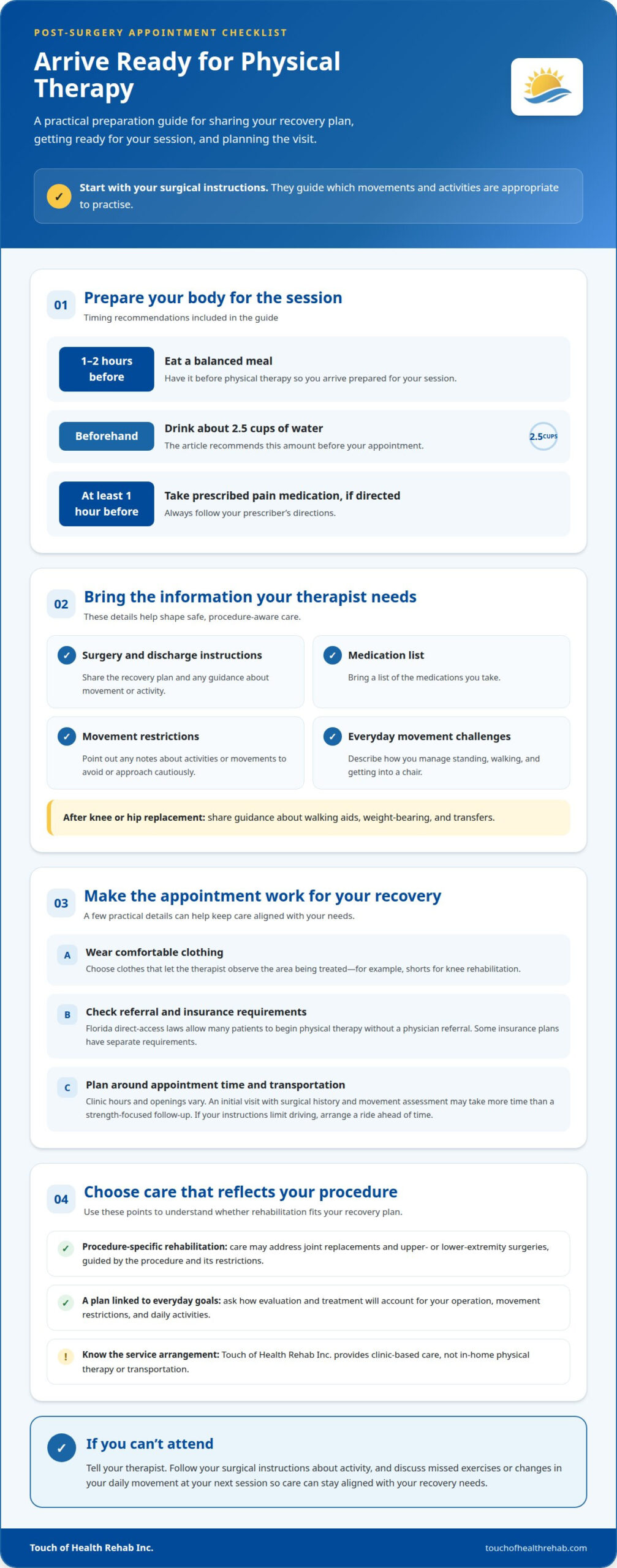
Preparation starts before you arrive: eat a balanced meal 1-2 hours before physical therapy, drink about 2.5 cups of water beforehand, and take prescribed pain medication at least 1 hour before your session. If you’re looking for the best post-op physical therapy near Bal Harbour, bring your surgery and discharge instructions so your therapist can understand your recovery plan. These steps can help you arrive ready to focus on your session.
It’s natural to wonder what therapy will involve, how progress is measured, and when everyday movements may start to feel easier. Choosing the best post-op physical therapy near Bal Harbour means finding care that connects your recovery goals with the movements you need in daily life. Understanding the process can help you feel prepared and involved.
This guide covers what to bring and how to prepare, how treatment goals and timelines are set, and how mobility training can support everyday activities after surgery. You’ll also learn what to consider when choosing the best post-op physical therapy near Bal Harbour, plus how to think about continued recovery support and insurance coverage.
Key Takeaways
- Use your post-surgical instructions to guide appointment preparation, and share how recovery is affecting your everyday movement.
- Clear, functional goals help you understand what each stage of therapy is working toward and how progress is assessed.
- Recovery support can focus on practical milestones, such as moving around safely and rebuilding confidence with daily activities.
- Balance, stair practice, and transfers can help prepare you for the movements you need at home.
- Florida direct-access rules allow many people to begin physical therapy without a physician referral, while insurance plans may have their own requirements.
How should I prepare for my physical therapy appointment?
Start with your surgical instructions. Bring your discharge paperwork, medication list, and any notes about movement restrictions to your first appointment. These details help your therapist understand which activities need caution and which movements are appropriate to practise. After a knee or hip replacement, describe how you manage everyday tasks such as standing, walking, and getting into a chair.
MedStar Health recommends eating a balanced meal 1-2 hours before physical therapy, drinking about 2.5 cups of water beforehand, and taking prescribed pain medication at least 1 hour before the session. Follow your prescriber’s directions for medication. Wear comfortable clothes that let the therapist observe the area being treated, such as shorts for knee rehabilitation.
Do post-op physical therapy clinics near Bal Harbour require a referral or prescription? Florida’s direct-access laws allow many patients to begin physical therapy without a physician’s referral, although some insurance plans have separate requirements. Your surgeon’s post-operative protocol still guides which exercises and activities are appropriate.
What physical therapy clinics near Bal Harbour specialize in post-operative rehabilitation? Look for clinics that provide rehabilitation after procedures such as joint replacements and upper- or lower-extremity surgeries. Ask how the evaluation and treatment will reflect your procedure, movement restrictions, and everyday goals.
Which clinics near Bal Harbour offer specialized rehabilitation after joint replacement, orthopedic surgery, or sports surgery? Look for post-surgical or orthopedic rehabilitation tailored to the procedure and its restrictions. After joint replacement, share instructions about walking aids, weight-bearing, and transfers. Following sports surgery, rehabilitation should reflect the surgeon’s protocol and the movements related to your intended activity.
What are the clinic hours, wait times, and appointment availability near Bal Harbour? Hours and openings vary by clinic schedule, and wait times depend on demand and appointment length. A first visit that includes your surgical history and a movement assessment may need more time than a follow-up focused on strength. Plan around your recovery routine and transportation needs.
Do nearby clinics offer in-home physical therapy or transportation options? Some physical therapy services may offer in-home care when traveling is difficult, while transportation arrangements are separate. Touch of Health Rehab Inc. provides clinic-based care, not in-home physical therapy or transportation. If your surgical instructions limit driving, arrange a ride to appointments in advance.
What are the risks of delaying or missing physical therapy after surgery? Missing a visit can interrupt supervised practice and feedback on movement, strength, or technique. If you can’t attend, inform your therapist and follow your surgical instructions about activity. Discuss missed exercises or changes in your daily movement at your next session to keep care aligned with your recovery needs.
Treatment plans with goals and timelines
A useful post-surgical treatment plan connects clinical goals with movements you need in daily life. After knee replacement, that might mean working toward safer walking, easier chair transfers, and improved knee mobility. After hip surgery, goals may focus on standing, balance, and essential routines. Your procedure and surgeon’s instructions shape the plan.
Individualized rehabilitation starts with an assessment, not a one-size-fits-all exercise list. Your therapist considers the operation, movement restrictions, current strength, and activities you want to resume. Someone who needs to manage stairs at home, for example, may have different priorities from someone whose main goal is walking comfortably on level ground. Those priorities make each session purposeful.
A personalized physical therapy plan should explain your goals, how progress will be reviewed, and what comes next. Goals can be practical and observable, such as standing from a chair with better control or walking with prescribed support. Clear goals help you and your therapist discuss what feels easier, what remains challenging, and whether exercises need adjustment.
Plans also need a timeline. Treatment plans at Touch of Health Rehab Inc. set clear goals, an expected timeline, and a defined path forward when you seek the best post-op physical therapy near Bal Harbour. The schedule depends on the operation, your starting mobility, the surgeon’s protocol, and how you respond to therapy. Regular progress reviews help show whether the next step is appropriate.
A customized rehabilitation plan can change as your abilities improve. Early work might emphasize movement quality and safe daily tasks; later sessions may build strength or practise more demanding activities. Your therapist can explain how clinic exercises relate to your home program, so you understand the purpose of each movement rather than simply counting repetitions.
Ask how progress will be measured and what might prompt a change to your plan. Useful measures include the movements you can perform, the support needed for a task, or your ability to complete a specific activity. If manual therapy is part of your care, ask how it supports your goals alongside active movement practice. Medication and surgical instructions remain separate parts of your recovery plan.
For a clearer sense of how post-surgical goals can guide rehabilitation, explore post-surgical rehabilitation as you consider your next steps.
Ongoing support during recovery
Recovery continues between appointments as you use new movement skills in daily routines. Your therapist can revisit an activity that still feels difficult, such as rising from a low chair or walking through a doorway. Share what has happened at home since your last session. Specific examples help guide your evaluation and keep orthopedic rehabilitation focused on real needs.
After hip or knee surgery, ongoing support can progress from supervised movement to practical tasks. A patient after hip replacement might work on controlled standing before practising a household routine. After knee replacement, someone may need to regain confidence bending the knee during everyday movement. Your procedure, current function, and care instructions shape what comes next.
Which nearby post-op physical therapy clinics have the highest patient ratings and reviews? A star score alone doesn’t show how well a clinic supports post-surgical recovery. Look for detailed feedback about communication, orthopedic care, and progress with specific daily activities, then compare ratings on the same platform.
Recovery stories illustrate how different surgical needs can be. Gail Winner was 83 when she received an emergency partial hip replacement after a fall. Her experience highlights why rehabilitation goals should reflect the individual’s procedure and daily challenges, rather than follow a generic schedule. A therapist can use patient feedback about movement at home to focus sessions on meaningful tasks.
Bertha Galindo was 73 when she underwent knee replacement surgery for osteoarthritis in both knees. She had her second total knee replacement three months after her first. Her story shows that even one person’s surgical recovery can involve separate procedures and changing needs. Support can address each stage individually, with progress reviewed against that patient’s goals.
Injury recovery also benefits from continuity. Someone returning to activity after a sports injury may need a different progression from a patient recovering after joint replacement. Ongoing evaluation can identify which movements remain difficult and which activities are ready for practice. This keeps rehabilitation focused on function, not simply completing exercises.
Make follow-up sessions useful by bringing a brief update and one example from home. Note a task that felt easier, one that remains challenging, and any change in movement since your previous visit. Share concerns about an exercise or daily activity directly. This gives your therapist concrete information to guide adjustments within the surgical plan.
If you’re balancing recovery with household routines, therapy can help make activity more manageable. Break a demanding task into smaller steps, such as standing, pausing, then walking a short indoor route. Discuss this example during therapy so your next session can address the movement, confidence, or balance involved.
Balance, stairs, and transfers after surgery
Everyday movements can become rehabilitation goals after surgery. A transfer means moving between positions, such as rising from a chair or getting into bed. Balance training can address control while standing, turning, or walking with a mobility aid. Stairs are another practical task, especially if your home has steps between rooms or at the entrance.
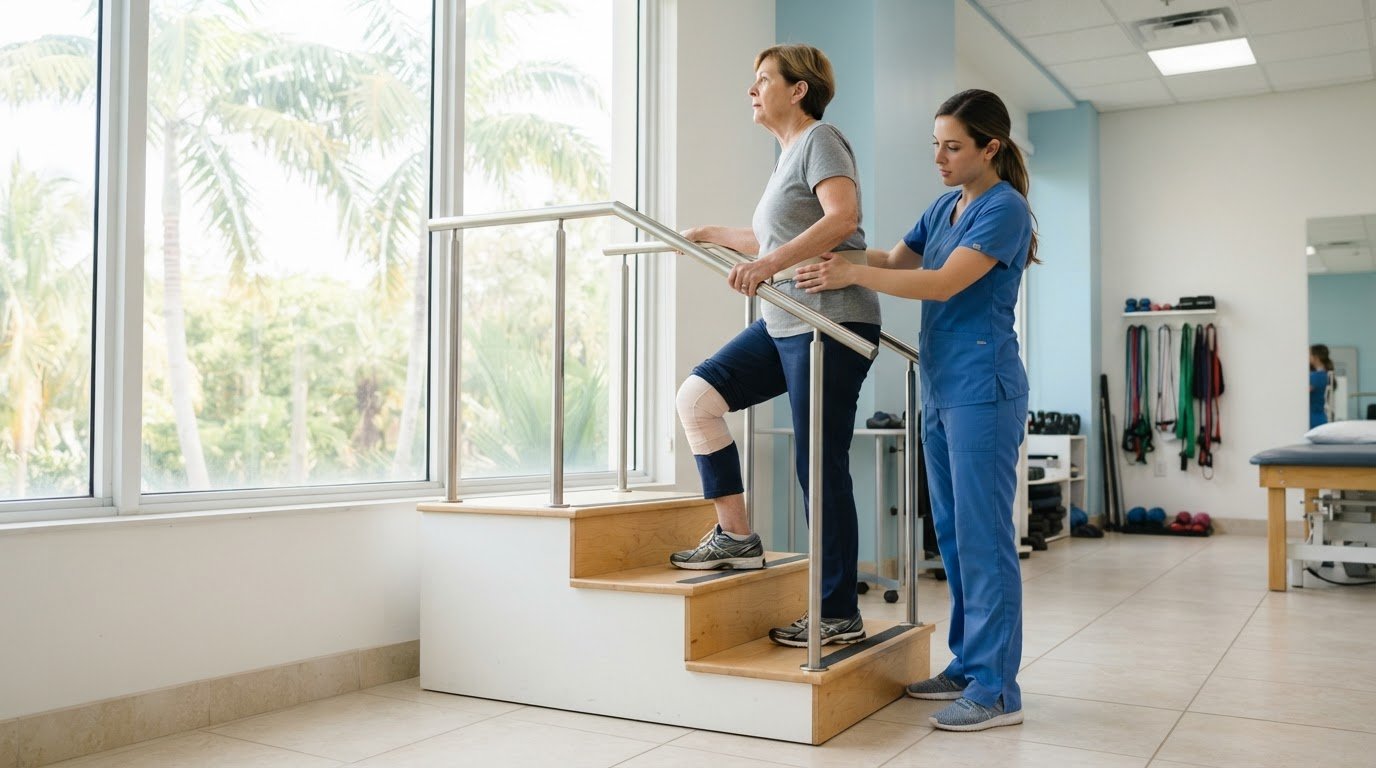
Practice should follow your surgical instructions and your therapist’s guidance. In a supervised session, you might practise standing from a firm chair, pausing to steady yourself, then walking a short distance. For stairs, your therapist can guide foot placement and handrail use based on your abilities and post-operative restrictions.
Professional post-operative care outlines total joint replacements and upper- and lower-extremity surgeries among reasons patients may receive physical or occupational therapy. After hip or knee surgery, physical therapy may address walking and transfers. Occupational therapy after hand surgery can focus on daily tasks, such as handling a cup or fastening clothing, as allowed by the surgical plan.
At home, in-home physical therapy from specialists like Touch of Health Rehab Inc. may include practicing stairs, transfers, balance, and other movements needed there. The setting lets a therapist work with the actual layout, such as a narrow hallway or a step at the entry. If travel is difficult, this format may help address home mobility directly when searching for the best post-op physical therapy near Bal Harbour. It is distinct from clinic-based appointments.
For athletes recovering from sports surgery, training may eventually include movements related to their intended return, such as controlled changes in direction. Progression should move from basic mobility toward more demanding tasks, guided by the procedure and recovery goals. Returning to sport is not the same as walking comfortably; activity-specific movement also needs attention.
Make practice meaningful by identifying the exact movement that feels challenging. Note whether standing from a dining chair, stepping onto a curb, or carrying a light household item requires more control. Share the example during therapy so your therapist can assess the movement and adapt training to support balance, coordination, or confidence while respecting surgical precautions.
Keep the area clear during supervised practice and use prescribed mobility aids as directed. Don’t turn a new stair or transfer exercise into an unsupervised test. If a movement feels different from your therapist’s instructions, pause and describe what happened at your next visit. That feedback connects rehabilitation exercises with real tasks.
Progress is best understood through function, not a single difficult repetition. A useful milestone might be completing a familiar transfer more steadily or managing a previously challenging route with prescribed support. Your therapist can use these examples to guide the next stage, whether your goal is safer mobility at home or a gradual return to activity.
Insurance coverage
In Florida, direct-access laws allow many patients to begin physical therapy without a physician’s referral. Insurance plans may have separate requirements, so distinguish the legal route to starting care from your plan’s payment rules. For example, a plan may require referral paperwork even when direct access is available. Knowing which process applies can help you plan your first appointment and distinguish access from coverage.
Review your policy’s physical therapy benefits before arranging a post-surgical schedule. Check for referral or authorization requirements, visit limits, and cost-sharing terms that apply to outpatient rehabilitation. These details can affect how you organize appointments after a knee replacement, for example. Keep the relevant plan information with your surgical paperwork so it’s easy to refer to when planning care.
Insurance-based care is one way to manage rehabilitation expenses. Coverage depends on your plan’s terms and requirements for physical therapy. Compare those rules with your proposed treatment schedule. If your clinical plan changes as mobility improves, the services and documentation associated with care may also change.
Some centers also offer structured self-pay programs, providing a separate way to pay for care outside an insurance claim. The difference is how services are paid for and documented, not the purpose of rehabilitation. Whether you use insurance or self-pay, keep track of appointments and exercises assigned for home practice.
Health Savings Account and Flexible Spending Account cards may also be relevant. A clinic may accept HSA and FSA cards for eligible care expenses. Save receipts and related records with your post-operative documents. Account rules determine which expenses qualify, so consider those terms alongside the therapy center’s payment options.
For out-of-network care, a superbill provides documentation you can submit when seeking reimbursement from your insurer. It doesn’t guarantee reimbursement. Your insurer’s out-of-network terms determine whether reimbursement applies and which records are needed. Keep each superbill and match it to the related visit, such as a session focused on walking or a home exercise program.
Simple organization can make insurance easier to manage during recovery. Keep a record of appointment dates, submitted paperwork, insurer responses, and questions about your benefits. If you’re comparing insurance-based care with self-pay, consider how each option fits your plan requirements and preferred schedule. This preparation can help you focus visits on movement, strength, and restoring daily function.
For support with post-surgical rehabilitation and payment options, explore physical therapy care as a next step.
Touch of Health Rehab: Physical Therapy
Touch of Health Rehab Inc. provides post-surgery physical rehabilitation to support your return to everyday movement. If you’re recovering from a procedure and need guided practice with mobility, strength, or balance, physical therapy can connect your recovery goals with purposeful exercises. Care can also address posture or vestibular concerns when they affect movement.
Bring your surgical instructions and share which daily activities remain challenging, such as walking comfortably or rising from a chair. This gives your therapist practical context for your rehabilitation and helps shape care around your needs. For an individualized next step, visit Touch of Health Rehab Inc. online.
Take Your Next Step Toward Everyday Movement
The next stage of recovery is building confidence with the movements that matter to you. Choose a practical personal milestone, such as returning to a favourite routine or moving through your home more easily. Sharing that goal can make your next conversation about care more focused and personal.
Choosing the best post-op physical therapy near Bal Harbour means finding support that connects rehabilitation goals with daily life. Touch of Health Rehab offers physical therapy, postural education, vestibular rehabilitation, and post-surgery physical rehabilitation. These services can support different movement needs as you work toward better function.
If you’re ready to discuss a thoughtful next step for your recovery, contact Touch of Health Rehab. Bring your main movement goal and the questions you want answered. Each step can help you build a clearer path forward, at a pace shaped around your recovery.
Frequently Asked Questions
Is this location convenient for commuters or residents in nearby neighborhoods?
Touch of Health Rehab is based in Sunny Isles Beach and serves people in Bal Harbour, Aventura, North Miami Beach, and Miami Beach. Whether the clinic is convenient depends on your starting point, route, and appointment time. If you’re travelling after surgery, consider how comfortable you feel getting there and whether someone can accompany you. Planning around your mobility needs can make regular visits easier to manage.
What does post-operative physical therapy cost near Bal Harbour without insurance?
The cost depends on your case and is provided after a quote request. Factors include the surgery, your evaluation, the treatment plan, and the frequency and length of care. If you’re considering self-pay, ask how the proposed program fits your recovery goals and what services it covers. You can also compare the plan with any HSA or FSA account rules that apply to your expenses.
What should patients look for when choosing a post-operative physical therapist?
Look for a therapist who connects your procedure and surgical instructions with practical recovery goals. After shoulder surgery, for example, your early movement plan will differ from rehabilitation after a knee replacement. A helpful therapist explains why exercises are included, adapts activities to your progress, and communicates clearly about movement restrictions. Bring your discharge instructions and ask how your goals will guide session activities and progress reviews.
Which nearby post-op physical therapy clinics have the highest patient ratings and reviews?
A star score alone may not show how well a clinic supports post-surgical recovery. Compare detailed feedback about communication, orthopedic care, and progress with daily activities on the same platform.
Which clinics near Bal Harbour offer specialized rehab after joint replacement, orthopedic surgery, or sports surgery?
Look for clinics that offer post-surgical or orthopedic rehabilitation tailored to the procedure and its restrictions. Care may address joint replacements and upper- or lower-extremity surgeries, while sports surgery rehabilitation should follow the surgeon’s protocol and reflect intended activities.