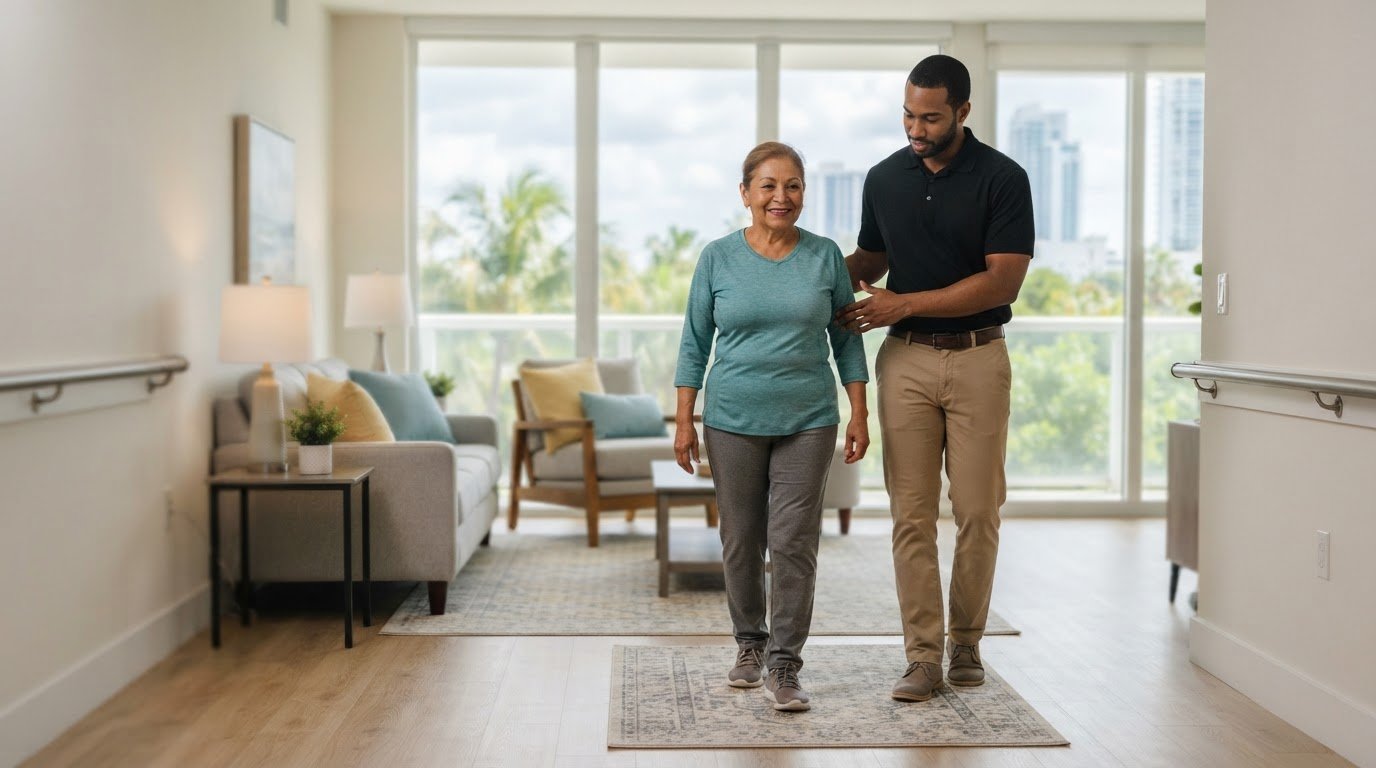
What if an important fall-prevention step isn’t a major home renovation, but noticing a change in walking or balance? If you’re researching “avoiding falls at home for seniors Sunny Isles,” it can be hard to know which hazards to address first, especially when you want to improve safety without giving up independence.
A loose rug, dim hallway, or rushed trip across a room may deserve attention. So may feeling unsteady when standing or turning. Safer aging at home means considering both: making practical changes to your surroundings and supporting steadier movement.
This guide will help you spot common household hazards, prioritize manageable safety improvements, and build safer daily habits. You’ll also learn when personalized support may help. Touch of Health Rehab Inc. provides geriatric physical therapy, fall prevention, and balance and gait rehabilitation in Sunny Isles Beach, serving people in Aventura, Bal Harbor, North Miami Beach, and Miami Beach as well. These services can address movement and confidence alongside home-safety steps, helping you make thoughtful changes while preserving as much independence as possible.
Key Takeaways
- Learn how avoiding falls at home for seniors Sunny Isles can combine practical household changes with support for steadier movement.
- Notice how changes in strength, sensation, vision, or walking may affect everyday activities and contribute to fall risk.
- Use a room-by-room review to identify hazards, then focus first on the changes that matter most to daily routines.
- Build a manageable plan with loved ones that respects personal preferences and supports independence.
- Understand when recurring unsteadiness, reduced confidence, or a recent fall may make individualized physical therapy helpful.
Why Fall Prevention Matters for Sunny Isles Seniors
Small, thoughtful adjustments can make it easier to move around at home without taking away your choices. Fall prevention isn’t about restricting activity or promising that a fall will never happen. It means reducing avoidable hazards and supporting safer movement while maintaining as much comfort and independence as possible.
That balance matters because a change that works for one person may not suit another person’s routines, mobility, or home layout. Notice where movement feels uncertain, then choose practical changes that fit daily life. General information about fall prevention for older adults also emphasizes environmental factors alongside individual needs.
Why a fall or near-fall deserves a closer look
A single trip may have a clear explanation, such as catching a foot on an object, and doesn’t automatically point to a particular health condition. Still, note what happened and where. If trips, stumbles, or unsteady moments recur, or you begin avoiding familiar activities, discuss the pattern with a clinician. Details about the activity, location, and circumstances can help guide an assessment.
Feeling afraid after a fall is understandable. If worry leads you to stop walking around your home, visiting others, or doing everyday tasks, your confidence and activity may gradually narrow. Share those concerns with someone you trust and describe which situations feel difficult. A clinician can consider whether changes in movement or other factors need attention. A recent fall or recurring unsteadiness may also be a reason to learn about fall-prevention physical therapy, which can complement home-safety measures.
Seek urgent medical help for a serious injury or sudden concerning symptoms. Don’t assume a troubling change is simply part of aging, and don’t delay care because a fall seemed minor at first. This guidance isn’t a diagnosis; a qualified medical professional can assess symptoms and recommend appropriate care.
Everyday home settings in Sunny Isles Beach
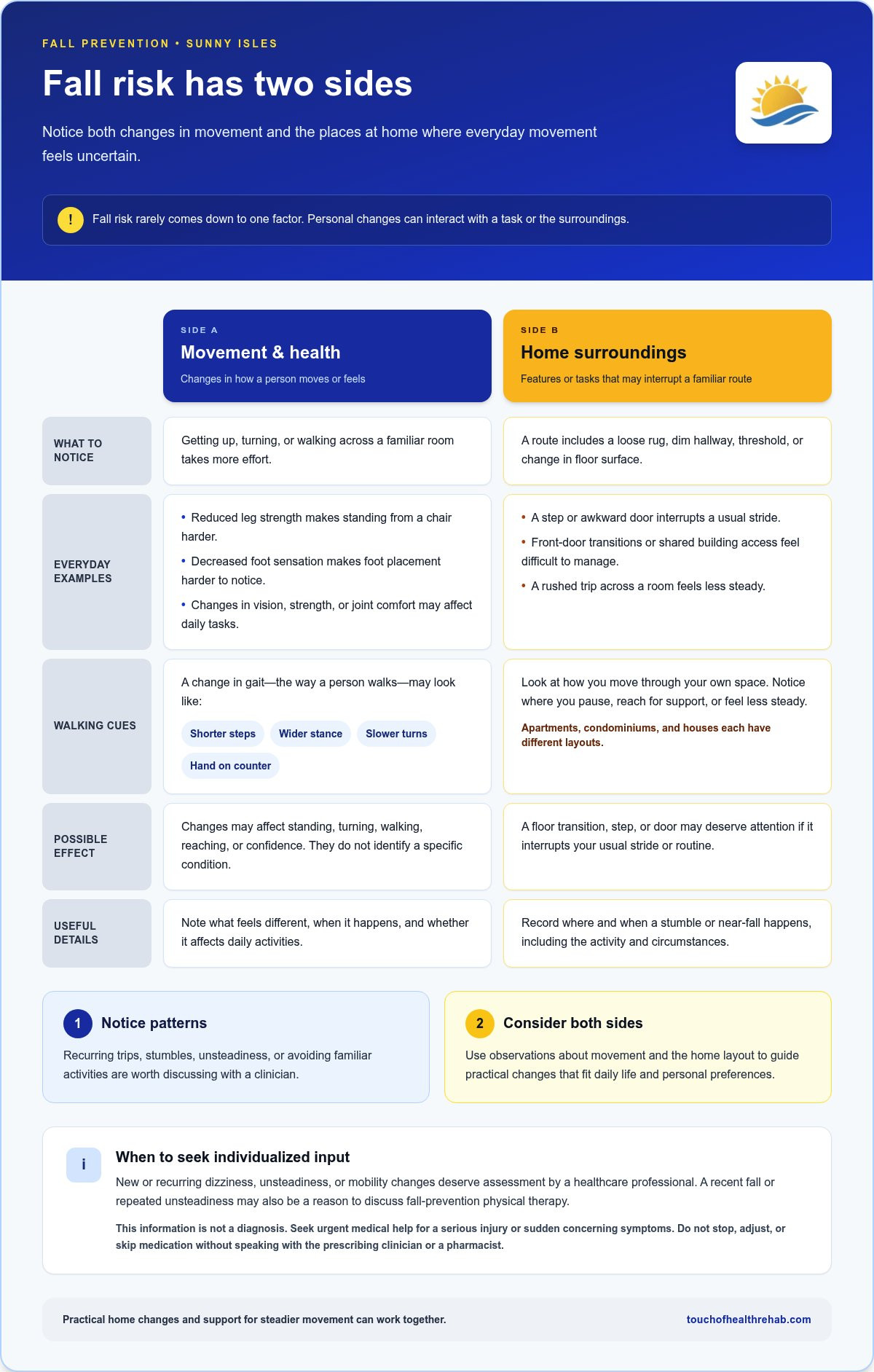
Seniors in Sunny Isles Beach may live in apartments, condominiums, or single-family homes, each with a different layout. The same is true in Aventura, Bal Harbor, North Miami Beach, and Miami Beach. Rather than assume a particular building feature is hazardous, pay attention to how you move through your own space. Notice transitions at the front door, thresholds between rooms, and shared building access points. A step, change in floor surface, or door that’s awkward to manage may deserve attention if it interrupts your usual stride.
For avoiding falls at home for seniors Sunny Isles, start with your own experience: Where do you pause, reach for support, or feel less steady? Write down where and when a stumble or near-fall happens. That simple record can help you and your family prioritize changes without treating every home as though it has the same risks.
How balance, walking, and health changes can affect fall risk
Fall risk rarely comes down to one factor, and age alone doesn’t explain why someone may feel less steady. Changes in strength, sensation, vision, or walking can interact with a task or the surroundings. For example, reduced leg strength may make standing from a chair harder, while decreased sensation in the feet may make it harder to notice where they’re placed. Fall risk depends on both personal factors and surroundings, as the NIH fall prevention resources explain.
Look for changes in everyday movement rather than trying to diagnose the cause. Is getting up, turning, or walking across a familiar room taking more effort? Does someone now reach for furniture or avoid certain activities? These observations can help explain what has changed to a healthcare professional and inform a more individualized conversation about avoiding falls at home for seniors Sunny Isles.
Changes in balance, gait, and confidence
Gait means the way a person walks. A change might look like shorter steps, a wider stance, slower turns, or needing a hand on a counter for support. These signs don’t identify a specific condition, but they can show that familiar movements feel different. Notice when the change occurs, such as while turning, starting to walk, or moving between rooms.
Balance symptoms can have different causes. Vestibular difficulties, which involve body systems that help with balance and spatial orientation, may be associated with dizziness or feeling unsteady. Those sensations can affect walking and confidence, but shouldn’t be self-diagnosed. New or recurring dizziness deserves individualized assessment. A physical therapist may evaluate movement and provide balance and gait rehabilitation as part of a personalized plan.
Health, medication, and mobility considerations
Strength, joint comfort, changes in sensation or vision, and other health considerations may influence reaching, carrying items, or rising from a seat. More than one change can be present at once, so a list of observations is a starting point for discussion, not a diagnosis. Note what feels different, when it happens, and whether it affects daily activities.
If dizziness, unsteadiness, or mobility changes are new or keep returning, discuss them with a healthcare professional. If you have questions about whether a medication could be affecting how you feel, raise them with the prescribing clinician or a pharmacist. Don’t stop, adjust, or skip medication on your own. A careful review can help the right professional consider your concerns in context.
Noticing a change doesn’t mean you must give up independence. It gives you useful information for deciding what support may help. If movement concerns are affecting everyday confidence, Touch of Health Rehab provides physical therapy support as one part of a broader approach that also considers your home and routines.
A room-by-room home safety checklist for Sunny Isles seniors
A home walk-through can help you spot places where a small change may make daily movement easier. Treat it as an observation and prioritization exercise, not a substitute for a professional assessment. Choose a time when you feel comfortable moving through your home, and invite a family member or trusted person to join if you’d like a second perspective. Don’t rush or test movements that feel unsafe.
Consider how you actually use each space. A clear route to the kitchen may matter more than a rarely used corner, and improving lighting may be a practical first step before considering a larger modification. Needs differ from home to home, so focus on your routines and the places where you pause, reach, or change direction.
Check the main walking routes and entryways
Trace the routes you use between the bedroom, bathroom, kitchen, and main entrance. Walk at your usual pace only if that feels safe; otherwise, observe the route with someone beside you. At each transition, look for anything that could interrupt a step or make the floor harder to see. Check the entrance after rain, too, since wet flooring can create a slipping concern.
- Walking paths: Look for clutter, trailing cords, uneven floor transitions, loose rugs, and objects stored at floor level. Notice whether furniture narrows a route you use often.
- Lighting: Check whether you can see the path from one area to the next, including at night. Consider whether switches or commonly used lights are reachable without stretching or crossing a dark space.
- Entry points: Observe thresholds and changes in flooring at your entrance or shared building access. Layouts vary, so note the specific spot that feels difficult rather than assuming every doorway needs the same change.
Review bathrooms, bedrooms, and daily-use areas
Pay special attention to the first steps after getting out of bed and the route to the bathroom. Check whether you need to reach for furniture, step around belongings, or cross a poorly lit area. In the bathroom, look at the floor and the path between the doorway and the fixtures you use. Focus on the concerns in your home rather than assuming every room has the same risks.
- Bedroom: Notice whether slippers, bedding, or other belongings enter your path. Check that frequently used items and lighting controls are within comfortable reach.
- Bathroom: Look for wet floors, loose mats, or items that make it harder to move through the room. Consider whether your usual route leaves enough space to turn comfortably.
- Daily-use areas: Keep items you use regularly accessible. Avoid storing them where reaching high, bending low, or climbing could be required.
For avoiding falls at home for seniors Sunny Isles, write down the concerns you notice and address the ones affecting everyday routes first. That turns a general home check into a manageable list of priorities to review with family or a professional.
Build a fall-prevention plan with safer routines and support
A workable plan doesn’t need to change every part of your day at once. Start with the concern that affects a familiar routine, choose a manageable adjustment, then notice whether moving through that task feels easier. A step-by-step approach keeps the senior’s preferences at the center and gives family members a practical way to help without taking over.
Prioritize changes without overwhelming the household
Begin with the route or activity used most often, such as getting from the bedroom to the bathroom. Agree on one change to try, who will help make it, and how you’ll tell whether it suits the person living in the home. An adjustment is more likely to fit daily life when the senior has a say in what changes and what stays the same.
Once the adjustment is in place, review how it works during regular routines. If it helps, move on to another priority. Revisit the plan after a change in health, mobility, or living arrangements, since a setup that once felt comfortable may no longer match a person’s needs. Flexibility matters more than completing a long list quickly.
Make daily movement feel more predictable
Small habits can make transitions feel less rushed. Take your time moving from lying down to sitting, or sitting to standing, and pause if you feel unsteady. There isn’t one routine that suits everyone, so discuss recurring difficulty with a healthcare professional. Choose footwear that fits securely and feels stable for the activities you do at home; no single style is right for everyone.
Keep items used throughout the day within comfortable reach, and allow enough time to move without hurrying. If stumbles or moments of uncertainty happen more than once, jot down what you were doing, where it happened, and what you noticed. This record can help you explain the pattern to a clinician and consider an appropriate next step.
Exercise can be part of a fall-prevention plan, but exercises should match your abilities and health needs. Don’t begin challenging balance activities alone or rely on a generic routine if you’re already feeling unsteady. Individualized fall-prevention physical therapy can address balance, gait, strength, and functional movement, complementing safety changes at home rather than replacing them.
For avoiding falls at home for seniors Sunny Isles, the most useful plan supports safer movement while respecting the person’s comfort and independence. If balance or walking concerns are shaping your plan, connect with Touch of Health Rehab Inc. for physical therapy support tailored to your needs.
When fall-prevention physical therapy in Sunny Isles may help
Home adjustments can address environmental hazards, while physical therapy focuses on how you move through daily activities. Consider physical therapy if you’ve had a recent fall, feel unsteady repeatedly, or have less confidence walking, turning, or getting up from a chair. These changes don’t point to one diagnosis on their own, but they’re useful reasons to discuss what support may fit your needs with a healthcare professional.
Physical therapy works on movement; it can’t promise that falls will never happen. A therapist can assess balance, walking, strength, and functional movement, then shape care around your abilities and goals. This work complements home-safety steps rather than replacing them. Considering both your surroundings and your movement can make fall prevention more complete and personally relevant.
What a balance and gait rehabilitation plan can address
Gait means the way you walk. A physical therapist may observe how you start, stop, turn, and move through everyday tasks, then use that information to guide a plan. Balance and gait rehabilitation can address steadiness and walking patterns through activities tailored to the individual, supporting greater ease and confidence in movement. The plan and pace depend on the person, not a fixed timeline.
Think about specific activities you’d like to manage more comfortably. Perhaps you want to feel steadier while changing direction, walking to a nearby destination, or rising from a seat. Sharing these goals gives the therapist useful context. You can also describe when unsteadiness occurs and whether you’ve started avoiding activities because of it.
Taking the next step in Sunny Isles Beach
At Touch of Health Rehab, a clinic-based physical therapy visit is an opportunity to explain what has changed, which movements concern you, and what you hope to keep doing independently. Geriatric physical therapy takes your needs and movement goals into account. Your therapist can use the conversation and assessment to develop an individualized plan alongside practical safety measures at home.
For avoiding falls at home for seniors Sunny Isles, seeking guidance doesn’t mean giving up independence. It’s a way to understand your movement and consider support that fits your life. No therapy plan can guarantee that a person will never fall, but individualized care can address balance, gait, strength, and functional movement while you continue making thoughtful choices about your home environment.
Explore personalized physical therapy at Touch of Health Rehab Inc. to discuss movement concerns and goals with the clinical team.
Take a Confident Step Toward Safer Movement
Your next step in avoiding falls at home for seniors Sunny Isles doesn’t have to be a major change. Choose one concern you’d like to address, then decide what support would help you move forward comfortably. That might mean talking through your goals with family or discussing changes in balance and mobility with a physical therapy professional.
Fall prevention is an ongoing process, not a test you have to pass. Your needs and preferences matter, and the right plan should support the activities you want to keep doing. Personalized physical therapy can help you explore movement goals with guidance shaped around your needs, while home adjustments remain an important part of the picture.
Ready to discuss your next step? Explore personalized physical therapy at Touch of Health Rehab Inc. Thoughtful support and changes that suit your life can help you work toward greater confidence and preserve the independence that matters to you.
Frequently Asked Questions
Can a senior be injured in a fall even if they can stand afterward?
Yes. Being able to stand doesn’t rule out an injury, and pain or other symptoms may become noticeable later. After a fall, pay attention to new soreness, swelling, bruising, or difficulty using an arm or leg. A head impact also deserves careful attention, even if the person initially feels well. If you’re unsure how serious an injury may be, contact a healthcare professional for guidance.
What should I do if a senior falls at home?
Stay calm and don’t rush to lift the person. Check whether they’re responsive and look for obvious injury, without moving them if you suspect a head, neck, or back injury. Call emergency services for a serious injury, loss of consciousness, trouble breathing, confusion, or sudden concerning symptoms. If they can’t get up safely, keep them comfortable and wait for trained help rather than attempting a lift alone.
Can a cane or walker reduce a senior’s risk of falling?
A cane or walker may provide useful support when it suits the person, is properly fitted, and they know how to use it. An aid that’s the wrong height or unfamiliar can make movement more difficult. Ask a healthcare professional to assess whether one is appropriate and provide instruction. If you already use one, mention changes in comfort or stability at your next appointment, and have worn equipment checked.
How often should a senior’s fall risk be reviewed?
There isn’t one review schedule that fits everyone. Revisit fall concerns after a fall or near-fall, or if walking, balance, health, medications, or daily routines change. A new mobility aid or a return home after a hospital stay can also be a useful time to discuss safety. Regular healthcare visits offer another opportunity to mention changes, even if they seem small or happen only during particular activities.
Does Medicare cover physical therapy for fall prevention?
Original Medicare Part B may cover outpatient physical therapy when it’s medically necessary to improve or maintain a condition, including work related to balance and fall prevention. The therapist must certify medical necessity; a doctor’s referral isn’t required under Original Medicare. After the 2026 Part B deductible of $257 is met, the patient generally pays 20% of the Medicare-approved amount. Coverage can depend on your circumstances and plan.
Is it normal for a senior to feel afraid after a fall?
Yes, feeling worried or less confident after a fall is understandable. The concern deserves attention if it leads someone to avoid activities they value, such as walking to another room or visiting friends. Ask what situations feel frightening rather than urging them to “just get back to normal.” Sharing these concerns and specific movement goals with a clinician can help the person consider supportive next steps at a comfortable pace.
Can physical therapy guarantee that an older adult will not fall?
No. Physical therapy can’t guarantee that a person will never fall. Individualized care may address balance, walking, strength, and movements involved in daily activities, while home-safety steps address environmental concerns. For avoiding falls at home for seniors Sunny Isles, these approaches can work together without eliminating every risk. A physical therapist can assess movement and tailor guidance to the person’s goals, abilities, and concerns.