
The most constructive conversation respects your parent’s independence. If you’re wondering how to convince a parent they need balance therapy, describe specific changes you’ve noticed, explain why they concern you, and invite your parent to explore support rather than insisting they need it. Listening to their perspective matters just as much as sharing yours.
It’s understandable to worry when your parent seems less steady or confident moving around. They may also fear that therapy means losing control or being judged. Explain how support could fit into everyday life and help them pursue what matters to them, without turning the conversation into pressure.
You’ll learn how to choose a calm moment, describe your concerns clearly, ask open questions, and respond if your parent isn’t ready. These steps can help you keep the conversation caring and honest, while leaving your parent room to decide whether balance therapy feels right for them.
Key Takeaways
- Choose a calm, private moment to talk, then ask open questions and give your parent room to share what they’re experiencing.
- Describe specific changes you’ve noticed and explain how they affect you, without blaming your parent or insisting you know the cause.
- Share what you value about therapy to make support feel like a practical option, not a judgment about your parent.
- Notice changes in steadiness, movement, or confidence, and raise them as concerns rather than treating them as a diagnosis.
- If your parent isn’t ready, pause the conversation and leave space to revisit the idea when they feel more comfortable.
Asking open questions and listening without judgment
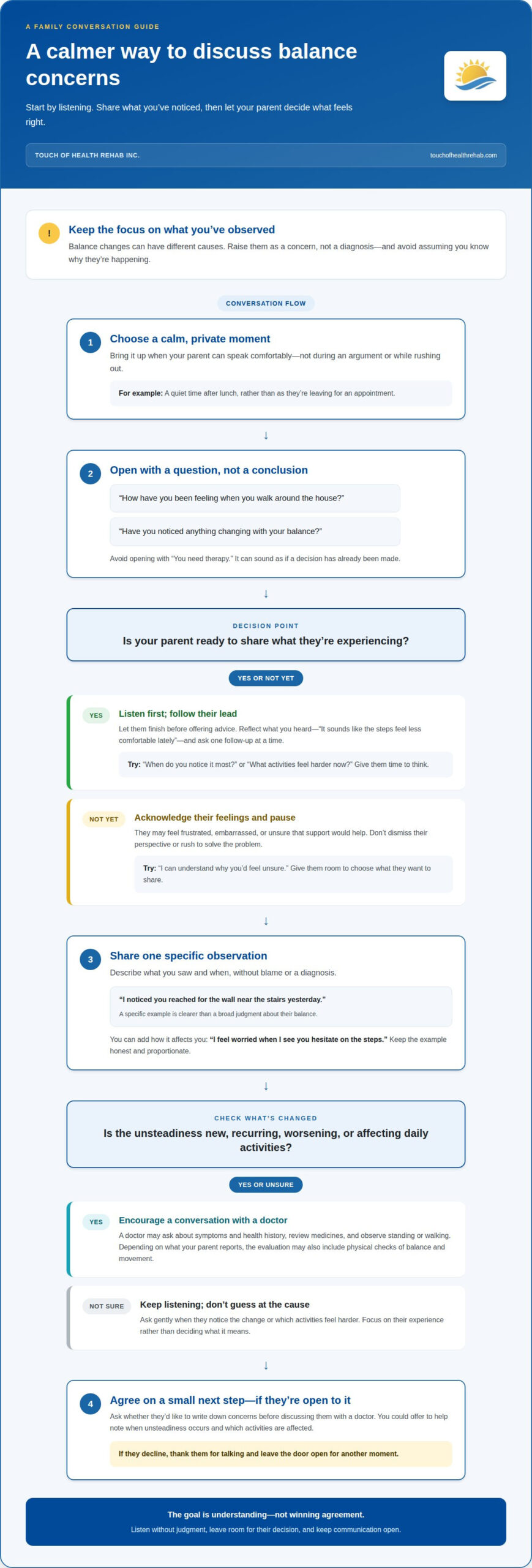
Balance problems can have different causes, including changes affecting the inner ear, vision, strength, or coordination. If your parent’s unsteadiness is new, recurring, worsening, or affecting daily activities, encourage them to discuss it with a doctor.
A doctor may ask about symptoms and health history, review medicines, and observe standing or walking. Depending on what your parent reports, the evaluation may also include physical checks of balance and movement.
- Choose a private moment. Bring it up somewhere your parent can speak comfortably, not during an argument or while rushing out. For example, choose a quiet time after lunch rather than raising therapy while they’re trying to leave for an appointment. A relaxed setting can make asking about a sensitive change feel less like criticism.
- Begin with an open question. Ask, “How have you been feeling when you walk around the house?” or “Have you noticed anything changing with your balance?” These questions invite your parent to describe their experience in their own words. Avoid starting with “You need therapy,” which can sound like a decision has already been made.
- Listen for the concern underneath the answer. Your parent might mention feeling unsteady, avoiding stairs, or worrying about an upcoming outing. Let them finish before offering advice. Then reflect their meaning: “It sounds like the steps feel less comfortable lately.” This shows you heard the concern, rather than preparing a rebuttal.
- Ask one follow-up at a time. Try, “When do you notice it most?” or “What activities feel harder now?” A specific example, such as hesitating before walking across an uneven yard, can clarify what has changed. Don’t turn the conversation into a rapid list of questions; give your parent time to think.
- Make room for different feelings. Your parent may feel frustrated, embarrassed, or unconvinced that support would benefit them. You can respond, “I can understand why you’d feel unsure,” then ask what would make a conversation with a doctor feel easier. Don’t dismiss their perspective or assume you know the cause.
- Agree on a small next step. If your parent is open to it, ask whether they’d like to write down concerns before discussing them with a doctor. You could offer to help note when unsteadiness occurs and which activities are affected. If they decline, thank them for talking and leave the door open for another moment.
Focus on what your parent is trying to communicate rather than judging whether their concern seems reasonable. Even if you see things differently, avoid correcting or minimizing their experience, or comparing it with someone else’s. A pause gives them room to choose their words; you don’t need to fill every silence or solve the problem immediately.
If you’re unsure what they mean, check gently instead of guessing: “Would you like to tell me more about that?” You could also ask whether they want you to listen, think through options together, or simply give them time. Respecting their answer lets your parent choose what to share. The goal isn’t to win agreement, but to understand their perspective and keep communication open.
Explaining how you feel and how it affects your life
Balance difficulties can make walking, turning, or moving between rooms less steady, potentially increasing fall risk and making everyday activities harder to manage independently. Describe the practical change you’ve noticed without presenting it as a diagnosis or assuming you know its cause.
- Describe one observable change. Choose a specific example, such as your parent holding the railing more tightly or pausing before crossing the yard. Say what you saw and when it happened. “I noticed you reached for the wall near the stairs yesterday” is clearer than “You’re getting less steady.” Specific details keep the conversation focused on what happened.
- Use an “I” statement. Explain your reaction without assigning blame: “I feel worried when I see you hesitate on the steps.” Then connect that feeling to a real activity, such as walking to the mailbox together. This approach makes talking less confrontational and helps your parent hear the care behind your concern.
- Explain the effect on your own day. You might say, “I sometimes worry when we’re out because I want us both to enjoy the visit.” Keep the example honest and proportionate. Don’t imply that your parent is responsible for every difficult feeling you experience, or use fear to push them toward an appointment.
- Name your concern without claiming certainty. For example, say, “I’m concerned this could make stairs or uneven paths more difficult.” Avoid stating that a fall will happen or that a particular condition explains the change. A doctor can assess health concerns; your role is to share what you’ve observed and how it affects you.
- Make space for your parent’s mental health and perspective. A change in confidence can feel personal, so respond with compassion rather than correcting every objection. You could say, “I hear that you don’t want to feel limited. I want us to talk about what would help you feel comfortable.” Ask what they find hardest about dealing with the change.
- Keep boundaries clear and supportive. You can offer help arranging a conversation or joining an appointment, but your parent decides what support to accept. If you’re a young person, you might explain the impact in a simple way, much as a student asks for help with a difficult school subject. Focus on what you’re experiencing and what you hope could improve, without feeling obliged to explain why you feel that way.
If you’re concerned about your own wellbeing, tell your parent what you’re experiencing and how it affects your life. You don’t have to explain why you feel that way. You might say, “I want to see someone who can help me feel better.” Focusing on the support you want can make it easier to start the conversation, even if you’re unsure how to describe the cause.
A letter writer described the mother as falling asleep at 3 a.m. and sleeping until after noon. Share what you have noticed without treating it as proof of a particular problem. Explain what kind of help you hope to discuss, while leaving room for your parent to respond.
Normalizing therapy and sharing personal experiences
Balance therapy uses exercises and guidance suited to a person’s needs to address balance and movement difficulties. Its role in reducing fall risk depends on the challenges being addressed and the person’s participation.
Balance exercises can challenge steadiness, so activities should suit the person’s ability and take place in a safe setting. A physical therapist can assess movement and guide the choice and progression of exercises.
For balance concerns, look for physical therapy that includes balance and gait rehabilitation. The therapist’s assessment should address your parent’s specific movement concerns and daily activities.
- Describe therapy as practical support. Compare it to getting extra help with a difficult task, not to being broken or incapable. You might say, “A therapist can work with you on feeling steadier during the activities you want to keep doing.” This keeps the conversation focused on function and personal goals.
- Share your own experience without making it a prescription. If therapy helped you, explain what you found useful, such as having someone break a challenging activity into manageable steps. Then make clear that your parent’s situation may differ. Your experience can make therapy feel more normal, but it shouldn’t be presented as proof that the same approach will suit them.
- Use someone else’s story carefully. If a friend or relative has discussed their therapy openly, you can mention their experience only with permission. Keep the example factual: “They said practicing everyday movements helped them feel more prepared.” Don’t disclose someone else’s private details or suggest their results predict your parent’s.
- Explain what an appointment can involve. A first conversation about balance concerns can give your parent space to describe what feels difficult and what they hope to do more comfortably. They can ask how exercises relate to their goals. Present this as a chance to understand the process, rather than a commitment to continue.
- Make room for emotional concerns. Your parent may worry that therapy means losing independence or admitting weakness. Respond with empathy: “I can see why that idea feels uncomfortable.” Then ask what would make the conversation feel easier, such as writing down questions beforehand or having you accompany them. Respecting that choice makes the discussion more collaborative.
- Keep the conversation open, not forceful. If your parent says no, don’t use another person’s experience to pressure them. You can say, “I care about your concerns, and we can talk again if you want.” That response normalizes support while leaving the next step in your parent’s hands.
Balance therapy cannot guarantee that falls will be prevented. Its benefits depend on whether the exercises address the person’s difficulties and on their participation. A therapist can tailor and progress exercises to suit the person’s abilities.
Respecting a parent’s pace and readiness
Present balance therapy as an option, not a decision you can make for your parent. A respectful conversation gives them room to consider treatment and choose what feels right.
- Pick a low-stress time. Avoid raising therapy during an argument, while rushing to an appointment, or just after a difficult incident. Instead, choose a quiet moment when you can both talk without competing demands. You might say, “Could we set aside time to talk about what’s been feeling difficult?” A clear invitation lets your parent know what the conversation is about without demanding an immediate answer.
- Offer one clear next step. Suggest discussing balance concerns with a doctor or learning what a therapy appointment involves. Don’t frame that conversation as agreement to start treatment. For example: “Would you be open to asking what support might fit your goals?” If you’re considering how to convince a parent they need balance therapy, focus first on helping them explore options, not securing a yes.
- Ask what feels difficult about starting. Your parent may worry about time, unfamiliar exercises, or what therapy could mean for independence. Ask, “What part of starting feels stressful?” Listen to the answer before offering practical ideas. If they mention anxiety, acknowledge that feeling and ask what information would help them make a comfortable decision.
- Offer help without taking control. You could offer to accompany your parent to an appointment or help with transportation. Make the offer specific, then accept their answer. “I can go with you if you’d like” respects their choice. Don’t schedule treatment or make arrangements on their behalf without their agreement.
- Pause if the conversation becomes overwhelming. If your parent grows frustrated, goes quiet, or seems emotionally overloaded, stop persuading. Try, “We can leave this for today.” A pause protects trust and gives both of you time to settle. It also shows that the relationship matters more than getting an immediate answer.
- Revisit the topic respectfully. If your parent brushed off the first conversation, ask whether they’d be willing to set aside time later. For example, “Would another day feel better for talking about this?” If you’re still thinking about how to convince a parent they need balance therapy, remember that repeated pressure can make the subject harder to discuss. Respect a clear refusal.
- Separate your support from their decision. You can offer practical help while allowing your parent to choose what happens next. If their stress affects your own wellbeing, consider talking with someone you trust about your boundaries. Your parent’s readiness is theirs to determine, and your steady support can continue without turning each conversation into a request for agreement.
What are common signs of balance problems in older adults?
Notice changes in movement and daily routines without trying to diagnose the cause. A single observation, such as avoiding a walk your parent used to enjoy, can open a caring conversation.
- Notice increased reliance on support. Your parent may reach for furniture, a counter, or another person while moving around the home. Observe when this happens, such as while turning from the kitchen counter or walking across a room. Describe what you saw without labeling it as a condition or criticizing their choices.
- Pay attention to changes in walking. A parent may take shorter steps, move more cautiously, or seem to veer while walking. These are observations, not proof of a particular cause. If you notice a change, make a brief note about the setting and activity, such as whether it happened indoors or during a familiar walk.
- Watch how they manage turns and transitions. Turning to answer someone, getting up from a chair, or moving between rooms involves changing direction or position. Notice whether your parent pauses, steadies themselves, or needs extra effort. One example is taking several small steps to turn toward a conversation instead of pivoting comfortably.
- Listen for reports of unsteadiness or dizziness. Your parent might say they feel off balance, lightheaded, or unsure on their feet. Ask what they mean and when they notice it, rather than assuming all these feelings have the same cause. If they mention a specific activity, such as getting out of a chair, remember that detail for discussion with a doctor.
- Notice changes in confidence and routine. A person who once enjoyed walking the dog or visiting a nearby neighbor may start declining those activities. Ask what has changed instead of assuming they’re simply less interested. Avoidance can reflect many concerns, but a clear example helps you understand whether movement feels less comfortable.
- Look for adjustments to familiar tasks. Your parent may choose a different route, carry fewer items, or ask someone to accompany them. For example, they might avoid carrying laundry while walking. These practical changes can show where they feel less secure, without requiring you to interpret the reason.
- Record observations respectfully. Note the activity, what you saw or heard, and any change your parent describes. Keep the record factual, such as “paused before turning toward the doorway,” rather than “seemed frail.” Share relevant observations when your parent discusses balance concerns with a doctor.
If movement changes are affecting your parent’s usual routines, explore support for balance and walking concerns.
Touch of Health Rehab: Physical Therapy
Touch of Health Rehab Inc. provides physical therapy for balance and movement concerns, tailored to your parent’s needs. Balance and gait rehabilitation addresses movement challenges, while vestibular rehabilitation may help when concerns involve the vestibular system. Postural education can build awareness of how your parent stands and moves.
Talking about your parent’s goals and the activities they find challenging can make the next step feel manageable. Their readiness matters, so invite them to explore support at a pace that feels comfortable.
Contact Touch of Health Rehab Inc. to discuss physical therapy for your parent’s balance concerns.
Let the next step begin with their goals
Your parent may be more open to support when it connects with something they want to keep doing, such as walking comfortably or joining family outings. Let their priorities guide the conversation. Offer support without deciding for them, and give them time to consider what feels right.
If you’re still wondering how to convince a parent they need balance therapy, shift the focus from convincing them to exploring options together. Touch of Health Rehab Inc. offers physical therapy, including postural education and vestibular rehabilitation, for relevant movement and balance concerns. A conversation can help your family consider whether this support fits your parent’s needs and readiness.
Contact Touch of Health Rehab Inc. to discuss a possible next step. You can keep the conversation open, respect your parent’s choices, and support them as they decide how to move forward.
Frequently Asked Questions
What is balance therapy and what happens during physical therapy sessions?
Balance therapy is physical therapy focused on steadier movement, walking, and everyday activities. Sessions are tailored to the person’s concerns and goals, which may include posture, dizziness, or walking. At Touch of Health Rehab, physical therapy includes balance and gait rehabilitation, postural education, and vestibular rehabilitation. Families in Sunny Isles Beach, Aventura, Bal Harbor, North Miami Beach, and Miami Beach can explore these options as a supportive way to discuss movement concerns.