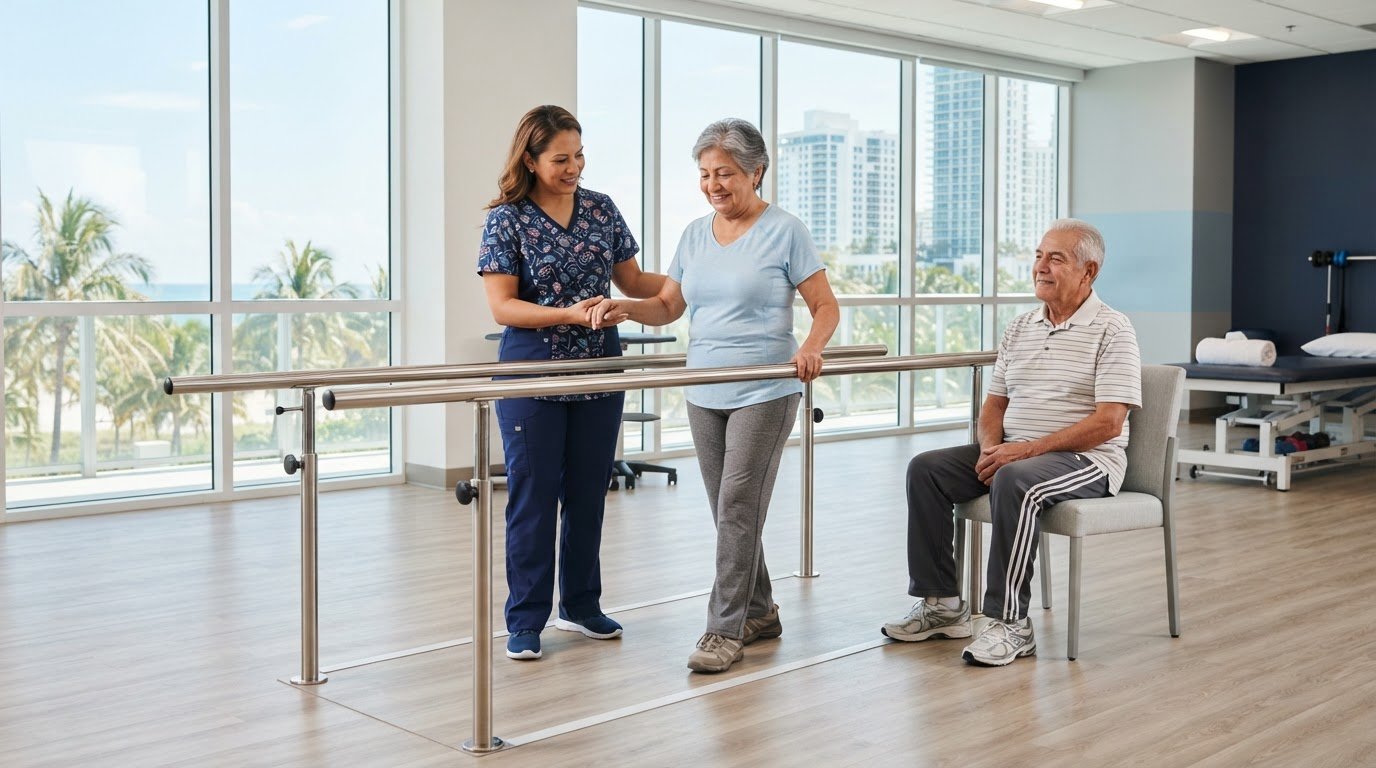
What if improving your balance isn’t only about doing more exercise? A clear walkway, better lighting, and a steadier way of moving can all play a part. If you worry about falling during everyday activities, learning how to improve balance and prevent falls can help you take practical steps without making movement feel intimidating.
It’s understandable to wonder which changes matter most or whether balance exercises are appropriate for you. Fall prevention can start with changes suited to your daily routine, rather than a one-size-fits-all plan.
This guide covers common home hazards, habits that support steadier movement, and ways to approach balance exercises with care. You’ll also learn when ongoing concerns or less confidence with daily activities may make an individualized assessment helpful. Touch of Health Rehab Inc. provides balance and gait rehabilitation and fall-prevention support tailored to individual needs in Sunny Isles Beach and nearby communities, including Aventura, Bal Harbor, North Miami Beach, and Miami Beach.
Key Takeaways
- Learn how to improve balance and prevent falls by pairing safer movement habits with practical changes to your surroundings.
- Consider movement, sensory, health-related, and environmental factors as individual influences, not predictions that a fall will happen.
- Choose exercises that suit your abilities. No single activity or product addresses every fall risk.
- Use a room-by-room checklist to make entryways, stairs, bathrooms, bedrooms, and walking paths easier to navigate.
- See how a physical therapy assessment can connect balance and gait support to the daily activities that matter to you.
How to Improve Balance and Prevent Falls in Everyday Life
Feeling unsteady while turning, stepping off a curb, or getting up from a chair can be unsettling. It doesn’t mean a fall is inevitable, and it doesn’t mean you need to stop doing the activities that matter to you. Learning how to improve balance and prevent falls starts with noticing what makes movement difficult and choosing practical steps that support confidence and independence.
Fall prevention involves reducing changeable risks while helping you move through daily life with greater security. Balance is your ability to stay upright while still or moving. Gait refers to the way you walk, including how you take steps and change direction. Strength helps you rise, step, and recover your position, while environmental safety concerns how well your surroundings support those movements. Each part matters, and no single adjustment addresses them all.
Fall prevention brings personal habits and safer surroundings together, making everyday movement more manageable. For a broader overview of approaches and interventions, see fall prevention strategies. If walking or changing direction feels less secure, balance and gait rehabilitation can provide individualized clinical support.
What can affect balance and steadiness?
Steady movement depends on several systems working together. Vision helps you notice obstacles and judge where to step. Sensation from your feet and joints gives your brain information about your position. Strength supports controlled movement, coordination helps different body parts work together, and the vestibular system in the inner ear contributes to your sense of movement and orientation.
A change in one area may be subtle, but several changes can combine. For example, dim lighting may make a step harder to see, while fatigue can make it more difficult to respond quickly. Health conditions, medication effects, or changes in vision can also influence steadiness, but feeling unbalanced alone doesn’t identify the cause. Don’t assume every change is simply part of aging.
Why a fall-risk approach should be personal
Your health history, mobility, home layout, and daily routines are unique. One person may want to feel more secure standing from a low chair; another may be concerned about walking across a busy room or getting around a familiar home. A useful plan starts with the movements and situations that matter to you, rather than treating a list of possible risks as a prediction that you’ll fall.
General guidance can help you notice questions to consider, but it can’t replace an individualized clinical assessment. A physical therapist can assess balance, gait, movement, and functional goals, then work with you on a plan suited to your needs. This practical focus can help you build safer movement habits while preserving the activities and independence that are important in daily life.
Which Factors Increase Fall Risk, and How They Affect Movement
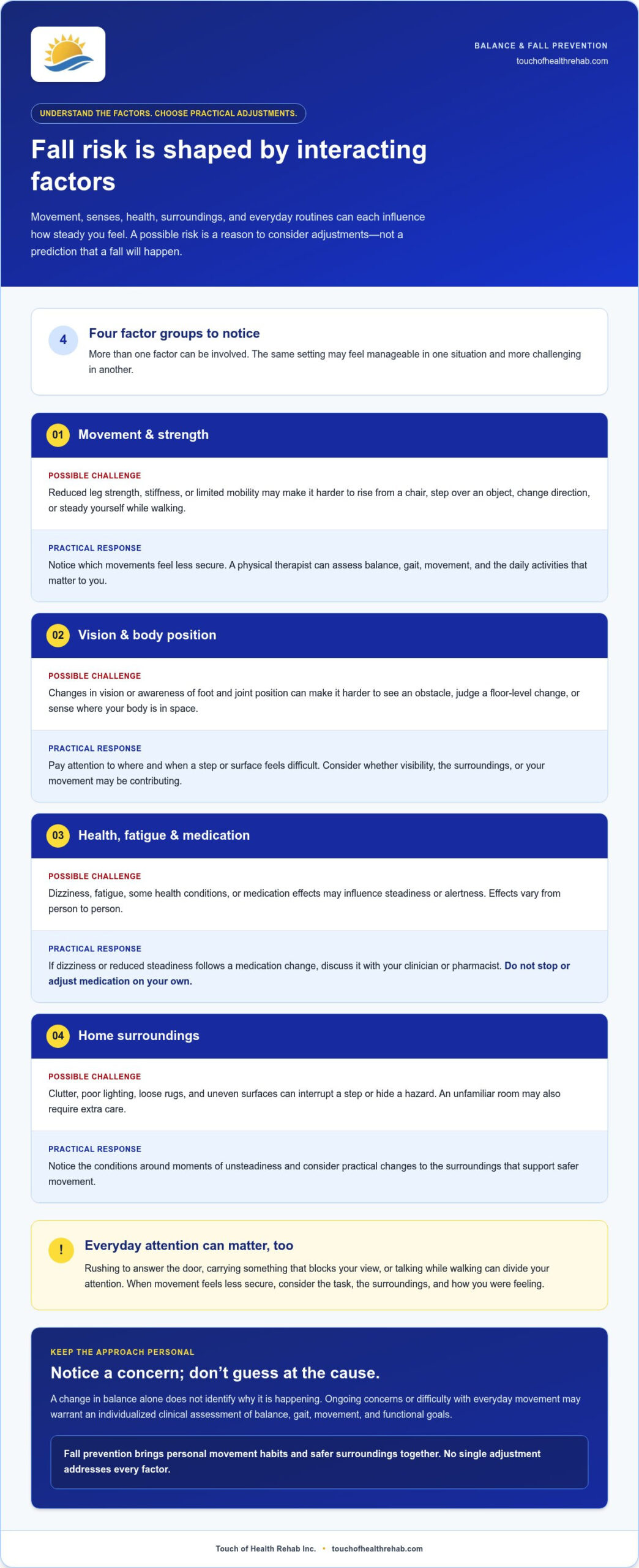
Feeling unsteady can have more than one explanation. A change in leg strength, a distracting task, a medication effect, or an obstacle underfoot may each affect movement in a different way. These factors can overlap, too. Noticing a possible risk is a reason to consider practical adjustments, not a reason to assume a fall will happen.
Fall risk reflects interacting factors, not age alone. Your abilities, health, surroundings, and routines all shape how easy it feels to move safely. The same stairway or busy walkway may feel manageable in one situation and more challenging in another.
Movement, strength, and sensory changes
Reduced leg strength or limited mobility can make it harder to rise from a chair, step over an object, or steady yourself while walking. Vision helps you identify obstacles and changes in floor level. Proprioception, your body’s sense of where it is in space, helps you recognize foot and joint position, including when you can’t see your feet directly.
Dizziness or a new change in balance deserves attention, especially if it affects everyday movement. A clinical assessment can help explore how balance and gait relate to your functional goals and guide next steps without guessing at a cause.
Health, medication, and surroundings
Some health conditions and medications may affect alertness or steadiness, but the effect varies from person to person. If you notice dizziness or feel less secure after a medication change, discuss it with your clinician or pharmacist. Don’t stop or adjust medication on your own. The Mayo Clinic fall prevention tips also highlight medication review as one part of a broader prevention approach.
- Movement: Reduced strength, stiffness, or difficulty changing direction may make transfers and walking less comfortable.
- Sensory: Changes in vision or awareness of foot position can make it harder to notice a step, surface, or obstacle.
- Health-related: Dizziness, fatigue, or medication effects may influence how steady or alert you feel. A qualified clinician can help assess concerns.
- Environmental: Clutter, poor lighting, loose rugs, and uneven surfaces can interrupt a step or hide a hazard.
Everyday situations matter, too. Rushing to answer the door, carrying items that block your view, or talking while walking can divide your attention. An unfamiliar room may require extra care because furniture, thresholds, and walking paths aren’t yet familiar. Notice when or where movement feels less secure, then consider whether the challenge came from the task, the surroundings, or how you were feeling.
Understanding how to improve balance and prevent falls begins with identifying which factors are relevant to you, rather than treating every possible risk as a personal diagnosis. If balance concerns affect your daily routines, Touch of Health Rehab Inc.’s physical therapy support can help you work on individualized balance and gait goals in Sunny Isles Beach and nearby communities.
Do Balance Exercises Prevent Falls? Separate Helpful Habits from Risky Shortcuts
Balance exercises can support steadier movement, but no single activity or piece of equipment can prevent every fall. Strength and balance practice works best as part of a broader approach that considers your abilities, health, daily routines, and surroundings. The goal isn’t to prove how long you can stand on one leg. It’s to build control for useful movements, such as rising from a chair or changing direction while walking.
Examples often used in balance and strength programs include sit-to-stands, heel raises, side leg raises, and standing with support. These are examples, not a universal routine: the right activity and difficulty depend on the person. Regular, manageable practice can help you develop movement skills over time, while jumping into difficult or unsupported challenges may leave you feeling less secure.
What makes balance practice more appropriate?
Start at a level that feels controlled, then progress gradually as your ability and confidence allow. For standing activities, keep a stable support within reach and choose a clear practice area. Pick a task connected to a real goal, such as improving control when standing up, rather than trying to copy an advanced exercise you saw online.
Pay attention to how your body responds. If an activity causes dizziness, pain, or another concerning symptom, stop rather than pushing through. A physical therapist can help adapt movement practice to your current abilities and functional goals. Balance and gait rehabilitation offers individualized support when everyday movement feels less secure.
When should you avoid a one-size-fits-all routine?
A routine that feels manageable for one person may not suit someone with different mobility, health history, or balance concerns. New dizziness, a recent fall, pain, or a change in how you walk or move are reasons to seek individualized advice before taking on challenging exercises. These concerns don’t identify a cause on their own, but they can help clarify what kind of guidance may be useful.
Online videos and written instructions can demonstrate an activity, but they can’t observe your movement, identify why balance feels different, or adjust an exercise to your needs. Be cautious with tasks that remove support or add complicated movements before you feel steady with simpler ones. Confidence grows through safe, manageable challenges, not by testing your limits when you’re unsure.
To decide whether an exercise is a sensible starting point, consider:
- Control: Can you complete the movement without rushing or feeling that you may lose your balance?
- Support: Is there a stable surface nearby, and is the practice area clear?
- Response: Do you feel comfortable during and after the activity, without concerning symptoms?
- Purpose: Does the movement relate to a daily activity you want to make easier?
These questions can help you approach how to improve balance and prevent falls thoughtfully. Exercise is one helpful tool, not a guarantee. Individualized guidance can help make practice safer and more relevant to the way you want to move.
A Practical Home and Daily-Routine Checklist to Reduce Fall Risks
A home-safety review doesn’t need to happen all at once. Choose one area, look at how you move through it, and make manageable changes that improve visibility and reduce obstacles. A family member or caregiver may notice something you’ve grown used to, if you welcome their help. Don’t attempt repairs that feel unsafe or beyond your ability; arrange appropriate assistance.
- Entryways: Check that the route from the door is clear and well lit. Look for raised thresholds, loose mats, or shoes that could catch your foot. Keep frequently used items, such as keys, within easy reach so you’re not rushing or reaching while stepping through the doorway.
- Stairs: Make sure steps are easy to see and free of objects. Check that lighting lets you see each step clearly, and notice whether a handrail is available where you need support. Take extra care with changes in floor level, especially when carrying something that blocks your view.
- Bathrooms: Review the path to the sink, toilet, and bathing area for clutter or slippery-looking surfaces. Consider whether essential items are easy to reach without stretching or bending. If a change to the space or a repair feels risky, don’t try to manage it alone.
- Bedrooms: Make sure the route from the bed to the door is open and visible, including at night. Keep frequently used belongings close enough to reach without leaning far, and place secure footwear where it’s easy to put on before walking.
- Walking paths: Clear cords, bags, and other clutter from the routes you use most. Look for loose rugs and uneven surfaces, and note areas where lighting could be improved. Keep the floor space you need for turning and moving between rooms unobstructed.
Build safer habits into everyday movement
Your routines matter as much as the layout. When getting up from bed or a chair, rise steadily and allow a moment to orient yourself before walking. Turn at a comfortable pace rather than twisting quickly, and avoid carrying objects that block your view of the path. Keep daily essentials accessible so you’re less likely to rush or stretch for them.
As you review your space, notice which everyday movements feel difficult: standing, turning, walking through a doorway, or carrying an item. These observations can help shape practical goals. Fall-prevention therapy can connect movement and environmental concerns with an individualized plan, making how to improve balance and prevent falls more specific to your life.
If balance concerns make everyday movement feel less secure, explore physical therapy support at Touch of Health Rehab Inc. for an individualized approach to fall prevention in Sunny Isles Beach, Aventura, Bal Harbor, North Miami Beach, or Miami Beach.
When Physical Therapy Can Help Improve Balance and Prevent Falls
If you continue to feel unsteady, have had a fall, or find yourself avoiding activities because you’re unsure of your balance, an individualized physical therapy assessment can help clarify what support may be useful. It can turn the broad question of how to improve balance and prevent falls into practical goals based on your movement, concerns, and daily life. You don’t need to wait until a fall occurs to take persistent balance concerns seriously.
What may happen during a balance-focused assessment?
A physical therapist may ask about your symptoms, falls or near-falls, health history, and the everyday movements that feel challenging. With your goals in mind, the therapist may observe how you stand, walk, change direction, and manage functional movements. The assessment is individualized, so the activities and observations can vary according to your concerns and abilities.
- Your experience: When does unsteadiness occur, and what activities have become harder?
- Your movement: How do balance, walking, strength, and mobility relate to the tasks you want to do?
- Your goals: Which everyday activities would you like to approach with more confidence?
Sharing specific examples can make the discussion more useful. You might describe difficulty turning in a narrow space, walking outdoors, or getting up from a chair. These details connect the assessment to your priorities. A therapist can explain what they observe and discuss appropriate next steps without assuming that one test or plan fits everyone.
How individualized rehabilitation supports safer movement
Following an assessment, therapy activities can be selected around your current abilities and functional goals. The focus may be on movement skills related to the activities you want to manage, with adjustments as your needs change. This collaborative process keeps practice relevant instead of relying on a generic exercise routine or an assumed cause of unsteadiness.
Touch of Health Rehab provides balance and gait rehabilitation for people working toward steadier movement. For older adults, geriatric physical therapy offers a clinical approach shaped around individual needs and everyday function. The aim is to support meaningful activities and confidence, without promising a particular outcome.
If balance concerns affect your daily life in Sunny Isles Beach, Aventura, Bal Harbor, North Miami Beach, or Miami Beach, connect with Touch of Health Rehab to discuss an individualized approach to physical therapy and fall prevention.
Take Your Next Step Toward Steadier Movement
Progress doesn’t have to begin with a major change. Choose one movement or daily situation you’d like to feel more confident handling, and use that goal to guide what you try next. If uncertainty continues to limit your routine, individualized support can help turn a broad concern into a plan shaped around your needs.
For people in Sunny Isles Beach, Aventura, Bal Harbor, North Miami Beach, and Miami Beach, Touch of Health Rehab offers balance and gait rehabilitation and fall-prevention services. Learning how to improve balance and prevent falls is personal, and the right next step can start with a conversation about the movement goals that matter to you.
Connect with Touch of Health Rehab to discuss your next step. With thoughtful guidance and goals that fit your life, you can move forward at a manageable pace and build confidence one step at a time.
Frequently Asked Questions
Can balance exercises help prevent falls?
Yes, appropriately chosen balance and strength exercises can support steadier movement, though they can’t eliminate every fall risk. The best activities depend on your abilities and goals. If you’re unsure where to begin, a physical therapist can help identify an appropriate level and ways to progress. That makes learning how to improve balance and prevent falls more relevant to your daily needs than following a challenging routine designed for someone else.
What should I do if I feel unsteady while walking?
Pause and steady yourself before continuing. If possible, move toward a stable support, such as a countertop or railing, and avoid turning quickly or carrying something that blocks your view. Notice whether the unsteadiness happens at a particular time or during a specific activity. If it’s new, persistent, or interfering with daily tasks, arrange a clinical assessment rather than trying to push through it.
Can medications increase the risk of falls?
Some medications may contribute to dizziness, drowsiness, or other effects that change how steady you feel. The possibility depends on the medication and your individual health, so don’t stop or change a dose on your own. If symptoms begin after starting a medicine or changing a dose, discuss the timing with your clinician or pharmacist. Bring a current list of prescriptions, over-the-counter medicines, and supplements to the conversation.
What should I do after a fall?
First, check whether you’re injured, and don’t rush to stand if you have severe pain, feel confused, or may have hit your head. Call emergency services for a serious injury, a possible head injury, or if you can’t get up safely. If you feel uninjured, take your time and get help if needed. Let your clinician know about the fall, even if you feel better afterward, so you can discuss what happened.
Are canes or walkers useful for preventing falls?
A cane or walker may provide useful support when it suits your mobility and is adjusted and used correctly. The wrong device, poor fit, or unfamiliar technique can make moving more difficult. A physical therapist can assess how you walk and help determine whether an aid may fit your needs, then guide you in practicing with it. Don’t borrow a device or rely on one without considering whether it works for your movement.
When should someone seek help for balance problems?
Seek a clinical assessment if unsteadiness persists, worsens, follows a fall, or makes you avoid activities you want to do. Sudden severe symptoms or a serious injury call for urgent medical attention. For ongoing balance concerns, Touch of Health Rehab Inc. serves people in Sunny Isles Beach, Aventura, Bal Harbor, North Miami Beach, and Miami Beach. An individualized assessment can help clarify goals and whether balance-focused support may be appropriate.
Does aging make falls unavoidable?
No. Age alone doesn’t mean you’ll fall, and balance concerns shouldn’t be dismissed as an inevitable part of getting older. Strength, health, vision, medications, surroundings, and daily activities can all influence how secure movement feels, and those factors differ from person to person. Paying attention to changes and getting guidance when needed can help you make informed choices while continuing the activities that matter to you.