Back surgery recovery can take anywhere from weeks to a full year to regain complete functionality. Long-term recovery after back surgery begins a couple of months after the procedure and continues for months beyond; more extensive surgeries often take 3-6 months or longer for full recovery. The type of surgery, your health before the procedure, and the demands of your work all shape the timeline.
It’s understandable to want a clear date for when you’ll feel like yourself again. Healing happens in stages, so returning to daily activities doesn’t necessarily mean your spine has finished healing. This guide explains what long-term recovery after back surgery may involve, how the procedure and your health can affect progress, and what to consider when returning to work.
You’ll also learn how rehabilitation can support movement and strength, and which changes after surgery need medical attention. Understanding the milestones can help you set realistic expectations and plan your next steps.
Key Takeaways
- Healing can range from weeks to a year, and feeling ready for daily activities doesn’t necessarily mean your spine has finished healing.
- Surgery type and your baseline health both shape recovery; spinal fusion generally takes longer to heal than less extensive procedures.
- Gradually increasing activity and following a tailored physical therapy plan can support progress while respecting your recovery stage.
- After non-instrumented lumbar surgery, light-duty work may be possible in 2-4 weeks, while more physically demanding work often takes longer.
- Know when to seek medical advice, including if you develop a fever above 101 degrees after surgery.
When should you call for help?
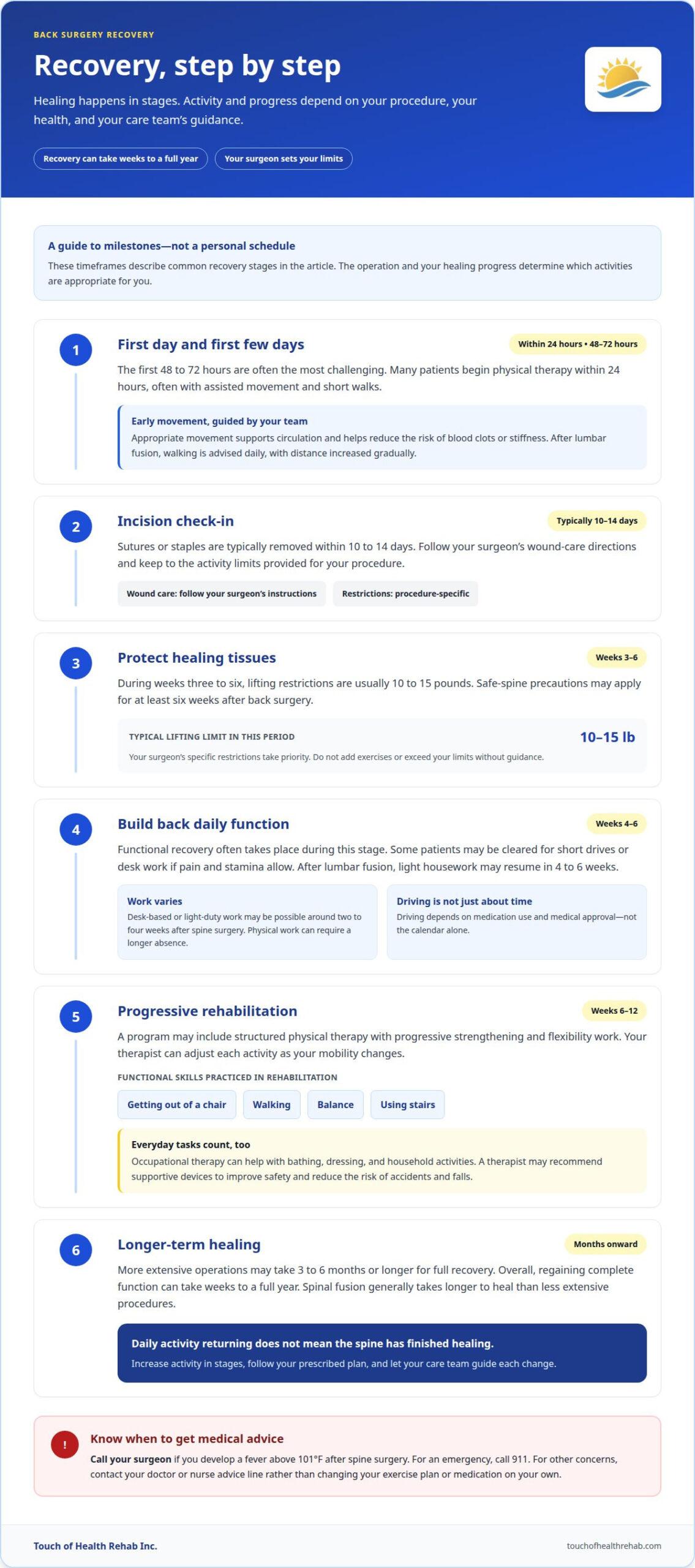
Call your surgeon if a fever rises above 101 degrees after spine surgery. If a problem needs emergency care, call 911. For other concerns during recovery, contact your doctor or nurse advice line rather than changing your exercise plan or medication on your own.
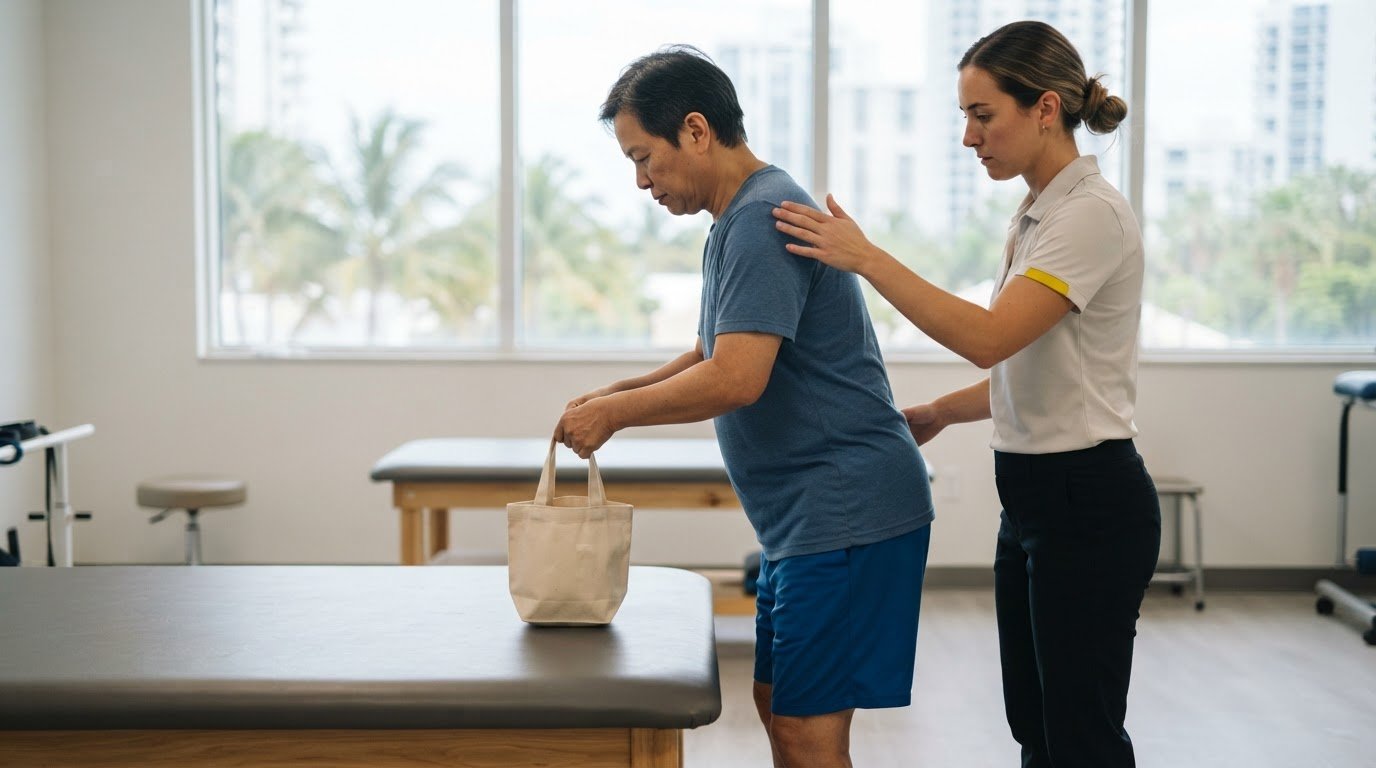
Physical therapy and exercises recommended after back surgery depend on the procedure and your stage of healing. Many patients begin physical therapy within 24 hours, often with assisted movement and short walks; your surgeon or rehabilitation team guides the timing and activities appropriate for you.
Early, appropriate movement supports circulation and helps reduce the risk of blood clots or stiffness. Walking is a practical first activity: after lumbar spinal fusion, patients are advised to walk daily and gradually increase the distance. Follow your care team’s instructions, and don’t use a walk to test how much discomfort you can tolerate.
Rehabilitation builds in stages. During weeks 6 to 12, a program may include structured physical therapy with progressive strengthening and flexibility work. A therapist can help you practice functional movements, such as getting out of a chair, walking, balancing, and using stairs, then adjust the challenge as your mobility changes.
Follow your doctor’s instructions for back exercises, especially after fusion. The operation and your healing progress determine which movements are appropriate, so don’t add exercises on your own. If you’re unsure whether a movement belongs in your routine, ask your care team before trying it. Clear guidance helps you progress without exceeding your current limits.
Call your surgeon when a problem arises or you’re concerned about how recovery is progressing. A fever above 101 degrees is a specific reason to call. For an emergency, call 911. Don’t rely on an exercise session to resolve a new concern or push through it without medical guidance.
Occupational therapy can help with everyday tasks such as bathing, dressing, and household activities. An occupational therapist may also recommend supportive devices to improve safety and reduce the risk of accidents and falls. If a daily task is difficult, discuss it during rehabilitation so practical adaptations can support your independence as you heal.
Post-surgery physical rehabilitation can help restore mobility, strength, walking ability, and range of motion. A post-surgical rehabilitation program can shape exercises around your current function and recovery stage. Follow your prescribed plan, report concerns promptly, and let your rehabilitation team guide each increase in activity.
Back Surgery Recovery Time: How Long Does It Take to Heal?
Recovery may take weeks or extend to a full year, depending on the procedure and how much function you need to regain. The 48 to 72 hours after surgery are often the most challenging, while more extensive operations may need 3-6 months or longer for full recovery.
Activity and Incision Restrictions
Activity and incision restrictions protect healing tissues while you gradually resume movement. Follow your surgeon’s wound-care directions and lifting limits; after back surgery, safe-spine precautions may apply for at least 6 weeks. Sutures or staples are typically removed within 10-14 days, while lifting restrictions during weeks three to six are usually 10 to 15 pounds.
Increase activity in stages, following the limits set for your procedure. Your capacity may remain lower for 8 weeks or more, even as everyday movement becomes easier. After lumbar spinal fusion, light housework may resume in 4 to 6 weeks, but heavier lifting and strenuous exercise require a more cautious progression. A minimally invasive procedure may allow a shorter recovery than a more extensive operation.
Returning to Work and Daily Activities
Returning to work means resuming job duties without exceeding your current strength and activity tolerance. Desk-based or light-duty work may be possible around two to four weeks after spine surgery, while physical work can require a longer absence. After lumbar fusion, people with jobs that don’t require physical labor may return after 4 to 6 weeks.
Daily activities also return gradually. Functional recovery often takes place during weeks 4 to 6, when some patients may be cleared for short drives or desk work if pain and stamina allow. Rehabilitation may continue through weeks 6 to 12, building strength and flexibility as activities progress. Driving depends on medication use and medical approval, not the calendar alone.
Persistent Symptoms and Surgical Complications
Persistent symptoms include pain, numbness, or weakness that continues or returns after surgery. Their duration and effect on daily function matter. Adjacent segment disease refers to problems affecting spinal levels next to a fused segment. Failed back surgery syndrome describes ongoing or recurring pain after an operation, rather than one specific surgical complication.
Recovery varies by procedure and patient, so consider symptoms alongside healing and changes in activity. Pain is expected to reduce significantly within a few weeks, but new or worsening symptoms deserve attention from your care team. Don’t increase exercise to push through a concerning change.
In the United States, rehabilitation costs depend on the case and are provided after a quote request; insurance coverage depends on your plan’s benefits and terms. As you plan your next steps, explore post-surgery rehabilitation support to help rebuild movement and function during recovery.
Recovery timelines by type of back surgery
Recovery depends partly on the procedure: a less extensive operation and a spinal fusion have different healing demands. The timelines below describe common milestones, from early movement to fuller function, so you can better understand what to expect while preparing for recovery.
After a discectomy, patients often walk the same day or the day after surgery. Limited activities may resume within 2-3 weeks, and light activity within 2-4 weeks. A full range of activities can take 6-8 weeks. Physical therapy typically lasts 4-6 weeks and focuses on core stability.
With a laminectomy or spinal decompression, walking often begins within 1-2 days. Partial function commonly returns in 4-6 weeks, with light activity in that period. Normal activity may take 8-12 weeks, and physical therapy typically lasts 6-8 weeks, focusing on spinal alignment, gait training, and core stability.
Spinal fusion involves a longer healing process because bone fusion continues after daily movement begins. Light activity may resume in 6-8 weeks, while full healing can take 6 months to a year. Physical therapy typically lasts 12+ weeks and focuses on core strengthening, posture, and long-term spinal stability. After anterior lumbar interbody fusion (ALIF), a hospital stay typically lasts two to four days.
For artificial disc replacement, light activity may resume in 3-4 weeks, with normal activity in 8-12 weeks. Full healing may take 6 months or more. Physical therapy typically lasts 8-12 weeks, emphasizing spinal mobility, flexibility, and strength training.
After kyphoplasty or vertebroplasty, a good amount of functionality may return within 2-3 weeks, with full recovery in 4-6 weeks. Following nucleoplasty, full function may return within 2-3 weeks, while complete recovery can take up to 12 weeks.
These milestones describe different stages, not interchangeable definitions of “recovered.” Returning to light activity after fusion, for example, doesn’t mean the bone has fully healed. Your procedure, daily functional needs, and rehabilitation plan all shape how quickly you can increase activity.
For lumbar spinal stenosis surgery, meaningful improvement in leg pain, numbness, and walking ability often occurs within the first three months. Minimally invasive procedures may have recovery times as short as 4-6 weeks, while moderate procedures typically require 8-12 weeks. Your ability to resume a particular task depends on its demands, not simply the procedure’s earliest milestone.
How surgery type and baseline health affect recovery
Long-term recovery depends on the procedure, your health before surgery, and the demands you place on your back afterward. These factors also inform return-to-work recommendations. Surgeons consider your goals, postoperative pain, and the duties your job involves.
Decompression and spinal fusion affect the spine differently. Decompression removes tissue to relieve pressure, while fusion requires bones to join as healing progresses. More extensive surgery may take longer to recover from, and bone healing after fusion can continue after you resume everyday movement. The incision and number of treated spinal levels also matter.
Your health before surgery can influence healing. Smoking, poor nutrition, and high stress levels can slow recovery and increase the risk of complications after back surgery. These factors may affect your energy, tissue healing, and ability to take part in rehabilitation. Following your prescribed activity and physical therapy plan helps build function gradually, without treating one milestone as the finish line.
Work recommendations depend on more than the name of your surgery. Desk work, moderate-duty roles, and heavy labor place different demands on movement, strength, and endurance. Your pain levels and recovery goals also affect the timing. Discuss work expectations with your surgeon before surgery, then revisit the plan as your function changes.
Follow-up appointments track your progress and help the surgical team assess healing. Most spine surgery patients have their first postoperative follow-up around two weeks after surgery. A surgeon will likely order X-rays around three months after surgery to assess spinal healing. Use these visits to discuss symptoms and changes in your activity.
Monitoring may continue beyond the first imaging appointment. Follow-up appointments after back surgery may occur every few months for up to 2 years. This longer schedule can be particularly relevant when fusion healing continues or when recovery goals involve gradually increasing activity. Keep each appointment so your care team can follow changes over time.
Successful recovery involves more than a healed incision. It also means regaining the function needed for daily tasks and work while respecting the demands of your procedure. Returning to desk duties, for example, differs from lifting or repeated bending. Your surgeon considers those demands alongside pain and healing when making work recommendations.
Before surgery, identify the job tasks and daily activities you hope to resume. Share those goals with your surgeon, and discuss your progress at follow-up visits. Smoking, nutrition, stress, procedure type, and postoperative pain all shape recovery, so a plan based on your circumstances makes each milestone more useful.
Return-to-work timing after non-instrumented lumbar surgery
After non-instrumented lumbar surgery, such as microdiscectomy or decompression, light-duty work may resume in 2-4 weeks. Moderate-duty jobs may require 4-6 weeks away, while heavy-duty work may take around 8 weeks. These timelines differ because each role places different demands on the healing back.
For heavy-duty work after non-instrumented surgery, the number of treated spinal levels can affect timing. Surgery involving multiple levels may delay a return to heavy duties to 12 weeks. A full return to work activities may take 12-14 weeks. These are separate milestones: resuming light work doesn’t mean you’re ready for lifting or repeated bending.
Instrumented lumbar surgery has its own timeline. After single-level surgery, light-duty work may resume around 2-4 weeks, moderate-duty work around 6-8 weeks, and heavier duties around 12 weeks. After multi-level instrumented surgery, light-duty work may be delayed to roughly 6 weeks, medium-duty work to roughly 8 weeks, and heavier labor to 12-14 weeks.
Spinal fusion can also require a longer recovery before physically demanding work. After lumbar fusion, returning to a job involving light physical labor may take 3 to 6 months. For jobs without physical labor, returning may be possible after 4 to 6 weeks. After ALIF surgery, heavy lifting should be avoided for eight to 12 weeks.
Sports and strenuous activities follow a different progression from work. With clearance from their surgeon, many spine surgery patients begin a gradual return to sports and higher-impact activities around four to six months after surgery. This milestone reflects the demands of impact and sustained movement, not simply the ability to do desk work.
Consider the actual tasks involved in your job: sitting at a desk, lifting materials, and repeated bending place different demands on your body. Return-to-work recommendations should reflect your goals and postoperative pain. Discuss expectations with your surgeon before surgery, and follow your medical instructions throughout recovery. Your procedure, the number of operated levels, job demands, and current function all inform the decision.
Physical rehabilitation can support a gradual return by addressing movement, strength, and function relevant to everyday tasks. If you’re preparing to resume work after surgery, explore post-surgery rehabilitation support as part of your recovery plan.
Touch of Health Rehab: Post Surgery Physical Rehabilitation
Touch of Health Rehab Inc. provides post-surgical physical rehabilitation to support your return to movement and daily function after back surgery. Physical therapy can address mobility, strength, walking ability, and range of motion as you progress through recovery.
Consider rehabilitation once your surgical team has cleared you to begin or continue therapy, or when you need help progressing with everyday activities. Sessions can focus on your current movement goals, while postural education can build awareness of how you position your body during daily tasks. Your recovery plan should follow your surgeon’s instructions and reflect your procedure and stage of healing.
For support with the next phase of recovery, contact Touch of Health Rehab Inc.
Build Your Next Step Into Recovery
Healing is about more than reaching a milestone. It also means building the confidence and everyday function to keep moving forward. During long-term recovery after back surgery, steady, guided progress can help you return to activities that matter to you.
Touch of Health Rehab Inc. offers physical therapy and postural education to support movement and body awareness. Vestibular rehabilitation is also available when balance or dizziness concerns are part of your recovery needs. Care focuses on your goals and progress.
If you’re ready to discuss rehabilitation, contact Touch of Health Rehab Inc. to take the next step. Keep moving forward with support tailored to your recovery.
Frequently Asked Questions
How can you care for yourself at home?
Arrange practical support before surgery to make everyday tasks easier. Family and friends can help with meals and errands and encourage you during recovery. Follow your prescribed movement plan, and change position regularly rather than sitting or standing for long stretches. Mindfulness, meditation, or journaling may also help you manage emotional challenges as you adjust to recovery at home.
What Are the Worst Days After Back Surgery?
The first 48 to 72 hours after spine surgery are typically the most challenging. During this early period, hospital care may focus on pain control, short assisted walks, and basic self-care. You may need help with getting out of bed or moving between a chair and the bathroom. Breaking tasks into manageable steps can make this demanding phase easier to navigate.
What can help your recovery?
Appropriate movement, prescribed exercises, and physical therapy can help build mobility and strength over time. After lumbar fusion, walking daily and gradually increasing distance supports a measured return to activity. Follow the exercise plan provided by your care team rather than adding movements on your own. For people arranging rehabilitation in Sunny Isles Beach, physical therapy can address walking ability, balance, and everyday movement goals.
When should I call my healthcare provider?
Call your surgeon if you develop a fever above 101 degrees after spine surgery or if a new problem concerns you. Contact your doctor or nurse advice line for other recovery issues. If you need emergency care, call 911. Describe what changed, when it began, and how it affects movement or daily tasks. That information can help your care team understand the concern.
What is the typical long-term recovery timeline after back surgery?
Long-term recovery after back surgery can take from a few months to a year, depending on the procedure and the function you’re working to regain. Returning to daily activities early doesn’t necessarily mean healing is complete. Recovery often involves gradual improvements in movement, strength, and independence while deeper tissue or bone healing continues. Your progress is best assessed through both daily function and follow-up visits.
How do long-term outcomes differ by type of back surgery, such as spinal fusion, discectomy, or laminectomy?
Spinal fusion generally involves a longer healing process than discectomy or laminectomy because bone fusion continues over time. After discectomy, limited activities may resume within 2-3 weeks, while a full range can take 6-8 weeks. Laminectomy recovery can take up to 12 weeks. These milestones describe different procedures and activity levels, so compare progress by function, not by another person’s timeline.
What activities and lifting restrictions apply months or years after back surgery?
Restrictions depend on the procedure, healing progress, and the activity involved. Safe-spine precautions may apply for at least 6 weeks after surgery, with early lifting limits often set at 10 to 15 pounds. After that period, activity increases according to recovery and medical instructions. Fusion healing may continue for months, so returning to lifting or strenuous exercise should follow the guidance given for your surgery.
When can patients return to work, driving, exercise, and normal daily activities after back surgery?
Timing varies by task and procedure. Desk-based work may be possible around two to four weeks after spine surgery, while heavier jobs can take longer. Driving may begin around 3 weeks after surgery once you’re off pain medication and have your doctor’s approval. Exercise and daily activities should progress according to your surgical instructions, pain levels, stamina, and ability to move safely.