
What if the way back to more comfortable movement starts with understanding what makes it difficult in the first place? If pain, stiffness, weakness, or an injury is limiting your routine, you may wonder whether musculoskeletal physical therapy could help, or whether you should rest or try another form of care. Physical therapy looks at how your body moves and what may be getting in the way of the activities you want to return to.
Your concerns are personal, so treatment shouldn’t feel like a one-size-fits-all routine or a push to work through pain. A physical therapist can ask about your symptoms, daily demands, relevant health history, and goals, then use that information to shape a plan with you. The approach can be reviewed and adjusted as your movement and needs change.
This article explains the conditions and movement challenges musculoskeletal physical therapy may address, what can influence a personalized plan, and how physical therapy may fit alongside activity changes, rest, medication, or other care. You’ll also find practical guidance on what to discuss with a clinician, so you can take a considered next step toward moving with greater confidence.
Key Takeaways
- Musculoskeletal physical therapy addresses movement concerns involving muscles, joints, and supporting tissues. An assessment helps clarify what may be contributing to your symptoms and how they affect daily activities.
- A personalized plan connects your movement needs with everyday goals and can be adjusted as your tolerance and progress are reviewed.
- Physical therapy, activity modification, and medical evaluation can complement one another. The right combination depends on your situation.
- Before an appointment, note when symptoms occur, relevant health history, and which daily activities feel limited.
- When comparing local care, ask about services related to your concern, how an individual assessment works, and how the clinic explains care options.
What Is Musculoskeletal Physical Therapy, and What Can It Address?
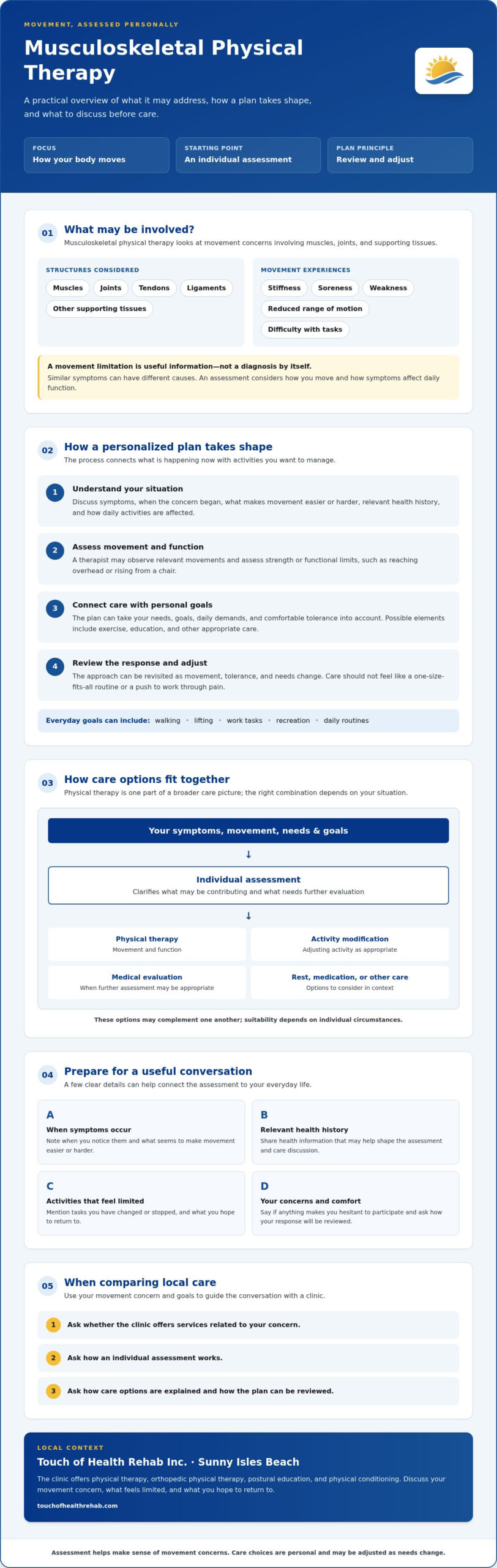
Musculoskeletal physical therapy focuses on movement concerns involving muscles, joints, tendons, ligaments, and other supporting tissues. It assesses how these structures affect function and may support injury recovery, mobility, and everyday activities. Similar symptoms can have different causes, so care starts with an individual assessment rather than assumptions based only on where discomfort occurs.
Which body parts and movement concerns may be involved?
Muscles help create movement, while joints allow body parts to move in relation to one another. Tendons connect muscles to bones, and ligaments help support joints. When one of these structures, or the way they work together, affects movement, you might notice stiffness, soreness, reduced range of motion, weakness, or difficulty with tasks such as reaching, walking, lifting, or getting up from a chair.
These experiences describe what movement feels like, not what is causing the problem. For example, limited shoulder movement could have more than one explanation. A physical therapist considers your symptoms and how you move, while a clinician’s evaluation can help determine whether further medical assessment is appropriate. A movement limitation is useful information, but it isn’t a diagnosis by itself.
How is physical therapy different from treating symptoms alone?
Rather than focusing only on where it hurts, a therapist considers your movement, daily function, relevant health history, and personal goals together. That broader view can connect a physical concern with the activities you want to manage, whether that means returning to exercise or moving more comfortably through your routine. Orthopedic physical therapists work with movement and musculoskeletal concerns as part of the wider field of physical therapy.
Care choices depend on what an individual assessment shows and what you can comfortably tolerate. Exercise, education, and other elements may be considered in light of your needs, with the approach reviewed as your movement changes. This doesn’t mean every visit follows the same routine or that you should push through pain. Ask what each part of the plan is intended to help you do and how your response will be reviewed.
Touch of Health Rehab Inc. is based in Sunny Isles Beach and offers physical therapy, orthopedic physical therapy, postural education, and physical conditioning. Learn more about its comprehensive physical therapy when considering where to discuss a movement concern. Sharing what feels limited and what you hope to return to can help start a collaborative conversation about appropriate next steps.
How Musculoskeletal Physical Therapy Supports Movement and Recovery
Musculoskeletal physical therapy turns assessment into a practical plan for movements that matter in your life. The process generally involves understanding your current function, agreeing on meaningful goals, choosing appropriate care, and checking how you respond. The focus isn’t just on completing exercises. It’s on building capacity for activities such as walking, lifting, work tasks, recreation, or daily routines.
What happens during an assessment?
A physical therapist may ask about your health history, when your concern began, and what makes movement easier or harder. They may observe relevant movements and assess strength or functional limitations, such as difficulty reaching overhead or rising from a chair. These findings are considered together, rather than treating one symptom as a complete explanation.
Your goals and concerns belong in the conversation, too. Tell the therapist what you hope to do, which activities you’ve changed or stopped, and whether anything makes you hesitant to participate. Physical therapists follow a professional education and education and licensure pathway that prepares them to assess movement and guide care. Sharing clear details helps make that expertise relevant to your priorities.
How do goals shape the care plan?
Goals work best when they connect therapy to real tasks. If walking is difficult, the plan can take into account the movements and demands involved in walking. If your goal is to manage work duties or return to a recreational activity, those needs can inform which abilities to address. Your therapist can discuss suitable activity and exercise options based on your presentation and tolerance, rather than assuming the same routine suits everyone.
Why can a treatment plan change over time?
Progress reviews provide a chance to revisit what you can do, what still feels challenging, and how you respond to activity. As function or tolerance changes, the plan may be adjusted so that the next steps remain appropriate. This is a practical part of individualized care: rehabilitation should reflect your current abilities, and each person’s response and pace can differ.
Education can also help you make informed activity choices between appointments. Ask what a recommended movement is intended to support, how to adapt it if it feels difficult, and what response to report at your next review. Those conversations help you take an active role in self-management without needing to diagnose yourself or judge progress against someone else’s timeline.
If you’re ready to discuss your movement goals with a local clinic, explore physical therapy with Touch of Health Rehab Inc.
Musculoskeletal Physical Therapy, Rest, and Other Care: How to Think About the Options
Physical therapy, adjusting activity, and medical evaluation can each play a role in addressing movement concerns. They aren’t competing choices, and you don’t always need to wait for symptoms to disappear before doing any activity. The appropriate approach depends on your symptoms, health history, and clinical findings.
| Option | What it may involve | How it can fit |
|---|---|---|
| Physical therapy | An assessment of movement and function, followed by individualized guidance, which may include exercise and education. | Can help address movement limitations and support progress toward functional goals. |
| Activity modification | Temporarily changing how often, how long, or how intensely you do a task. | May help you stay engaged in appropriate activity while avoiding demands that currently aggravate symptoms. |
| Clinician-guided medical evaluation | Assessment by a healthcare professional who can consider your symptoms and whether further evaluation or care is needed. | May be appropriate when symptoms need medical assessment or physical therapy alone isn’t the right next step. |
These options can be combined when clinically appropriate. For example, someone may adjust a demanding task while discussing symptoms with a clinician and exploring physical therapy. You don’t have to decide the cause on your own. Sudden, severe, worsening, or otherwise concerning symptoms warrant prompt medical assessment.
Is physical therapy the same as exercise at home?
No. Exercise may be part of physical therapy, but care can also involve assessing how you move, discussing your goals, and learning how to adapt activities. A therapist can help select and progress activity based on your presentation and tolerance. That doesn’t mean home exercise is always unsafe or that everyone needs supervised care. The suitable approach depends on your symptoms, health history, and clinical findings.
If you’re unsure whether to continue a particular activity, describe what you feel and when it occurs to a healthcare professional. Don’t assume you must either stop all movement until symptoms vanish or push through discomfort without guidance.
When might another healthcare professional also be involved?
If an assessment suggests that your concern needs additional evaluation, a physical therapist may recommend discussing next steps with another healthcare professional. Physical therapy doesn’t replace medical care. Depending on your needs, clinicians may coordinate, with your consent and in line with their practice. Ask what further assessment is being suggested, why it may be useful, and how it fits with your movement goals.
How to Prepare for Musculoskeletal Physical Therapy and Make Care More Useful
A little preparation can help you explain what’s changed and what you want to do more comfortably. You don’t need to identify the cause yourself. For an initial evaluation, useful details include when symptoms started, when they occur, relevant health and treatment history, activities that feel limited, and the goals you’d like care to support.
What information should you bring or be ready to discuss?
Before your visit, consider jotting down a few notes. They don’t need to be formal or exhaustive. Focus on what you’ve noticed and what would make a difference in your everyday life.
- Describe your symptoms. Note when they began, where you feel them, when they tend to occur, and what activities seem to affect them. Share changes you’ve observed without trying to label the cause.
- Review relevant health history. Be ready to mention diagnoses, previous injuries, surgeries, medications, and care you’ve already received, when applicable.
- Bring useful records if available. Relevant clinical records or instructions from another healthcare professional may provide context. Ask whether they would be helpful, and bring them if appropriate.
- Name your movement goals. Think of specific activities you want to resume or manage more comfortably, such as carrying groceries, reaching for an item, or completing a task at work.
These details help the clinician understand your experience in context. A simple note such as “my knee feels stiff after sitting, and stairs are difficult” is more useful than attempting to self-diagnose.
How can you take part in a personalized plan?
Care is a conversation, not a test you have to pass. Be open about what feels comfortable, what concerns you, and what may make it hard to follow a home plan. If an activity feels too challenging, or your symptoms or daily function change between visits, share that feedback so the plan can be discussed in light of your experience.
Ask how progress will be reviewed and how home activities are chosen for your needs. It’s reasonable to ask how to perform an exercise, how often to do it, what to pay attention to, and how progression will be decided. Clear answers can help you feel more confident about taking part between appointments.
If your concerns involve a joint or orthopedic movement issue, explore orthopedic physical therapy as one relevant care option. To discuss your movement concerns with a local clinic, contact Touch of Health Rehab Inc. about its physical therapy services.
Finding Musculoskeletal Physical Therapy Near Sunny Isles Beach
Choosing a local clinic is about more than finding a convenient address. Look for services that fit your concern, an assessment that takes your movement goals into account, and communication that helps you understand the proposed plan. These basics can help you compare musculoskeletal physical therapy options in Sunny Isles Beach, Aventura, Bal Harbour, North Miami Beach, and Miami Beach, and decide what questions to ask before arranging care.
What questions can you ask a physical therapy clinic?
A few clear questions can help you understand how care might work. Ask how the initial assessment will consider your daily activities and how your goals will inform the plan. You can also ask how progress is reviewed, what home activities may be recommended, and how the plan can be adjusted if your needs or comfort change. Confirm the clinic’s current services, location, and any practical details directly before planning a visit.
Notice how the answers are communicated. You should be able to ask questions, describe what concerns you, and understand what the next steps involve. If you’re unsure whether a service is relevant to your situation, explain what movement or activity is difficult and ask whether the clinic can discuss that concern with you.
How can local care support your next step?
Touch of Health Rehab Inc. is based in Sunny Isles Beach and serves nearby communities, including Aventura, Bal Harbour, North Miami Beach, and Miami Beach. Confirm the clinic’s current location and service details directly before making plans. Its relevant offerings include physical therapy, orthopedic physical therapy, physical conditioning, injury recovery, and postural education. These are options to discuss, not a promise of a particular treatment or result.
As you compare options, consider whether the clinic can clearly explain how its services relate to your movement concerns and what an initial assessment involves. A conversation can help you identify whether the setting and care options suit your needs. You can also explore the clinic’s comprehensive physical therapy information for an overview of its physical therapy services.
If you’re ready to ask questions about your movement concerns, explore physical therapy at Touch of Health Rehab Inc.. Sharing what feels limited and what you hope to do more comfortably is a useful place to begin.
Take a Confident Next Step Toward Better Movement
Musculoskeletal physical therapy can connect movement challenges with the activities you want to manage more comfortably. A thoughtful assessment, goals that reflect your daily life, and ongoing communication can guide care that adapts to your needs. Physical therapy can also fit alongside activity changes or medical evaluation when appropriate, so you don’t have to figure out the next step alone.
Touch of Health Rehab is based in Sunny Isles Beach, Florida, and offers physical therapy, physical conditioning, injury recovery, and postural education. Sharing what feels difficult and what you hope to do can start a clear, collaborative conversation about whether the clinic’s services may fit your concerns.
Explore physical therapy with Touch of Health Rehab and take a considered first step toward moving with greater confidence.
Frequently Asked Questions
What does musculoskeletal physical therapy treat?
Musculoskeletal physical therapy addresses movement difficulties involving muscles, joints, tendons, ligaments, and supporting tissues. People may seek care for stiffness, reduced mobility, injury recovery, or trouble with everyday activities such as walking, reaching, or lifting. These symptoms can have different causes, so an assessment helps determine what care may be appropriate. The goal is to understand how movement affects your function, rather than assuming a symptom alone reveals the underlying issue.
Can physical therapy help with muscle and joint pain?
Physical therapy may help address muscle or joint pain when movement or function is affected, but whether it’s suitable depends on your symptoms, health history, and clinical findings. A physical therapist can assess relevant movement and discuss options that fit your needs and tolerance. Pain doesn’t always mean you should stop all activity, but sudden, severe, worsening, or concerning symptoms warrant prompt medical assessment rather than relying on therapy alone.
What happens during musculoskeletal physical therapy?
Care typically starts with a conversation about your symptoms, health history, and everyday activities, followed by an assessment of relevant movement, strength, or functional limitations. You and the therapist can identify goals, such as managing a work task or moving more comfortably through your routine. The plan may include activity guidance, exercise, or education, with progress reviewed and care adjusted in response to your needs and tolerance.
Is musculoskeletal physical therapy the same as orthopedic physical therapy?
The terms overlap, though their use can vary. Musculoskeletal physical therapy describes care focused on movement concerns involving muscles, joints, and supporting tissues. Orthopedic physical therapy commonly refers to physical therapy for orthopedic or musculoskeletal concerns. Both may address function and mobility, but the specific care offered depends on your situation and the clinician’s assessment. Ask a clinic how its services relate to your concern and goals.
How long does musculoskeletal physical therapy take?
There isn’t one timeline that applies to everyone. The length of care can depend on your concern, health history, functional goals, response to activity, and other clinical considerations. Your therapist can discuss how progress will be reviewed and whether the plan needs adjustment as your function or tolerance changes. Ask what signs will help guide decisions about next steps, rather than comparing your pace with someone else’s recovery.
Do I need a referral for physical therapy in Florida?
Florida allows physical therapists to treat patients for up to 30 days without a physician referral. If care needs to continue beyond that period for a condition not previously assessed by a doctor, a practitioner of record must review and sign the plan of care. Referral rules for insurance reimbursement may differ by plan, so check with your insurer and the clinic about requirements that apply to your situation.
What should I wear to a physical therapy appointment?
Choose comfortable clothing that lets you move easily and allows the therapist to observe the area relevant to your concern. For example, flexible pants and a comfortable top may work well for a general movement assessment. Wear or bring shoes you normally use for the activity you want to discuss, such as walking. If you’re unsure what’s appropriate, ask the clinic before your appointment, and bring relevant instructions or records if available.