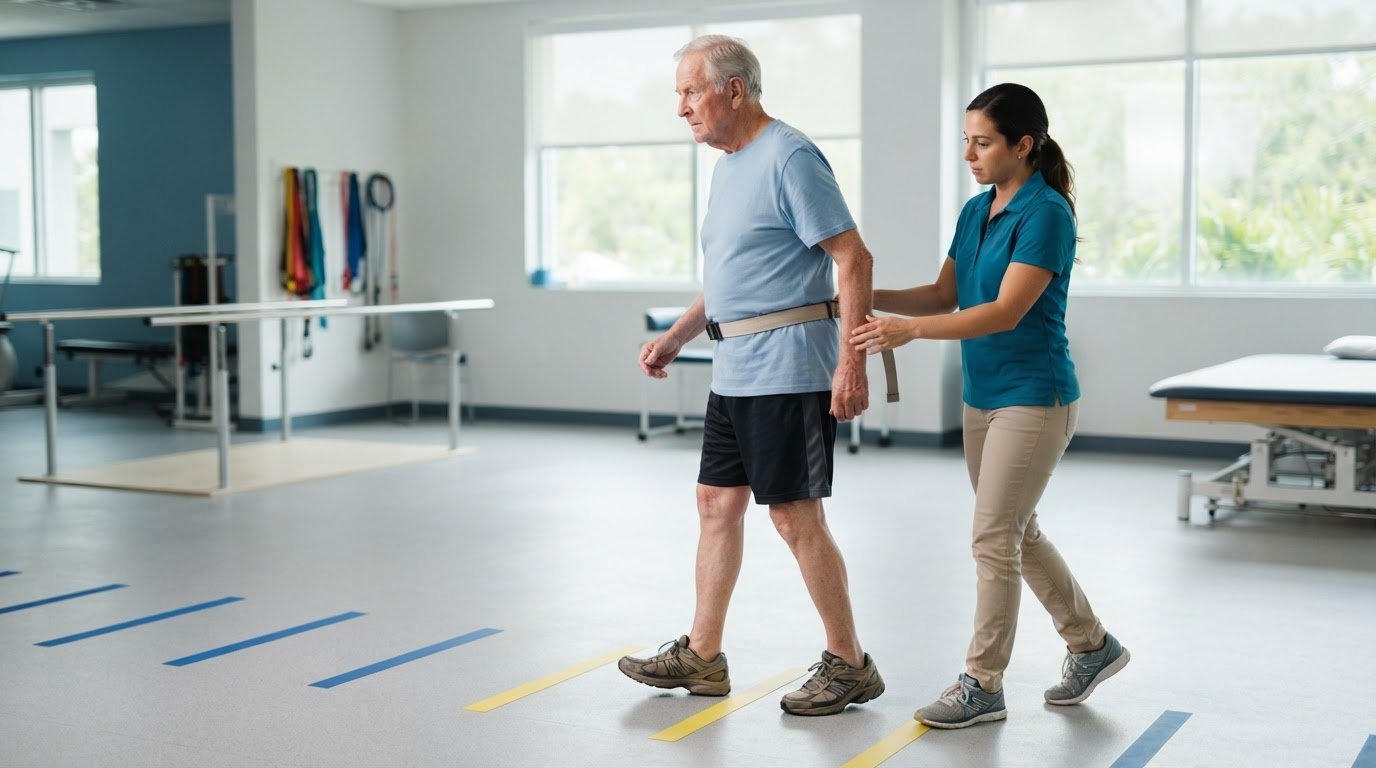
Parkinson’s gait care isn’t one fixed exercise plan; it should adapt as movement needs change. Physical therapy for Parkinson’s disease gait in Sunny Isles can address walking changes, balance, and everyday mobility with exercises and practice tailored to the person. The aim is to support safer, more confident movement, not to promise a cure.
It’s understandable to want support that goes beyond walking practice. Parkinson’s can affect how you start moving, turn, balance, and manage familiar activities, so therapy may address several aspects of movement together. Your needs and abilities can change over time, too.
This article explains how physical therapy may support gait, balance, strength, and daily tasks at different stages of Parkinson’s disease. You’ll learn what gait training can involve, how a therapist can tailor care to movement challenges, and when a personalized rehabilitation plan may help you stay engaged in everyday life.
Key Takeaways
- Physical therapy can combine gait practice, strengthening, and activities such as dance to address changing movement needs.
- Parkinson’s can affect walking, balance, speech, and cognition, so a therapy plan should reflect the person’s individual challenges.
- Fall-prevention work can focus on balance and everyday movements to support greater confidence and independence.
- Therapy can address stiffness, tremors, and slowed movement with approaches tailored to current abilities.
- As Parkinson’s progresses, rehabilitation can adapt its focus to support mobility and daily activities through each stage.
How can Physical Therapy help?
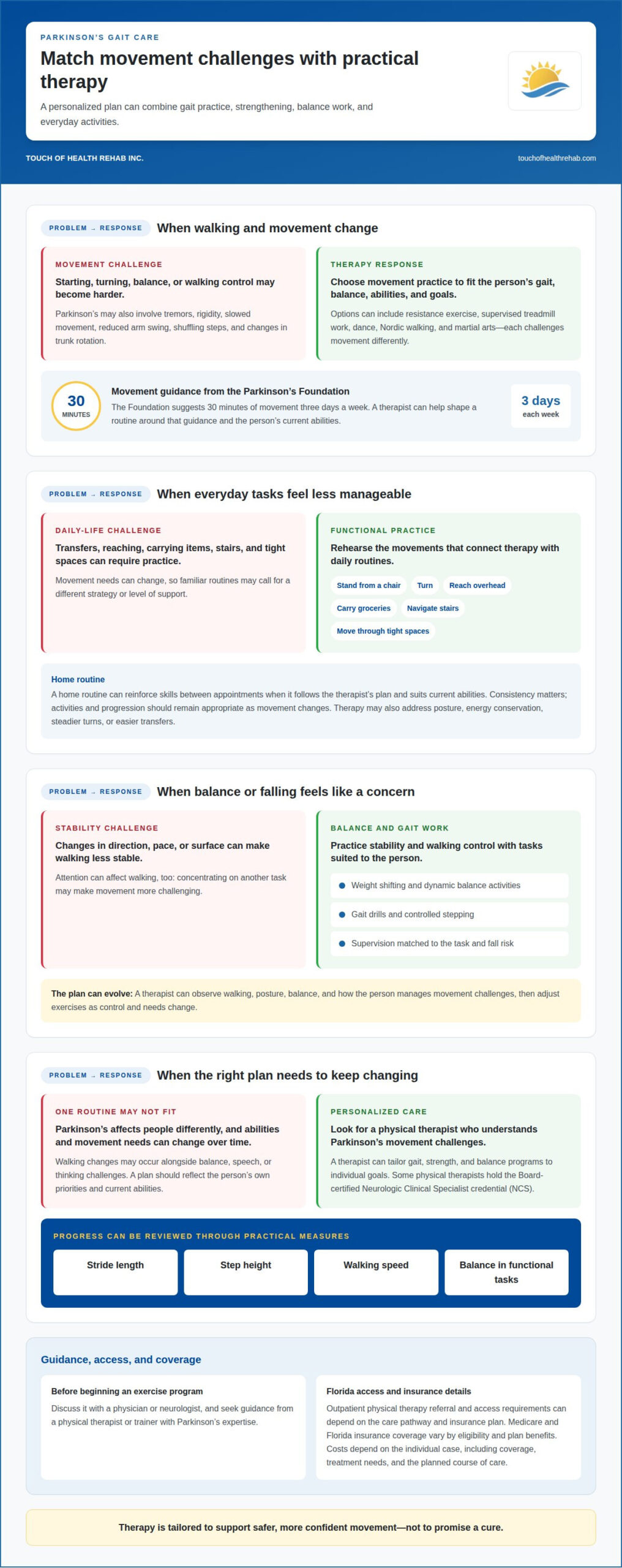
Physical therapy can address gait, strength, balance, and daily function through individualized exercise. The right combination depends on a person’s movement challenges, abilities, and changing needs.
Parkinson’s Exercise Approaches
Parkinson’s exercise approaches can include resistance and treadmill training, dance, Nordic walking, and martial arts. Each activity challenges movement differently, supporting strength, coordination, or walking practice. A therapist can adapt activities to a person’s gait and balance needs rather than relying on a standard routine.
Resistance exercise may use light dumbbells or bands, depending on disease stage and ability. Supervised treadmill work can provide structured practice, while dance, Nordic walking, and martial arts bring movement into varied patterns. Parkinson’s Foundation suggests 30 minutes of movement three days a week; a therapist can help shape a routine around that guidance.
Functional Exercises and Home Routines
Functional exercise rehearses everyday movements such as standing from a chair, turning, reaching overhead, and carrying groceries. Practicing these tasks helps connect clinic exercises with daily routines, including navigating stairs or tight spaces.
A home routine can reinforce skills between appointments when it follows the therapist’s plan and suits the person’s current abilities. Consistency matters, but activities and progression should remain appropriate as movement changes. A therapist may also address posture, energy conservation, and exercises for specific goals, such as steadier turns or easier transfers.
Exercise Safety and Professional Guidance
Professional guidance helps match exercise intensity and balance challenges to a person’s movement, symptoms, and fall risk. Balance practice may include weight shifting, dynamic activities, and gait drills, with supervision suited to each task.
Before starting an exercise program, discuss it with a physician or neurologist and seek guidance from a physical therapist or trainer with Parkinson’s expertise. In Florida, referral and access requirements for outpatient physical therapy can depend on the care pathway and insurance plan, so discuss these details with your healthcare team and insurer.
Medicare and Florida insurance coverage vary according to eligibility and plan benefits. Therapy costs depend on the individual case; factors may include coverage, treatment needs, and the planned course of care.
Choosing a Parkinson’s-Trained Physical Therapist Near Sunny Isles Beach
Look for a physical therapist who understands Parkinson’s movement challenges and can tailor gait, strength, and balance programs to individual goals. Some physical therapists hold the Board-certified Neurologic Clinical Specialist credential, known as NCS. Ask how a therapist’s experience and approach fit your needs.
Useful progress measures may include stride length, step height, walking speed, and balance during functional tasks. In Sunny Isles Beach, balance and gait rehabilitation can focus care on walking and stability goals, with progress reviewed as the plan evolves.
Parkinson’s disease and its effects on movement, balance, speech, and cognition
Parkinson’s can affect movement in connected ways, so changes in walking may occur alongside balance, speech, or thinking challenges. Understanding these effects helps shape therapy around a person’s priorities.
Movement and Cognitive Effects
Parkinson’s is associated with progressive degeneration of dopamine-producing neurons, and dopamine helps regulate movement. Symptoms can include tremors, rigidity, slowed movement, reduced arm swing, shuffling steps, and changes in trunk rotation. The balance system can also be affected, making walking less stable.
Speech changes and cognitive challenges may occur alongside movement symptoms. Cognitive impairment, anxiety, depression, and sleep disturbances are also associated with Parkinson’s. At an initial gait therapy evaluation, expect to discuss your movement history and goals, followed by observation of your walking, posture, and balance. These findings help identify priorities for care.
Mobility, Strength, and Flexibility Benefits
Physical therapy can address mobility, strength, flexibility, and balance with exercises selected for a person’s abilities and symptoms. Range-of-motion work and posture or core exercises can support movement control, while strength training targets the effort needed for everyday tasks. The focus can change as needs evolve.
Stiffness and muscle weakness can make movement more demanding. A therapist can assess restricted movements and tailor exercise accordingly, including flexibility work for tight areas. Endurance activities can also support sustained movement, with the format and intensity adjusted to a person’s capacity.
Balance and Gait Training
Balance and gait training practice walking control and stability through tasks suited to a person’s movement pattern. A therapist may observe how someone manages changes in direction, pace, or surface, then choose exercises to address the specific difficulty.
Parkinson’s can affect movement initiation and coordination, so gait training may focus on controlled steps and a stable walking pattern. Assessment also considers how attention affects walking, since concentrating on another task can make movement more challenging. Training can progress as control improves.
Fall-Risk Reduction
Fall-risk reduction uses balance practice and movement strategies to address instability before it limits daily activities. A therapist considers balance, strength, walking control, and situations that feel difficult, then selects appropriate exercises and supervision.
Parkinson’s symptoms can change over time, so fall-prevention needs may shift as well. Regular reassessment can show whether to adjust balance tasks or reinforce movement strategies. This individualized approach connects therapy goals with safer mobility and greater independence in everyday routines.
A focused physical therapy assessment can help connect movement changes with practical rehabilitation goals.
Fall prevention and independence in daily activities
Falls can disrupt everyday activities, from moving between rooms to getting dressed. Parkinson’s symptoms such as stiffness, tremors, and slowed movement can affect stability and confidence in staying active. Fall-prevention planning connects these challenges with practical goals, such as safer transfers, steadier walking, and maintaining independence in familiar routines.
A therapist can assess which situations make daily movement difficult, such as starting to walk, turning in a narrow space, stepping over a threshold, or rising from a chair. The assessment considers balance, muscle strength, walking control, and how symptoms affect each task. This helps prioritize training around the movements that matter most in daily life.
Practice can focus on functional movements rather than balance in isolation. A therapist may work with someone on controlled weight shifts, changing direction, or moving safely around obstacles. Rehearsing a turn before approaching a doorway, for example, can reveal where extra support or a different movement strategy may help. The therapist adjusts each task as ability and symptoms change.
Some people benefit from adaptive techniques or an assistive device to support safer, more efficient movement. A therapist can assess gait and balance, then recommend an option suited to how the person moves. Training may include using the device during relevant activities, such as walking between rooms or changing direction. The goal is to support function without unnecessary complexity.
Reducing multitasking can also be part of fall-prevention planning, particularly when walking already requires focused attention. A therapist may help identify when carrying an object, talking, or responding to another task makes movement harder. The plan can then address how to prioritize walking in those situations. Speech changes may affect conversation, but walking and speech needs are considered separately when planning activities.
The home environment can influence daily mobility. Therapists may address practical adjustments that make common routes and tasks easier, such as navigating tight spaces or reaching frequently used items. Occupational therapists may collaborate on home modifications and adaptive equipment. These considerations can help maintain independence while supporting meaningful activities.
For people with Parkinson’s, fall-prevention needs can change as symptoms progress. Regular professional review can keep movement strategies, balance activities, and assistive-device recommendations aligned with current function. Fall-prevention therapy can address everyday movement challenges and support safer participation in daily routines.
Parkinson’s-related stiffness, tremors, and slowed movement
Stiffness, tremors, and slowed movement can affect how people start, continue, and finish everyday actions. A tight hip flexor may make a long step harder; reduced movement amplitude can make reaching or turning feel less fluid. Parkinson’s symptoms vary, so therapy focuses on how they affect each person’s function rather than treating everyone alike.
Muscle tightness commonly involves the hip flexors, hamstrings, and calves. A therapist can assess which areas restrict comfortable movement, then include stretching and mobility work in the care plan. Banner Health recommends stretching every day when possible, or two to three days per week. For Parkinson’s, stretching tight muscles at frequent intervals throughout the day may be more useful than doing it only once.
Slowed movement can make familiar actions, such as stepping forward or rising from a chair, require more effort and attention. LSVT BIG physical therapy uses exaggerated movements, including high steps and larger arm swings, to encourage greater movement amplitude. A therapist can adapt this practice to a patient’s abilities and goals, then observe whether movements remain controlled during functional tasks.
Tremors and rigidity can affect coordination, posture, and confidence in moving. Resistance exercise may help address strength, while carefully selected movement practice can target control and range of motion. When choosing resistance and exercise difficulty, a therapist considers balance, fatigue, stiffness, and movement patterns. A manageable progression lets the plan respond to changing symptoms rather than follow a fixed routine.
Gait practice can target the details of a step. A therapist may observe stride length, step height, arm swing, and turning, then select a cue or exercise for the movement that needs attention. For example, if steps shorten during a turn, practice can focus on maintaining deliberate steps through the transition. Rhythmic or visual cues may support gait control and coordination.
Posture is another practical focus. Changes in trunk movement can influence how a person stands, reaches, and walks, so posture education can complement movement practice. A therapist may connect postural education with flexibility, strength, and everyday function, such as standing upright before beginning a walk.
The right progression depends on how stiffness, tremors, and slowed movement affect daily activities. A therapist can reassess movement and adjust exercises as needs change, with an emphasis on controlled, purposeful motion. This individualized approach helps patients work toward smoother movement and take part in meaningful routines.
Physical therapy across stages of Parkinson’s disease
Parkinson’s is a lifelong, progressive disease, so physical therapy needs to adapt as movement and daily priorities change. The key question isn’t whether one exercise plan suits every stage. It’s how assessment and treatment can keep pace with a person’s abilities, symptoms, and goals, from maintaining mobility to adapting activities as support needs grow.
Earlier in the course, therapy can build a foundation for movement. A therapist may assess walking, balance, posture, strength, flexibility, and range of motion, then set goals around activities that matter to the person. Someone who wants to keep walking outdoors, for example, may work on endurance and gait control, while another person may prioritize turning or standing from a chair. Early attention helps establish a baseline for future decisions.
As movement becomes less predictable, therapy can focus more closely on specific challenges. A therapist may adjust gait practice to address shorter steps, difficulty initiating movement, or turning in a tight space. Visual markers or rhythmic sounds can cue the start and continuation of a walking pattern. Progression should reflect the person’s response, keeping exercises relevant rather than advancing on a fixed schedule.
Changes in balance or daily function can also shift the plan toward safety and practical strategies. Training may address transfers, navigating stairs, or moving around obstacles. If multitasking makes walking harder, a therapist can help the person prioritize movement during those situations. Adaptive techniques or an assistive device may become part of the plan when they support safer, more efficient mobility.
In later stages, care can emphasize participation and making essential tasks manageable. A therapist may adjust balance activities, reinforce movement strategies, and consider how the home environment affects daily routines. If standing from a chair becomes difficult, for instance, therapy can focus on that transfer and the strength and control it requires. The aim is to match treatment to current function.
Across stages, useful measures relate to everyday life: walking quality, balance during turns, range of motion, and the ability to complete valued activities. Regular reassessment helps show when techniques need adjustment, whether symptoms have changed or a goal has been achieved. Physical therapy may help support movement and day-to-day function as needs evolve.
Explore physical therapy options to discuss movement goals and care needs as Parkinson’s changes.
Touch of Health Rehab: Balance and Gait Rehabilitation
Touch of Health Rehab Inc. offers Balance and Gait Rehabilitation to support people working on walking stability and everyday movement. If Parkinson’s symptoms affect your steps, turns, or confidence with balance, physical therapy can focus on the mobility goals that matter to you.
Care may also include Postural Education or Vestibular Rehabilitation when these services relate to your movement and balance concerns. The appropriate focus depends on your symptoms, abilities, and daily activities, with the goal of supporting function as needs change.
If you’re ready to discuss support for gait and balance, contact Touch of Health Rehab Inc.
Choose a Next Step That Fits Your Movement Goals
Your next step can begin with a specific goal, such as feeling steadier when you turn or moving more easily through a familiar routine. For people seeking physical therapy for Parkinson’s disease gait in Sunny Isles, sharing these priorities can help shape care around what matters in daily life. Needs can change, so focus on how movement feels now and which activities you want to support.
Touch of Health Rehab Inc. offers Physical Therapy, Postural Education, and Vestibular Rehabilitation. These services can address different movement and balance needs as part of a personalized approach, helping you work toward practical goals with professional support.
Contact Touch of Health Rehab Inc. to discuss your movement goals and explore a supportive next step. With thoughtful guidance, you can keep working toward greater confidence in the activities that matter to you.
Frequently Asked Questions
Is exercise important for Parkinson’s patients?
Yes, regular movement is an important part of managing activity with Parkinson’s. The Parkinson’s Foundation suggests 30 minutes of movement three days a week. That can take different forms, depending on a person’s abilities and goals. For example, a therapist can help shape a routine around walking, balance, or strength needs. Exercise supports mobility and function, but it isn’t a cure for Parkinson’s.
What gait problems can physical therapy help with in Parkinson’s disease?
Physical therapy can address shuffling steps, reduced arm swing, slower walking, freezing, and difficulty turning. These changes can make it harder to start moving, cross a room, or change direction in a narrow space. Gait assessment helps identify which part of walking needs attention. For example, a therapist can observe turns and step size, then tailor practice to the movement challenge that most affects daily activity.
What Parkinson’s gait therapy methods are evidence-based, such as cueing and treadmill training?
The American Physical Therapy Association’s Parkinson’s clinical practice guideline includes gait training, balance training, and task-specific training. Therapists may use rhythmic sounds or visual floor markers to cue steps, and supervised treadmill training to practice walking. Turning drills can address direction changes that cause difficulty in daily life. A therapist selects methods based on gait, balance, and functional needs, rather than applying every technique to every person.
How often and for how long should people with Parkinson’s do gait physical therapy?
Gait practice frequency depends on how much walking difficulty a person experiences and the goals of therapy. Some patients show improvement with one to four physical therapy sessions per week for four to 12 weeks. These figures describe reported treatment schedules, not a required plan for everyone. The therapist adjusts frequency and duration based on progress, symptoms, and how safely the person can practice between sessions.
Which Sunny Isles Beach or nearby clinics offer Parkinson’s gait rehabilitation?
Touch of Health Rehab Inc. offers Balance and Gait Rehabilitation and Physical Therapy in Sunny Isles Beach. Its local service area also includes Aventura, Bal Harbour, North Miami Beach, and Miami Beach. For Parkinson’s-related walking concerns, this rehabilitation can address gait and stability within a physical therapy plan. The focus can be tailored to specific difficulties, such as maintaining a steady walking pattern or moving confidently through turns.
What safety risks and fall-prevention measures should people consider during gait therapy?
Balance instability and freezing can raise fall concerns during walking practice, so exercise should be individualized and supervised by qualified healthcare professionals. Discuss starting an exercise program with a physician or neurologist. A therapist can adapt tasks to current balance, teach movement strategies, and consider assistive devices or reducing multitasking. Reviewing how a person manages turns, obstacles, and daily routes helps make safety planning relevant to real activities.
How can I compare Parkinson’s physical therapy clinics by credentials, programs, and outcomes?
Compare therapists’ Parkinson’s experience and credentials, such as Board-certified Neurologic Clinical Specialist (NCS), and ask how they tailor gait, strength, and balance programs to individual goals. Useful progress measures include stride length, step height, walking speed, and balance during functional tasks.