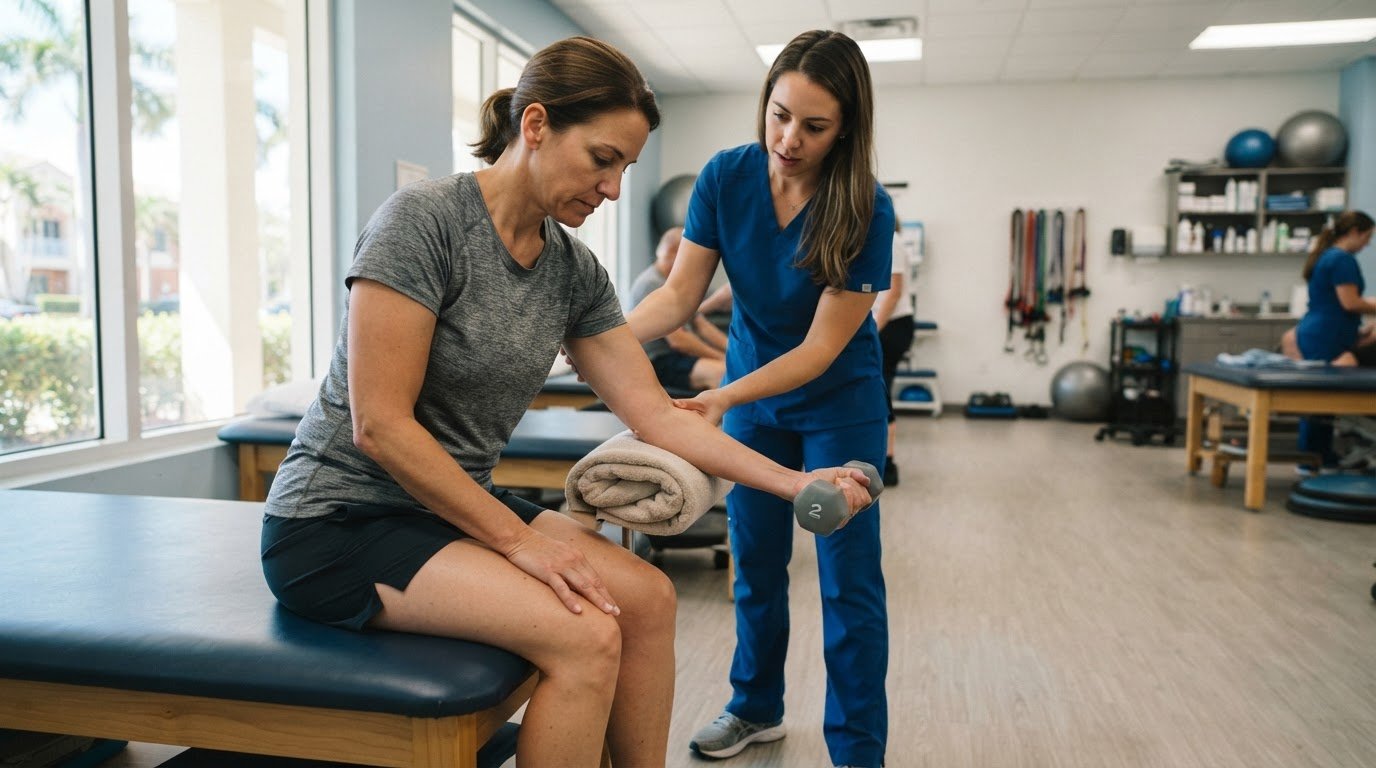
Tennis elbow can make even a simple grip unexpectedly difficult, and it often develops from repeated strain rather than playing tennis. Physical therapy for tennis elbow in Aventura can address the affected forearm muscles and tendons, manage symptoms, and support a gradual return to everyday activities.
Also called lateral epicondylitis, tennis elbow commonly causes pain and tenderness on the outer side of the elbow. You may notice discomfort when gripping, lifting a cup, or turning a doorknob. This guide explains what may contribute to the condition and how a physical therapist can assess your movement and shape care around your needs. It also covers how therapeutic laser may fit into treatment and why adjusting activities that repeatedly strain the arm can be part of managing symptoms. With a clear understanding of the options, you can take a more informed, supported next step toward restoring comfortable use of your arm.
Key Takeaways
- Recognize how repeated gripping and forearm strain can contribute to pain and tenderness on the outside of the elbow.
- Learn what a physical therapist may assess, including movement, mobility, strength, and stability.
- See how a tailored rehabilitation plan can guide exercise progression and support consistent practice between sessions.
- Understand how laser therapy may be combined with physical therapy and changes to aggravating activities.
- Explore how care can address related elbow, wrist, and hand concerns while supporting a gradual return to daily tasks.
What is tennis elbow?
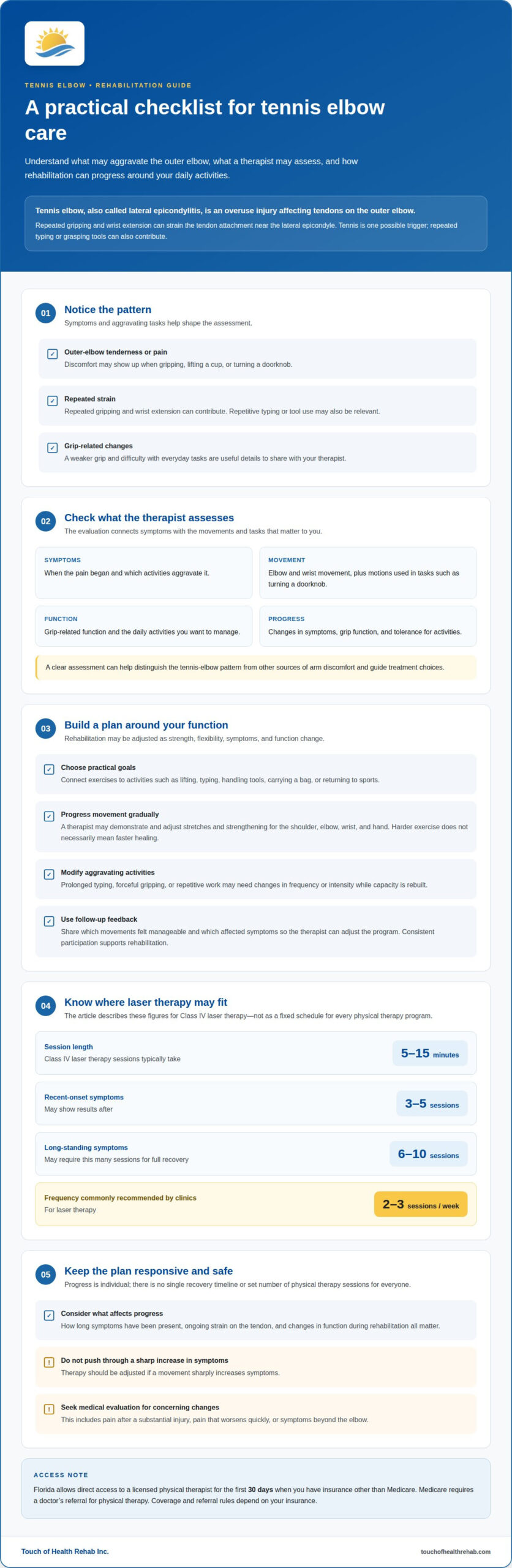
Tennis elbow, or lateral epicondylitis, is an overuse injury affecting tendons on the outer elbow. Repeated gripping and wrist extension can strain the tendon attachment near the lateral epicondyle. Tennis is one possible trigger, but painters, plumbers, office workers, and others who type or grasp tools repeatedly can develop symptoms too. Common signs include tenderness on the outer elbow, a weaker grip, and discomfort when lifting a cup.
A physical therapy evaluation starts with your symptoms and the activities that aggravate them. The therapist asks when the pain began, then assesses elbow and wrist movement, grip-related function, and the movements involved in tasks such as turning a doorknob. This assessment helps distinguish the pattern of tennis elbow from other sources of arm discomfort and guides treatment choices. A structured physical therapy assessment connects those findings to functional goals.
When choosing a clinic in Aventura, look for a clear assessment, an individualized plan, and progressions linked to your daily activities. An office worker who types for long periods may need to address different aggravating tasks than someone whose job involves repetitive gripping. Ask how the therapist tracks changes in symptoms, grip function, and activity tolerance. These details show whether care will respond to your injury instead of following a one-size-fits-all routine.
Florida allows direct access to a licensed physical therapist for the first 30 days when you have insurance other than Medicare. Medicare requires a doctor’s referral for physical therapy. Coverage requirements and referral rules therefore depend on your insurance, so the distinction matters before sessions begin.
Physical therapy is a nonsurgical approach focused on movement, symptom management, and rebuilding strength. Injections and surgery are separate medical interventions. The appropriate option depends on the diagnosis, symptoms, and response to treatment. A therapist can explain the rehabilitation approach, while decisions about injections or surgery belong in a discussion with the relevant medical professional.
There is no single recovery timeline or set number of physical therapy sessions for everyone. Progress depends on factors such as how long symptoms have been present, which activities continue to strain the tendon, and how function changes during rehabilitation. Treatment goals include easing symptoms, improving strength and flexibility, and returning to meaningful activities without repeatedly aggravating the elbow.
A session at an Aventura clinic can include reviewing your response, practicing movements, and adjusting the plan to your current function. Treatment may involve stretching, progressive strengthening, and activity modifications. A therapist can also explain how changing your grip or repetitive tasks may improve comfort at work, during sports, or in everyday routines.
For Class IV laser therapy, sessions typically take 5 to 15 minutes. Recent-onset tennis elbow may show results after 3 to 5 sessions, while long-standing symptoms may require 6 to 10 sessions for full recovery; clinics commonly recommend 2 to 3 sessions per week. These figures describe laser therapy, not a fixed schedule for every physical therapy program.
Therapy should be adjusted, not pushed through, if a movement sharply increases your symptoms. Seek medical evaluation if elbow pain follows a substantial injury, worsens quickly, or comes with symptoms beyond the elbow. Sharing these changes helps your care team decide whether to modify the treatment plan.
How can the physical therapist help?
A therapist connects your symptoms with the tasks that matter to you, then builds a progressive rehabilitation plan. In Aventura, physical therapy for tennis elbow can address your movement demands and support a gradual return to daily routines.
Individualized Rehabilitation Plans
Your plan can focus on movements that challenge you, such as lifting, typing, or handling tools. A physical therapist can adjust exercise difficulty as your strength, flexibility, and function change. Look for a clear connection between each activity and a practical goal, such as carrying a bag or returning to sports. This individualized approach keeps rehabilitation focused on your needs rather than a generic sequence.
Exercises and Stretches Recommended by a Physical Therapist
Therapy may include stretches and strengthening exercises for the shoulder, elbow, wrist, and hand. A therapist selects and demonstrates movements, then adjusts the effort and range to match your response. Harder exercise does not necessarily mean faster healing. Controlled movement and gradual progression matter. Your therapist can explain what each exercise targets and how it supports function, rather than leaving you to perform movements without guidance.
Activities a Physical Therapist May Recommend Modifying or Avoiding
A therapist identifies repeated movements that may aggravate symptoms, including prolonged typing, forceful gripping, or repetitive work tasks. Your plan may adjust how often or intensely you perform these activities while building capacity. Orthopedic rehabilitation addresses musculoskeletal injuries through movement- and function-focused care. For example, a racket-sport player may need to return to practice gradually rather than immediately resume every stroke at full intensity.
Guidance continues beyond the clinic. Your physical therapist explains how to perform assigned exercises, clarifies the intended movement, and connects each activity to your goals. At follow-up sessions, describe which movements felt manageable and which affected your symptoms. That feedback helps your therapist adjust the program. Consistent participation supports rehabilitation, and a clear plan makes it easier to fit practice into work and home routines.
Progression from rehabilitation toward performance depends on changes in strength, flexibility, and tolerance for functional tasks. A therapist can advance an exercise when you perform its current version with control, then link the next step to your goal. Someone preparing to return to sports may move from general strengthening toward sport-related demands. The focus is on rebuilding function without an abrupt increase in activity.
For physical therapy for tennis elbow in Aventura, an individualized plan can connect exercise choices with work, sports, or everyday goals. Orthopedic physical therapy supports movement-focused care, and you can explore physical therapy options as a next step.
Combining laser therapy with physical therapy and activity changes
Laser therapy may complement exercise and practical changes to repetitive tasks. Used together, these approaches can address symptoms while reducing strain during activities that challenge the forearm.
Combining Laser Therapy and Activity Changes
For physical therapy for tennis elbow in Aventura, a therapist may consider laser therapy alongside strengthening, stretching, and activity modification. The plan should connect each method to a goal, such as improving comfort at work or during routine tasks. Laser is one component, not a replacement for movement-based rehabilitation. People who are pregnant, have active cancer, or have certain photosensitivity conditions should consult a healthcare provider before starting laser therapy.
Repetitive Tennis Elbow Activities
Tennis elbow can develop when forearm muscles repeatedly contract to straighten the hand and wrist. Besides tennis, activities such as softball, baseball, raking leaves, and extensive computer typing involve repeated arm movements. Repetitive gripping at work can also strain the tendon attachment. A therapist considers which movements trigger symptoms and how daily routines can be adjusted during recovery.
Activity modification doesn’t always mean stopping an activity completely. A therapist can identify the most demanding parts of a task and suggest changes to its frequency or movement pattern. For example, modifying repeated gripping may reduce aggravation while prescribed exercises build strength and flexibility. The aim is to support recovery and reduce repeated strain while keeping in view the activities you want to resume.
Physical therapy may also include heat, cold laser, iontophoresis, ultrasound, or massage. Your therapist considers how each method fits alongside exercise and changes to aggravating activities. Physical therapy for tennis elbow in Aventura can bring these elements together around your symptoms and functional goals, rather than relying on a single treatment method.
Elbow pain can occur on different sides, and the location of symptoms can help distinguish related conditions. Golf and racket sports, throwing sports, weightlifting, and repetitive work movements are associated with golfer’s elbow. The activity alone does not identify the condition. A therapist considers where symptoms occur and which movements reproduce discomfort when planning care.
As exercises and daily demands change, your therapist can review your response and adjust the plan. This links laser therapy and activity modifications to the movements you need to manage, helping guide a gradual return to comfortable function.
Elbow, wrist, and hand conditions
The elbow, wrist, and hand work together when you grip, lift, and reach. Tennis elbow affects tendons near the outer elbow, but symptoms can also affect how comfortably you use your wrist and hand. Repeated contraction of the forearm muscles that straighten the wrist can strain the tendon attachment. Repeated grasping adds stress, making tasks such as holding a tool or lifting a bag uncomfortable.
Physical therapy for an elbow condition begins by connecting symptoms with movement and function. A therapist considers where tenderness occurs, which motions reproduce discomfort, and how your grip or wrist movement has changed. This helps shape a personalized plan around activities you need to do, such as handling work equipment or carrying groceries. The goal is to address the affected muscles and tendons, improve strength and flexibility, and support a return to daily tasks.
Different methods can support treatment. A physical therapist may use exercises and stretches, therapeutic massage, ice massage, or muscle stimulation to address symptoms and movement needs. A therapist may also recommend a tennis elbow brace or wrist orthotic. A wrist orthotic can rest the wrist extensors and reduce demands on the muscles involved in straightening the wrist. The choice depends on your symptoms and the tasks that remain difficult.
- Outer-elbow tenderness: The therapist relates discomfort near the lateral epicondyle to gripping and wrist movements.
- Grip difficulty: The plan connects hand function with tasks such as carrying a cup or grasping a handle.
- Wrist strain: A wrist orthotic may rest the wrist extensors during rehabilitation.
- Movement sensitivity: Ice massage or muscle stimulation may be considered for symptom relief.
These methods are not interchangeable or automatic. Someone whose symptoms increase during repeated grasping, for example, may need a plan that addresses that movement, while another person may struggle more with straightening the wrist. Your therapist uses your responses during assessment and treatment to guide exercise selection and progression. This individualized approach keeps rehabilitation relevant to your condition and its effect on function.
Elbow, wrist, and hand symptoms can overlap, so describing the exact task that causes discomfort gives your therapist useful context. Mention whether gripping, lifting, wrist movement, or reaching changes your symptoms. A physical therapy plan can then focus on the involved muscles, tendons, and functional movements. Progressive strengthening and flexibility work aim to ease symptoms, improve the affected area’s capacity, and help prevent reinjury.
Assessment of movement, mobility, strength, and stability
An assessment connects your elbow symptoms with movements you use at work, at home, or during sports. A physical therapist reviews your history, including when symptoms began and which tasks affect them. You might describe difficulty lifting a pan, turning a key, or holding a racket. The therapist then observes how your elbow, wrist, and hand move during relevant tasks.
Movement and mobility checks help identify restricted or uncomfortable motions. Your therapist may ask you to bend and straighten your elbow, rotate your forearm, or move your wrist in different directions. They note where symptoms occur and whether one movement differs from another. These observations help shape treatment around your function rather than relying on pain location alone.
Strength assessment considers how your forearm, wrist, and hand contribute to everyday actions. A therapist may observe your grip and test controlled wrist movements, then relate the findings to lifting a light object or grasping a handle. Stability matters too: the therapist looks at how smoothly you control your arm during movement. Together, these checks establish useful starting points for rehabilitation.
- Movement: Bend, straighten, and rotate the elbow and forearm.
- Mobility: Observe wrist movement and comfort through available directions.
- Strength: Relate grip and wrist control to lifting or holding tasks.
- Stability: Note whether the arm stays controlled during functional movement.
Your reported symptoms put these observations in context. Pain during gripping, for example, may lead your therapist to examine wrist and forearm movements alongside hand function. Discomfort with lifting may call for assessing how your arm handles that task. Your response helps the therapist select exercises and adjust their difficulty, keeping each next step connected to practical goals.
Previous injuries, work demands, sports participation, and surgery history can also inform the assessment. Someone recovering after surgery may have different movement precautions from someone whose symptoms developed during repetitive work. Sharing the activities you need to resume helps your therapist connect the findings with your priorities. The assessment can then guide a personalized plan focused on mobility, strength, stability, and functional relief.
Progress is reviewed through changes in movement and tolerance for tasks, not just a single symptom report. If lifting a familiar object becomes easier, that functional change gives your therapist useful feedback. If wrist movement remains limited, the plan can address it directly. Reassessment helps guide exercise progression and supports a careful return to daily demands.
To discuss an assessment focused on your movement and functional goals, connect with a physical therapy team.
Touch of Health Rehab Inc.
Touch of Health Rehab Inc. can help address tennis elbow with physical therapy focused on your symptoms, movement, and everyday goals. If gripping, lifting, or work tasks remain uncomfortable, an assessment can guide a plan tailored to your needs and support a gradual return to function.
Care can include movement-focused rehabilitation and guidance for managing activities that place repeated demands on your arm. Your therapist can shape the next steps around your progress and functional priorities, whether you want to manage daily tasks or return to sports.
Contact Touch of Health Rehab Inc. to discuss physical therapy for tennis elbow.
Take the Next Step Toward Comfortable Movement
Choosing care is an opportunity to focus on the activities you want to regain, whether that means working comfortably, enjoying a sport, or managing everyday tasks more easily. Physical therapy for tennis elbow in Aventura can be tailored to your movement needs and the goals that matter in your routine. Progress is collaborative, guided by your symptoms, function, and response to rehabilitation.
Touch of Health Rehab Inc. provides physical therapy, as well as postural education and vestibular rehabilitation for other movement-related needs. For elbow concerns, a conversation about your priorities can establish a useful starting point and help identify the next step in care.
Connect with Touch of Health Rehab Inc. to discuss your physical therapy needs. A thoughtful plan can help you move toward daily activities with renewed confidence.
Frequently Asked Questions
What physical therapy treatments are used for tennis elbow?
Treatment may combine therapeutic exercise with methods selected for your symptoms and daily demands. A physical therapist may use stretching and strengthening, massage, ice, muscle stimulation, ultrasound, or iontophoresis. Laser therapy may also be part of a broader plan. For example, someone whose work involves repeated gripping may benefit from activity adjustments alongside exercises, rather than relying on a single treatment method.
How many physical therapy sessions are typically needed for tennis elbow?
There isn’t one standard number of physical therapy sessions for every case. The schedule depends on your symptoms, functional goals, and response as treatment progresses. For Class IV laser therapy specifically, recent-onset tennis elbow may show results after 3 to 5 sessions, while long-standing cases may require 6 to 10 sessions for full recovery. Clinics commonly recommend 2 to 3 laser sessions per week.
What does tennis elbow physical therapy cost in Aventura, Florida?
The price depends on your case and is provided after a quote request. Factors that shape the plan include the assessment, your treatment needs, and the methods used. The number and frequency of sessions may also affect the overall care plan. Insurance benefits and coverage terms can influence your out-of-pocket costs, so the clinic’s service price and your plan’s contribution are separate considerations.
Which physical therapy clinics in Aventura treat tennis elbow?
Touch of Health Rehab provides physical therapy for people in Aventura. During care, a physical therapist can connect your elbow symptoms with relevant movements and daily activities, then guide treatment around your functional goals. Tell your therapist whether gripping, lifting, or a work task is limiting you. That context helps shape a plan around your needs rather than a generic routine.
Do Aventura physical therapy clinics accept insurance for tennis elbow treatment?
Insurance acceptance and coverage depend on the clinic and your individual plan. Benefits, network participation, referral requirements, and authorization terms can affect whether visits are covered and what costs remain your responsibility. Medicare requires a doctor’s referral for physical therapy. For other insurance, Florida allows direct access to a licensed physical therapist for the first 30 days. Coverage terms still depend on your plan.
How does physical therapy compare with injections or surgery for tennis elbow?
Physical therapy is a nonsurgical approach focused on movement, symptom management, and rebuilding strength. Injections and surgery are separate medical interventions. Their suitability depends on the diagnosis, symptoms, and response to treatment, and should be discussed with the relevant medical professional.