What makes a posture correction exercises program useful is how well it fits your goals, comfort, movement, and daily routine. A routine copied from a screen may not suit your needs, so it helps to know what to consider before you begin.
A balanced plan may include strengthening, mobility work, movement awareness, and changes to everyday habits. The right mix depends on what you want to do more comfortably and how your body responds. This article explains how to think through those options, start gently, and track practical changes without treating general advice as a personal treatment plan.
You’ll also learn when an assessment may help. Physical therapy and postural education can connect your posture goals with your symptoms and daily activities. Touch of Health Rehab Inc. offers physical therapy and postural education through personalized therapy plans at its Sunny Isles Beach clinic. The clinic serves people in Sunny Isles Beach, Aventura, Bal Harbor, North Miami Beach, and Miami Beach. You can begin with simple adjustments at home or seek individualized support, depending on what feels appropriate for you.
Key Takeaways
- A posture correction exercises program should reflect your goals, symptoms, mobility, strength, and daily demands, rather than follow a one-size-fits-all routine.
- Consider adaptable elements such as strengthening, mobility work, and everyday habit changes. Choose options that suit your starting point.
- Compare home routines with individualized physical therapy to decide whether a self-guided approach or professional feedback better fits your needs.
- Start gently, notice how your body responds, and adjust one factor at a time. Ask a clinician for guidance on individualized exercise choices and dosing.
- Postural education and physical therapy can connect posture goals with movement and daily activities through a personalized plan.
What a posture correction exercises program can and cannot change
Prolonged sitting, repetitive tasks, and everyday habits can prompt questions about posture, especially if you notice stiffness or discomfort during a familiar activity. A posture correction exercises program is a set of exercises and habit changes selected to support your goals, movement needs, and daily activities. It isn’t a universal routine or a promise of permanent correction.
Posture also isn’t a single position you need to hold perfectly. What feels comfortable can depend on the task, your mobility, and how long you’ve been in one position. Learning about proper spinal alignment can offer background, but it doesn’t mean there’s one ideal posture everyone should maintain all day. The ability to move comfortably between positions can matter as much as how you look in a still image.
What does posture correction mean in everyday life?
Posture describes how you position and move your body during daily activities. Static alignment is how you’re arranged while sitting or standing. Movement is how comfortably you shift, reach, bend, or change positions. Both may be relevant to your goals. At a desk, you might adjust your setup and take movement breaks. While driving, you can change position during a stop. When lifting a bag or looking at your phone, notice how you move and whether another position feels more comfortable. The goal is practical adaptability, not rigid self-monitoring.
Can exercises correct posture on their own?
Exercise may support strength, mobility, movement awareness, and confidence with movement. Depending on your needs, a plan might pair exercises with changes to everyday habits instead of asking you to hold one “correct” position all day. These approaches may help you move through daily tasks more comfortably, but exercises can’t be assumed to permanently realign every body or resolve every source of pain.
If discomfort persists, worsens, or makes everyday activities difficult, consider seeking guidance from a qualified clinician. They can discuss your symptoms, movement, and goals to help determine whether a general routine is appropriate or whether individualized advice may be useful. That distinction helps keep posture work supportive, rather than turning a generic exercise list into a treatment plan that may not fit you.
What an effective posture correction exercises program should include
A useful program starts with what you want to do more comfortably, not a checklist of “perfect posture” positions. Your goals, symptoms, mobility, strength, and daily demands can all influence which activities belong in a posture correction exercises program. Choose elements that relate to your daily tasks, then adapt them as you learn how your body responds.
Start with goals and a movement assessment
Begin with a practical goal, such as sitting through desk work more comfortably, reaching overhead with less effort, or changing positions during the day with greater ease. A physical therapist may discuss your symptom history and observe relevant movements, while considering strength, mobility, and your work or home routines. That context can help connect exercises to real tasks. A photograph or the appearance of your posture alone can’t establish which exercises you need or diagnose an underlying problem.
Combine mobility, strength, and habit practice
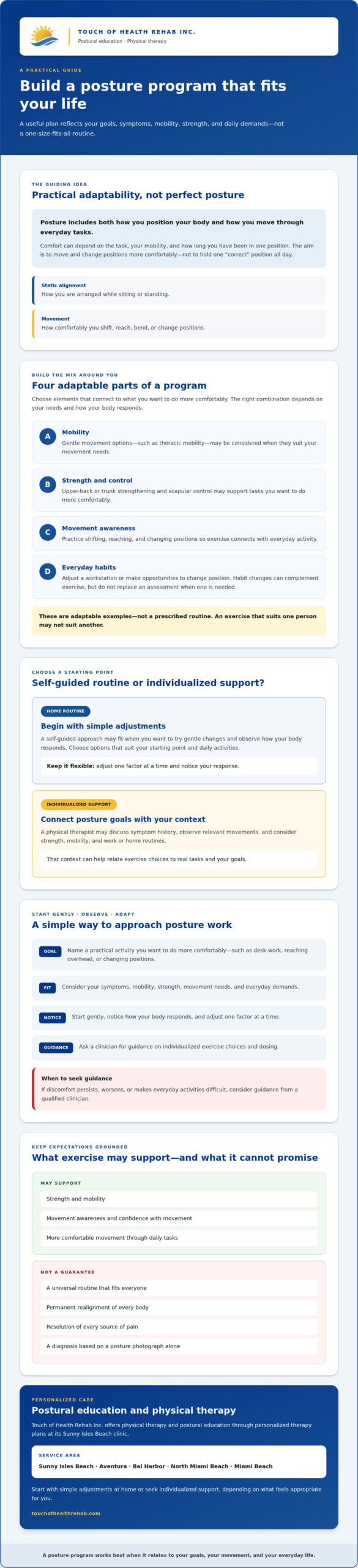
Depending on your needs, a program may draw from several adaptable categories:
- Mobility: Gentle movement options, such as thoracic mobility, may be considered when they suit your movement needs.
- Strength and control: Upper-back or trunk strengthening and scapular control may support the tasks you want to do more comfortably.
- Movement awareness: Practicing how you shift, reach, or change positions can connect exercises with everyday activity.
- Daily habits: Adjusting a workstation or making opportunities to change position can complement exercise, but won’t replace an assessment when one is needed.
These are examples, not a prescribed routine. An exercise that suits one person may not suit another, and familiar movements may need changes based on symptoms or mobility. A study of an exercise program and musculoskeletal pain offers research context, but its findings shouldn’t be treated as proof that the same exercises or results apply to everyone.
Progress gradually, guided by how you respond during and after an activity and whether it supports your functional goal. If a movement feels uncomfortable or affects your symptoms, pause rather than pushing through. Seek individualized guidance if you’re unsure how to adapt it. Changing the challenge may involve adjusting the movement, resistance, or position, but there’s no single progression that fits everyone.
If you want help connecting exercise choices with daily habits, postural education and alignment support may be a useful part of personalized guidance. Touch of Health Rehab Inc. provides postural education as part of its care approach.
Home posture routines versus individualized physical therapy
A gentle home routine may be a reasonable way to build general movement habits if you feel well and have no concerning symptoms. Self-guided exercise and physical therapy serve different needs. A posture correction exercises program should fit your circumstances, not just look convincing in a video. Physical therapy may be worth considering if symptoms persist, movement feels limited, or you’re unsure how to adapt an exercise.
| Consideration | Home routine | Individualized physical therapy |
|---|---|---|
| Personalization | General options you select and adapt | Exercises considered in relation to your goals, symptoms, and activities |
| Feedback | Self-observation, with no clinician watching your movement | Clinician feedback can help you adjust movement and exercise choices |
| Convenience | Can fit into your routine at home | Requires attending care with a provider |
| May suit | General movement habits when you feel well | Persistent symptoms, limited movement, or difficulty finding a suitable routine |
When can a general home routine be a reasonable starting point?
If you want to move more during the day and don’t have concerning symptoms, you might begin with comfortable, low-intensity movement and regular position changes. Choose options that feel manageable and suit your abilities. Stop if an activity brings on discomfort or worsens how you feel. Online examples can offer ideas, but they can’t account for your medical history or individual movement limitations. Even a routine that looks simple may need adapting.
When might personalized physical therapy help?
Consider professional guidance if symptoms persist, movement feels restricted, or repeated attempts to change your routine aren’t working for you. A physical therapist can discuss your goals and daily activities, observe relevant movement, and help tailor exercise choices. You don’t have to wait until pain is severe to ask whether professional support could be appropriate. For a related discussion of neck positioning, the physical therapy for forward head posture guide may also be useful.
A study hosted by the National Institutes of Health describes one specific approach in this posture correction exercise study. Its protocol shouldn’t be assumed to suit every reader. Touch of Health Rehab Inc. offers physical therapy support that can connect posture goals with individual needs. People in Sunny Isles Beach, Aventura, Bal Harbor, North Miami Beach, and Miami Beach can learn more about the clinic and its services through Touch of Health Rehab Inc..
How to start, adapt, and track posture exercises safely
A steady approach helps you learn how movement feels without turning posture practice into a test of perfect alignment. Use this framework as a general starting point. It isn’t an individualized prescription. A clinician can advise you on exercise choices and dosing for your needs.
- Choose a goal. Pick a practical task you’d like to do more comfortably, such as working at your desk or reaching for an everyday item.
- Begin gently. Select a comfortable movement you can perform without forcing your range or holding your breath.
- Observe your response. Notice how you feel during the movement and afterward. Consider whether the task you chose feels easier, unchanged, or more difficult.
- Adjust one variable. If appropriate, change one aspect at a time, such as the movement, position, or level of challenge. If you’re unsure what to change, ask a clinician rather than increasing effort or adding more exercises.
Mild effort can be part of activity, but sharp, increasing, or unusual symptoms are a reason to stop. Don’t push through symptoms to meet a target. Seek urgent medical help for sudden severe symptoms or new neurological warning signs, such as sudden weakness, numbness, or difficulty coordinating movement.
Build a routine that fits real daily habits
Link a brief movement practice to a cue already in your day, such as finishing a work task or getting up from a chair. There’s no universal duration or frequency to follow. Choose a manageable starting point, and ask a clinician for individualized guidance if you need it. Varying positions and taking movement breaks can be more practical than trying to hold one rigid posture. Keep a simple note of your comfort and how everyday tasks feel, so you can spot which changes seem helpful.
How should you monitor progress and respond to discomfort?
Track function, not just how your posture looks. You might note how comfortable sitting feels, whether movement seems easier, or how confident you feel doing a daily task. Progress can be gradual and may not show up as a dramatic visual change. If discomfort worsens or new symptoms appear, pause the exercise and seek professional guidance before restarting or modifying your plan.
If you’d like support choosing safe next steps, explore physical therapy and postural education at Touch of Health Rehab.
How postural education and physical therapy can personalize your next steps
General posture advice can be a helpful starting point, but it may not explain why a particular movement feels difficult or which changes make sense for you. Physical therapy can bring your posture goals, symptoms, movement, and daily activities into the same conversation. This can help shape a posture correction exercises program around your needs instead of relying on a routine designed for someone else.
What may happen during a posture-focused physical therapy visit?
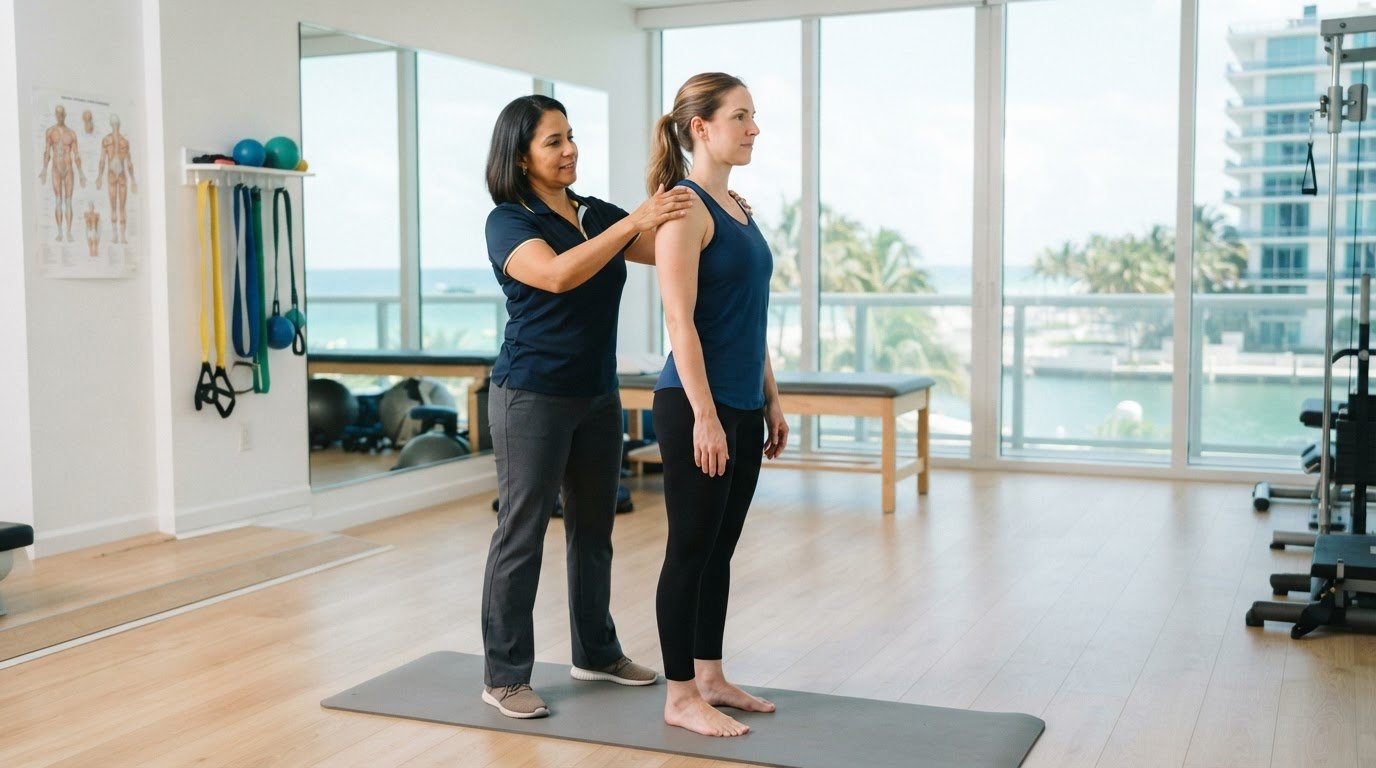
A clinician may ask what you hope to do more comfortably, which activities are part of your day, what symptoms you’ve noticed, and what relevant health history could affect movement. You might discuss desk work, driving, exercise, or tasks at home. The clinician may observe how you move during activities related to your concerns, then work with you to identify realistic goals.
There isn’t one fixed evaluation protocol for everyone. The conversation and movement observation can help guide a plan that reflects your needs and comfort. Depending on what’s appropriate, the plan may include exercise choices, ways to adjust everyday habits, or guidance on how to approach movement. Postural education can help you apply those ideas in daily life. It doesn’t require holding a rigid position or assuming posture alone explains every symptom.
Choosing a supportive next step in Sunny Isles Beach
If comfortable movement and simple habit changes are serving you well, you may choose to continue with those general practices. If symptoms persist, movement feels restricted, or online guidance leaves you uncertain, asking about individualized postural education or physical therapy may help you decide on a suitable next step. Seeking guidance doesn’t mean you need to wait until symptoms are severe. It’s a way to discuss your questions and options with a clinician.
Touch of Health Rehab provides physical therapy and postural education through personalized therapy plans at its Sunny Isles Beach clinic. The clinic serves nearby Aventura, Bal Harbor, North Miami Beach, and Miami Beach. Its plans can take your goals and daily activities into account without assuming one approach fits everyone. If you’re considering a more tailored path, connect with Touch of Health Rehab to explore the clinic and its care options.
Take Your Next Step Toward More Comfortable Movement
A helpful posture correction exercises program isn’t about forcing your body into one ideal position. It’s a flexible plan shaped by your goals, comfort, movement, and everyday demands. Start gently, pay attention to how activities feel, and look for practical progress, such as moving with more ease or feeling more confident during daily tasks.
General movement habits may be enough to begin, but you don’t have to figure out every exercise choice alone. If symptoms persist, movement feels limited, or online advice doesn’t seem to fit, physical therapy can help connect your goals with your individual needs. Postural education can also support practical changes in how you move through daily routines.
Touch of Health Rehab provides physical therapy and postural education through personalized therapy plans at its Sunny Isles Beach clinic, serving Aventura, Bal Harbor, North Miami Beach, and Miami Beach. If you’re ready to explore guidance tailored to your needs, explore personalized physical therapy and postural education.
Frequently Asked Questions
Can posture correction exercises really improve posture?
They may support strength, mobility, movement awareness, and comfort during everyday activities, depending on your needs and goals. A posture correction exercises program isn’t a guarantee of permanent alignment changes, and exercise may not address every cause of discomfort. Since posture isn’t one fixed position, a balanced plan should consider how you move and which daily activities matter to you. If symptoms persist or worsen, ask a qualified clinician for individualized guidance.
What exercises are usually included in a posture correction program?
Programs may combine mobility work, strengthening, movement-awareness practice, and everyday habit changes. A clinician might consider options such as thoracic mobility or scapular-control exercises, but their suitability depends on your needs and health history. There’s no single list that fits everyone. Choose movements that feel comfortable and don’t force a position. If you have ongoing pain, restricted movement, or concerns about safety, seek professional guidance before choosing or progressing exercises.
How long does a posture correction exercises program take to work?
There’s no reliable timeline that applies to everyone. Progress can depend on your starting point, goals, consistency, symptoms, and daily activities. You may first notice greater movement awareness or more comfort with a task rather than a visible posture change. Track practical measures, such as how a usual activity feels, over time. If progress stalls or symptoms change, consider reviewing your routine with a physical therapist.
Can I correct my posture with exercises at home?
You may be able to begin with gentle movement, strengthening, and regular position changes at home. Online advice is general, though, and can’t account for your health history, symptoms, or movement limitations. Keep movements comfortable and avoid forcing a position. If discomfort persists, symptoms worsen, or you’re unsure which exercises are appropriate, consult a qualified healthcare professional before progressing your routine.
Should posture exercises hurt?
No exercise should be forced through sharp, increasing, or unusual pain. Stop a movement that triggers concerning symptoms, and ask a qualified clinician how to adjust it. Mild effort may feel different from pain, but responses vary from person to person. Seek urgent medical help for sudden severe symptoms or new neurological warning signs, such as weakness or numbness. Don’t rely on an exercise routine to assess or manage those changes.
When should I see a physical therapist for posture concerns?
Consider speaking with a physical therapist if discomfort persists, movement feels limited, symptoms interfere with daily tasks, or self-guided exercise isn’t helping. A clinician can discuss your goals and relevant movement patterns to help shape an individualized plan. You don’t need to wait for severe pain to ask for guidance. Touch of Health Rehab provides physical therapy and postural education in Sunny Isles Beach, serving nearby Aventura, Bal Harbor, North Miami Beach, and Miami Beach.