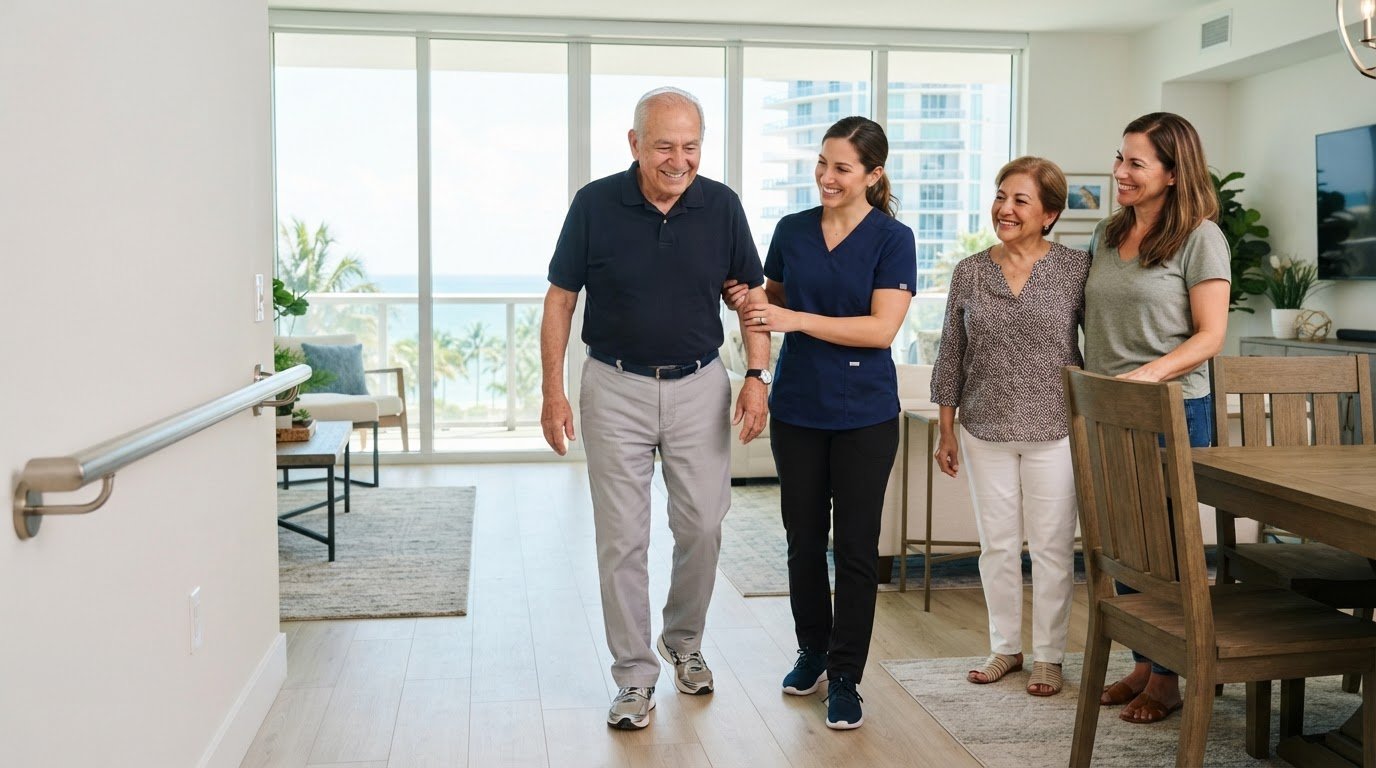
What if reducing fall risk for elderly parents could help them keep more independence, not less? It’s natural to worry that one misstep could lead to injury or shake your parent’s confidence. But safety changes don’t have to mean taking over. Small adjustments, made together, can support familiar routines while making everyday movement safer.
This guide explains how to spot common hazards at home, adjust daily routines, and recognize when extra support may help. You’ll also find ways to discuss safety while respecting your parent’s choices. An individualized physical therapy assessment can look at balance, walking, strength, and functional movement, adding a personalized layer to home-safety efforts. Together, these steps can build a practical plan that supports safer movement and greater confidence.
Key Takeaways
- Assess your parent’s current mobility, health, daily activities, and surroundings rather than relying on age alone to judge fall risk.
- Consider how home adjustments, safer routines, caregiver support, and physical therapy can address different parts of a prevention plan.
- Approach reducing fall risk for elderly parents as a shared process, starting with manageable changes that respect familiar routines and independence.
- Observe everyday movements and note concerns to help identify where extra support or professional guidance may be useful.
- An individualized physical therapy assessment can address balance, gait, strength, and functional movement, without promising to eliminate falls.
Reducing Fall Risk for Elderly Parents Starts with Understanding Their Everyday Risks
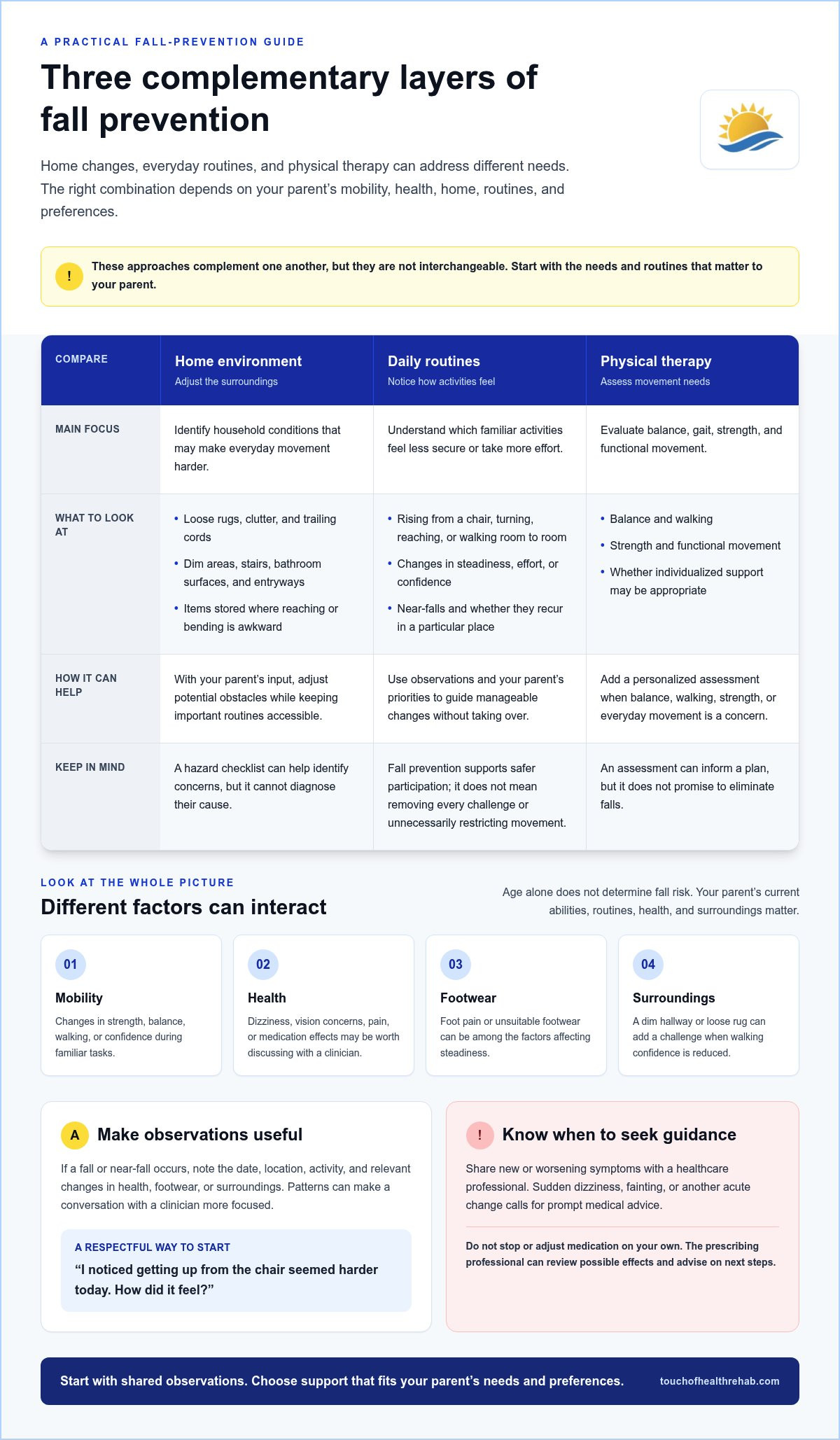
Fall risk reflects a mix of personal, health, activity, and environmental factors that may make a fall more likely. These can include changes in strength or balance, a health concern, a slippery surface, or a familiar task that has become harder. Age alone doesn’t determine someone’s risk. Your parent’s current abilities, routines, and surroundings matter.
It’s understandable to feel worried after a stumble, but one incident doesn’t establish a single cause. Consider what was happening, where it occurred, and whether anything has changed recently, such as walking confidence, health, or the home setup. Fall prevention supports safer participation in daily life; it doesn’t mean removing every challenge or unnecessarily restricting movement. A broad overview of fall prevention strategies includes activity, therapy, and environmental modifications. These approaches can work together rather than compete.
For families focused on reducing fall risk for elderly parents, the aim is to notice patterns and make thoughtful adjustments while preserving the parent’s choices. If balance, walking, or everyday movement is a concern, fall prevention therapy can be part of a broader plan.
Which changes may signal that a parent needs more support?
Notice whether your parent seems less steady, has difficulty rising from a chair, or has begun relying on furniture or another person during familiar activities. Near-falls are useful information, too. Keep track of whether these moments recur, happen in a particular place, or affect confidence about walking and everyday tasks.
Start the conversation with curiosity, not instructions. You might say, “I noticed getting up from the chair seemed harder today. How did it feel?” Ask which activities your parent wants to continue and what would help them feel secure. Their observations can guide next steps without making safety feel like a loss of control.
How do health, mobility, and surroundings combine?
Several factors may interact. Reduced strength or balance can make a step or turn harder. Vision changes may make obstacles less noticeable, while unsuitable footwear or medication effects may affect steadiness. A dim hallway, loose rug, or awkward home layout can add another challenge. A checklist can help you notice concerns, but it can’t diagnose their cause.
Share new or worsening symptoms with a healthcare professional for review. Sudden dizziness, fainting, or another acute change calls for prompt medical advice. A physical therapy assessment can evaluate balance, gait, strength, and functional movement when those areas are relevant.
Understand the Fall Risks That Can Affect an Older Parent at Home
Fall risk isn’t a fixed label, and age alone can’t tell you how safely your parent moves through the day. Current balance, strength, health, vision, medications, footwear, and home conditions all matter. A change in one area may combine with another. For example, dim lighting can make it harder to spot a step when walking confidence is already reduced.
The CDC’s STEADI fall prevention resources identify several risk-factor categories, including difficulty with walking or balance, lower-body weakness, vision problems, medication effects, foot pain or unsafe footwear, and hazards at home. These are areas to notice, not a diagnosis or proof that a fall will happen. Your parent’s circumstances and how they manage everyday activities provide important context.
What physical and health factors should families notice?
Observe whether walking looks less steady, steps seem shorter, or your parent needs more effort to rise from a chair or move between surfaces. Notice changes in leg strength, endurance, or confidence during familiar tasks, such as turning, reaching, or walking to another room. These observations can help identify which activities feel less secure.
Dizziness, vision concerns, pain, and recent medication changes are also worth discussing with a clinician. Don’t stop or adjust a medication on your own; the prescribing professional can review possible effects and advise on next steps. If concerns involve balance, walking, or functional movement, an individualized physical therapy assessment can help clarify what support may be appropriate.
Which household conditions can make walking less safe?
Walk through the routes your parent uses most, ideally together. Check for loose rugs, clutter, trailing cords, and areas where poor lighting makes changes in floor level hard to see. Also look at stair rails, bathroom surfaces, entryways, and storage spots that require bending or reaching. An everyday item kept high or low may create an awkward movement, especially if balance or strength has changed.
Treat these as priorities to assess, not signs that a fall is inevitable. With your parent’s input, note what could be adjusted while keeping important routines accessible. As part of reducing fall risk for elderly parents, record near-falls or falls with the date, location, activity, and any relevant changes in health, footwear, or surroundings. Patterns can make conversations with a clinician more focused. Families in Aventura can also learn about local physical therapy support as they consider next steps.
Compare Home Changes, Daily Habits, and Physical Therapy for Fall Prevention
Fall prevention works best when each step addresses a relevant need. Clearing a walkway can remove an obstacle, while clinician-guided movement practice may address balance or mobility. These approaches complement one another, but they aren’t interchangeable. The right combination depends on your parent’s mobility, health history, home, routines, and preferences.
| Approach | Need it may address | When individualized advice is important |
|---|---|---|
| Home-safety changes | Obstacles, poor lighting, or difficult routes through the home | Before installing handholds or equipment, or changing stairs and bathroom areas |
| Safer daily habits | Rushed transitions, carrying items while walking, or tasks that feel less steady | If a routine change limits valued activities or doesn’t feel practical to your parent |
| Caregiver support | Tasks where a parent wants assistance or feels less secure | When deciding how much help is useful while preserving autonomy |
| Physical therapy | Balance, gait, strength, or functional movement concerns | When symptoms, health history, or movement limitations call for clinical assessment |
Environmental changes and movement-focused care address different parts of fall prevention. Adjusting a walkway won’t build strength, and exercise alone won’t remove a loose rug. Combining relevant changes can support safer movement while helping your parent continue familiar activities.
When can home-safety changes make daily movement easier?
Start with clear walking paths, steady lighting, and frequently used items placed within comfortable reach. Review bathroom surfaces, stairs, and entryways together, and discuss whether handholds or other modifications could help. Any equipment or changes should suit your parent’s needs and the specific home, with appropriate assessment and installation. Include your parent in decisions rather than changing their surroundings without discussion.
When can balance and gait rehabilitation add support?
A clinician can assess balance, gait, strength, and functional movements such as standing, turning, or walking. The findings can guide an individualized plan, including exercises suited to your parent’s abilities and goals. Online routines aren’t a substitute for that assessment, particularly when symptoms or health conditions affect safe movement. Balance and gait rehabilitation can support safer movement as one part of a broader plan.
For families focused on reducing fall risk for elderly parents, the decision isn’t about choosing one solution for every situation. Match each step to the person: what feels difficult, what matters to them, and what kind of support can help them move with greater confidence.
Create a Practical Fall-Prevention Plan with Your Parent
A useful plan starts with your parent’s perspective, then turns observations into manageable next steps. Keep the goal clear: support the activities they value, not take control of their routine. Work through the steps together and revisit the plan as needs change.
- 1. Talk together. Ask which activities feel difficult or less secure, and listen before suggesting changes. Offer choices and connect each idea to a priority your parent names, such as reaching the bathroom comfortably or continuing to prepare meals.
- 2. Observe everyday movement. Notice how familiar activities go, such as getting up from a chair, walking through a doorway, or carrying an item. Don’t ask your parent to try challenging balance tests or exercises without appropriate guidance.
- 3. Review the surroundings. Walk through the routes your parent uses most and identify possible obstacles or awkward tasks. Start with low-disruption adjustments, such as clearing a path or moving frequently used items to an easier-to-reach spot. Discuss bathroom, stair, or other significant changes before making them.
- 4. Record concerns. Write down when a near-fall or difficulty occurred, what your parent was doing, where it happened, and any symptoms they reported. Include relevant changes in mobility, health, medication, footwear, or the home setup. These details can help a clinician understand the situation.
- 5. Choose next steps together. Agree on what to address first and who will help. If concerns involve medication, vision, or a change in health, arrange a review with the appropriate clinician. Don’t change or stop medication without guidance from the prescribing professional.
How can you discuss fall prevention without taking over?
Use observations instead of blame or assumptions: “I noticed you paused before the stairs. Did anything feel uncomfortable?” Ask what would make the activity feel easier, then offer options rather than issuing instructions. Collaborative language respects your parent’s knowledge of their own routine and makes it easier to agree on changes that feel useful.
When should you revisit the plan?
Review it after a near-fall or fall, a health or mobility change, or a shift in walking confidence. Check whether an agreed adjustment is helping and whether it still fits your parent’s preferences. If movement or balance remains a concern, a personalized assessment can help identify appropriate support as part of reducing fall risk for elderly parents.
Families in Aventura can explore physical therapy support for safer movement as part of a broader fall-prevention plan.
When Physical Therapy Can Help Reduce Fall Risk for Elderly Parents
If your parent remains unsteady, feels less confident walking, or has difficulty with everyday movements, a professional assessment can help clarify what support may be useful. A physical therapist can evaluate balance, gait, strength, and functional activities such as standing, turning, or moving between a chair and bed. The goal is to identify movement needs and support safer, more confident participation in daily life, not to promise that falls can be eliminated.
Physical therapy is one part of a broader fall-prevention plan. Home adjustments, daily habits, and caregiver support may address other needs. A personalized plan combined with practical changes can help families work toward reducing fall risk for elderly parents while respecting the parent’s priorities and abilities.
What may a personalized fall-prevention therapy plan address?
A therapist uses assessment findings to guide work on balance, walking patterns, strength, and functional movement. The plan and its progression should reflect your parent’s current abilities, health considerations, and goals, rather than follow a universal exercise routine. For example, if turning or standing feels difficult, those movements may help inform the focus of care. Geriatric physical therapy can provide individualized support for movement needs as people age.
At Touch of Health Rehab Inc., geriatric physical therapy and fall-prevention physical therapy are part of the care offered. An assessment can connect your parent’s concerns with balance, gait, strength, and functional movement, then inform a personalized approach.
How can local families explore balance and fall-prevention support?
Touch of Health Rehab Inc. serves families in Sunny Isles Beach, Aventura, Bal Harbor, North Miami Beach, and Miami Beach. Fall-prevention physical therapy can complement home-safety steps and routine adjustments, particularly when walking confidence or steadiness remains a concern. Support can be tailored to the individual rather than treated as a one-size-fits-all solution.
If you’re considering professional guidance for a parent, learn about care at Touch of Health Rehab Inc. and how physical therapy may fit into a broader plan for safer movement.
Take the Next Step Toward Safer, More Confident Movement
Reducing fall risk for elderly parents starts with understanding what’s changing in their daily movement and surroundings. Work with your parent to choose manageable safety improvements that preserve independence, and keep track of concerns that may benefit from professional guidance.
Home adjustments and safer routines can address environmental challenges, while individualized physical therapy can focus on balance, gait, strength, and functional movement. Touch of Health Rehab Inc. provides geriatric physical therapy, fall-prevention services, and balance and gait rehabilitation tailored to individual needs and goals. Families in Sunny Isles Beach, Aventura, Bal Harbor, North Miami Beach, and Miami Beach can explore support as part of a broader plan.
Explore fall-prevention and physical therapy support at Touch of Health Rehab Inc. to discuss a personalized approach to safer movement for your parent.
Frequently Asked Questions
How can I reduce fall risk for my elderly parent at home?
Start by reviewing the routes and activities your parent uses every day. Clear clutter and trailing cords, improve lighting, and keep frequently used items within comfortable reach. Talk together about bathroom, stair, or entryway changes so safety steps respect familiar routines. Notice near-falls or tasks that have become difficult, and share recurring concerns with a clinician to help decide what support may be useful.
What are the most common fall risks for older adults?
Common risk factors include changes in balance, gait, leg strength, vision, or endurance; dizziness or pain; medication effects; and environmental hazards such as clutter or poor lighting. Footwear and the demands of daily activities can also matter. These factors may combine, but no checklist can determine an individual’s risk on its own. Consider your parent’s current abilities and circumstances, and discuss new or worsening concerns with a clinician.
Can physical therapy help prevent falls in elderly parents?
Physical therapy can address movement-related concerns through an individualized assessment of balance, gait, strength, and functional activities. A therapist can use those findings to guide exercises and practice suited to the person’s abilities and goals. This may support safer movement and greater walking confidence, but it can’t guarantee that falls will be eliminated. Therapy works alongside relevant home-safety adjustments and daily routine changes.
What should I do if my parent has had a fall?
First, check whether your parent is injured or in immediate distress. If there may be a serious injury, head impact, or another urgent medical concern, seek emergency help. Don’t rush to lift them if they’re hurt or unsure they can move safely. Once immediate needs are addressed, record what happened, where and during which activity, and note any symptoms or recent changes to share with a clinician.
How do I talk to my parent about fall prevention?
Begin with a calm question about what feels difficult or less secure, then listen before suggesting changes. You could say, “Would anything make the walk to the bathroom feel easier?” Offer choices and connect ideas to activities your parent wants to continue. Avoid blame, frightening language, or assumptions about ability. A shared conversation can help shape a plan that supports safety without making your parent feel controlled.
Are balance exercises safe for every older adult?
No single balance exercise is appropriate for every older adult. Health conditions, pain, dizziness, current mobility, and the level of support available can all affect what’s safe. Avoid challenging balance tests or online exercise routines if your parent feels unsteady or has new symptoms. A clinician, including a physical therapist, can assess movement and guide exercises and progressions that fit the person’s abilities and goals.
When should an older adult get a fall-risk assessment?
Consider discussing an assessment with a clinician if your parent has fallen or had recurring near-falls, feels persistently unsteady, or has become less confident walking or completing familiar activities. New or worsening dizziness, weakness, vision concerns, or mobility changes also deserve medical review. In Sunny Isles Beach, Aventura, Bal Harbor, North Miami Beach, and Miami Beach, Touch of Health Rehab Inc. provides geriatric physical therapy, fall prevention, and balance and gait rehabilitation.