
What if the sharp, electric-shock pain radiating down your leg isn’t a permanent sentence, but a signal that your body is ready for a structural reset? If you’ve found yourself pausing during a sunset walk or struggling to stand through a dinner with friends, you know how isolating nerve pain can be. Finding effective sciatica pain relief in Sunny Isles Beach often feels like a cycle of temporary fixes; it leaves many people worried about potential surgery or lasting damage. We agree that you deserve more than a masked symptom. You deserve to understand your body and regain your freedom of movement.
In this article, you’ll discover how specialized physical therapy and postural education provide a clinical path to lasting recovery. We’ll explore the root causes of your discomfort and explain how a personalized plan can restore your ability to exercise without fear. By focusing on restoration and progression, we’ll show you how to move past the pain and return to the vibrant Sunny Isles Beach lifestyle you enjoy. It’s time to transition from simply managing your symptoms to mastering your long-term physical health.
Key Takeaways
- Identify the specific anatomical triggers of your nerve irritation, such as herniated discs or spinal stenosis, to better understand your path toward recovery.
- Learn why active, movement-based physical therapy is the clinical gold standard for achieving lasting sciatica pain relief Sunny Isles Beach residents need to return to an active lifestyle.
- Discover how postural education provides a foundation for natural spinal decompression, helping you move with confidence and without the fear of “electric shock” sensations.
- Explore the process of building a “muscular corset” through targeted physical conditioning to stabilize your spine and prevent future flare-ups during daily activities.
- Understand the vital connection between nerve health and balance, including how personalized gait analysis can reduce fall risks for seniors in the local community.
Navigating Sciatica Pain Relief in Sunny Isles Beach
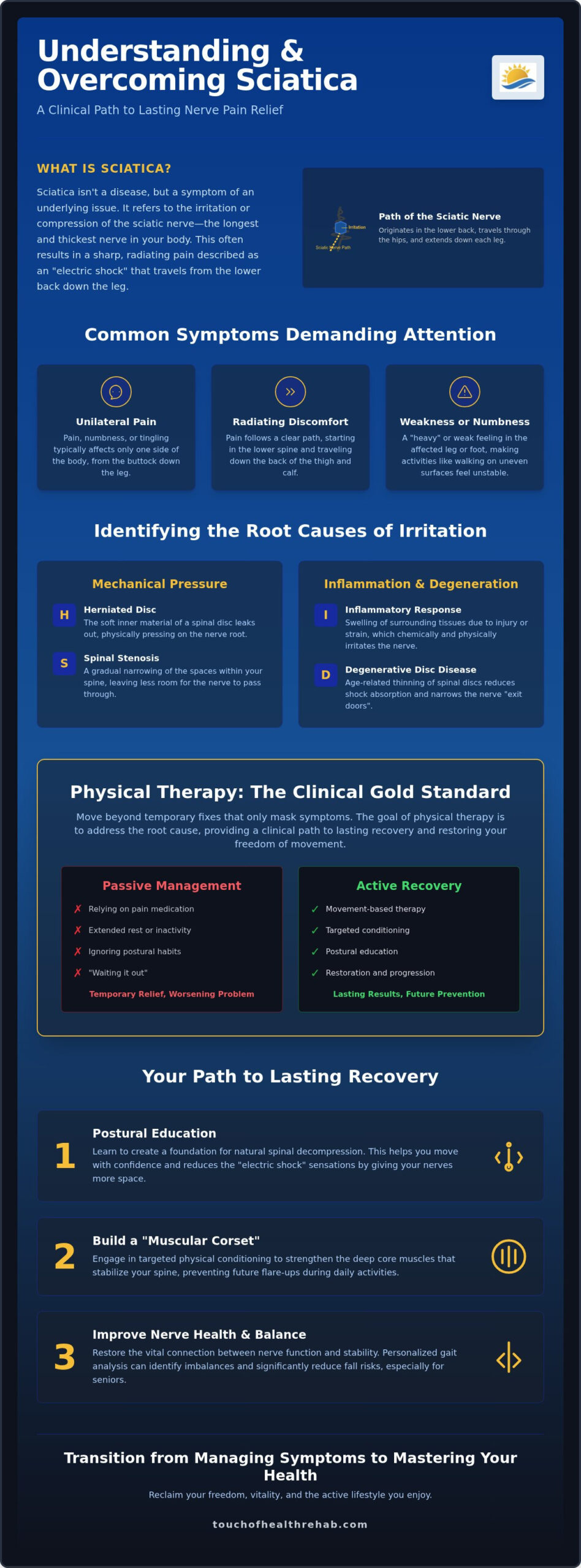
Discovering effective sciatica pain relief Sunny Isles Beach starts with understanding that your pain is a signal, not a permanent state. Sciatica refers to the irritation or compression of the sciatic nerve, which is the longest and thickest nerve in your body. It originates in your lower back and travels deep through your hips and down each leg. For many residents, Understanding Sciatica is the first step toward regaining their quality of life, as this condition is often a symptom of an underlying structural issue rather than a standalone disease.
You might experience this irritation as a sudden, sharp “electric shock” that jolts through your glute and thigh. Others describe it as a persistent “pins and needles” sensation or a dull, heavy ache that never seems to fully dissipate. Whether it’s an acute flare-up triggered by a sudden movement or a chronic irritation that has lingered for months, the goal is always the same: restoring your nerve’s ability to glide freely without interference.
Sunny Isles Beach presents a unique environment for those dealing with nerve pain. We see active retirees who enjoy daily strolls along the coastline and professionals who spend hours commuting through Aventura or sitting in high-rise offices. Both groups are at risk. Prolonged sitting can compress the nerve, while repetitive movements on uneven surfaces can aggravate an already sensitive spinal disc. Recognizing the difference between a temporary muscle pull and true sciatic nerve irritation is vital for your long-term recovery.
Common Symptoms That Demand Professional Attention
True sciatica typically presents as unilateral pain, meaning it only affects one side of your body. This pain radiates from your lower spine, through your buttock, and down the back of your leg toward the calf or foot. You may also notice numbness or a “heavy” feeling in your leg. This weakness makes walking on uneven surfaces, such as the shifting sand of our local beaches, feel unstable or even dangerous. Many patients also report burning sensations that intensify after sitting for long periods or driving across the William Lehman Causeway.
The Impact of Sciatica on Local Lifestyle and Mobility
Nerve pain does more than just hurt; it limits your ability to engage with the South Florida lifestyle you love. It forces you to cancel social gatherings at the pier or skip your morning exercise routine. This loss of independence often carries a heavy psychological toll, leading to frustration and a fear of movement. If you choose to “wait it out,” your body will naturally begin to compensate. You might start limping or shifting your weight, which frequently leads to secondary, compensatory injuries in your hips and knees. Addressing the root cause early prevents this cycle of dysfunction and keeps you moving confidently.
Identifying the Root Causes of Sciatic Nerve Irritation
To find lasting sciatica pain relief Sunny Isles Beach, we must look beyond the surface level of your discomfort. Your sciatic nerve is incredibly sensitive to both physical pressure and chemical irritation. When the structural integrity of your spine is compromised, the nerve reacts with the sharp, radiating sensations you’ve been experiencing. Common anatomical triggers include herniated discs, where the soft inner material of a spinal disc leaks out to press against the nerve, and spinal stenosis, which involves a gradual narrowing of the spaces within your spine. Spondylolisthesis, a condition where one vertebra slips forward over another, also places direct mechanical stress on the nerve roots.
Inflammation plays a silent but powerful role in nerve root compression. When tissues around the spine become inflamed due to injury or strain, they expand and leave less room for the nerve to pass through safely. This is often exacerbated by age-related degenerative disc disease. As we age, the discs that act as shock absorbers between our vertebrae naturally lose fluid and thin out. This narrowing of the “exit doors” for your nerves can lead to persistent irritation during your daily activities, making even simple movements feel like a challenge.
Disc Herniation vs. Spinal Stenosis
A bulging or herniated disc often causes sudden, acute pain because it physically pinches the nerve exit point. In contrast, spinal stenosis typically develops over years. You might find that your symptoms improve when you lean forward or sit down, as these positions temporarily open the spinal canal. Our team uses specific diagnostic signs and movement tests to differentiate between these conditions, ensuring your plan targets the exact source of your irritation. Utilizing evidence-based treatment for sciatica allows us to address these structural issues with clinical precision.
The Overlooked Role of Muscular Imbalance
Sometimes, the spine isn’t the primary culprit. Piriformis Syndrome occurs when a small muscle in your buttock becomes tight or spasms, compressing the sciatic nerve as it passes underneath. Muscular tightness in the gluteal region can create “pseudo-sciatica” symptoms by compressing the nerve along its path down the leg, even when the spinal discs themselves remain healthy. Weakness in your core muscles further complicates this by failing to support your lumbar spine, leading to excessive strain on your lower back. Your daily habits, from your desk ergonomics in Aventura to how you lift groceries, significantly impact your spinal health. If you’re unsure which of these factors is driving your pain, connecting with an expert physical therapist can provide the clarity you need to start your recovery.
Why Physical Therapy is the Gold Standard for Sciatica Recovery
Seeking sciatica pain relief Sunny Isles Beach often leads people toward passive treatments like injections or quick adjustments. While these options might offer a temporary window of comfort, they don’t address the underlying structural mechanics causing your nerve irritation. Physical therapy stands as the gold standard because it shifts you from being a passive recipient of care to an active participant in your own healing. In Florida, you can take advantage of direct access, which allows you to begin your rehabilitation journey immediately without waiting for a doctor’s referral. This early intervention is vital for preventing acute irritation from becoming a chronic, life-altering condition.
Movement-based therapy does much more than just stretch tight muscles; it promotes essential blood flow to the nerve roots and facilitates nerve desensitization. By engaging in comprehensive physical therapy, you’re investing in your long-term neurological health. This clinical approach uses targeted movement to encourage the nerve to glide naturally through the spinal canal and surrounding tissues. This process reduces the chemical irritation that causes that signature “electric shock” feeling and helps your nervous system return to a state of calm and stability.
Beyond Passive Relief: The Power of Movement
Specific, guided movements are designed to achieve “centralization.” This phenomenon occurs when your pain moves out of your leg and back toward your lower spine, which is a key clinical indicator that your recovery is on the right track. Manual therapy also plays a supporting role by gently addressing localized tissue inflammation and improving joint mobility. You might feel tempted to stay in bed when pain flares up, but resting for too long can actually worsen sciatic nerve adhesion. Nerves need movement and oxygen to heal; staying sedentary can cause the nerve to become “stuck” in its surrounding sheath, leading to more pain when you finally do try to move. For a broader look at diagnostic options, you can consult this comprehensive guide to sciatica treatment.
Clinical Expertise vs. General Exercise
The internet is full of “best stretches for sciatica,” but following generic YouTube exercises can be dangerous. An exercise that helps someone with spinal stenosis might severely aggravate a specific type of disc herniation. A Licensed Physical Therapist provides the clinical oversight needed to tailor the load and intensity of your program to your specific pain threshold. By choosing orthopedic physical therapy, you receive specialized care that respects the complexity of your spinal anatomy. This expert guidance ensures that every movement you perform brings you closer to recovery rather than risking further injury or setbacks.
At Touch of Health Rehab, we don’t believe in one-size-fits-all solutions. Achieving definitive sciatica pain relief Sunny Isles Beach requires a precise understanding of your unique movement profile. Our evaluation process includes a comprehensive gait analysis to see how you walk, strength testing to identify muscle imbalances, and specialized nerve tension tests that determine exactly how sensitized your sciatic nerve has become. This data allows us to build a roadmap that targets your specific limitations rather than just chasing the pain. Our lead physical therapist and the entire team act as your dedicated guides, ensuring that every session is a collaborative effort. This one-on-one attention means we can adjust your plan in real-time based on your feedback and progress.
We integrate pain management solutions into the earliest stages of your care to create a comfortable environment for healing. By calming the initial inflammatory response, we make it possible for you to engage in the active movements necessary for long-term recovery. This approach ensures that you aren’t just waiting for the pain to stop, but are actively working toward a more resilient version of yourself.
The Postural Education Framework
We prioritize postural education as the foundation for natural spinal decompression. Postural education is the cognitive retraining of movement patterns that helps you maintain a neutral spine during your daily activities. This isn’t just about standing up straight; it’s about learning how to move without putting undue stress on your nerve roots. Whether you’re working in a home office in Sunny Isles Beach or driving through South Florida traffic, we provide the ergonomic tools needed to reduce constant nerve pressure. Mastering these habits ensures that your recovery lasts long after you leave our clinic.
Manual Therapy and Neural Mobilization
Our therapists use hands-on techniques to release myofascial restrictions in the lumbar and gluteal regions, which often contribute to nerve compression. We also employ “nerve glides,” a specialized form of neural mobilization that improves the mobility of the sciatic nerve within its protective sheath. These glides are gentle, repetitive movements that act like “flossing” for your nerves, encouraging them to move past areas of scar tissue or tight muscle without triggering a pain response. Our goal is to provide the most effective sciatica pain relief Sunny Isles Beach has to offer by combining these hands-on skills with active patient participation. As your pain subsides, we seamlessly transition from these manual interventions to functional strengthening, empowering you to move with confidence.
If you’re ready to stop the cycle of flare-ups, meet our team of dedicated physical therapists to begin your personalized evaluation today.
Moving Beyond Pain: Long-Term Conditioning and Prevention
True recovery means more than just reaching a day without pain; it’s about ensuring your body is resilient enough to handle the demands of your daily life. Once the initial inflammation has settled, the focus shifts to physical conditioning. This phase is designed to build what we call a “muscular corset.” By strengthening the deep stabilizing muscles of your core and lower back, you create a natural support system that protects your spinal discs from future irritation. This proactive approach is the final, essential step in achieving definitive sciatica pain relief Sunny Isles Beach.
For many of our neighbors in Bal Harbor and Aventura, especially seniors, sciatica often leads to subtle changes in how they move. Nerve irritation can cause muscle weakness or a loss of sensation that directly impacts your stability. This makes balance and gait rehabilitation a vital component of a clinical recovery plan. When your gait is compromised, your risk of stumbling increases. We prioritize restoring your natural movement patterns to ensure you can navigate your home and community with total confidence.
Restoring Balance and Stability
It’s common for patients to develop compensatory limps during a chronic pain phase. Your body naturally tries to “protect” the painful side by shifting weight, which eventually leads to strain in your opposite hip or knee. We use proprioception training to retrain your brain and muscles to work in harmony again. This is particularly important for residents who enjoy walking on the uneven terrain of the beach. By integrating fall prevention therapy into your plan, we address these hidden vulnerabilities and ensure your safety during every outdoor activity.
Your Roadmap to a Pain-Free Future
Consistency is the key to preventing disc degeneration and nerve flare-ups. We work with you to create a personalized home maintenance program that fits your lifestyle and keeps your spine resilient. This isn’t a generic list of stretches; it’s a curated set of movements tailored to your specific anatomical needs. Viewing your health through the lens of wellness and preventative care allows you to maintain the progress you’ve worked so hard to achieve.
Your journey to recovery doesn’t have to be a solo effort. We see ourselves as your partners in health, providing the expertise and encouragement needed to reach your peak physical state. By committing to this collaborative path, you aren’t just escaping pain; you’re reclaiming your vitality and ensuring that your future with Touch of Health Rehab Inc. is active, mobile, and free from the limitations of sciatica.
Reclaim Your Freedom and Vitality
We’ve explored how understanding the anatomical root of your nerve irritation and embracing movement-based therapy can transition you from chronic discomfort to lasting resilience. By integrating specialized postural education and functional conditioning into your daily routine, you create a foundation for a life free from the limitations of nerve pain. Finding definitive sciatica pain relief Sunny Isles Beach is about more than just a quick fix; it’s about a clinical commitment to your long-term movement health and physical empowerment. You don’t have to navigate this path alone when expert guidance is just around the corner.
Our expert staff at Touch of Health Rehab Inc. is here to serve as your dedicated guide, providing the professional care you need in a location conveniently accessible to Sunny Isles, Aventura, and Miami Beach. We invite you to explore our Success Stories to see how we’ve helped your neighbors return to the active lifestyle they love. Your path to restoration begins with a single, purposeful step toward professional care. Schedule your personalized sciatica evaluation at our Sunny Isles Beach clinic today. We’re ready to partner with you on this journey toward peak health and a more vibrant, pain-free future.
Frequently Asked Questions
How long does it take to get sciatica pain relief with physical therapy?
Most patients experience a noticeable decrease in symptoms within 4 to 6 weeks of consistent physical therapy. Chronic or complex cases may require up to 12 weeks of dedicated care to achieve full restoration. Your specific timeline depends on the severity of the nerve irritation and how closely you follow your personalized plan for sciatica pain relief Sunny Isles Beach. We focus on a steady, methodical progression to ensure your results are definitive and lasting.
Can I do physical therapy for sciatica if I have a herniated disc?
Yes, physical therapy is the clinical gold standard for managing sciatica caused by a herniated disc. Our expert therapists use specific movements to reduce mechanical pressure on the nerve exit point and promote natural healing of the disc tissue. This active approach empowers you to avoid more invasive interventions, such as surgery or injections, by rebuilding the structural support around your spine. We work as your dedicated guides to ensure every exercise is safe for your specific injury.
Is walking good for sciatica pain, or should I rest?
Movement is medicine for the sciatic nerve, and walking is generally encouraged over bed rest. Modern clinical protocols for 2026 emphasize that prolonged inactivity can actually worsen nerve adhesions and lead to muscle stiffness. We’ll teach you specific “nerve gliding” and “flossing” techniques that keep the nerve mobile as you walk. These movements help desensitize the nerve and improve blood flow, allowing you to maintain your active lifestyle without increasing your discomfort.
Do I need a doctor’s referral for sciatica treatment in Sunny Isles Beach?
You don’t need a physician’s referral to begin your recovery at our clinic. Florida law allows for direct access to physical therapy, which means you can start your evaluation and treatment immediately. This allows us to address your “electric shock” sensations or leg pain right away, saving you the cost and time of an extra office visit. Starting your rehabilitation early is one of the most effective ways to prevent acute flare-ups from becoming chronic issues.
What is the most effective exercise for immediate sciatica relief?
The most effective exercises are those that achieve “centralization,” which means moving the pain out of your leg and back toward your lower spine. The McKenzie Method is considered a leading physical therapy approach in 2026 for identifying the directional movements that provide the fastest relief. Because every nerve compression is unique, we identify the exact movements that work for your anatomy. This ensures you don’t accidentally perform “YouTube exercises” that might aggravate your specific type of disc herniation.
How can I tell if my leg pain is actually sciatica or something else?
Sciatica is characterized by unilateral pain that radiates from the lower spine, through the buttock, and down the back of the leg. You’ll often feel “pins and needles” or sharp sensations that travel past the knee into the calf or foot. If your pain is localized only in your lower back or stays above the knee, it may be a different orthopedic or muscular issue. A professional evaluation includes nerve tension tests and gait analysis to confirm if the sciatic nerve is the true source.
What happens if sciatica is left untreated for too long?
Leaving sciatic nerve irritation untreated can lead to permanent nerve damage, persistent muscle weakness, and a loss of sensation in your leg. Your body will naturally develop compensatory movements or a limp to avoid the pain, which frequently causes secondary injuries in your hips and knees. Over time, these changes can lead to gait instability and an increased risk of falls. Addressing the root cause early protects your long-term mobility and prevents the attainment of peak health from becoming more difficult.
Does insurance cover physical therapy for sciatica in Florida?
Most insurance plans, including Medicare and private providers, cover physical therapy for sciatica. For the 2026 benefit year, the Medicare therapy threshold is set at $2,480 for combined physical therapy and speech-language pathology services. Patients are typically responsible for a copay or coinsurance, which often ranges from $10 to $75 per session depending on your specific plan. We recommend verifying your benefits to understand how your coverage applies to your personalized rehabilitation journey.