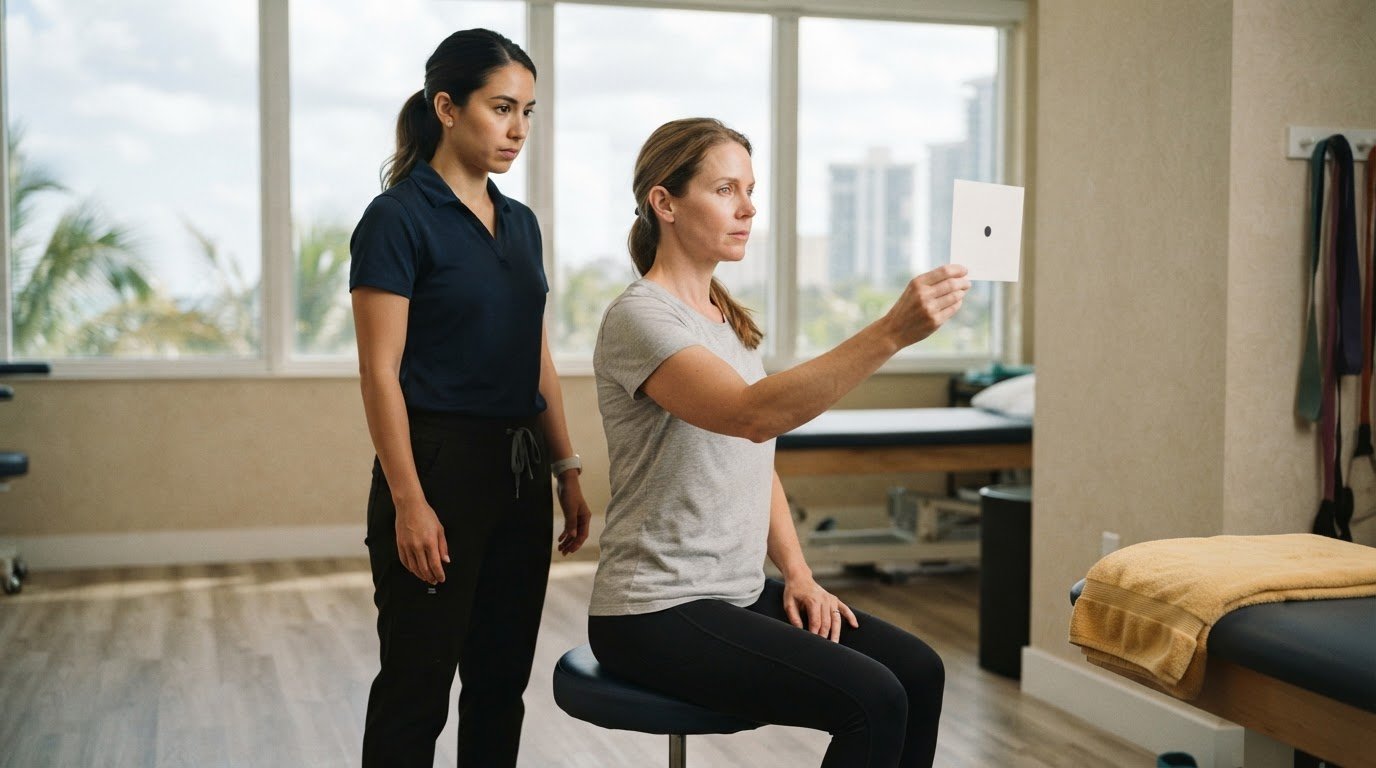
The spinning from vestibular neuritis may ease before your balance feels steady again. Vestibular neuritis is inflammation of the vestibular nerve, and lingering dizziness can last weeks to months; the NHS says many people regain their balance in 2 to 6 weeks, though recovery can take longer. Understanding that timeline is an important part of considering a vestibular neuritis recovery program in Sunny Isles.
It can be discouraging when intense vertigo settles but movement, busy surroundings, or quick head turns still feel unsettling. Lingering dizziness doesn’t necessarily mean you’re failing to recover: your brain may need time and appropriate activity to adapt to changed balance signals.
Learn what vestibular neuritis is, why symptoms can persist, and how recovery may unfold. We’ll also explain how vestibular rehabilitation uses tailored balance and gaze-stabilization exercises to help you build steadier movement and visual focus, one step at a time.
Key Takeaways
- Track changes in dizziness alongside the activities, medications, or other strategies you’ve tried to help identify what supports you.
- Lingering imbalance can reflect the brain adapting to changed balance signals, even after intense spinning improves.
- Recovery time varies: many people regain balance within 2 to 6 weeks, while some take longer, according to the NHS.
- Vestibular rehabilitation can use tailored balance and gaze-stabilization exercises to build steadier movement and visual focus.
- When dizziness continues to affect daily activities, vestibular rehabilitation at Touch of Health Rehab can provide structured support for your recovery.
1. What is vestibular neuritis?
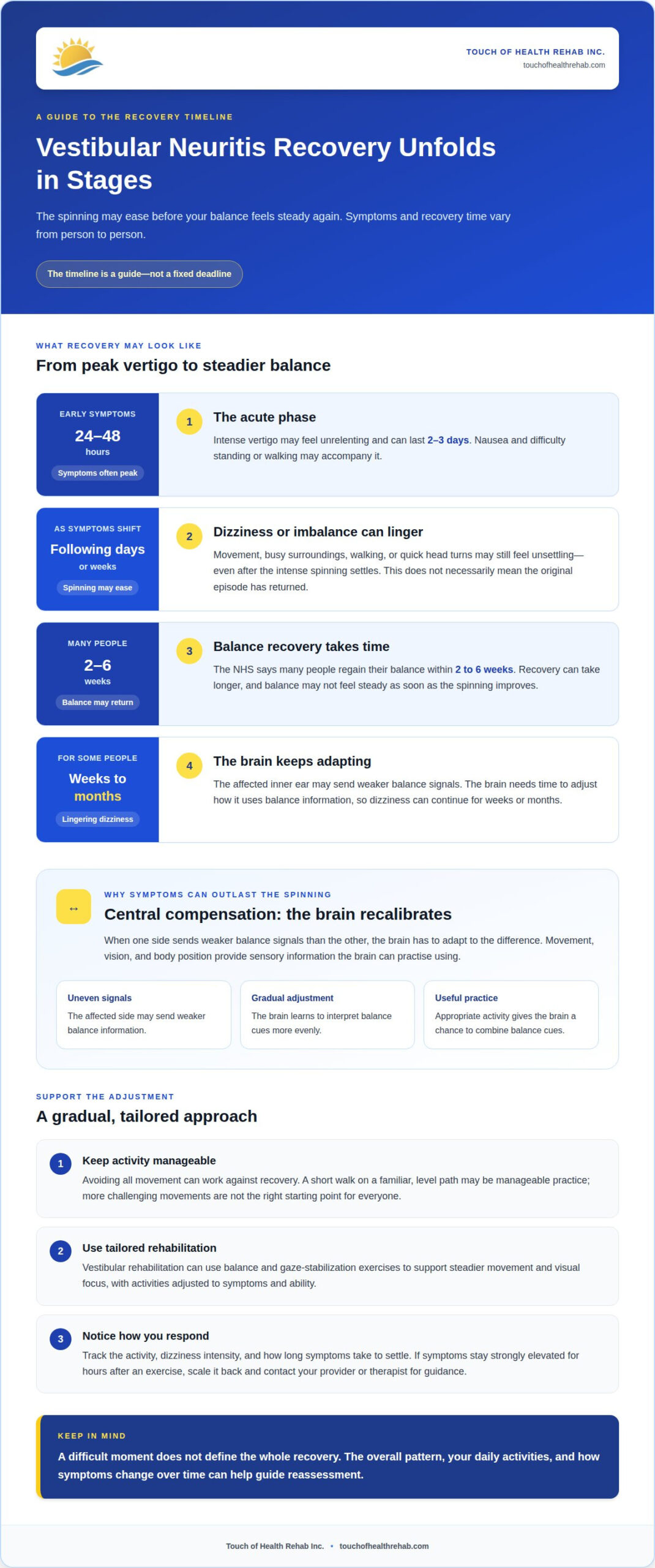
Vestibular neuritis is inflammation of the vestibular nerve, which carries balance information from your inner ear to your brain. It affects the vestibular portion of the 8th cranial nerve, so sudden vertigo can disrupt walking, head movement, and visual focus. Symptoms commonly peak within 24 to 48 hours. The intense spinning may settle, while imbalance or dizziness continues and changes how you manage everyday movement.
During the acute phase, vertigo can feel unrelenting and may last 2-3 days. Nausea and difficulty standing or walking can accompany it. Hearing loss is not typical of vestibular neuritis; hearing changes, ear pain, fullness, or ringing deserve medical follow-up because they may point to another inner-ear condition. Labyrinthitis, for example, can affect hearing as well as balance.
Symptoms describe what you experience, while vestibular test results measure balance-system function. A mismatch between intense dizziness and a less striking test result doesn’t, by itself, explain the cause. Clinicians consider both your symptom history and examination findings. Noting when vertigo occurs, which movements bring it on, and how your balance changes can help put test results into context.
Keep a brief daily note of changes. Record symptom severity as mild, moderate, or severe, along with the activity, medication, exercise, or aid you used. For example, note whether turning your head while walking worsened dizziness and whether resting or adjusting the activity helped. If symptoms recur, compare them with your initial episode and note which strategies made a difference. This record gives your medical provider or physical therapist concrete details for reassessment.
When comparing vestibular therapy programs near Sunny Isles Beach, look for clear information about the therapist’s vestibular training, assessment process, and how care is adjusted as symptoms change. Patient reviews may offer insight into communication and support, but they don’t replace an individual evaluation. A useful program explains how symptoms and vestibular findings shape the rehabilitation plan.
Doctors assess the symptom pattern and perform an examination to evaluate possible causes, including stroke or other conditions. Sudden severe vertigo with a severe headache, weakness, trouble speaking, vision loss, or fainting warrants calling 911 or going to an emergency room, not booking a clinic appointment.
ENT and neuro-otology specialists are relevant for hearing changes or complex balance concerns in Sunny Isles Beach. Medical evaluation can help direct care to the appropriate specialty when those symptoms arise.
2. Lingering dizziness and central compensation
After the strongest vertigo settles, dizziness may continue for weeks or months. The inner ear on the affected side can send weaker balance signals than the other side. Your brain needs to adapt to this difference, so turning your head, walking through a busy store, or shifting your gaze may still feel unsettling. This lingering sensation reflects ongoing adjustment, not necessarily a return of the original acute episode.
Central compensation is the brain’s process of recalibrating how it uses balance information. Imagine the damaged side providing 50% input while the intact side provides 100%. The brain can learn to interpret those unequal signals more evenly, helping movement feel more coordinated. This adaptation depends partly on receiving useful sensory information through movement, vision, and body position.
That’s why avoiding all movement can work against recovery. Gentle, appropriate activity gives your brain opportunities to practise combining balance cues. For example, a short walk on a familiar, level path may provide manageable movement practice. Turning your head while walking can be more challenging, so it isn’t the right starting point for everyone. Choose activities that match your current symptoms and ability.
Medication that suppresses vertigo or nausea may be used to manage overwhelming symptoms during the acute phase. These medicines are usually stopped after the first few days because they may interfere with the brain’s compensation. Follow the instructions of the medical professional managing your care, and don’t change medication on your own. If dizziness remains disruptive, vestibular rehabilitation can guide graded activities that address balance, visual stability, and movement tolerance.
Track your response to activity instead of judging progress by one difficult moment. Note what you were doing, how strong the dizziness felt, and how long it took to settle. If symptoms remain strongly elevated for hours after an exercise, scale it back and contact your provider or therapist for guidance. A brief increase during a tailored exercise can differ from an extended flare that disrupts the rest of your day.
During a setback, compare current symptoms with your initial episode and describe them as mild, moderate, or severe. Record any medications, exercises, aids, or activity changes you used, then note which seemed helpful. A vestibular therapist can reassess your movement and adjust the plan when familiar activities become difficult again. Targeted vestibular rehabilitation supports this gradual practice, helping you build confidence as your brain adapts to changed balance signals.
3. Typical vestibular neuritis recovery timeline
Vestibular neuritis recovery usually unfolds in stages, not as a single turning point. During the acute phase, severe vertigo and nausea may dominate for days. The constant spinning often eases over the next several days or weeks, but that doesn’t always mean balance has fully recovered. The NHS says many people regain their balance in 2 to 6 weeks, though recovery can take longer.
Some people feel mostly recovered within a few weeks; others need several months. Typical recovery takes about two months, while gradual improvement over weeks is common after the acute phase. These timeframes describe different stages of recovery: spinning may fade first, while steadiness during walking, head movement, or visually busy activities returns later.
To understand your progress, track function as well as dizziness. Note whether you can walk across a room, turn your head while moving, or look at a screen without stopping. Compare these activities over time. For example, if a grocery aisle first feels overwhelming but later becomes manageable, that change is useful evidence of progress, even if some symptoms remain.
Recovery may take longer when migraine, visual sensitivity, anxiety around dizziness, reduced activity after the episode, or another balance condition is present. These factors can affect how movement feels and how steadily you resume daily routines. A clinical review can consider them alongside your symptoms, examination, and vestibular test results, rather than relying on a calendar alone.
Pay attention to hearing symptoms during recovery, because hearing loss isn’t typical of vestibular neuritis. New hearing changes, ear pain, fullness, or ringing call for medical follow-up. A sudden return of dizziness should also be considered in context: note how it compares with the original episode, what activity preceded it, and whether other symptoms have appeared.
Therapy can help address lingering balance and movement difficulties as recovery continues. A physical therapy assessment can identify challenging activities and consider how your symptoms respond, then shape rehabilitation around your needs. If an exercise leaves symptoms strongly elevated for hours, scale it back and contact your provider or therapist for guidance. A timeline is most useful when considered alongside changes in function, not treated as a recovery deadline.
4. Vestibular rehabilitation and gaze stabilization
Vestibular rehabilitation is a specialized form of physical therapy that addresses balance, visual stability, movement tolerance, and confidence. After vestibular neuritis, a therapist can assess how head movement, walking, and visual tasks affect you, then select exercises for those challenges. In a vestibular neuritis recovery program in Sunny Isles, this assessment connects rehabilitation activities with the movements that matter in your daily routine.
Gaze-stabilization exercises train your eyes to stay focused while your head moves. For example, you may look at a stationary target and gently turn your head from side to side while keeping the target clear. A therapist can adjust the pace, range, or visual task based on your response. This practice supports steadier focus during activities such as looking around while walking.
Vestibular rehabilitation can begin after medical evaluation has addressed the acute episode and established that exercise is appropriate. The starting point depends on your symptoms and ability to participate safely. A therapist can assess balance, vision, and movement tolerance, then introduce manageable exercises and adjust them as your responses change.
Exercises may challenge balance, head movement, or visual focus. A therapist might begin with steady standing, then add head turns or walking between visual targets. Each activity practises a skill used in daily life. If symptoms remain strongly elevated for hours after an exercise, scale it back and contact your provider or therapist for guidance.
Research comparing vestibular rehabilitation with corticosteroids found no clear difference between the treatments at 12 months. A systematic review also found earlier improvement in patient-reported dizziness disability with rehabilitation, while corticosteroids showed earlier change on one objective vestibular measure. These findings describe different outcomes, not an individual prediction. A clinician considers your situation when discussing treatment options.
If you’re considering a vestibular neuritis recovery program in Sunny Isles, tracking how exercises affect daily activities can help guide adjustments. Note whether a head-turn task makes it easier to follow a conversation or whether balance practice affects your steadiness afterward. This information helps a therapist tailor the plan. Vestibular rehabilitation offers a structured way to practise balance and gaze control during recovery.
Randomized controlled trials strongly recommend vestibular rehabilitation for people with vestibular neuritis.
During a vestibular setback, track symptoms and gradually reintroduce helpful activities. A vestibular physical therapist can reassess you during a setback and offer techniques and support that helped before.
5. Vestibular neuritis recovery time
Recovery time is best understood through both symptoms and daily function. The NHS says symptoms lasting months to years occur in 30 to 50 percent of peripheral vestibular disorder cases, a group that includes vestibular neuritis. This figure describes a broader group of conditions, not a personal forecast. It shows why persistent dizziness deserves attention even after the initial spinning has eased.
A prospective vestibular neuritis study followed 40 people from the first few days of illness. Researchers reassessed 32 participants at a median of ten weeks. Those details help illustrate how recovery is studied over time, but the follow-up figures alone don’t tell you how quickly any one person will return to normal activities. Progress depends on symptoms and on whether balance, vision, and movement are improving in daily situations.
Use function as a practical measure. At regular intervals, notice whether you can walk through a familiar room, turn your head while moving, or tolerate visual activities such as reading. Record which task feels easier and which still interrupts your routine. These examples can show gains that a single dizziness rating may miss. They also give a therapist or medical provider specific changes to consider during reassessment.
Recovery can take longer when migraine, visual sensitivity, anxiety around dizziness, reduced activity after the episode, or another balance condition is present. Each can affect how movement feels and how easily you resume everyday tasks. Your brain may continue compensating as you rebuild activity, so symptom improvement and restored function don’t always happen together. A steady return to appropriate movement helps reveal what your balance system currently tolerates.
New or changing symptoms can alter the clinical picture. Hearing loss is not typical of vestibular neuritis, so hearing changes call for medical follow-up and may lead to reconsideration of the diagnosis. Seek urgent emergency assessment for sudden severe vertigo with weakness, trouble speaking, vision loss, fainting, or a severe headache. Those signs need urgent attention, not routine recovery tracking.
The clearest takeaway is to judge recovery by your direction of change, not by a single deadline. Keep a concise record of symptoms and meaningful activities, such as walking, turning, or reading. If progress stalls or daily function remains limited, vestibular rehabilitation can help assess balance and guide a tailored return to movement. Explore support for vestibular recovery as you plan your next steps.
Touch of Health Rehab: Vestibular Rehabilitation
Touch of Health Rehab Inc. provides vestibular rehabilitation for people with lingering dizziness, unsteadiness, or difficulty keeping vision steady during head movement. This specialized physical therapy focuses on balance, gaze stabilization, and movement tolerance through exercises tailored to your needs in Sunny Isles Beach, Aventura, Bal Harbour, North Miami Beach, and Miami Beach.
Consider rehabilitation when intense spinning has eased but everyday activities, such as walking or turning your head, still feel difficult. A therapist can assess how movement affects your symptoms and guide a gradual approach to rebuilding steadiness and confidence. If symptoms change or worsen, seek appropriate medical follow-up before continuing exercises.
Contact Touch of Health Rehab Inc. to discuss vestibular rehabilitation and support for your recovery.
Take a Steady Next Step Toward Daily Confidence
Choose one meaningful activity you’d like to feel more comfortable doing, such as walking through a busy space or turning your head while moving. That goal can help shape a practical conversation about what still feels difficult and what support may fit. A vestibular neuritis recovery program in Sunny Isles can connect rehabilitation with the activities you want to return to, rather than focusing only on symptoms.
Touch of Health Rehab offers Vestibular Rehabilitation, Physical Therapy, and Postural Education to support balance, movement, and everyday function. If lingering dizziness is affecting your routine, you can discuss your goals and current challenges with the team. Contact Touch of Health Rehab to discuss your rehabilitation goals and take a thoughtful next step toward steadier movement.
Frequently Asked Questions
What is vestibular neuritis?
Vestibular neuritis is inflammation affecting the balance portion of the vestibular nerve, which carries signals from the inner ear to the brain. It can cause sudden vertigo, nausea, and difficulty with balance or walking. Symptoms may resemble other conditions, so medical assessment considers the pattern of symptoms and examination findings. Hearing loss is not typical and may point to a different inner-ear condition.
Does Everyone Need Vestibular PT to Recover from a Vestibular Hypofunction?
No. The need for vestibular physical therapy depends on how vestibular hypofunction affects your balance, vision, and daily activities. For example, difficulty walking while turning your head may be a reason to consider an assessment. A therapist can identify affected tasks and tailor exercises accordingly. Someone whose function is steadily returning may have different rehabilitation needs from someone whose symptoms continue to limit routine activities.
How Does it Work?
Vestibular rehabilitation uses assessed movement and balance activities to practise skills affected by dizziness. A therapist may observe how you stand, walk, or keep your eyes on a target while moving your head. Based on your response, exercises can be adjusted to address specific challenges. For example, a therapist may modify a walking task if turning your head makes it harder to stay steady.
How long does recovery take?
Recovery varies from person to person. The NHS says many people regain their balance in 2 to 6 weeks, though it can take longer. To follow practical changes, compare activities such as walking through a familiar space or reading while seated. If symptoms change or progress stalls, describe those specific experiences to your medical provider so they can consider what evaluation or support may be appropriate.
Should I ask for vestibular rehabilitation?
Consider discussing vestibular rehabilitation if dizziness, imbalance, or visual discomfort continues to interfere with daily activities. Be specific about what feels difficult, such as walking through a busy setting or turning to speak with someone. That information can help guide an assessment. If an exercise leaves symptoms strongly elevated for hours, scale it back and contact your provider or therapist for guidance before continuing.
What Happens at a First Visit for Lingering Dizziness?
A first visit typically includes a discussion of your symptoms and how they affect everyday movement. You may describe when the dizziness began, which activities bring it on, and whether hearing changes occurred. The therapist may assess balance, walking, and visual stability during head movement. These observations help identify rehabilitation goals, such as improving steadiness while standing or making head turns more comfortable during routine tasks.
Who Can help?
A medical provider can assess new or changing symptoms, while a vestibular physical therapist can evaluate balance and movement challenges. Touch of Health Rehab Inc. provides vestibular rehabilitation and physical therapy for dizziness and balance difficulties. Its local service area includes Sunny Isles Beach, Aventura, Bal Harbor, North Miami Beach, and Miami Beach. Sudden severe symptoms such as weakness or trouble speaking warrant emergency care; call 911.
What is vestibular neuritis and what are its symptoms?
Vestibular neuritis affects the vestibular nerve, which carries balance information from the inner ear. Symptoms may include sudden vertigo, nausea, and unsteadiness that makes standing or walking difficult. Hearing loss is not typical of this condition. If hearing changes, ear pain, fullness, or ringing accompany dizziness, follow up with a medical provider, since these symptoms can be associated with a different inner-ear problem.