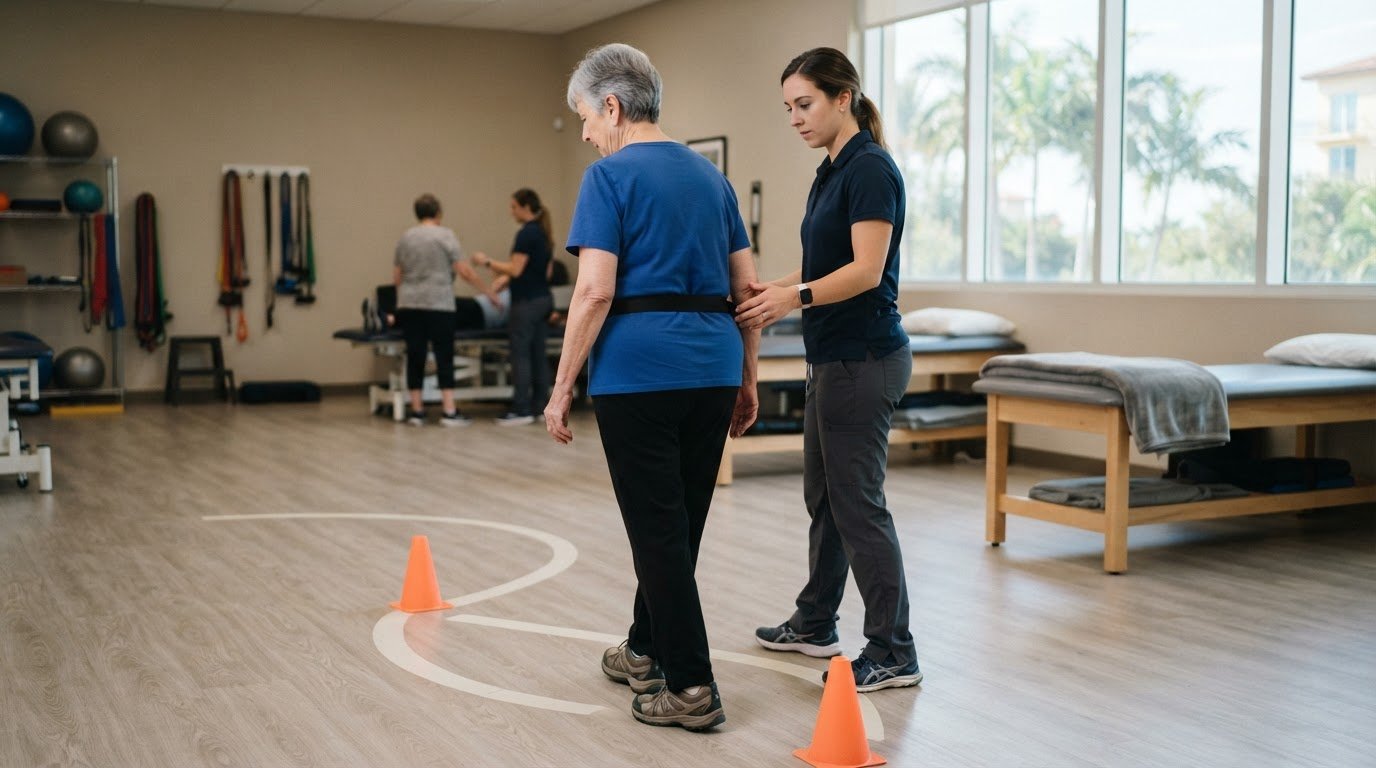
Vestibular rehabilitation for seniors in Aventura uses individualized exercises to help manage dizziness, vertigo, imbalance, and trouble keeping vision steady during movement. It retrains the brain to interpret signals from the inner ear and body, but it doesn’t cure the underlying condition. The exercises are tailored to each person’s needs and abilities.
When dizziness or unsteadiness affects walking, turning, or everyday activities, it’s natural to want to know what vestibular rehabilitation for seniors in Aventura involves and how it fits with other care. Treatment can include balance training, gaze-stabilization exercises, and gentle, repeated movements to help reduce sensitivity to triggers.
This article explains how the vestibular system supports balance, which conditions and symptoms rehabilitation may address, and what seniors can expect from therapy. It also covers how physical therapists coordinate with physicians and other care providers, so the plan can account for health history, symptoms, and progress over time.
Key Takeaways
- Learn how personalized exercises can help manage dizziness, vertigo, imbalance, and difficulty keeping your vision steady during movement.
- See how gaze-stabilization exercises train you to keep an object in focus while moving your head.
- Understand how the inner ear, vision, and body-position signals work together to support balance and spatial orientation.
- Recognize symptoms and everyday difficulties that may point to a vestibular or balance concern.
- Find out how communication between therapists, physicians, and other care providers can help coordinate therapy and respond to changes in symptoms.
What Is Vestibular Rehabilitation Therapy?
Vestibular rehabilitation is physical therapy using individualized exercises to help manage dizziness, vertigo, imbalance, and gaze instability. It retrains how the brain interprets signals from the inner ear and body, but it doesn’t cure the underlying condition.
Gaze Stabilization and Habituation Exercises
Gaze-stabilization exercises train you to keep an object in focus while moving your head. Habituation uses repeated, controlled exposure to movements that trigger dizziness. For example, a therapist may guide a senior to look at a steady target while turning the head, then adjust the movement as needed. These exercises can help maintain visual focus during head movement and reduce sensitivity to certain triggers.
Individualized Vestibular Exercise Plans
A vestibular exercise plan is tailored to a person’s symptoms, physical condition, and medical history. It may combine gaze stabilization, habituation, and balance training rather than rely on the same routine for every senior. Someone who feels unsteady while walking, for instance, may need different practice from someone whose main difficulty is maintaining clear vision during head turns.
Therapist Guidance and Senior Mobility
Therapist guidance starts with assessing symptoms and abilities, then monitoring safety and adjusting the pace. This matters because an exercise that challenges balance can increase fall risk if it doesn’t match a senior’s current mobility. A physical therapist can connect practice to tasks such as turning, walking, or changing direction, helping build skills for everyday movement.
Before starting a new exercise program, seniors with balance or gait issues should consult a physical therapist. The therapist can consider medical history, walking ability, and movements that trigger symptoms, then choose an appropriate starting point. Regular practice may improve coordination among signals from the eyes, muscles, and vestibular system. The schedule and pace depend on individual needs.
When comparing clinics near Aventura, consider clearly described therapist credentials and experience with vestibular conditions, facilities suited to mobility needs, and reviews that discuss communication and individualized care. Reviews can offer context, but they don’t establish clinical qualifications or predict your results.
Medicare and private insurance coverage depends on the plan’s benefits, eligibility criteria, and cost-sharing terms. Coverage varies by policy, so plan documents determine whether outpatient physical therapy is covered and under what conditions.
For more detail on vestibular rehabilitation therapy, explore how exercise selection can address dizziness and balance problems while supporting safer senior mobility.
How the vestibular system supports balance and spatial orientation
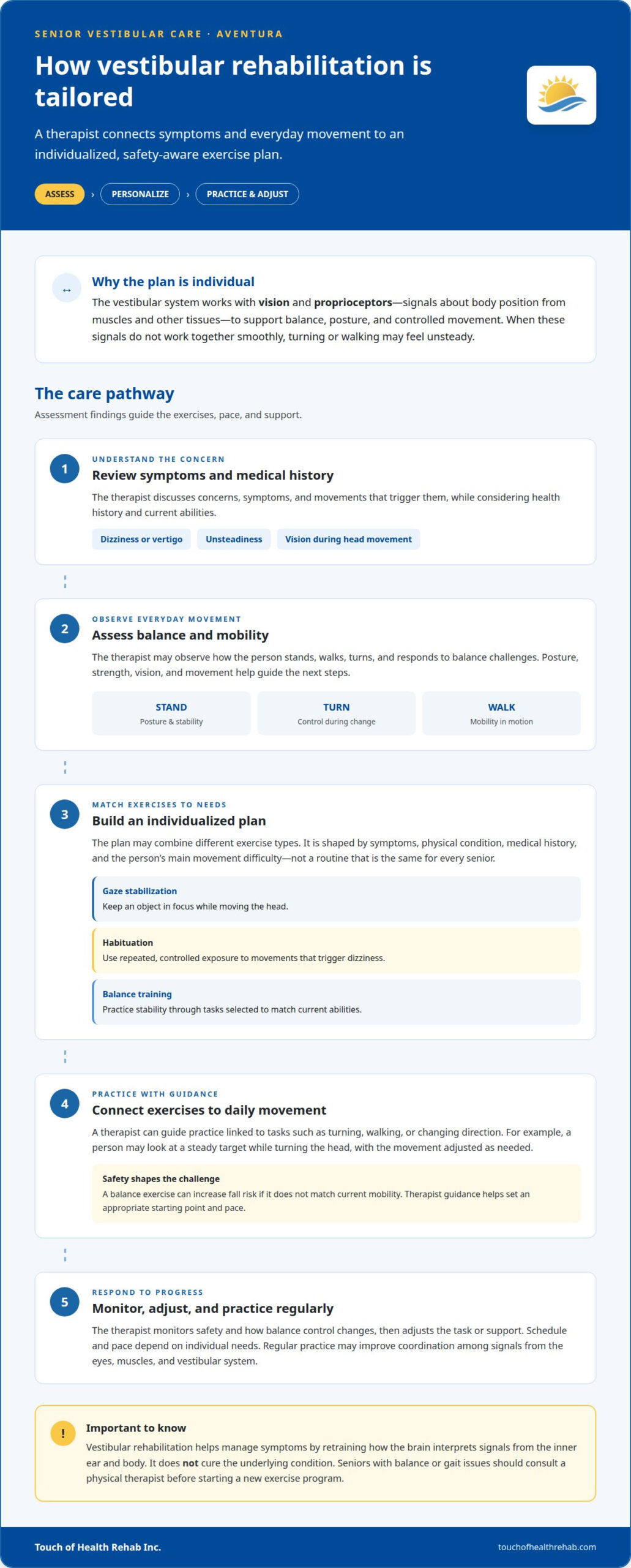
A vestibular rehabilitation evaluation connects symptoms with everyday movements such as standing, turning, and walking. The therapist reviews your concerns and medical history, observes balance and mobility, then uses those findings to guide treatment.
The vestibular system includes parts of the inner ear and brain. It helps you sense your position and maintain balance as your head or body moves. It also works with vision and proprioceptors, which provide information about body position through muscles and other tissues. Together, these systems help keep posture steady and movement controlled.
Imagine walking across a room while turning toward a sound. Your vestibular system senses head movement, your eyes track the surroundings, and proprioceptors inform your body about each step. If these signals don’t work together smoothly, you may feel unsteady or have difficulty judging your position. Symptoms can become more noticeable when turning, changing direction, or walking on uneven ground.
Balance therapy builds on this interaction through tasks that challenge stability in a controlled way. Depending on the assessment, practice might involve standing with a narrower base, shifting weight, or walking while changing direction. A therapist observes how posture, strength, vision, and movement affect balance, then adjusts the task to match your abilities. This connects therapy with actions you want to manage more confidently.
During a session, the therapist may assess how you stand, walk, turn, and respond to balance challenges, then select exercises based on those observations. Treatment can progress as your control changes, with adjustments to the task or support to keep practice appropriate. Your symptoms, mobility, and medical history shape the plan rather than a standard routine.
Balance problems matter because losing stability can lead to falls. Falls are a leading cause of injury and hospitalization for older adults. Fall-prevention work can address difficult movements such as rising, turning, or walking around an obstacle. Improving strength and practicing controlled movement can support safer mobility, while a therapist monitors how each task affects your balance.
The goal reaches beyond a steadier stance. Being able to move through familiar activities with greater control can support independence and quality of life. For an overview of care that addresses movement and function, explore physical therapy options.
The vestibular system works with vision and proprioceptors to support physical balance, upright posture, and head and body stability during movement.
Conditions treated with vestibular rehabilitation
Vestibular rehabilitation can address dizziness, vertigo, imbalance, and gaze instability linked to vestibular problems. These symptoms may occur alone or together. A senior might feel spinning after changing position, feel unsteady while walking, or struggle to keep a clear view during head movement. Treatment focuses on the symptoms that disrupt daily activities.
One relevant diagnosis is benign paroxysmal positional vertigo, often shortened to BPPV. It can cause brief spinning sensations associated with changes in head position, such as rolling in bed or looking upward. Other vestibular concerns can bring persistent unsteadiness or difficulty coordinating head and body movement. A clinician assesses the symptom pattern before deciding whether rehabilitation exercises are appropriate.
Symptoms can also include nausea, blurry vision, difficulty focusing, headaches, and trouble walking. These experiences can affect coordination and make familiar tasks feel less predictable. For example, a patient who becomes dizzy during turns may need balance practice that reflects turning, while someone who struggles to focus during head movement may need a different exercise emphasis. Addressing the relevant difficulty keeps treatment connected to the patient’s goals.
An individualized evaluation considers symptoms, mobility, medical history, and movements that bring on discomfort. The therapist uses these details to shape a plan, then adjusts exercise selection and pace as the patient responds. One senior may need balance training, while another may benefit from gaze-stabilization or habituation exercises. This approach accounts for differences in physical condition instead of assuming one routine suits everyone.
Treatment duration varies with a person’s symptoms, needs, and response to practice. Many people receiving vestibular rehabilitation have six to eight weekly sessions. Some may need only one or two sessions, while others need several months of ongoing rehabilitation, including home exercises. These different durations reflect different treatment needs, not one timetable for every diagnosis.
Progress depends on the balance or dizziness challenge being addressed, the patient’s health history, and how consistently exercises fit into the care plan. A therapist monitors the response and can modify activities when symptoms or abilities change. Treatment can be linked to practical goals, such as walking with better control or managing position changes with less disruption.
Dizziness, imbalance, and everyday challenges
Dizziness can make ordinary movements feel difficult, from getting out of bed to crossing a room. Vertigo describes a spinning sensation, while imbalance can feel like swaying or unsteadiness. These experiences can disrupt walking, turning, and focusing on nearby objects, especially when movement triggers symptoms.
Symptoms that may warrant assessment include dizziness, spinning sensations, nausea, balance problems, difficulty focusing, blurry vision, headaches, and trouble walking. For example, a senior might feel unsteady when turning toward a countertop or struggle to keep a clear view while moving the head. Noting which movements trigger symptoms helps guide an evaluation.
Benign paroxysmal positional vertigo is one condition associated with position-related spinning. Rolling in bed or looking upward can bring on a brief episode. Other vestibular problems can cause ongoing dizziness or imbalance while walking. The pattern matters: a therapist considers what the person feels, when it occurs, and which daily activities it interrupts.
A rehabilitation program uses tailored exercises to help manage dizziness and balance symptoms. Depending on the difficulty, therapy can include balance training for steadier movement, gaze stabilization for focusing during head turns, or habituation exercises that use controlled exposure to symptom-triggering movements. The therapist adjusts activities to the person’s needs. Rehabilitation can help manage symptoms, but it doesn’t cure the underlying condition.
Anti-nausea drugs and sedatives can provide short-term relief from dizziness, but they don’t address the underlying cause of vestibular problems. Rehabilitation focuses on movement practice and how the brain interprets signals from the inner ear and body. The appropriate approach depends on the condition and the symptoms affecting activities such as walking or turning.
At home, contact your provider about new or increased ringing in the ear, or a sudden change or fluctuation in hearing. Report these changes during exercise practice because they add important information about your symptoms. Follow the therapist’s guidance on exercise selection and progression instead of increasing a movement simply because it feels manageable one day.
Sudden or severe dizziness with weakness, trouble speaking, vision loss, or fainting requires urgent attention. Call 911 or go to an emergency room for these symptoms. For less urgent but recurring dizziness, spinning, or imbalance, recording the activity and movement associated with each episode can give the care team useful details for assessing the problem and shaping treatment.
Coordination with physicians and care providers
Vestibular symptoms can involve movement, vision, hearing, and other health concerns, so coordinated care helps keep each professional informed. A physical therapist focuses on balance and movement during rehabilitation, while physicians and other care providers contribute relevant medical context. Clear communication connects these perspectives to the senior’s daily needs.
At the start of care, the therapist can use the senior’s symptoms, medical history, and mobility goals to shape an exercise plan. Information from a physician about a diagnosis or recent health changes can add context. For example, dizziness during head movement may guide gaze-stabilization practice, while a change in hearing is important to share with the care team.
Coordination continues as exercises begin. The therapist observes how a senior responds to movement and notes changes that may affect the program. The senior can describe when symptoms occur, such as during a turn, while standing, or after an exercise. These details help the therapist understand which activities are manageable and what may need adjustment.
Hearing changes deserve particular attention during home exercise. Report a sudden change or fluctuation in hearing, or new or increased ringing in the ear, to your provider. Sharing this information allows the care team to consider it alongside dizziness, balance, and other symptoms. If a senior sees more than one provider, keeping each informed can help prevent important changes from being missed.
Care coordination also supports practical decisions about recovery. A senior’s medical history, physical condition, and response to controlled movement all inform exercise selection and pace. If walking remains difficult or symptoms change, the therapist can communicate relevant observations to the physician or other care providers. This shared picture connects rehabilitation goals with the wider care plan without treating every balance concern as identical.
Do seniors need a referral to start vestibular physical therapy in Florida? Referral needs can depend on the treatment pathway and insurance plan. A physician may be part of the care process, and coordination between the physician and therapist can help align rehabilitation with the senior’s health needs.
For seniors managing vestibular disorders, the key is to share meaningful changes promptly and keep communication open across providers. Report hearing changes, new symptoms, and movements that affect daily activities. These observations give the care team useful context as therapy progresses and help keep the plan responsive to the person’s needs.
Discuss your balance and vestibular therapy needs as a next step toward coordinated care.
Touch of Health Rehab: Vestibular Rehabilitation
Touch of Health Rehab Inc. provides vestibular rehabilitation for seniors managing dizziness, vertigo, or balance difficulties. Therapy can focus on exercises that support steadier movement and help you work toward greater confidence in everyday activities.
If unsteadiness affects walking or turning, vestibular rehabilitation may be a relevant next step. Physical therapy and postural education can also support movement and posture as part of your care. The right approach depends on your symptoms, health history, and mobility goals.
Contact Touch of Health Rehab Inc. to discuss how vestibular rehabilitation can support your needs.
Take the Next Step Toward Steadier Movement
Choosing vestibular rehabilitation for seniors in Aventura can be a thoughtful step toward addressing balance concerns and moving with greater confidence. Start by describing activities that feel challenging, such as walking through a busy space or turning your head while moving. These details can shape a conversation about your mobility goals and the support that may fit your needs.
Touch of Health Rehab offers vestibular rehabilitation, physical therapy, and postural education to support movement and function. Care can begin with a discussion of your concerns and what you hope to manage more comfortably in daily life. Progress is personal, and a plan should reflect your needs.
If you’re ready to discuss a next step, contact Touch of Health Rehab. A conversation can help you explore care options and move forward at a pace that feels right for you.
Frequently Asked Questions
Are there any risks?
Vestibular rehabilitation isn’t considered physically risky, though exercises may not fully resolve dizziness or balance problems. Controlled movements can temporarily bring on symptoms, especially during habituation practice, so the therapist adjusts the activity and pace to your abilities. Stop and report new or increased ear ringing or a sudden hearing change during home exercises. Sudden severe dizziness with weakness, trouble speaking, vision loss, or fainting needs emergency attention.
How Can Rehabilitation Help?
Rehabilitation can help you manage dizziness and balance symptoms through exercises matched to the movement causing difficulty. For example, a program may practice gaze control during head movement or stability while walking. The therapist can adjust exercises as your response changes, connecting treatment to practical goals such as turning more comfortably or moving through familiar spaces. Rehabilitation supports function, but doesn’t cure the underlying condition.
How long will I need this treatment?
The time needed depends on the condition, symptoms, health history, and response to the exercise plan. Some people need one or two sessions, while others may have six to eight weekly sessions or continue rehabilitation for several months with home exercises. These are different patterns, not a fixed schedule for everyone. A therapist considers your progress and the activities you’re working toward when shaping ongoing care.
What Causes Vestibular Disorders?
Vestibular difficulties can involve impaired inner-ear function, but other factors may also affect the system. These include neurological disease, poor cardiovascular health, diminished vision, arthritis, poor nutrition, and mental state. More than one factor can influence how steady you feel or how well you coordinate movement. A careful review of symptoms and health history helps identify what may contribute to balance concerns.
What Is the Vestibular System?
The vestibular system consists of parts of the inner ear and brain that help you sense spatial orientation and maintain balance. It works alongside vision and proprioception, the body’s sense of position, to support posture and stability. For example, these systems help coordinate your body when you turn your head toward a sound while standing or walking.
What is vestibular rehabilitation and how can it help seniors?
Vestibular rehabilitation is individualized physical therapy that uses exercises to help manage dizziness, vertigo, imbalance, and gaze instability. A plan may include balance training, gaze stabilization, or controlled exposure to movements that trigger symptoms. For a senior, exercise choice and pace reflect physical condition and medical history. The aim is to improve how the brain interprets signals from the inner ear and body during movement.
What symptoms and conditions are treated with vestibular rehabilitation?
Rehabilitation may address dizziness, spinning sensations, nausea, imbalance, blurry vision, difficulty focusing, headaches, and trouble walking. It can also support people with benign paroxysmal positional vertigo, which can cause spinning with certain changes in head position. Treatment depends on the symptom pattern and individual assessment. A therapist selects exercises based on the movements or daily tasks most affected, rather than using the same plan for every condition.
Which clinics near Aventura, Florida offer vestibular rehabilitation for seniors?
Touch of Health Rehab provides vestibular rehabilitation for seniors in the Aventura area, with its physical therapy center based in Sunny Isles Beach. Its care also serves nearby communities, including Bal Harbour, North Miami Beach, and Miami Beach. Seniors experiencing vertigo, dizziness, or balance difficulties can explore whether a tailored therapy plan fits their needs and mobility goals.