
A stalled recovery is a reason to reassess the plan, not simply push through. If you’re wondering what to do if physical therapy isn’t working, tell your therapist what has improved, what remains difficult, and whether exercises cause pain. Physical therapy can take weeks or months, and progress isn’t always linear. But a lack of improvement may call for changes to your plan or a closer look at what is causing your symptoms.
It’s understandable to feel frustrated when you’re putting in effort without seeing the results you hoped for. That doesn’t mean you’ve failed or that recovery is out of reach. It means your response deserves a thoughtful review.
This article explains how to recognize progress, adjust exercise demands without repeatedly provoking pain, and discuss whether your diagnosis or treatment approach needs reconsideration. You’ll also learn when working with a physician or another healthcare provider may help clarify the next step.
Key Takeaways
- Track changes in pain, movement, strength, and everyday activities to see whether your recovery is moving forward.
- If an exercise repeatedly aggravates symptoms, discuss a more manageable version with your physical therapist rather than pushing through it.
- When progress stalls, revisit the diagnosis and consider whether other factors could be affecting your recovery.
- Clear updates about your symptoms, challenges, and goals can help your therapist decide whether to adjust your plan or involve another healthcare provider.
- Touch of Health Rehab’s Work Accident Rehabilitation and Physical Therapy can support people whose recovery needs a reassessment after a work-related injury.
Adjusting exercises to stay within pain limits
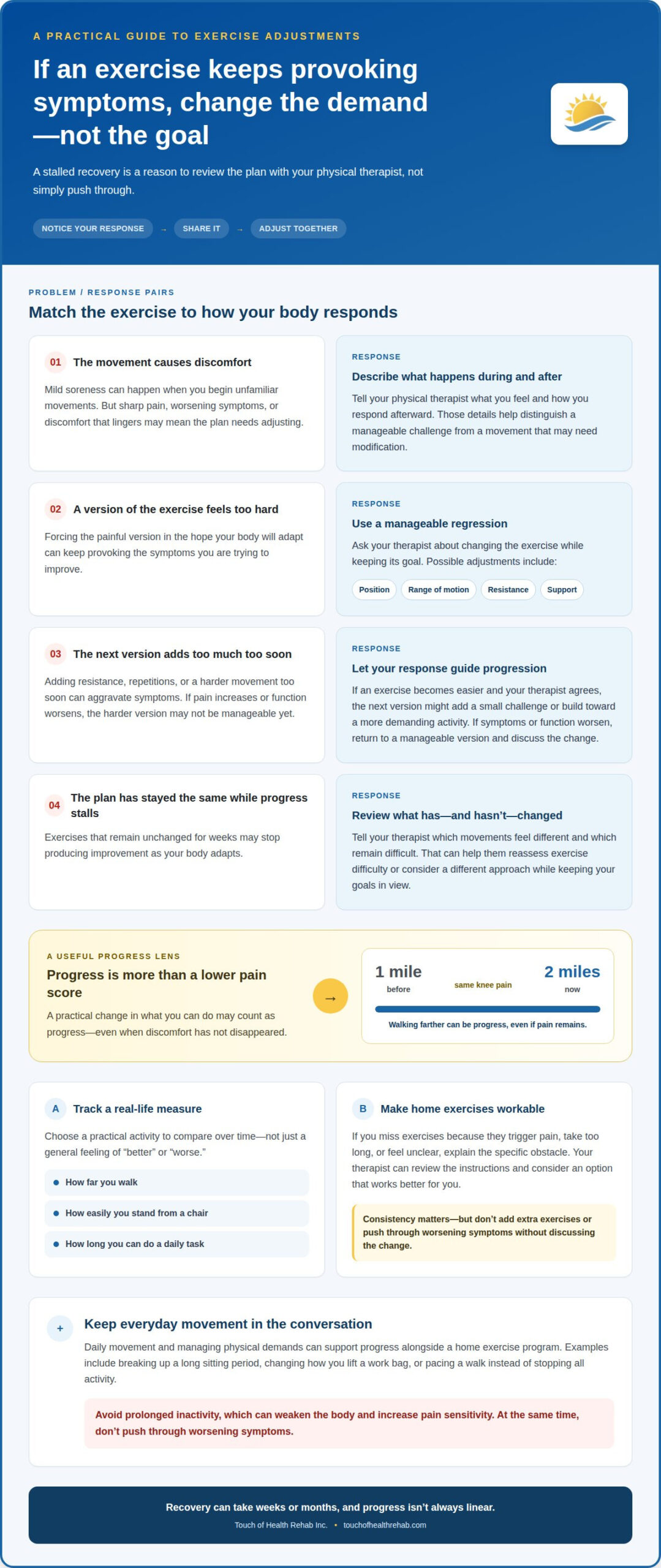
Exercise should challenge your body without repeatedly provoking the symptoms you’re trying to improve. Mild soreness can happen when you begin unfamiliar movements, but sharp pain, worsening symptoms, or discomfort that lingers may mean your plan needs adjusting. Tell your physical therapist what you feel during an exercise and how you respond afterward. Those details help distinguish a manageable challenge from a movement that needs modifying.
Progress means more than a lower pain score. Imagine walking two miles with the same knee pain you previously felt after one mile. Walking farther is progress, even if the discomfort hasn’t disappeared. Track a practical measure, such as how far you walk, how easily you stand from a chair, or how long you can perform a daily task. These examples give you and your therapist something specific to compare over time.
Exercise progression should match your response, not a push to advance quickly. Adding resistance, repetitions, or a more difficult movement too soon can aggravate symptoms. If an exercise becomes easier and your therapist agrees, the next version might add a small challenge or build toward a more demanding activity. If pain increases or function worsens, return to a manageable version and discuss the change instead of forcing the harder one.
A simpler version, called a regression, can keep you moving while reducing the exercise’s demands. For example, if a standing movement hurts, your therapist might adjust your position, range of motion, resistance, or support. Don’t keep performing the painful version in the hope your body will adapt. Ask why the exercise is included and what alternative movement targets the same goal.
Consistency between appointments matters, too. ProHealth says physical therapy may be ineffective when patients don’t complete prescribed home exercises or follow their physical therapist’s movement and positioning guidance. If you miss exercises because they trigger pain, take too long, or feel unclear, explain the specific obstacle. Your therapist can review the instructions and consider a more workable option.
Daily movement and managing physical demands can support progress alongside a home exercise program. You might break up a long sitting period, change how you lift a work bag, or pace a walk instead of stopping all activity. Avoid prolonged inactivity, which can weaken the body and increase pain sensitivity. At the same time, don’t add extra exercises or push through worsening symptoms without discussing the change.
Exercise plans that remain unchanged for weeks may stop producing improvement as your body adapts. If your progress has stalled, describe which movements feel different and which remain difficult. That conversation can help your therapist reassess the exercises, adjust their difficulty, or choose a different approach while keeping your goals in view.
How can you tell if physical therapy is working?
Progress can show up in daily activities before pain disappears. Many people notice some improvement within 2 to 6 weeks, depending on their condition, consistency, and treatment plan. Others see changes after a few visits or improve more gradually. These timelines are guides, not a substitute for tracking how your own symptoms and abilities change.
Your therapist can measure progress in several ways, including pain levels, range of motion, strength, balance, stability, and everyday function. You might report that reaching overhead feels easier, standing takes less effort, or you can complete a familiar task with fewer breaks. Comparing these specific activities over time can reveal changes that a general “better” or “worse” might miss.
Before an appointment, note what feels different and what remains difficult. Include when symptoms occur, which activities bring them on, and whether they settle afterward. If stairs still hurt but walking feels easier, say so. Describe how home exercises affect your symptoms and whether daily activities have changed. These details help your physical therapist understand your response and decide what needs attention.
Share your goals, too. Returning to a work task, gardening, or playing golf gives treatment a practical target. Ask why an exercise supports that goal, what progress should look like, and how recovery is expected to unfold. If the explanation doesn’t make sense, say so. Clear answers help you understand the plan and take part in decisions about it.
A strong patient-therapist relationship makes honest communication easier. Tell your therapist if instructions feel unclear, a movement seems too difficult, or your priorities have changed. A useful conversation includes your observations and the therapist’s explanation of how they relate to treatment. If you leave appointments uncertain about the plan, raise that concern directly so the next steps are clear.
Insurance coverage for a second opinion or additional physical therapy sessions depends on your plan’s benefits, network rules, and authorization requirements. Ask your insurer whether the proposed provider and visits are covered and whether approval is required.
Seek medical care rather than relying on physical therapy alone for intense, sharp, electrical, or burning pain that remains intense regardless of movement. ProHealth also recommends medical evaluation when pain stays intense at night.
To find a qualified physical therapist near you, look for care that matches your condition and goals, such as orthopedic treatment for a joint problem. Discuss your symptoms, daily challenges, and desired activities during your first conversation. A clear explanation of the treatment plan and room for your questions can help you judge whether communication feels productive.
Identifying the actual cause before treatment
If symptoms aren’t improving, reassess whether the diagnosis and treatment plan fit what you’re experiencing. The next step is to review your response, exercises, and other factors that may affect recovery.
Reassessing the Diagnosis
Reassessing a diagnosis means reviewing whether it explains your symptoms and response to treatment. This matters because a plan based on an incorrect diagnosis cannot address the right problem. Your physical therapist can revisit which activities trigger symptoms, how your function has changed, and whether the exercises match your needs. If there’s no improvement after several weeks, discuss whether the diagnosis or treatment plan needs another look.
Risks of Symptom-Based Treatment
Symptom-based treatment focuses on easing discomfort without necessarily addressing why it began. A treatment may reduce pain temporarily, for example, yet the pain can return if its underlying source remains. A generic plan can also miss differences in your symptoms, daily demands, or response to exercise. Tell your therapist which activities bring symptoms on and what changes after treatment. Those details help connect symptom relief with a plan that addresses function and the cause.
Considering Further Tests
Further tests are evaluations that help clarify a suspected cause when symptoms or treatment response raise questions. The specific test depends on your history and clinical findings. A physical therapist may recommend working with a physician on imaging or additional testing when progress is lacking. According to ProHealth, diagnostic testing should rule out a fracture before physical therapy begins after trauma such as a major fall, motor vehicle accident, or strenuous lift.
Testing isn’t automatically the next step for every stalled recovery. Your clinician considers how symptoms began, where they occur, what movements affect them, and whether the current plan has changed your function. Persistent symptoms after a fall, for example, call for a different review than discomfort that developed gradually during repeated activity. Share the timeline and any changes clearly so the assessment reflects the full picture.
Reassessment also considers factors beyond the original diagnosis. Injury type, how long symptoms have lasted, overall health, and daily activities can influence recovery. Work demands, sleep, or stress may affect how consistently you can follow a plan. If a movement remains difficult or symptoms keep returning, describe the pattern and ask how it informs the next treatment decision. The aim is to match the approach to the problem, rather than repeat what hasn’t helped.
What if Physical Therapy Doesn’t Work?
Physical therapy is a healing process that can take weeks or months, and progress may include setbacks. Expecting a condition to improve within one or two appointments can lead to disappointment. A difficult week doesn’t erase earlier gains, so compare your current abilities with your starting point and discuss any changes with your therapist.
Consistency gives your therapist a clearer picture of how your body responds. Attend scheduled appointments, follow your home program, and share any missed exercises or barriers. If work demands make a prescribed movement difficult, for example, explain when you can realistically do it. Your therapist can then understand what’s affecting your participation and whether the plan needs adjustment.
Keep track of patterns between visits. Note which activities feel easier, which symptoms return, and whether a setback follows a particular task. A change after carrying groceries, sitting through a work shift, or returning to a sport offers more useful context than simply reporting a bad day. If an activity becomes harder, tell your therapist before increasing your effort.
Setbacks can happen during rehabilitation because recovery isn’t always linear. A flare after a demanding day doesn’t automatically mean therapy has failed, but a repeated decline deserves discussion. Distinguish a temporary change from a continuing pattern by describing when it started, what you were doing, and how it affected your usual activities. That information helps your therapist decide whether to modify the plan.
If you’re considering what to do if physical therapy isn’t working, start by explaining to your physical therapist what hasn’t changed. If consistent participation over several weeks brings no improvement, ask whether the treatment plan should be reassessed. If you remain dissatisfied after that discussion, consider a second opinion. The aim is to understand why progress has stalled and identify a suitable next approach, not to continue unchanged without addressing your concern.
Options for persistent pain or injury include a medical evaluation, further testing, or a different treatment approach developed with a physician or another healthcare provider. Depending on the findings, medical care may also consider options such as medication, injections, or surgery.
Knowing what to do if physical therapy isn’t working also means preparing for a focused conversation. Bring information about your symptoms, home exercise experience, and a daily activity that remains difficult. Explain whether a setback affects walking, lifting, or sleep, for example. Those details help your therapist and healthcare team decide whether to adjust rehabilitation, revisit the cause, or coordinate another form of care.
Working with a physician or another healthcare provider
A physical therapist and physician can contribute different information when recovery stalls. Your therapist observes how you move, respond to exercises, and manage daily activities. A physician can review your health history and consider whether further medical evaluation is needed. Sharing clear updates between them helps connect your treatment response with the broader picture of your health.
Discuss a referral back to a physician if pain or discomfort hasn’t changed within two weeks of physical therapy, assuming you and your therapist have both fully participated in treatment. ProHealth identifies this as a reason you may need a medical review. Bring a concise account of your symptoms, exercises completed, and changes in function. For example, explain whether discomfort occurs only during lifting or also while resting.
Some symptoms call for medical care rather than relying on physical therapy alone. ProHealth advises seeking medical care for sharp, electrical, or burning pain that remains intense regardless of movement. ProHealth also recommends medical evaluation when pain remains intense at night. Describe the pain’s quality, location, and timing clearly so the clinician understands how it differs from your usual symptoms.
When progress is lacking, your physical therapist may recommend working with a physician or another healthcare provider on imaging, further testing, or a different treatment approach. The next step depends on your symptoms, injury history, and response to care. A new symptom or persistent limitation, for example, may prompt a review of whether imaging or another assessment could clarify what is happening.
Make the conversation specific and organized. Before an appointment, write down when symptoms began, what activities affect them, and what has changed since treatment started. Include relevant injuries, previous evaluations, and daily tasks you still find difficult. A clear example, such as being unable to complete a work task that was manageable before, gives the care team useful context.
Ask what the proposed next step is intended to clarify and how its result could affect your treatment plan. If a physician recommends testing, discuss how the findings relate to your symptoms and rehabilitation. If treatment changes, make sure you understand how to coordinate it with your current exercises. These questions help keep the focus on function, safety, and a plan that reflects your response.
If a coordinated reassessment would help clarify your next steps, connect with a physical therapy team to discuss your symptoms and progress.
Touch of Health Rehab: Work Accident Rehabilitation
Touch of Health Rehab Inc. provides Work Accident Rehabilitation for people whose recovery after a workplace injury needs support. If progress has stalled, physical therapy can address movement challenges and support your return to daily activities. Sharing which work tasks remain difficult gives your care team practical context for your rehabilitation.
Depending on your needs, Postural Education can help you understand how positioning relates to movement, while Vestibular Rehabilitation addresses balance-related concerns. The right focus depends on the symptoms and goals you bring to care. Contact Touch of Health Rehab Inc. to discuss rehabilitation support after a work accident.
Choose a Next Step That Fits Your Recovery
Knowing what to do if physical therapy isn’t working begins with treating your concerns as useful information, not a reason to blame yourself. Your symptoms, daily challenges, and personal goals can help shape a more relevant conversation about what comes next. Taking time to reassess can make room for a clearer plan and renewed focus on the activities that matter to you.
Bring your questions and explain what you hope to regain, whether that’s confidence at work, ease with everyday movement, or the ability to return to a valued activity. Touch of Health Rehab Inc. can discuss your rehabilitation needs and help you explore an appropriate next step. Every recovery path is individual, but a thoughtful plan can help you move forward with greater clarity.
Contact Touch of Health Rehab Inc. to discuss your next step, and take the next part of your recovery one informed decision at a time.
Frequently Asked Questions
Is it normal to not see progress in physical therapy?
It can take time to notice changes, and improvement may be gradual rather than obvious after each visit. Some people notice a difference within a few visits, while others take longer. Many people see some improvement within 2 to 6 weeks, depending on their condition, consistency, and treatment plan. Compare how an activity feels now with how it felt before, rather than judging recovery from one session.
What Happens If Physical Therapy Isn’t Helping?
If therapy isn’t helping, discuss your response with your physical therapist and review whether the diagnosis and plan still fit. They may adjust exercises or recommend working with a physician or another healthcare provider. Further evaluation, imaging, or testing may help clarify the next approach. If you’ve participated consistently for several weeks without improvement, ask whether reassessment or a second opinion makes sense for your situation.
When should I get a second opinion?
Consider a second opinion if you’ve participated consistently for several weeks and still aren’t improving, or if you remain dissatisfied after discussing your concerns with your therapist. Bring a concise summary of your diagnosis, treatment so far, symptoms, and activities that remain difficult. Describe what still limits your workday or daily routine, for example. That context can help another clinician understand your concerns and consider next steps.
Why do I feel worse after physical therapy?
New exercises can cause soreness, but sharp pain, worsening symptoms, or pain that lingers may mean your plan needs adjustment. Note which movement brought symptoms on, when they began, and how long they lasted. Tell your therapist whether discomfort appeared during a particular exercise or later that day, for example. Don’t keep repeating an exercise that consistently worsens symptoms without discussing a manageable modification.
How long should physical therapy take to show improvement?
There isn’t one timeline for every condition. Some people notice improvement within a few visits, while many see some change within 2 to 6 weeks. Injury type, symptom duration, overall health, daily activities, and consistency all affect the pace. Recovery can take weeks or months, so use changes in function, movement, or activity tolerance alongside pain to understand how treatment is progressing.
What signs indicate physical therapy isn’t working?
Possible signs include no meaningful change in pain or daily function after several weeks, repeated difficulty with the same activities, or symptoms that worsen during treatment. A single setback doesn’t establish that therapy has failed. Look for a continuing pattern instead. If the same household task remains difficult and your overall abilities aren’t changing, explain that pattern to your therapist and ask for a review.
What should I do if physical therapy isn’t helping?
Tell your therapist what has changed, what hasn’t, and which everyday activities remain hard. Give a concrete example, such as a work task or household activity you still avoid. Ask how your response relates to the diagnosis and whether the plan should change. If progress remains stalled despite consistent participation, discuss reassessment and whether a physician or another healthcare provider should be involved.
When should I ask my physical therapist to change my treatment plan?
Raise the question when exercises repeatedly aggravate symptoms, your abilities have stalled for several weeks, or the plan no longer reflects your goals. Explain the specific movement or activity causing concern, rather than saying only that therapy feels ineffective. Your therapist can reassess your response and consider changing the exercise, its difficulty, or the broader approach. Ask what each proposed change is meant to address.