You are standing in a bright grocery aisle when the world suddenly tilts, leaving you clutching the handle of your cart for support. It’s a terrifying moment that many dismiss as simple exhaustion, yet for the 69 million Americans living with vestibular dysfunction, this instability is a daily reality. You might feel misunderstood by providers who suggest your symptoms are merely stress, but the nausea you feel while driving or the fear of falling in public is a physical signal that shouldn’t be ignored. Identifying the specific signs you need vestibular rehabilitation is the first step toward silencing the spin and reclaiming your independence.
We understand that your journey to wellness is deeply personal, and we’re here to act as your dedicated guides. This article will show you how specialized physical therapy can restore your balance and provide the tools to walk confidently on uneven surfaces once again. We’ll explore the five primary indicators of inner ear issues and explain how targeted recovery programs can help you return to the activities you love without hesitation. Your path to recovery isn’t just about managing symptoms; it’s about empowering you to live with vitality and grace.
Key Takeaways
- Distinguish between general lightheadedness and true vertigo by understanding how your inner ear acts as the body’s internal GPS.
- Recognize the red-flag signs you need vestibular rehabilitation, including persistent nausea when moving through visually busy environments or while driving.
- Uncover the hidden ways your body compensates for balance issues, such as chronic neck tension and the psychological “fear of the next attack.”
- Demystify the clinical process of vestibular therapy and learn how 1-on-1 care provides a steady, methodical path back to your daily routine.
- Learn how a compassionate, personalized recovery plan can help you walk confidently on uneven surfaces and restore your long-term vitality.
Understanding Dizziness: Is Your Balance System Out of Sync?
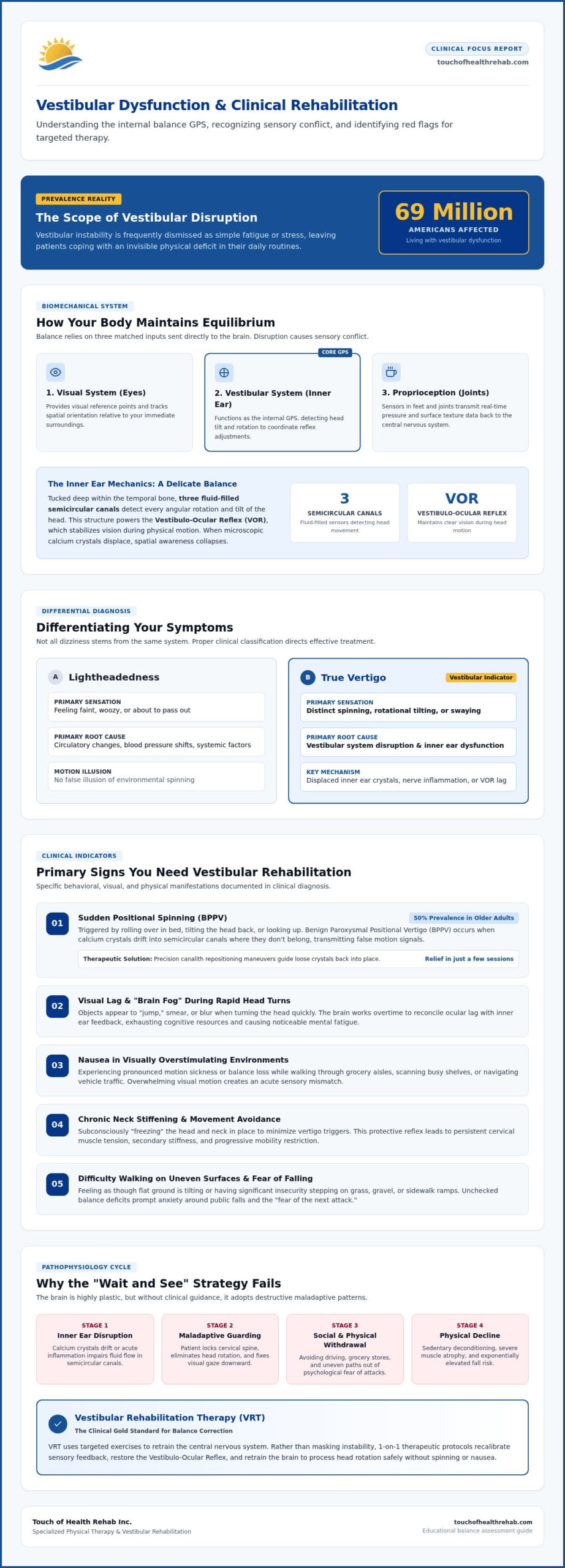
Dizziness isn’t just a minor inconvenience; it’s an invisible weight that changes how you move through the world. You might feel like your surroundings are tilting or that you’re losing your footing on perfectly flat ground. These experiences are potential signs you need vestibular rehabilitation, a specialized approach designed to recalibrate your body’s sensory inputs. We understand how isolating this can be, especially when others can’t see the struggle you’re facing. Your balance depends on your brain receiving clear, matching signals from your eyes, your inner ear, and your joints. When these signals clash, the result is a debilitating sensory conflict.
It helps to distinguish between different sensations to find the right path forward. While they’re often grouped together, “lightheadedness” and “true vertigo” are distinct clinical experiences:
- Lightheadedness: Often feels like you might faint; it’s frequently tied to circulatory issues or blood pressure changes.
- True Vertigo: A distinct sensation of spinning, swaying, or tilting; this is almost always a sign of a vestibular system disruption.
By identifying these differences, you can better communicate your needs to your care team and begin a collaborative journey toward restoration.
The Role of the Inner Ear in Daily Stability
Your inner ear acts as your body’s internal GPS. Tucked deep within the temporal bone, three semicircular canals filled with fluid detect every rotation and tilt of your head. This system works in tandem with your Vestibulo-Ocular Reflex (VOR), a vital mechanism that stabilizes your vision while your head is in motion. When a tiny calcium crystal shifts out of place or inflammation occurs, your spatial awareness shatters. Even a microscopic disruption in this delicate hardware can make a simple walk to the mailbox feel like a trek across a rolling ship deck. We focus on these mechanics to help you regain the precision your body once had.
Why ‘Wait and See’ Rarely Works for Vertigo
Many people hope their dizziness will simply fade away with time. However, your brain is highly adaptable, and without guidance, it often develops “maladaptive” strategies. You might find yourself stiffening your neck to avoid head movements or avoiding social outings entirely. Recognizing the signs you need vestibular rehabilitation early allows you to address the root cause before these habits lead to a sedentary lifestyle or muscle atrophy. Vestibular rehabilitation therapy (VRT) is the clinical gold standard for correcting these issues. By choosing vestibular rehabilitation, you’re partnering with experts who use targeted exercises to retrain your brain, ensuring you return to your daily activities with confidence and grace.
5 Clear Signs You Need Vestibular Rehabilitation Today
While everyone feels a bit off-balance occasionally, persistent symptoms are red flags that your internal orientation system needs professional attention. Identifying the signs you need vestibular rehabilitation isn’t just about acknowledging a feeling; it’s about tracking how often these sensations disrupt your life. Whether you’re navigating the busy sidewalks of Aventura or trying to enjoy a sunset walk in Sunny Isles Beach, these symptoms can turn simple moments into stressful ordeals. A clinical evaluation is vital to rule out other medical issues, ensuring your treatment targets the root cause of your instability.
1. The Sensation of Spinning (Vertigo)
Do you feel the room tilt when you roll over in bed or look up at a high shelf? This sudden, intense spinning is a hallmark sign of Benign Paroxysmal Positional Vertigo (BPPV). Research indicates that BPPV is the cause of about 50% of dizziness in older individuals. It happens when tiny calcium crystals in your inner ear drift into areas where they don’t belong, sending false motion signals to your brain. Seeking specialized vertigo treatment allows a therapist to perform precise maneuvers that guide these crystals back into place, often providing relief in just a few sessions.
2. Visual Instability and ‘Brain Fog’
If objects seem to “jump” or blur when you turn your head quickly, your brain is likely struggling to stabilize your vision. This visual lag forces your nervous system to work overtime, leading to profound mental exhaustion often described as “brain fog.” You might find it difficult to read or focus on a computer screen after a dizzy spell. This is a clear indicator that your Vestibulo-Ocular Reflex is out of sync. An exercise-based program can help retrain your eyes and brain to coordinate again, significantly reducing the cognitive load that leaves you drained by midday.
3. Frequent Stumbling or Near-Falls
Feeling like you’re “walking on a boat” while on solid ground is more than just clumsiness. If you find yourself veering to one side while walking down a hallway or reaching for walls to steady yourself, your gait is likely compromised. This instability increases your risk of injury, making balance and gait rehabilitation a critical priority for maintaining your independence. We focus on restoring your center of gravity so you can navigate uneven surfaces, like the sandy shores of Miami Beach, without fear. If these symptoms sound familiar, you can schedule a comprehensive assessment with our team to begin your collaborative recovery journey.
Dizziness often leaves a trail of subtle, secondary symptoms that you might not immediately link to your inner ear. Beyond the obvious spinning sensations, your body and mind begin to adapt in ways that can be just as debilitating. You might find yourself avoiding the bright, busy aisles of a local supermarket or feeling a rising sense of panic when you’re in a crowd. This “supermarket syndrome” occurs when your brain becomes overwhelmed by complex visual patterns and bright lights, a common experience for those living in sun-drenched South Florida. Recognizing these hidden signs you need vestibular rehabilitation is the first step toward reclaiming your peace of mind.
The psychological weight of chronic imbalance is significant. The “fear of the next attack” can lead to social withdrawal and constant anxiety, which only worsens the physical symptoms. We believe that healing requires a holistic approach. By developing a personalized physical therapy plan, we address both the sensory mismatch and the emotional stress it creates, helping you move forward with renewed confidence and grace.
The Postural Compensation Trap
When your balance system feels unreliable, your body instinctively tries to stabilize itself by stiffening your muscles. You might notice a chronic, “stiff neck” because you’re unconsciously trying to keep your head perfectly still. This protective mechanism often leads to poor posture and tension headaches. Over time, this rigidity makes you less mobile and more prone to injury. Correcting your alignment and releasing this guarded tension is a vital part of your collaborative recovery journey, ensuring your muscles support your balance rather than hindering it.
Sensitivity to Light and Motion
If the glare of the Florida sun or the flow of traffic in Miami feels overwhelming, you may be experiencing visual dependency. This happens when your brain stops trusting your inner ear and relies too heavily on what you see. Through habituation exercises, we can desensitize your system to these triggers. Identifying these visual stressors as signs you need vestibular rehabilitation allows us to retrain your brain to handle motion safely. We guide you through steady, methodical steps to reduce this sensitivity, so you can enjoy a drive along the coast without the fear of sensory overload.
Path to Stability: What to Expect in Vestibular Therapy
Entering a clinical setting when your world feels unstable can be a daunting experience. We prioritize your comfort by ensuring every session is a dedicated 1-on-1 encounter with our Sunny Isles Beach physical therapy team. Our approach focuses on functional restoration rather than just managing your symptoms. This means our ultimate goal is to return you to your daily activities with confidence and grace. Once you recognize the signs you need vestibular rehabilitation, our collaborative journey begins with a deep dive into the specific ways your balance system is struggling.
Step 1: The Comprehensive Vestibular Evaluation
Your first visit is a steady, methodical assessment designed to pinpoint the source of your disorientation. During this evaluation, we observe how your eyes react to specific movements and how your body maintains its center of gravity on different textures. This testing helps our experts identify whether your issue is peripheral, involving the inner ear, or central, related to how the brain processes data. By establishing this baseline, we create a recovery roadmap that respects your unique path to health. It’s during this phase that we confirm the signs you need vestibular rehabilitation and translate them into a concrete plan for action.
Step 2: Customized Habituation and Gaze Stabilization
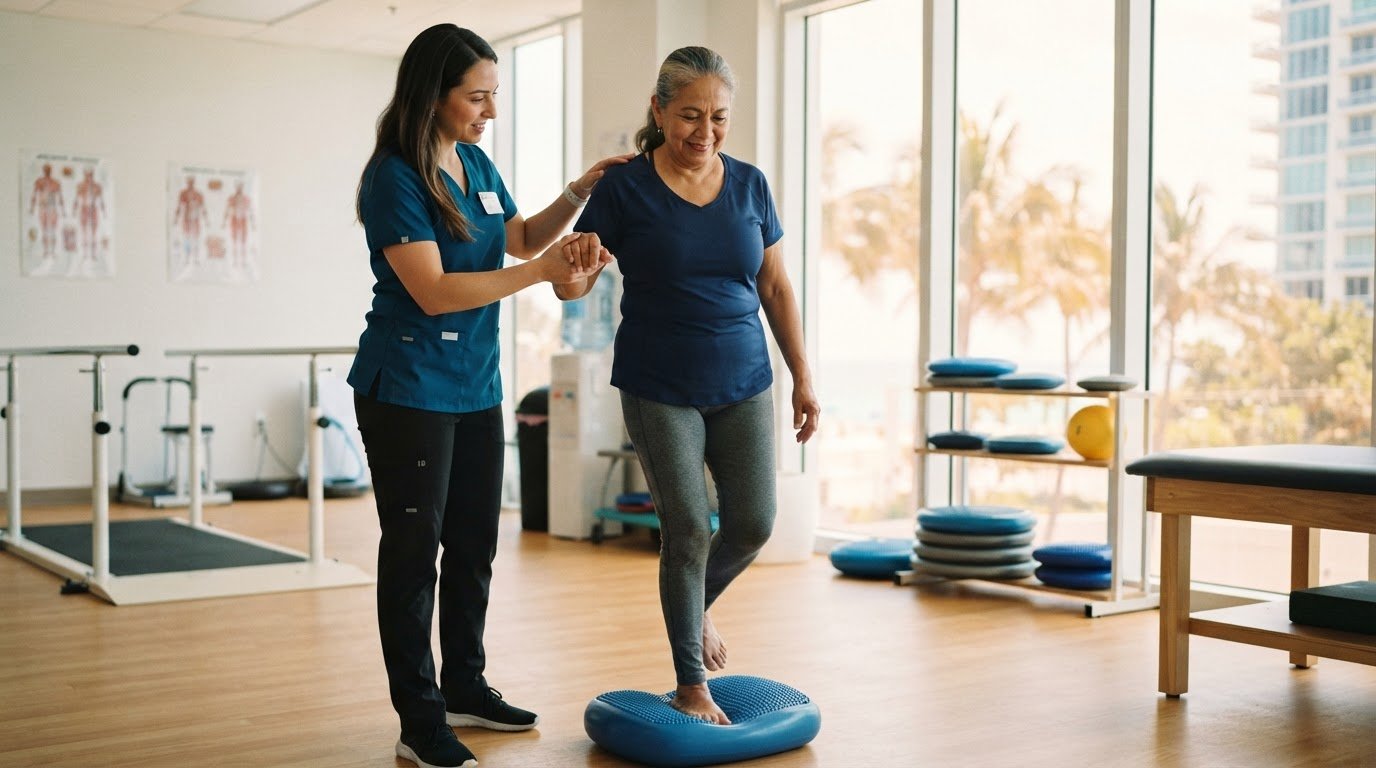
Recovery involves retraining your brain to ignore the false motion signals it receives from a damaged vestibular system. We use specific habituation exercises to desensitize your nervous system to the movements that trigger your dizziness. Gaze stabilization is another core component, helping you keep your vision clear while your head is moving, such as when you are checking for traffic while driving. We also incorporate balance training on foam or uneven surfaces to mimic the challenges of real-world environments. This purposeful practice helps your body recalibrate, turning once-scary tasks into manageable daily routines.
Step 3: Long-Term Fall Prevention and Wellness
Our commitment to your long-term vitality extends beyond your initial recovery phase. We integrate specialized fall prevention therapy to ensure you stay safe and independent in your own home. Education on home safety and maintaining your progress is a key part of our philosophy as your dedicated guides. As you regain your confidence, we transition your care toward wellness and preventative care to maintain your peak physical health. If you are ready to reclaim your stability and walk without fear, we invite you to contact us today to begin your personalized rehabilitation journey.
Personalized Recovery at Touch of Health Rehab in Sunny Isles Beach
Recognizing the signs you need vestibular rehabilitation is a pivotal moment in your health journey. At Touch of Health Rehab, we believe that identifying the problem is only half the battle; the other half is finding a sanctuary where you feel heard and supported. Located in the heart of Sunny Isles Beach, we serve our neighbors in Aventura and North Miami Beach with a sophisticated blend of clinical expertise and human-centered care. Our “Compassionate Expert” approach means we listen to your story before we ever begin treatment, ensuring your path to recovery is as unique as you are. We’re dedicated to helping you move from a state of fear to a state of peak physical health.
We don’t just treat the inner ear in isolation. True restoration requires integrated care that addresses the whole person. By combining specialized vestibular exercises with postural education and physical conditioning, we help you break the cycle of compensation and tension we discussed earlier. This holistic view ensures that as your balance improves, your overall strength and confidence grow alongside it. You shouldn’t have to settle for a life limited by sensory conflict. Don’t let dizziness dictate your life anymore; you deserve to move with freedom and vitality.
Why Local Expertise Matters for Your Recovery
Choosing a clinic near Collins Ave provides more than just convenient access for South Florida residents; it means working with a team that understands your local lifestyle. Whether you’re navigating the busy shopping centers in Aventura or looking forward to a stable walk along the sand in Sunny Isles, we tailor our sessions to your real-world needs. You can read our success stories to see how patients just like you have regained their balance and returned to their favorite activities. Local expertise ensures your rehabilitation isn’t just a clinical exercise, but a purposeful return to the life you love.
Your First Step Toward a Steady Future
Starting your recovery is a steady, methodical process. For your first appointment, please bring any recent reports from your ENT or primary care physician, as we prioritize seamless coordination with your existing medical team. Wear comfortable clothing that allows for movement, as we’ll perform a thorough evaluation of your balance and gait. We’re here to act as your dedicated guides, providing the calm and stability you need during this transition. If you’ve noticed the signs you need vestibular rehabilitation, it’s time to act. Schedule your vestibular evaluation at Touch of Health Rehab today and take the first step toward a steady, confident future.
Reclaiming Your Stability and Confidence
Dizziness doesn’t have to be your permanent reality. By recognizing the specific signs you need vestibular rehabilitation, you’ve already taken the most difficult step toward recovery. You now understand that the spinning sensations, postural stiffness, and visual fog are physical signals that your internal GPS needs recalibration. Specialized recovery is about more than just managing symptoms; it’s about restoring your ability to walk the beach or drive through Aventura with total peace of mind.
Our team at Touch of Health Rehab offers expert 1-on-1 care in Sunny Isles Beach, providing specialized vertigo and vestibular recovery programs tailored to your unique needs. We combine a compassionate, clinical approach to complex balance disorders with a deep commitment to your long-term vitality. You don’t have to navigate this path alone. We’re ready to serve as your dedicated guides in this collaborative journey toward peak physical health and functional independence.
Regain Your Balance, Schedule Your Consultation at Touch of Health Rehab
Your steady future is within reach, and we’re here to help you step into it with confidence and grace.
Frequently Asked Questions
What is the most common sign that I need vestibular rehabilitation?
The most frequent indicator is a distinct sensation of spinning or swaying when you change positions, such as rolling over in bed. This sensation often points to a sensory mismatch in your inner ear. If you find yourself reaching for furniture to steady your gait or feeling nauseous in visually busy places, these are clear signs you need vestibular rehabilitation. We focus on these specific triggers to help you regain control over your daily movements.
Can vestibular therapy help with chronic vertigo that I’ve had for years?
Yes, vestibular rehabilitation therapy is highly effective for chronic conditions, even if you’ve struggled for years. Your brain possesses a remarkable ability to adapt, a process called neuroplasticity. We use steady, methodical exercises to help your nervous system compensate for long-standing inner ear imbalances. For residents in Aventura and Sunny Isles Beach, this specialized care provides a collaborative path to finally silencing the spin and returning to a more active lifestyle.
How long does it typically take to see results from vestibular rehabilitation?
The timeline for recovery varies based on your specific diagnosis and how long you’ve experienced symptoms. For straightforward cases like BPPV, you might see significant improvement in just 1 to 3 visits. More complex or chronic conditions typically require 1 to 2 sessions per week for a period of 4 to 12 weeks. We track your progress closely to ensure you’re meeting your goals for balance and confidence in real-world settings.
Is vestibular rehabilitation painful or will it make my dizziness worse?
While the therapy isn’t painful, it’s designed to gently provoke your symptoms to help your brain habituate to motion. You might feel a temporary increase in dizziness during certain exercises, but this is a necessary part of the retraining process. Our therapists at Touch of Health Rehab serve as your dedicated guides, ensuring the intensity is always manageable. We prioritize your comfort while pushing toward the ultimate goal of long-term stability and functional restoration.
Do I need a doctor’s referral for vestibular therapy in Florida?
Florida law allows for direct access to physical therapy, meaning you can often begin your evaluation without a physician’s referral. However, some insurance plans still require a script for reimbursement purposes. We recommend checking with your specific provider or contacting our Sunny Isles Beach office for guidance. We coordinate closely with local ENTs and primary care doctors in North Miami Beach to ensure your entire medical team is aligned on your recovery journey.
Can vestibular issues cause neck pain and headaches?
Vestibular disorders frequently lead to secondary issues like chronic neck tension and cervicogenic headaches. This happens because you might instinctively stiffen your neck muscles to keep your head perfectly still and avoid dizzy spells. This postural compensation creates a cycle of pain and restricted mobility. By addressing the root inner ear issue and incorporating postural education, we help release this tension and restore your natural, pain-free alignment during your collaborative recovery.
Is vestibular rehabilitation effective for seniors at risk of falling?
Vestibular rehabilitation is a critical tool for geriatric physical therapy and fall prevention in our local South Florida community. As we age, the vestibular system can become less sensitive, leading to a higher risk of injury. Our specialized programs focus on improving gait stability and center of gravity. This empowers seniors in Bal Harbor and Miami Beach to walk confidently on uneven surfaces, such as sand or grass, without the constant fear of falling.
What happens if I ignore the signs of vestibular dysfunction?
Ignoring the signs you need vestibular rehabilitation often leads to a sedentary lifestyle and increased social isolation. When you stop moving to avoid dizziness, your muscles can atrophy and your brain may develop maladaptive compensation strategies that are harder to correct later. Untreated balance issues significantly increase your risk of dangerous falls. Early intervention through a personalized rehabilitation plan is the best way to protect your long-term vitality and maintain your independence.