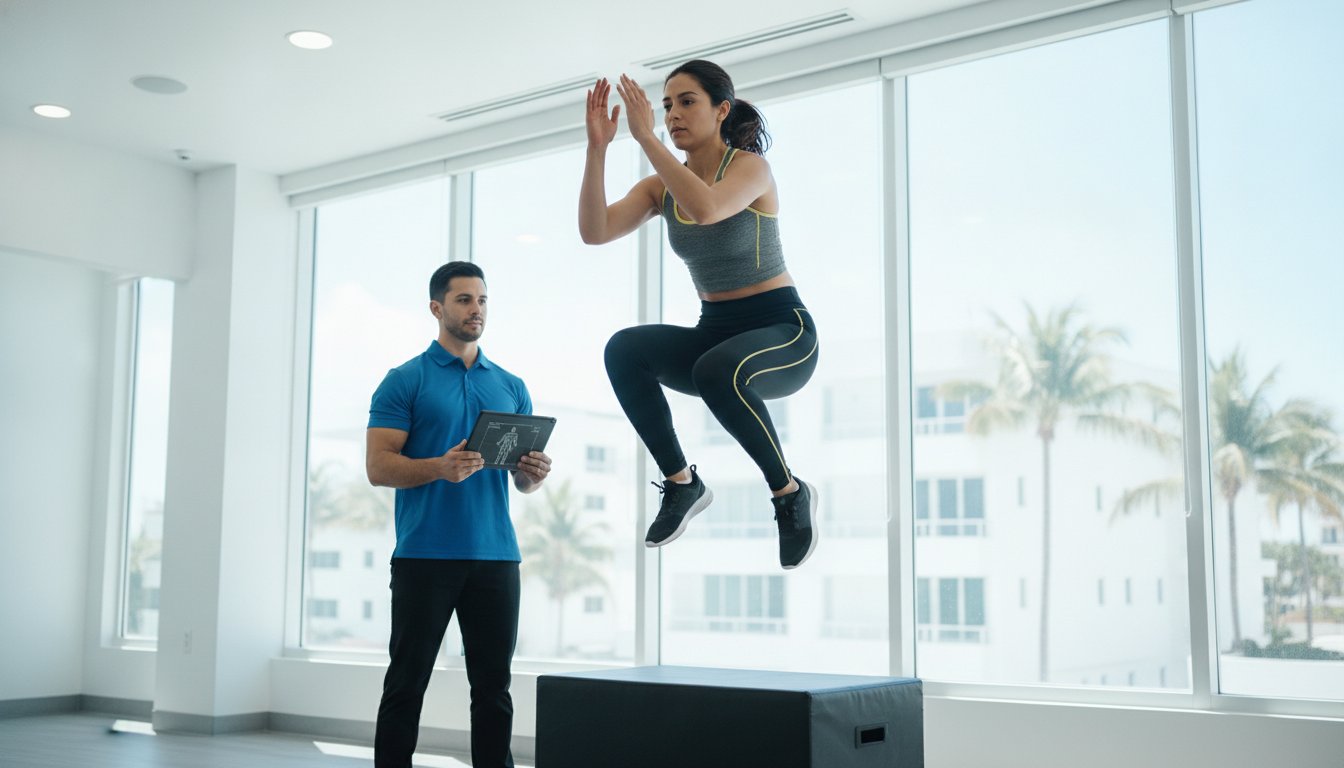
What if the reason you can’t break through that performance plateau isn’t a lack of effort, but a hidden biomechanical glitch your current gym routine simply can’t see? You’ve likely spent countless hours training hard, yet you still find yourself sidelined by recurring minor injuries that stall your progress. This is where specialized sports conditioning physical therapy transforms your approach to athletic health. It’s frustrating to feel stuck in a cycle where being “pain-free” doesn’t actually mean you’re ready to play at your highest level. You deserve a path that moves you beyond basic recovery and into true athletic mastery.
Our team focuses on bridging the gap between clinical rehabilitation and peak performance with a steady, methodical approach. You’ll discover how clinical conditioning goes beyond standard training to optimize your biomechanics, shield you from future injuries, and unlock your full athletic potential. This guide provides a clear roadmap to help you understand the root causes of your performance issues. We’ll show you how to return to your sport without fear; ensuring every movement is efficient, powerful, and built on a foundation of professional expertise and compassionate care.
Key Takeaways
- Understand why medically-supervised sports conditioning physical therapy is the essential bridge between simple injury recovery and peak athletic performance.
- Learn how postural education and proper alignment serve as your secret weapons to eliminate “energy leaks” and maximize movement efficiency.
- Discover how to safely navigate the transition from being pain-free to being truly “ready-to-play” by moving beyond basic rehabilitation.
- Identify the specific clinical assessments, such as gait analysis and strength testing, used to build a physical conditioning program tailored to your unique biomechanics.
- Gain a clear roadmap for returning to your sport with increased power and the confidence that comes from expert-led movement optimization.
What is Sports Conditioning Physical Therapy?
When you commit to an athletic pursuit, your training shouldn’t just be about working harder; it should be about working smarter. Many athletes assume that general fitness routines are enough to prepare them for the rigors of competition. However, sports conditioning physical therapy offers a medically-supervised approach that bridges the gap between basic health and high-level performance. While general fitness builds a broad foundation, sport-specific conditioning prepares your body for the unique biomechanical stresses of your chosen activity.
The “no pain, no gain” mentality is a dangerous myth that often leads athletes straight to a clinic. Pain is your body’s alarm system, not a badge of honor to be ignored. In a clinical setting, we prioritize movement quality over sheer quantity. To understand how this fits into your overall health, you can explore the broader scope of What is Physical Therapy? to see how specialized care supports the human body. Our role is to identify subtle compensations before they turn into chronic issues, ensuring your path to peak performance is steady and sustainable.
The Clinical Difference: Why a PT Matters
A physical therapist views the musculoskeletal system with a level of depth that goes beyond simple muscle growth. We don’t just look at the muscle being worked; we evaluate the entire kinetic chain. This expertise is vital during sports injury treatment, where the goal is to restore function while building resilience. Clinical oversight is the best way to prevent the “overuse” injuries that plague so many amateur athletes. By integrating post-surgery physical rehabilitation principles into conditioning, we help you rebuild with a focus on long-term vitality rather than just a quick fix for the next game.
Is it the Same as Strength and Conditioning?
You might wonder how this differs from traditional coaching. While a strength coach focuses on power and speed, a physical therapist-led program focuses on “pre-habilitation.” This means we fix underlying alignment and stability issues before they manifest as injuries. We act as your dedicated guide, ensuring your body can handle the intensity of your training. Sports conditioning is the scientific optimization of athletic movement. We don’t just want you to be stronger; we want you to move with a level of efficiency that makes your strength more effective. It’s a partnership where your goals are supported by clinical precision and a genuine investment in your success.
The Foundation of Performance: Postural Education and Alignment
Peak performance isn’t just about the size of your muscles or the intensity of your sprint. At its core, athletic excellence relies on postural education and alignment; the often overlooked secret weapon of elite competitors. When your body is out of alignment, you’re essentially fighting yourself. Every movement becomes more difficult, and every stride requires more effort than it should. For local Sunny Isles Beach athletes, alignment therapy serves as the bedrock of a successful sports conditioning physical therapy program. It ensures that your hard work in the gym actually translates to results on the field.
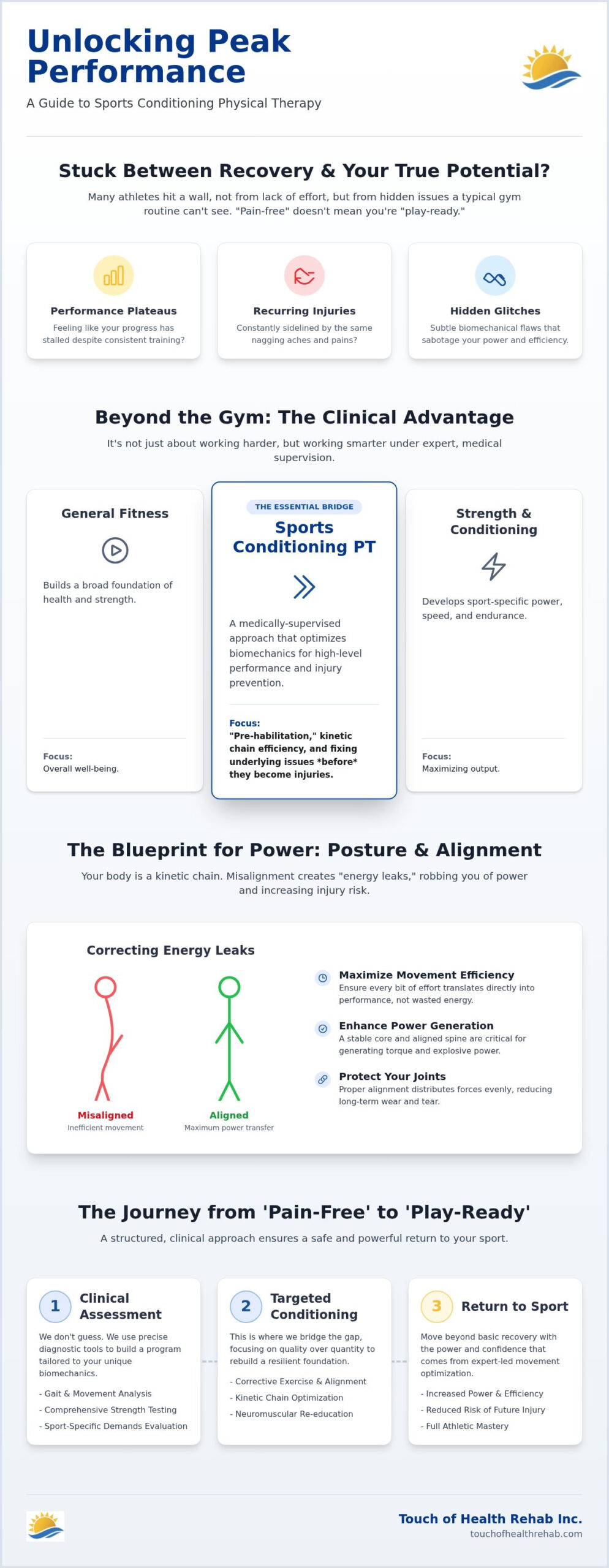
Poor posture creates “energy leaks.” Think of your body as a kinetic chain; if one link is weak or misaligned, the power generated at the start of the chain never reaches the end. This is why we prioritize postural health as a vital part of wellness and preventative care. By fixing these foundational issues, you aren’t just getting faster today; you’re protecting your joints for the years to come. It’s a collaborative process where we help you understand how your specific alignment affects your unique athletic goals.
Correcting Energy Leaks in Your Movement
A tilted pelvis or rounded shoulders might seem minor during a casual walk, but they’re devastating for a golf swing or a tennis serve. If your shoulders roll forward, you lose the range of motion needed for a powerful overhead strike. Similarly, a misaligned spine prevents your core from generating the torque required for explosive movements. For runners, postural correction prevents the “slump” that occurs during fatigue, which can lead to shin splints or hip pain. Swimmers benefit from a more streamlined profile in the water, reducing drag and increasing speed with every stroke. Athletes who spend significant time on screens between training sessions should also be aware that physical therapy for forward head posture can address the cervical misalignment that quietly undermines your athletic mechanics and overhead power.
Biomechanics: The Science of Moving Better
Moving better starts with understanding how your body interacts with the ground. We use gait analysis and balance testing to look for subtle instabilities that could lead to injury. This is where balance and gait rehabilitation becomes essential. While some think these services are only for seniors, they’re actually critical for athletic stability. Improving your proprioception, or your body’s awareness of its position, is what prevents a rolled ankle or a torn ACL during a quick pivot. It’s about building a body that is as stable as it is strong, allowing you to move with confidence and precision.
Bridging the Gap: From Injury Recovery to Peak Condition
Many athletes fall into what we call the “danger zone.” This is that deceptive period where your pain has subsided, but your body isn’t yet resilient enough for the explosive demands of your sport. Stopping the pain is a victory, but it isn’t the finish line. Our sports conditioning physical therapy is designed to guide you safely through this transition, ensuring you don’t rush back only to face a frustrating setback. We use a methodical “Spectrum of Care” that acknowledges the uniqueness of your path. It bridges the gap between clinical healing and athletic mastery, positioning us as your dedicated guide through every milestone of your recovery.
If you’ve recently undergone a procedure, the transition from post-surgery physical rehabilitation to active conditioning is critical. It’s about more than just healing tissue; it’s about rebuilding the trust you have in your own body. Clinical movement testing provides the objective data you need to feel psychologically confident. When you know your strength ratios are balanced and your gait is symmetrical, you can play without the nagging fear of re-injury. This objective feedback silences the hesitation that often follows a long recovery. You’ll step back onto the field knowing your foundation is secure and your power is restored. For those recovering from a hip, knee, or shoulder replacement, our specialized approach to physical therapy after joint replacement in Sunny Isles Beach provides the structured gait training and postural education needed to transform your surgical outcome into lasting mobility and strength.
The Return-to-Play Timeline
We follow a clear, three-phase roadmap to ensure your return is both safe and successful. Phase 1 focuses on acute recovery and pain management, where we prioritize calming the nervous system and protecting the healing area. Once the foundation is stable, we move to Phase 2: restoring range of motion and functional mobility. You’ll regain the ability to move through full patterns without restriction or compensation. Finally, Phase 3 involves building sport-specific strength and explosive power. This is where the real transformation happens, turning a recovered athlete into a high-performer ready for the rigors of competition.
Why “Pain-Free” Isn’t Enough
Your brain is an expert at finding shortcuts to avoid pain. Even after an injury feels better, you might still be using compensatory movements that place undue stress on other joints. Specialized sports injury treatment identifies these hidden weaknesses before they cause a new problem. For example, a lingering weakness in the hip can lead to knee instability during a quick pivot. To see how these principles apply specifically to our local community, read our guide on Sports Injury Rehab in Miami Beach. We don’t just want you back in the game; we want you performing with a level of efficiency you didn’t have before the injury.
Components of a Personalized Physical Conditioning Program
A generic workout routine might get you sweaty, but it won’t necessarily make you a more resilient athlete. To truly excel, your training must be as unique as your own biomechanics. Our sports conditioning physical therapy begins with a comprehensive initial assessment that goes far beyond a simple fitness check. We utilize gait analysis to see how you move through space, strength testing to identify muscle imbalances, and flexibility screening to find where your movement is restricted. This data-driven start ensures that every exercise in your program serves a specific purpose in your athletic progression. Understanding how a personalized physical therapy plan adapts to your body’s real-time response is what separates a truly effective conditioning program from a generic one-size-fits-all approach.
Integrating orthopedic physical therapy into your conditioning is essential for long-term health. This specialized focus allows us to address joint mechanics and soft tissue health while you’re building power. In South Florida, we tailor our programs to meet the specific demands of local favorites like golf, tennis, and paddle. These sports require immense rotational power and lateral stability, which we build through a blend of manual therapy and active, sport-specific exercise. By addressing these needs clinically, we help you gain a competitive edge while protecting your body from the wear and tear of high-intensity play. Athletes who have experienced a collision and are navigating car accident recovery in Sunny Isles Beach will find that restoring spinal mobility and neuromuscular control through a personalized conditioning program is essential before returning to rotational sports like golf or tennis.
Functional Mobility and Flexibility
We move you beyond static stretching and into the world of dynamic athletic mobility. While most people think of stretching as a passive activity, true athletic performance requires you to be strong through your entire range of motion. We use joint mobilization techniques to clear any structural blocks that might be holding you back. Mobility improvement physical therapy focuses on the active control of joints through their full range of motion, whereas general flexibility often only addresses the passive length of muscles. This distinction is what allows a swimmer to find more reach or a golfer to achieve a deeper, more powerful backswing.
Neuromuscular Control and Power
Strength is only useful if your brain knows how to use it. Neuromuscular control is the “software” that manages your “hardware,” ensuring your muscles fire efficiently and in the correct sequence under load. Under clinical supervision, we incorporate plyometrics and explosive training to build power that translates directly to your sport. We also place a heavy emphasis on deceleration training. Most injuries happen when an athlete tries to slow down or change direction; by teaching your body to absorb force safely, we significantly reduce the risk of ligament tears and muscle strains. Schedule your initial assessment to begin building a body that is as stable as it is powerful.
Start Your Athletic Progression in Sunny Isles Beach
Your journey toward peak performance shouldn’t be a solitary struggle. At Touch of Health Rehab, we’ve refined a specialized approach to sports conditioning physical therapy that prioritizes your unique physiology and long-term goals. Led by Lead Physical Therapist Berlin, our clinic offers the personalized, one-on-one attention that generic gyms and large medical centers often lack. We believe that every athlete, whether a weekend golfer or a competitive tennis player, deserves a dedicated guide. We’re proud to serve active residents throughout Aventura, Bal Harbor, and Miami Beach; providing a clinical foundation for those who refuse to settle for anything less than their best.
Our focus remains steadfast on your long-term health, wellness, and the attainment of peak performance. We don’t just fix what’s broken; we empower you to move with a level of efficiency you may have never experienced before. By combining clinical precision with a compassionate understanding of your athletic drive, we help you break through plateaus and stay on the field, court, or in the water for years to come. It’s a partnership where your success is our primary investment and your vitality is our ultimate reward.
A Sanctuary for Healing and Performance
Our Sunny Isles Beach facility is designed to be a welcoming sanctuary for healing. It’s a space where professional authority meets human-centered care, ensuring you feel supported at every stage of your progression. We view ourselves as your partners, working collaboratively to restore your function and enhance your vitality. This commitment extends beyond rehabilitation; it’s a core part of our wellness and preventative care philosophy. For active adults in South Florida, this means having a professional resource that understands the specific demands of your lifestyle and protects your body against the inevitable stresses of high-intensity activity.
Your Next Steps to Athletic Excellence
Taking the first step toward optimization is simple. You can schedule your comprehensive assessment by contacting our office, where we’ll begin the process of mapping your biomechanical profile. To get the most out of your first visit, please consider the following:
- Wear comfortable athletic clothing that allows for a full range of motion.
- Bring the specific footwear you use for your sport, such as tennis shoes or running sneakers.
- Be prepared to discuss your athletic history and any recurring pain points or plateaus.
You’ll join a community of local athletes who have shared their success stories after returning to their favorite activities with more power and less fear. We’re ready to help you write your own success story, ensuring your path to peak physical health is methodical, steady, and successful. Your potential is waiting; let’s unlock it together.
Unlock Your Full Athletic Potential
You’ve seen how the right foundation transforms your performance. By addressing energy leaks through postural alignment and moving beyond the deceptive “danger zone” of being merely pain-free, you set the stage for lasting success. Our specialized sports conditioning physical therapy provides the roadmap you need to return to your sport with absolute confidence. We focus on the biomechanical root of your movement, ensuring every session builds a more efficient and powerful version of yourself.
Lead Physical Therapist Berlin and our dedicated team are here to partner with you. We offer personalized plans and expert biomechanical analysis to athletes across Sunny Isles Beach, Aventura, and Miami Beach. You don’t have to navigate your recovery or performance plateaus alone. Our clinical expertise is your competitive advantage, helping you stay active and resilient for years to come. We’re invested in your success and committed to helping you reach your goals safely.
Your best performance is still ahead of you, and we’re honored to be your dedicated guide on this journey to excellence.
Frequently Asked Questions
Do I need to be a professional athlete to benefit from sports conditioning?
You don’t need a professional contract to benefit from this specialized care. Our programs are designed for anyone who wants to move better; including youth athletes, weekend warriors, and active adults. Whether you are a high school swimmer or a retiree playing tennis in Aventura, our approach is tailored to your specific fitness level and personal goals.
How is sports conditioning different from working with a personal trainer?
The primary difference lies in the clinical expertise and medical supervision provided by a licensed physical therapist. While a trainer focuses on fitness and aesthetics, we focus on the scientific optimization of your biomechanics. We identify underlying structural issues and energy leaks that a standard gym routine might overlook, ensuring your training is built on a medically sound foundation.
Will my insurance cover sports conditioning physical therapy?
Coverage typically depends on your specific insurance provider and whether the therapy is deemed medically necessary to treat an injury or functional limitation. Many plans do cover sports conditioning physical therapy when it’s part of a rehabilitation program. We recommend contacting your insurance company directly to verify your benefits for physical therapy services before your first session.
Can sports conditioning help me if I have a chronic injury?
Yes, specialized conditioning is often the key to resolving long-term issues that haven’t responded to traditional rest. We look beyond the site of the pain to find the compensations your body has developed over time. By restoring proper alignment and improving movement efficiency, we help you break the cycle of chronic discomfort and return to the activities you love.
How long does a typical physical conditioning program take to see results?
Most clients begin to notice improvements in their stability and movement quality within four to six weeks of consistent work. Significant gains in power and sport-specific speed usually take longer as your tissues and nervous system adapt to new demands. This is a methodical, step-by-step process designed to create lasting changes rather than a temporary fix.
Do I need a doctor’s referral for sports conditioning in Florida?
Florida is a direct access state, which means you can begin your physical therapy program without a doctor’s referral for the first 30 days. This allows you to start your recovery or performance journey immediately. If your care needs to continue beyond that initial 30-day window, we will help you coordinate the necessary referral from your healthcare provider to ensure uninterrupted progress.
Can sports conditioning prevent common injuries like ACL tears or rotator cuff strains?
Yes, injury prevention is a cornerstone of our sports conditioning physical therapy approach. We focus on deceleration training and neuromuscular control to teach your body how to absorb force safely. By strengthening the stabilizing muscles around your joints and correcting poor movement patterns, we significantly reduce the risk of traumatic tears and overuse strains during high-intensity play.
What should I wear to my sports conditioning sessions?
You should wear comfortable, breathable athletic clothing that allows you to move freely through a full range of motion. It’s also important to bring the footwear you typically use for your sport, such as running shoes or tennis sneakers. This allows us to perform an accurate gait analysis and see how your body interacts with the gear you use during actual competition.