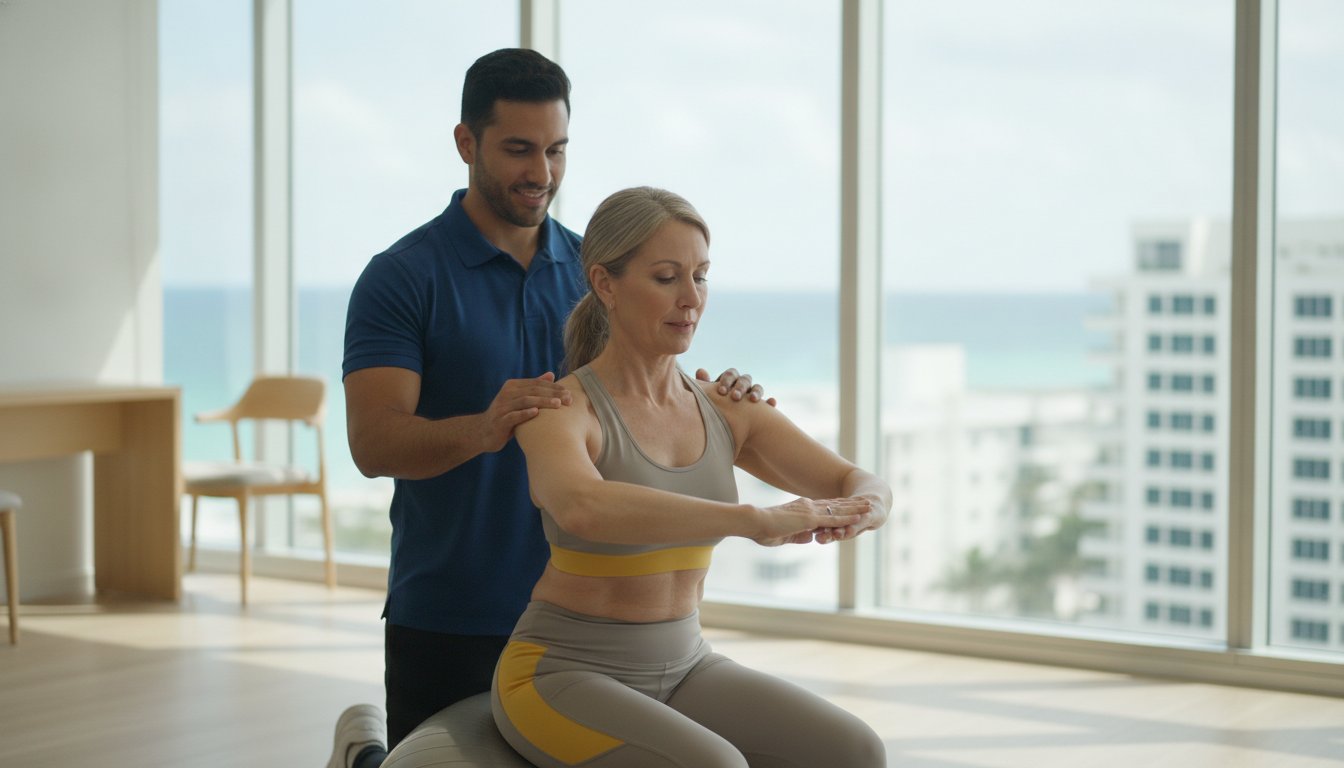
Imagine you’re finally out on the golf course or the tennis court on a beautiful afternoon, but a sudden, familiar twinge in your lower back brings everything to a halt. It’s a frustrating cycle where recurring minor strains keep you from the activities you love. You might feel like you’re stuck choosing between pushing your limits and staying safe. However, physical conditioning for injury prevention isn’t just about “getting fit” in a general sense; it’s a precise, clinical strategy designed to reinforce your body’s natural architecture and protect your musculoskeletal system.
We understand that the fear of falling or losing your balance can make you hesitant to stay active. You deserve to move with confidence, knowing your joints and muscles are prepared for whatever the day brings. This guide reveals how a structured program builds the deep resilience you need to stay active and injury-free through 2026. You’ll find a clear roadmap for physical resilience that improves your mobility for beach days or sports while helping you avoid the high costs of preventable medical visits. We’ll explore how clinical alignment and specialized balance training transform your daily movement into a foundation for long-term vitality and strength.
Key Takeaways
- Learn how systematic exercise builds a “resilience factor” in your tissues, allowing your body to safely absorb unexpected physical stress during daily activities.
- Discover why personalized physical conditioning for injury prevention is essential for correcting underlying dysfunctions that generic fitness routines often ignore.
- Identify the four core pillars of clinical conditioning, focusing on functional strength and dynamic flexibility to protect your joints during sports or leisure.
- Follow a clear roadmap to design your own resilience strategy, starting with a professional baseline assessment of your current mobility and strength levels.
- Understand how a proactive approach to wellness reduces long-term medical costs while keeping you active and confident in your favorite hobbies.
What is Physical Conditioning for Injury Prevention?
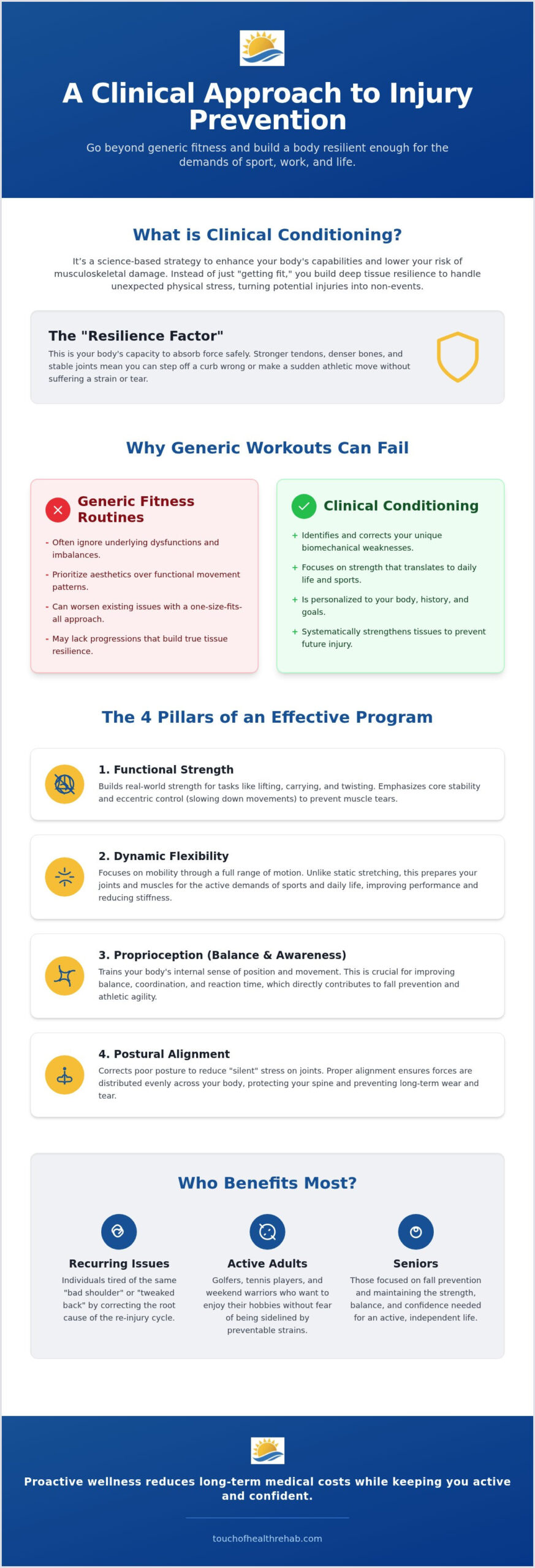
Physical conditioning for injury prevention is the systematic, science-based application of exercise to enhance your body’s physical capabilities while specifically lowering your risk of musculoskeletal damage. While many people view exercise through the lens of physical fitness goals like weight loss or muscle size, clinical conditioning focuses on the structural integrity of your movements. It’s a method of “pre-habilitation” where we identify potential weaknesses and address them before they turn into painful setbacks. By prioritizing how your body functions under pressure, you create a foundation that supports a lifetime of activity.
A core concept in this practice is the “Resilience Factor.” This is your body’s ability to handle unexpected stress. Imagine stepping off a curb awkwardly or reaching for a high tennis volley. Conditioning ensures your tissues are robust enough to absorb that force without tearing or straining. It’s the difference between being fragile and being functionally sound. Instead of just “getting fit,” you’re building a body that’s prepared for the unpredictable demands of daily life.
The Science of Tissue Resilience
When you engage in controlled, progressive stress through a structured program, your body adapts at a cellular level. This process strengthens tendons and ligaments by increasing collagen density, making them more resistant to strains and sprains. It also plays a vital role in long-term health by improving bone density, which is essential for preventing fractures as we age. For those looking to excel in athletic pursuits, our guide on sports conditioning physical therapy explores how these biological changes translate to peak performance on the field or court.
Who Benefits Most from Clinical Conditioning?
Our personalized approach in Sunny Isles Beach serves a wide range of needs, ensuring every individual finds their path to lasting resilience. You don’t have to be a professional athlete to benefit from a clinical perspective on movement.
- Active Adults: Those returning to the golf courses of Aventura or the tennis courts of Miami Beach benefit from conditioning that mimics the specific rotational and lateral demands of their favorite sports.
- Seniors: Maintaining independence often depends on effective fall prevention. Conditioning builds the balance and lower-body strength necessary for stable, confident movement.
- Individuals with Recurring Issues: If you’ve dealt with “that one bad shoulder” for years, physical conditioning for injury prevention helps break the cycle of re-injury by correcting underlying movement dysfunctions.
By focusing on your unique biomechanics, we move beyond generic gym routines. We don’t just want you to move; we want you to move with precision, ensuring your body remains a reliable partner in your pursuit of health and happiness.
The Four Pillars of an Effective Conditioning Program
A successful program for physical conditioning for injury prevention relies on a balanced clinical architecture. It isn’t enough to simply move more. You must move with intent. We focus on four specific pillars: functional strength, dynamic flexibility, proprioception, and postural alignment. Each pillar supports the others, creating a safety net for your musculoskeletal system that allows you to remain active without the constant threat of a setback.
Functional Strength vs. Bodybuilding
Unlike bodybuilding, which often prioritizes muscle size and aesthetics, functional strength focuses on multi-joint movements that mirror your daily life. Whether you’re lifting a suitcase or swinging a racquet, your body needs to coordinate multiple muscle groups simultaneously. We place a high value on Core Stability Training to ensure your trunk remains stable while your limbs move. We also emphasize “eccentric” strength. This is your muscle’s ability to control movement while lengthening. It’s often the missing link that prevents painful muscle tears during sudden stops or changes in direction.
Postural Education and Joint Longevity
Your posture isn’t just about looking confident. It’s about long-term joint health. Poor alignment creates “silent” stress, where certain joints bear more weight than they were designed for. Over time, this leads to uneven wear and tear on the spine, hips, and neck. At Touch of Health, our postural education programs help you identify these hidden stressors before they cause damage. Alignment is the foundation upon which all strength is built; without it, conditioning only reinforces dysfunction. When you prioritize alignment, you ensure that every exercise you do actually protects your body. If you’re ready to assess your current movement patterns, our team at Touch of Health is ready to partner with you.
Balance as a Safety Net
Proprioception is your brain’s ability to sense where your body is in space. It’s your internal GPS. Training this connection is vital for preventing slips and falls, especially as we age. We often integrate vestibular health into our routines to sharpen your reflexes and improve your reaction time. You can find more detail in our clinical guide on how physical therapy helps with balance. Simple habits, like standing on one leg while you’re waiting for coffee, can start to wake up these neural pathways. When your brain and body communicate clearly, you gain the confidence to stay active and independent.
Why Generic Workouts Often Lead to Injury
Generic fitness routines often promise quick results, but they frequently overlook the unique requirements of your musculoskeletal system. If you dive into a high-intensity program without a clinical foundation, you’re likely to fall for the “Too Much, Too Soon” fallacy. This occurs when the volume or intensity of your exercise exceeds your body’s current ability to adapt, leading to avoidable overuse injuries. Effective physical conditioning for injury prevention isn’t about how much you can do; it’s about how well your body can handle the load.
Another significant risk is “training over dysfunction.” When you add weight, speed, or repetitions to a flawed movement pattern, you aren’t getting stronger; you’re simply reinforcing a pathway to injury. For instance, if your glutes aren’t firing correctly, your knees may bear the brunt of the force during a run or a game of tennis. This hidden imbalance eventually causes a breakdown in the joint. We also emphasize that rest is a vital component of your program. Your tissues don’t strengthen during the workout itself; they rebuild and become more resilient during the recovery periods between sessions.
Identifying Hidden Biomechanical Imbalances
Your body is an expert at compensating for weakness. If one muscle group isn’t doing its job, another group will step in to help, often at the cost of its own health. A common example is how tight hip flexors can lead to chronic lower back strain by pulling the pelvis out of alignment. These issues are often “silent” until they cause significant pain. This is why a comprehensive physical therapy assessment is so valuable. It allows us to pinpoint these gaps in your biomechanics and address them before they halt your progress.
The South Florida Active Lifestyle Risk
Residents in Sunny Isles Beach and Miami Beach enjoy a vibrant, outdoor lifestyle, but activities like golf, tennis, and beach running present unique challenges. “Weekend warriors” who are sedentary during the week and highly active on Saturdays are particularly susceptible to injury. The uneven surface of the sand or the repetitive rotation of a golf swing can quickly overwhelm an unconditioned body. Additionally, the South Florida heat increases muscle fatigue through dehydration. Fatigue is a primary driver of injury because it slows down your reflexes and compromises your form. We help you prepare for these local demands so you can enjoy the sunshine without the fear of a setback.
Designing Your Personalized Conditioning Strategy
Building a resilient body requires more than just showing up at the gym. It’s about a deliberate, clinical approach to physical conditioning for injury prevention that respects your unique biology. You don’t need a one-size-fits-all routine; you need a roadmap tailored to your specific life in Sunny Isles Beach. By following a structured progression, you ensure that your body adapts safely to new challenges without the risk of burnout or sudden setbacks.
- Step 1: Professional Baseline. We begin with a clinical assessment of your current mobility and strength to find the hidden gaps in your movement.
- Step 2: Define Lifestyle Goals. Your program should be functional. If you want to play 18 holes of golf without back pain, we prioritize rotational stability and core power.
- Step 3: Progressive Loading. We implement a plan that slowly increases the demand on your tissues, allowing them to thicken and strengthen without becoming inflamed.
- Step 4: Specialized Stability. For our clients over 60, we integrate targeted fall prevention therapy to ensure your balance remains a reliable safety net.
- Step 5: Regular Tune-ups. As you improve, your needs change. Periodic check-ins with your physical therapist allow us to adjust your plan for continued progress.
The Role of Professional Assessment
Gait Analysis is the clinical observation of walking patterns to identify mechanical inefficiencies. While a personal trainer focuses on your effort and calories burned, a physical therapist looks at the intricate details of your biomechanics. We see the subtle hip drop or the slight inward roll of an ankle that eventually leads to joint wear. This clinical perspective allows us to catch issues before they manifest as pain, providing a level of precision that generic fitness programs simply can’t match. Understanding your unique movement signature is the first step toward true physical conditioning for injury prevention.
Progressive Overload vs. Random Exercise
Random exercise often leads to random results and, eventually, injury. To build lasting resilience, we utilize the “10% Rule,” which involves increasing your total volume or weight by no more than 10% per week. This measured pace protects your tendons and ligaments from the “too much, too soon” trap discussed earlier. During this process, you’ll learn to listen to your body. We help you distinguish between “good pain,” such as the dull ache of muscle fatigue, and “bad pain,” which is the sharp or localized discomfort that signals a potential injury. If you’re ready to stop guessing and start building a body that lasts, reach out to the experts at Touch of Health to schedule your initial assessment.
Clinical Conditioning at Touch of Health Rehab
At Touch of Health Rehab in Sunny Isles Beach, we believe that your health journey doesn’t end when the pain stops. Our personalized approach to physical conditioning for injury prevention is designed to take you from recovery to peak vitality. We specialize in bridging the gap between clinical rehabilitation and wellness and preventative care, ensuring that every patient has the tools to stay active for years to come. Whether you’re managing a chronic condition or looking to bulletproof your body against future strains, our team provides the expert guidance you need to move with confidence.
Our lead physical therapist, Berlin, oversees a team with deep expertise in treating a wide range of musculoskeletal and vestibular issues. This clinical depth allows us to create programs that are far more sophisticated than a standard gym routine. We’ve seen incredible results within the Sunny Isles and Aventura community, helping neighbors return to their morning beach walks and competitive tennis matches without the fear of re-injury. These success stories are the heartbeat of our practice, proving that a proactive, science-based strategy can truly transform your quality of life.
A Sanctuary for Healing and Performance
We’ve created a welcoming, high-end clinical environment that feels more like a sanctuary than a medical office. Our Sunny Isles location is designed to be a space where you feel heard, valued, and empowered. We’re committed to providing one-on-one attention, ensuring that your postural education and movement mechanics receive the focus they deserve. This dedicated care is easily accessible for patients living in Aventura, Bal Harbor, and North Miami Beach, making it convenient to prioritize your long-term health without a long commute.
Your Next Steps to Resilience
Taking a proactive stance on your health today is the best gift you can give your future self. To begin your journey toward lasting resilience, you can book an initial consultation through our website or by calling our office. For your first session, please bring comfortable athletic wear that allows for a full range of motion. It’s also helpful to have any relevant medical records or a list of your specific activity goals. We’re here to be your partners in health, guiding you through every step of your physical conditioning for injury prevention with patience, expertise, and genuine care for your success.
Invest in Your Future Mobility
Your path to a resilient body begins with understanding that movement is a clinical discipline. By focusing on the four pillars of functional strength, balance, and alignment, you stop the cycle of recurring strains and start building a foundation that lasts. A personalized approach to physical conditioning for injury prevention ensures that your body’s prepared for the specific demands of your lifestyle, whether that’s a morning on the golf course or a stroll through Sunny Isles Beach.
At Touch of Health Rehab, we’ve spent years serving the Sunny Isles Beach and Aventura communities with specialized expertise in balance, gait, and postural education. Led by Lead Physical Therapist Berlin, our team acts as your dedicated guide, transforming your health from a reactive concern into a proactive strength. We invite you to Schedule Your Personalized Conditioning Assessment at Touch of Health Rehab today. You deserve to move with confidence and freedom, knowing your body is supported by a plan designed specifically for your success. We look forward to partnering with you on this journey toward peak physical health and long-term vitality.
Frequently Asked Questions
Is physical conditioning the same as strength training?
Physical conditioning is a broader discipline that incorporates strength training as one of its many components. While strength training focuses primarily on building muscle mass and power, conditioning integrates balance, flexibility, and coordination to improve your overall functional capacity. This holistic approach ensures your body can handle specific real-world stresses, like the rotational force of a golf swing or the stability needed for beach running, rather than just lifting a heavy weight in a linear path.
How often should I perform injury prevention exercises?
Most patients benefit from performing specific injury prevention drills two to three times per week. However, the postural habits and movement patterns you learn during your sessions should be integrated into your daily life. Consistency is the key to building tissue resilience. By dedicating just fifteen to twenty minutes a few times a week to your personalized program, you create a protective buffer that significantly reduces the risk of acute strains during your favorite weekend activities.
Can physical conditioning help with existing chronic pain?
Yes, physical conditioning for injury prevention is highly effective for managing chronic pain by addressing the underlying biomechanical imbalances that cause discomfort. Instead of just treating the symptoms, we focus on strengthening weak supporting muscles and improving joint alignment. For example, if you have chronic lower back pain, we might focus on hip mobility and core stability. This proactive approach reduces the load on sensitive areas, allowing your body to heal and function without constant irritation.
Do I need a doctor’s referral for conditioning at Touch of Health Rehab?
In many cases, you don’t need a doctor’s referral to begin your journey with us. Florida law allows for direct access to physical therapy services for a limited period, typically up to thirty days. This means you can start your conditioning program immediately to address concerns before they escalate. We recommend checking with your specific insurance provider regarding coverage requirements; our team is always available to help you navigate the administrative process for a seamless start.
How long does it take to see results from a conditioning program?
You’ll likely notice improvements in your balance and movement awareness within the first two to four weeks as your nervous system adapts. Structural changes in your tendons, ligaments, and muscles typically take six to twelve weeks of consistent effort. This timeline ensures that your body builds genuine resilience rather than just temporary strength. Every person’s path is unique; a steady, methodical progression leads to the most sustainable results for long-term health and performance.
Is conditioning safe for seniors with balance issues?
Conditioning is not only safe but essential for seniors who want to maintain their independence and prevent falls. Our programs are carefully supervised and tailored to your current level of stability. We focus on vestibular health and lower-body strength to ensure you feel confident while walking on uneven surfaces or navigating stairs. By building this safety net through physical conditioning for injury prevention, you significantly lower the risk of fractures and other serious injuries common in older adults.
What is the difference between physical therapy and physical conditioning?
Physical therapy is traditionally reactive, focusing on rehabilitating a specific injury or surgery to return you to a baseline level of function. Physical conditioning is a proactive extension of that care. It’s designed to push you beyond your baseline, building a high level of resilience that prevents the injury from occurring in the first place. Think of physical therapy as the repair phase and conditioning as the reinforcement phase that keeps your musculoskeletal system robust and reliable.
Can postural education really prevent future injuries?
Postural education is one of the most effective tools for preventing future injuries because it eliminates the silent stress caused by poor alignment. When your body is properly aligned, your joints and muscles share the load evenly. This prevents the lopsided wear and tear that leads to chronic issues like herniated discs or rotator cuff tears. Learning how to sit, stand, and move correctly ensures that your daily activities contribute to your health rather than detracting from it.