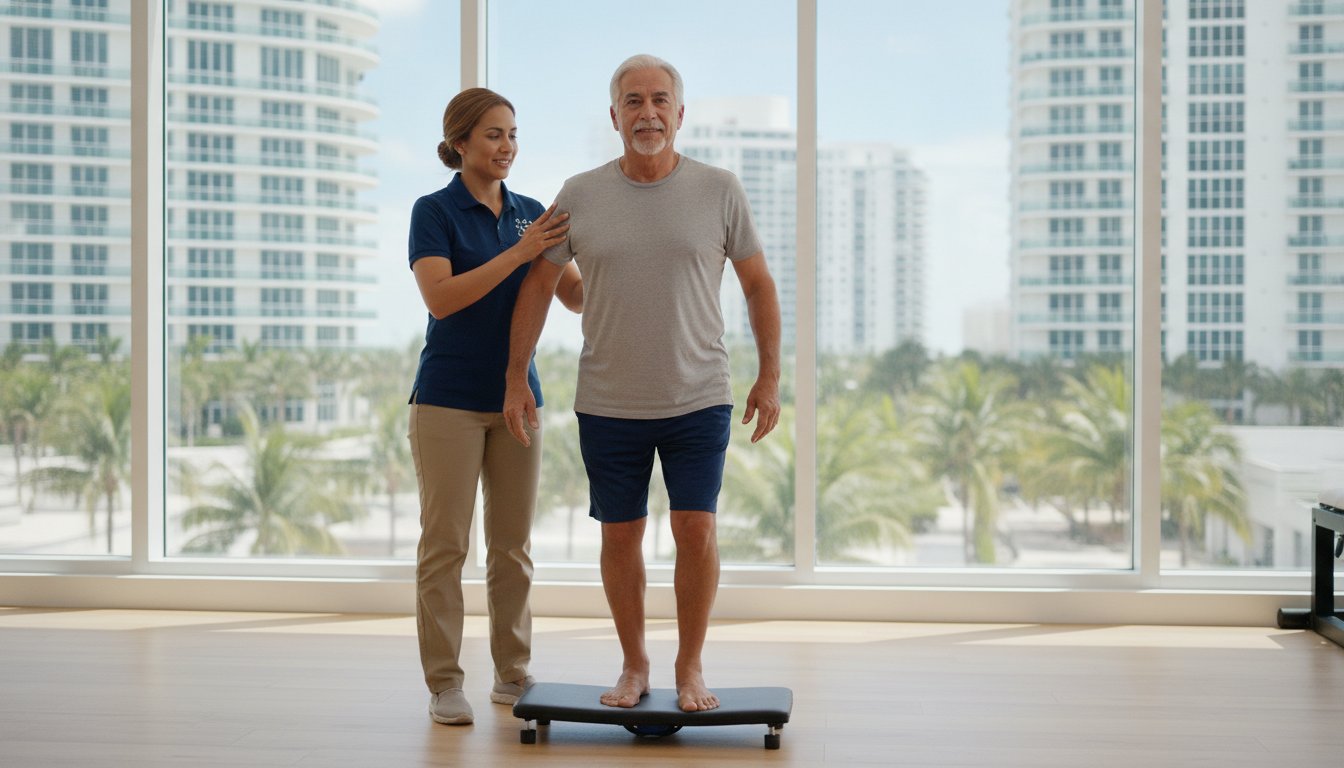
What if the secret to finding your footing isn’t just in your muscles, but in the way your brain processes every step? When you’re living with a neurological condition, the world can feel like it’s constantly tilting, turning a simple stroll through Sunny Isles Beach into a source of deep anxiety. Specialized physical therapy for neurological balance disorders focuses on this exact challenge by addressing the complex communication between your nervous system and your movement. It’s natural to feel frustrated when generic exercises don’t help, but your path to recovery is a collaborative journey toward lasting stability.
You deserve an approach that targets the root cause of your instability rather than just the symptoms. We’ll show you how tailored neurological rehabilitation can recalibrate your balance, reduce fall risks, and restore the independence you value. This guide previews the science of sensory rewiring and the specific steps taken to help you return to your daily activities with total confidence and a steady gait.
Key Takeaways
- Understand how your brain integrates vision, touch, and inner ear signals to maintain stability and why disruptions in these three pillars cause dizziness.
- Discover how specialized physical therapy for neurological balance disorders uses targeted movement to re-calibrate your nervous system and restore your confidence.
- Learn why postural education serves as the essential foundation for improving your gait and preventing future falls during daily activities.
- Demystify the evaluation process and see how a collaborative, compassionate assessment creates a personalized roadmap for your unique recovery journey.
- Explore how our expert team in Sunny Isles Beach provides a sanctuary for healing, helping you return to the active South Florida lifestyle you love.
Understanding Neurological Balance Disorders and the Brain-Body Link
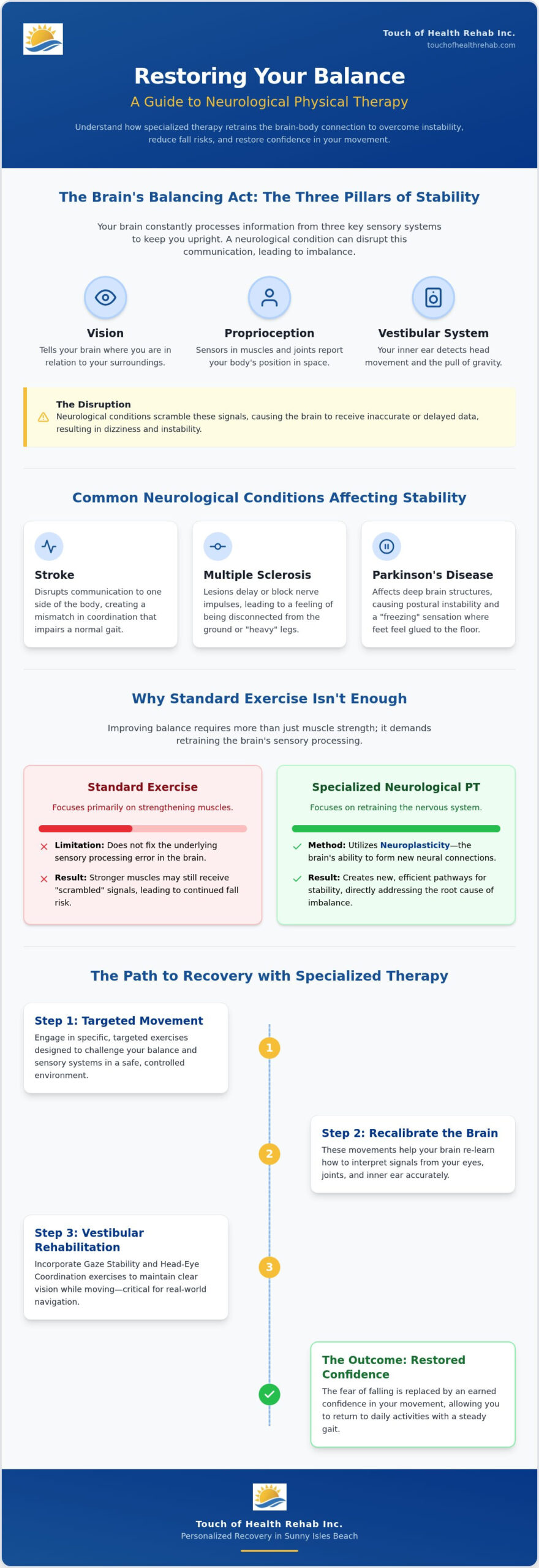
Balance is a silent, constant conversation between your body and your brain. When you’re walking or simply standing still, your brain acts as a high-speed processor, synthesizing data from three distinct pillars of stability. First, your vision tells you where you are in relation to your surroundings. Second, proprioception uses sensors in your joints and muscles to tell your brain exactly where your limbs are positioned. Third, the vestibular system in your inner ear acts as a biological level, detecting head movement and gravity. A neurological balance disorder occurs when the brain can’t effectively process or integrate this incoming information, leaving you feeling unsteady even on flat ground.
In conditions like Multiple Sclerosis or Parkinson’s, the electrical insulation of your nerves or the chemical messengers in your brain become compromised, which effectively scrambles the timing of these vital balance signals. It’s helpful to distinguish between peripheral and central issues. Peripheral balance problems usually stem from the “hardware” of the inner ear, whereas central balance disorders involve the “software” of the brain or spinal cord. Specialized physical therapy for neurological balance disorders focuses on this internal communication, helping your brain interpret signals more accurately.
Common Neurological Conditions Affecting Stability
A stroke often disrupts the communication between the brain’s motor cortex and one side of the body, creating a mismatch in coordination that makes a normal gait feel impossible. Multiple Sclerosis can cause lesions that delay nerve impulses, leading to a sensation of being disconnected from the ground or “heavy” during movement. Parkinson’s Disease affects the brain’s deep structures, often resulting in postural instability or a “freezing” sensation where your feet feel momentarily glued to the floor. Each of these requires a specific, compassionate approach to retrain the nervous system.
Why Standard Exercise Isn’t Enough for Neuro-Balance
Generic leg lifts or treadmill walking might improve muscle strength, but they don’t fix a sensory processing error. If your brain is receiving “scrambled” data from your feet or eyes, simply having stronger muscles won’t prevent a fall. This is why physical therapy for neurological balance disorders is distinct from standard orthopedic rehab. We focus on neuroplasticity, which is the brain’s remarkable ability to reorganize itself by forming new neural connections. By understanding what neurological disorders cause balance problems, we can design exercises that challenge your brain to find new, more efficient pathways to keep you stable and upright.
The Role of Specialized Physical Therapy in Neurological Recovery
We view your recovery as a shared mission. As compassionate experts, we provide the high-end clinical tools necessary to help you navigate the complexities of a neurological condition. This specialized physical therapy for neurological balance disorders works by recalibrating how your brain interprets signals from your body. By engaging in these specific, targeted movements, you’re not just exercising; you’re retraining your nervous system to prioritize safety and precision. The ultimate benefit is a profound shift in your mindset, replacing the paralyzing fear of falling with a steady, earned confidence in your physical movement.
Vestibular rehabilitation is a cornerstone of this process, extending far beyond simple dizziness management. We implement gaze stability training to help you maintain clear vision while moving your head, which is essential for navigating real-world environments like a busy sidewalk or a crowded room. For those living with permanent neurological deficits, these exercises are transformative. They teach the brain to compensate for lost function, ensuring that a simple turn of the head doesn’t lead to a loss of balance. If you’ve felt stuck in your progress, discovering a personalized plan can be the first step toward reclaiming your mobility and peace of mind.
Vestibular Rehabilitation: Beyond Just Dizziness
Gaze stability and head-eye coordination are the primary focus of Vestibular Rehabilitation Therapy (VRT). When your neurological system is compromised, your eyes and your inner ear often stop working in harmony, leading to blurred vision or a “lagging” sensation when you move. VRT helps the brain compensate for these deficits by strengthening the vestibulo-ocular reflex. This recalibration allows you to maintain focus on your surroundings while walking, which directly reduces the risk of trips and falls. It’s a methodical approach that turns once-daunting tasks into manageable, everyday movements.
Neuroplasticity and Habituation Exercises
We also utilize habituation exercises to desensitize your nervous system to provocative movements. By gently and repeatedly exposing you to specific triggers in a controlled environment, we help your brain realize that these “false” dizziness signals aren’t an active threat. This leads to a significant reduction in symptoms during your daily routine, such as when you’re bending down to tie your shoes or looking up at a high shelf. “Neuroplasticity is the brain’s ability to reorganize itself by forming new neural connections throughout life.” When one sensory system is compromised, we use sensory substitution to strengthen the others. For example, we might train you to rely more on your vision or the proprioceptive feedback from your ankles to stay grounded. This comprehensive approach ensures that physical therapy for neurological balance disorders provides you with multiple layers of stability.
Comparing Balance, Gait, and Postural Education
To achieve true stability, we must look at the structural foundation of your movement. While we’ve discussed how the brain processes signals, physical therapy for neurological balance disorders also requires a focus on your physical framework. Think of posture as your foundation, balance as your structural integrity, and gait as the fluid movement of the entire system. When these three elements work in harmony, your body functions with minimal effort. If one is out of alignment, the others must overcompensate, leading to fatigue and an increased risk of injury.
A common concern we hear from patients is the feeling of being “too weak” to perform balance exercises. It’s a valid worry, but the reality is often more encouraging. By focusing on postural education and alignment, we actually reduce the amount of muscle strength required to stay upright. When your joints are stacked correctly, your skeleton bears your weight, which frees up your muscles to focus on movement rather than just fighting gravity. This collaborative approach ensures that your recovery is sustainable and doesn’t leave you feeling exhausted after every session.
Gait Training: Restoring Your Natural Walk
Walking is a complex, rhythmic cycle that most people take for granted until it’s disrupted. For neurological patients, issues like “foot drop” or a shortened, shuffling stride can make navigating a simple hallway feel like a hurdle. Our balance and gait rehabilitation focuses on restoring the natural mechanics of your step. We often utilize assistive devices as a temporary bridge. These tools provide the safety you need to practice correct movement patterns today, with the ultimate goal of transitioning toward independent, unassisted walking as your nervous system recalibrates.
Postural Education: The Secret to Stability
Your center of gravity is the invisible point that determines your stability. When you develop “forward head posture,” which is common in many neurological conditions, that center shifts forward. This shift makes you feel as though you’re constantly on the verge of a fall. In our Sunny Isles Beach clinic, we use clinical correction techniques to bring your head, neck, and shoulders back into a neutral position. This is a vital component of physical therapy for forward head posture. Proper alignment provides the steady base your brain needs to accurately process balance signals, making every movement feel more secure.
What to Expect During a Neurological Balance Evaluation
Taking the first step toward recovery is often the most significant challenge, especially when every step feels uncertain. We’ve designed our initial evaluation to be a welcoming, non-invasive experience that feels less like a medical exam and more like a collaborative discovery. When you visit our clinic in Sunny Isles Beach, our primary focus is your safety and comfort. We understand the anxiety that comes with a fear of falling, so we move at your pace, ensuring you feel supported throughout the entire process. This session is the beginning of a partnership where we combine our clinical expertise with your personal history to build a foundation for success.
Our goal during this first meeting is to demystify why your balance feels compromised. By using specialized physical therapy for neurological balance disorders, we can look past the symptoms to see how your nervous system is actually functioning. We provide a sanctuary for healing where you can discuss your frustrations without judgment. This thorough assessment ensures that your treatment plan is as unique as your own path to health, giving you a clear vision of the progress ahead.
Step 1: Comprehensive Sensory Assessment
We begin by evaluating the “three pillars” of balance: vision, touch, and the inner ear. By testing these systems individually, we can identify which one is the “weak link” causing your instability. We use precise clinical tools to measure your postural sway and reaction times under different conditions. For instance, we might observe how your stability changes when your visual input is removed or when the surface beneath your feet becomes uneven. Identifying these specific deficits is essential because it allows us to target the exact sensory processing errors your brain is experiencing.
Step 2: Functional Movement and Gait Analysis
Once we understand your sensory input, we look at how you move. We analyze how you transition from sitting to standing and observe your walking patterns in detail. Often, patients develop “compensatory strategies” to cope with unsteadiness, like taking shorter steps or keeping their eyes fixed on the floor. While these habits feel safe, they can sometimes hinder your long-term recovery. We’ll work together to set personalized goals, such as regaining the confidence to walk to the beach or navigate a busy supermarket. If you’re ready to move with ease again, you can schedule your personalized evaluation to start your journey toward lasting stability.
Personalized Recovery at Touch of Health Rehab in Sunny Isles Beach
Your recovery deserves a setting that matches the high standards of the care you receive. At Touch of Health Rehab, we’ve created a high-end clinical sanctuary in Sunny Isles Beach where the focus remains entirely on your restoration. This isn’t just a medical facility; it’s a welcoming space where sophisticated clinical authority meets compassionate reassurance. Our specialized physical therapy for neurological balance disorders provides the precise tools you need to navigate your world with renewed stability. We believe that a tranquil, professional environment is the best foundation for the complex work of neurological rehabilitation.
Lead Physical Therapist Berlin and our dedicated team view every patient as a partner in a collaborative journey toward health. We combine clinical precision with a genuine investment in your long-term success. You aren’t just another case file to us. Instead, you’re an individual with a unique path to health that requires expert, personalized navigation. We use active, life-affirming techniques to ensure you don’t just reach a baseline of function, but attain a level of vitality that allows you to thrive. Our commitment to your well-being extends beyond the immediate challenge of balance, focusing on the attainment of peak physical health and preventative care.
Serving Sunny Isles, Aventura, and Beyond
Accessibility is a vital part of a stress-free recovery process. Our clinic is conveniently located to serve patients in Sunny Isles Beach, Aventura, and North Miami Beach, bringing world-class neuro-care right to your neighborhood. You don’t have to travel far to find the expertise required for complex gait and vestibular issues. When you meet our team, you’ll discover a group of professionals who are passionate about the craft of healing and deeply rooted in the South Florida community.
Your Next Step Toward Stability
Recovery is a collaborative journey that begins with a single, confident decision to prioritize your health. We invite you to move from the frustration of generic exercises toward a specialized plan that actually works for your nervous system. Our methodical approach ensures that your progress is steady, reassuring, and permanent. You can read about the people who have already reclaimed their independence in our success stories. When you’re ready to recalibrate your balance and return to the activities you love in Sunny Isles Beach, our clinic is here to welcome you.
Reclaiming Your Stability and Independence
You’ve discovered how your brain integrates complex sensory signals and how specialized rehabilitation can rewire these pathways to restore your confidence. By focusing on the vital pillars of vision, touch, and the inner ear, we move beyond surface-level exercises to address the neurological root of your instability. Under the expert guidance of Berlin, our Lead Physical Therapist, you’ll benefit from compassionate, one-on-one sessions tailored to your specific journey with Stroke, MS, or Parkinson’s. These dedicated programs in Sunny Isles Beach are designed to transform your fear of falling into a steady, reliable gait.
Specialized physical therapy for neurological balance disorders is the essential tool for recalibrating your movement and regaining your freedom. We invite you to schedule your personalized balance evaluation in Sunny Isles Beach today. Your path toward a more active, secure life is a collaborative journey we’re honored to share. You don’t have to navigate the world on unsteady ground when expert support is right here in your community.
Frequently Asked Questions
Can physical therapy really help with balance if I have a permanent neurological condition?
Yes, physical therapy is highly effective even if your condition is considered permanent. While we cannot always reverse the underlying neurological damage, we use the brain’s neuroplasticity to build new pathways. We teach your body to rely more on vision or touch to compensate for lost signals. This approach ensures you maintain your independence and continue to navigate your home in Sunny Isles Beach with a much lower risk of injury.
How long does it take to see improvements in balance with physical therapy?
You can typically expect to see measurable improvements in your walking stability within 4 to 6 weeks of consistent treatment. Neurological recovery is a methodical process because it involves retraining the brain’s “software” rather than just strengthening muscles. Your individual timeline will depend on the complexity of your condition. We provide a steady, reassuring pace that prioritizes long-term success over quick, unsustainable fixes for your balance.
Is vestibular rehabilitation painful or will it make my dizziness worse?
Vestibular rehabilitation is not a painful process, but it does involve movements that might briefly make you feel lightheaded. This is a deliberate part of habituation training. By gently exposing your brain to the movements that cause dizziness, we help your nervous system learn to ignore those false signals. Our therapists in Sunny Isles Beach stay by your side to ensure every exercise is performed safely and within your comfort level.
What is the difference between dizziness and vertigo in neurological disorders?
Dizziness is a general feeling of unsteadiness, whereas vertigo is the distinct sensation that the world is spinning around you. Both are common symptoms we address through physical therapy for neurological balance disorders. Dizziness often results from a mismatch in sensory signals from your eyes and feet. Vertigo usually points to an inner ear issue. Our experts differentiate these to provide the most accurate treatment for your specific needs.
Do I need a doctor’s referral for neurological physical therapy in Sunny Isles Beach?
In Florida, you can often begin your rehabilitation journey through direct access without a formal referral. Some insurance plans may require a physician’s signature for continued care, but we can help you navigate those specific requirements. Our goal is to make your entry into physical therapy for neurological balance disorders as seamless as possible. We suggest calling our clinic to verify your plan so you can start your recovery without delay.
Will insurance cover physical therapy for balance and gait rehabilitation?
Most insurance providers, including Medicare, provide coverage for balance and gait rehabilitation because it’s essential for safety and fall prevention. Since neurological conditions directly affect your ability to perform daily tasks, therapy is generally considered a medical necessity. Our team handles the verification process for you, ensuring that you understand your benefits before you begin. This transparency helps you focus on your healing journey in a stress-free environment.
Can balance therapy help prevent falls in older adults with Parkinson’s?
Balance therapy is incredibly effective for preventing falls in those living with Parkinson’s. We focus on specific strategies to manage postural instability and gait changes, such as the tendency to shuffle or freeze. By practicing intentional weight-shifting and stride-lengthening exercises, you’ll gain the control needed to navigate uneven surfaces. This training provides the confidence you need to enjoy walks in Aventura or Miami Beach without the constant fear of tripping.