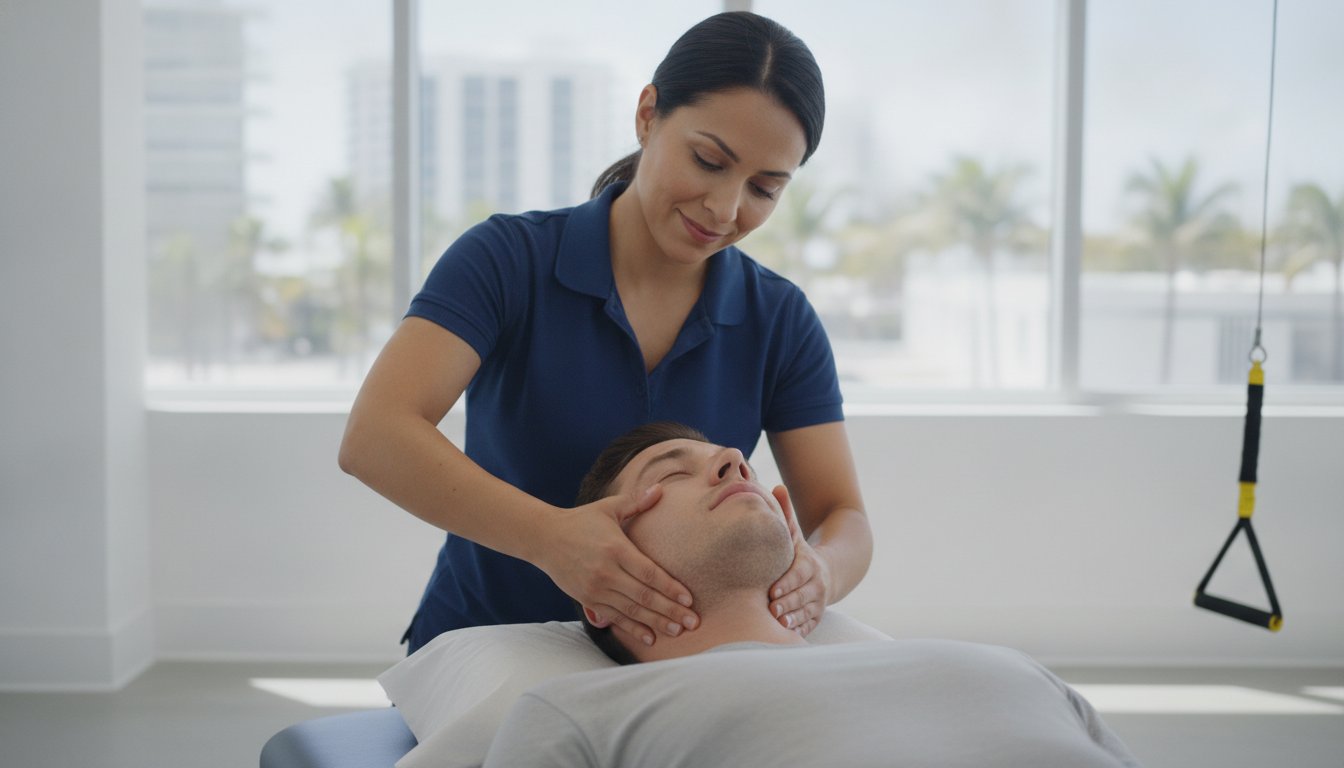
Did you know that over 3 million new cases of whiplash occur in the United States every year, yet more than 50% of those injured progress to some degree of chronic symptoms? If you’re struggling with persistent neck stiffness or a lingering sense of “brain fog” after an accident, you likely feel that your body has become a source of frustration rather than a vessel for life. It’s completely understandable to fear that this pain might become permanent. However, specialized physical therapy for whiplash provides a sophisticated, evidence-based approach to turn that fear into a collaborative journey toward restoration.
We believe your path to recovery should be as unique as you are. By shifting the focus from passive rest to active, guided movement, you can reclaim your mobility and eliminate the dizziness that often follows a traumatic impact. This article explores how a multimodal approach, including vestibular rehabilitation and postural education, restores your range of motion and prevents future neck issues. You’ll discover how the right clinical care empowers you to return to your work and daily activities without the shadow of pain, ensuring your long-term vitality and health.
Key Takeaways
- Learn why whiplash symptoms often peak 24 to 48 hours after an accident and how immediate intervention prevents long-term complications.
- Discover how specialized physical therapy for whiplash addresses cervicogenic dizziness by recalibrating the vital balance information sent from your neck to your brain.
- Compare the benefits of hands-on manual therapy and personalized clinical plans against the risks of unguided at-home recovery.
- Follow a structured, four-phase rehabilitation journey that progresses from acute pain control to full functional restoration and postural education.
- Find reassurance in a compassionate, human-centered approach designed to return you to your daily activities with confidence and vitality.
What is Whiplash and Why is Early Intervention Critical?
Whiplash is often misunderstood as a minor inconvenience, but it’s actually a complex soft tissue injury that impacts your muscles, ligaments, and nerves. You might feel fine immediately following a collision, only to wake up two days later unable to turn your head comfortably. This “delay effect” occurs because inflammation and muscle guarding often peak 24 to 48 hours after the impact. Learn more about whiplash to understand how these sudden forces affect your delicate anatomy. Ultimately, whiplash is a multi-system disruption that alters how your nervous system communicates with your musculoskeletal structure, rather than a simple neck strain.
In the past, the standard advice was to “wait and see” while wearing a restrictive brace. Modern clinical standards have shifted toward active recovery. We now know that early, movement-based physical therapy for whiplash is the most effective way to prevent long-term disability. By starting care early, we address the injury before your body develops maladaptive movement patterns or chronic stiffness. This proactive approach helps you return to your life with greater speed and confidence.
Common Symptoms Beyond Neck Pain
Whiplash doesn’t always stay confined to the neck. Many patients experience what clinicians call Whiplash-Associated Disorders (WAD). This can manifest as intense headaches, tension in the jaw or TMJ, or pain that radiates down your arms. When the soft tissues around your spine are injured, the resulting inflammation can irritate the surrounding nervous system. This irritation often leads to the “brain fog” or tingling sensations that many find so distressing. Our auto accident recovery protocols focus on calming this systemic inflammation to restore your comfort and clarity.
The Danger of Prolonged Immobilization
It’s a common myth that you should keep your neck perfectly still after an injury. In 2026, foam collars are rarely recommended for standard whiplash because they often delay healing. Excessive rest leads to muscle atrophy and joint stiffness, which creates a cycle of pain and immobility. There’s also a significant psychological link between the fear of movement and the development of chronic pain. If you’re afraid to move, your body stays in a state of high tension. Specialized physical therapy for whiplash uses gentle, purposeful exercises to rebuild your confidence and keep your joints mobile, ensuring a smoother path to total health.
The Head-Neck Connection: Why You Feel Dizzy After Whiplash
Many people expect neck pain after a car accident, but few are prepared for the disorienting sensation of dizziness or feeling “off-balance.” This happens because your neck is home to a high concentration of specialized receptors called proprioceptors. These receptors act like a GPS for your body, telling your brain exactly where your head is in space. When a whiplash injury disrupts these sensors, the brain receives conflicting signals, leading to a condition known as Cervicogenic Dizziness. It’s a frustrating experience because a standard x-ray or MRI usually comes back clear; these scans look for broken bones or torn discs, not the subtle communication breakdown between your neck and your brain. That’s why specialized vestibular rehabilitation is such a vital component of car accident recovery.
By engaging in targeted physical therapy for whiplash, you can address these balance issues directly. We don’t just look at the muscles; we look at how your entire sensory system has responded to the trauma. This clinical focus ensures that we aren’t just masking symptoms, but actually recalibrating the way your body perceives movement. It’s a sophisticated process that turns a confusing recovery into a clear, manageable path toward stability.
Whiplash and the Vestibular System
The relationship between your inner ear and your cervical spine is incredibly delicate. During a collision, the sudden acceleration-deceleration forces can “jar” the vestibular system, which is your body’s primary balance center located in the inner ear. If you notice that your dizziness worsens when you turn your head quickly or walk through a crowded grocery store, it’s a strong sign that your neck injury has affected your balance. According to Mayo Clinic’s guide to whiplash treatment, addressing these symptoms requires more than just rest. It requires a dedicated effort to recalibrate how your eyes, ears, and neck work together to keep you upright and focused.
Restoring Balance and Gait
Stability training is essential if you want to return to your favorite sports or simply walk through your office without feeling unsteady. Through balance and gait rehabilitation, we use specific exercises to help the brain re-integrate signals from the neck and eyes. These movements might include gaze stabilization or balance challenges on varied surfaces. They’re powerful tools for neurological restoration that help your body regain its natural rhythm and coordination. This specialized physical therapy for whiplash ensures you’re rebuilding your physical foundation from the ground up. If you’re ready to feel steady on your feet again, we invite you to explore our personalized approach to healing.
Clinical Physical Therapy vs. At-Home Recovery
While it’s tempting to search for quick fixes online, generic YouTube exercises often lack the nuance required for a safe recovery. A personalized physical therapy plan ensures that every movement you perform is tailored to your specific injury grade and pain tolerance. Professional monitoring is essential because it prevents “compensation patterns.” For instance, you might unconsciously hike your shoulder to avoid neck pain, which eventually leads to secondary issues in your upper back or chest. Supervised exercise provides a safety net, allowing you to push toward restoration without the constant risk of re-injury that comes with unguided at-home attempts.
Engaging in clinical physical therapy for whiplash provides you with a dedicated partner who understands the mechanics of your injury. This partnership is vital for long-term success. We don’t just give you a list of stretches; we provide a structured environment where your progress is constantly evaluated and your treatment is adjusted in real-time. This level of personalized care is something a screen simply cannot offer, ensuring your journey back to health is both efficient and thorough.
The Value of Expert Assessment
Our clinical evaluation in Sunny Isles Beach goes beyond simply identifying where it hurts. We differentiate between muscle strain and potential disc involvement, ensuring your treatment is both safe and effective. By using objective measurements like range of motion (ROM) and strength testing, we track your real progress over time. This data-driven approach removes the guesswork, providing a clear map of your journey toward peak physical health and long-term vitality.
Manual Therapy and Pain Management
Hands-on mobilization is a cornerstone of professional physical therapy for whiplash. Techniques like soft tissue mobilization and trigger point therapy are designed to reduce acute muscle guarding and break the “pain-spasm-pain” cycle. When your muscles are in a state of constant tension, they limit blood flow and prolong your discomfort. Clinical intervention restores this flow, facilitating the body’s natural healing process. Referencing a patient’s guide to managing whiplash can help you understand these clinical stages, but the skilled touch of a therapist is what transforms that knowledge into relief. Integrating these pain management solutions into your routine allows you to move more freely and sleep more soundly, empowering you to take charge of your recovery.
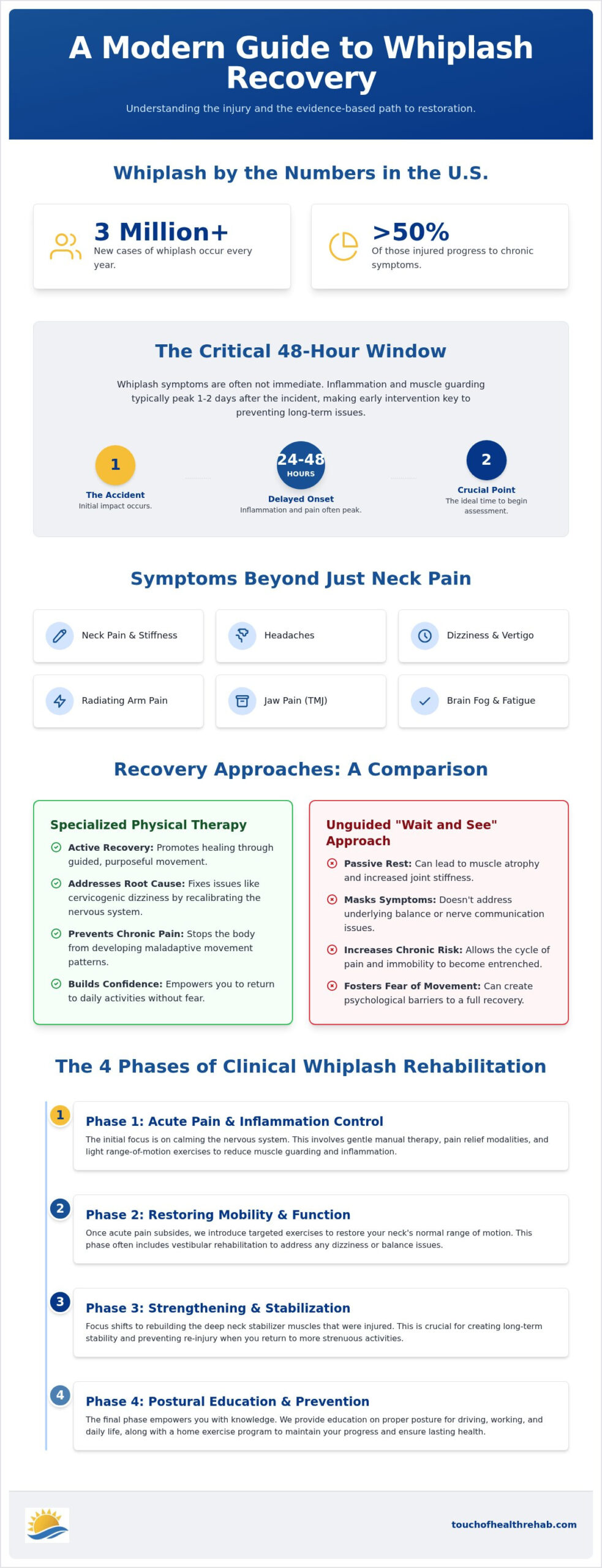
The 4 Phases of Clinical Whiplash Rehabilitation
Recovery is rarely a straight line, but it should always follow a logical, evidence-based progression. While some general resources offer a vague list of treatment options, we provide a structured roadmap to ensure your healing is thorough and sustainable. This clinical path is divided into four distinct phases, each designed to build upon the last and move you closer to your peak physical health and long-term vitality.
- Phase 1: Acute Pain Control (Days 1–14): The primary goal is reducing inflammation and calming the nervous system.
- Phase 2: Restoring Range of Motion (Weeks 2–4): We introduce gentle mobility to prevent the muscle atrophy and joint stiffness discussed in previous sections.
- Phase 3: Strengthening and Functional Integration (Weeks 4–8): You’ll begin rebuilding the support structures of your neck and shoulders to handle daily tasks safely.
- Phase 4: Long-term Conditioning: This phase focuses on postural education to prevent future injury and maintain your body’s resilience.
Engaging in this structured physical therapy for whiplash allows you to move through these stages with confidence. We act as your dedicated guides, ensuring you don’t skip essential steps that could lead to chronic issues later. By following this clinical timeline, you transform a period of vulnerability into a journey of empowerment and restoration.
Phase 1 & 2: Finding Relief and Movement
During the first two weeks, your body is often in a state of high alert. We use gentle isometric exercises to engage your deep neck flexors. These movements allow you to activate essential muscles without placing undue strain on your injured ligaments or nerves. Integrating heat or cold therapy alongside specific postural cues helps reduce muscle guarding, allowing your nervous system to relax and begin the healing process. It’s also the time when we monitor for “red flags,” such as worsening numbness or significant muscle weakness. This careful, professional oversight ensures that your physical therapy for whiplash remains safe and adapts to your specific pace of recovery.
Phase 3 & 4: Building a Resilient Neck
As you move into the later weeks of recovery, the focus shifts from protection to resilience. Progressive resistance training for your upper back and shoulders provides the necessary foundation for your neck to move freely. Many patients develop a habit of slouching to protect their injury, which often leads to “Forward Head Posture.” If left uncorrected, this alignment issue can cause chronic tension and recurring headaches. We address this directly through targeted exercises and alignment training. For a deeper look at this specific correction, you can read our guide on physical therapy for forward head posture. By the time you reach the final phase, you’ll have the tools to maintain your health independently. If you’re ready to start your structured recovery, schedule your evaluation with our team today.
Car Accident Recovery in Sunny Isles Beach: The Touch of Health Approach
Choosing the right clinical partner is the most important decision you’ll make after a motor vehicle accident. At Touch of Health Rehab, we’ve designed our auto accident recovery protocols to be more than just a medical service; we provide a human-centered sanctuary for your healing. Our clinic serves the vibrant communities of Sunny Isles Beach, Aventura, and North Miami Beach, offering a sophisticated blend of clinical expertise and compassionate care. Under the guidance of Berlin, our Lead Physical Therapist, every plan is meticulously crafted to ensure your physical therapy for whiplash addresses your unique symptoms and lifestyle goals.
We understand that the journey back to health can feel overwhelming. That’s why our approach centers on partnership and empowerment. We don’t just treat an injury; we invest in your long-term vitality. By combining advanced clinical techniques with a supportive environment, we help you transition from the initial shock of an accident to a state of peak physical health and confidence.
Personalized Care in a Clinical Setting
Large franchises often rely on “one-size-fits-all” templates that can overlook the subtle complexities of your recovery. We consciously avoid this detached model. Instead, we prioritize one-on-one attention, ensuring you have the dedicated time needed to master the movements that will restore your mobility. This individual focus is especially critical for complex cases where dizziness or radiating pain is present. As you progress through the four phases of rehabilitation, we seamlessly integrate wellness and preventative care into your routine. This ensures that you aren’t just recovering from one incident, but building a foundation for a lifetime of movement and comfort.
Start Your Journey to Recovery Today
Taking the first step toward restoration is simple. You can book your initial assessment at our Sunny Isles Beach clinic by contacting our team directly. To make your first visit as productive as possible, please bring any accident reports and imaging, such as X-rays or MRIs, you’ve already received. This data helps Berlin create a precise roadmap for your physical therapy for whiplash from day one. If you’re feeling uncertain, we invite you to read our success stories from other survivors who have reclaimed their lives through our care. Your path to recovery is a collaborative journey, and we’re honored to be your dedicated guides every step of the way.
Reclaim Your Mobility and Peace of Mind
Your path to recovery after an accident is a journey of restoration, not a permanent sentence of pain or confusion. By understanding the critical window for early intervention and addressing the complex link between your neck and your balance, you can move from a state of vulnerability to one of peak physical health. Specialized physical therapy for whiplash provides a structured, four-phase roadmap that generic exercises simply cannot match. This expert-led approach ensures that your recovery is thorough; it prevents the compensation patterns that lead to long-term stiffness and secondary discomfort.
At Touch of Health Rehab, we offer a compassionate sanctuary for your healing journey in Sunny Isles Beach. Our specialized programs for auto accident recovery and vestibular health are tailored to your unique needs, focusing on your long-term vitality. You deserve a dedicated guide who is genuinely invested in your success and happiness. Schedule Your Whiplash Recovery Consultation Today and take the first step toward a life of movement and comfort. We’re here to support you every step of the way.
Frequently Asked Questions
How many sessions of physical therapy are usually needed for whiplash?
A full course of physical therapy for whiplash often involves 8 to 12 sessions, though your specific timeline depends on the severity of the injury. Most individuals in our Sunny Isles Beach clinic see significant functional improvement within six to eight weeks of consistent care. We monitor your progress at every visit, adjusting your personalized plan to ensure you’re meeting your recovery milestones effectively. This steady, methodical approach ensures your return to daily activities is both safe and sustainable.
Is it too late to start physical therapy if my accident was months ago?
It’s never too late to begin your recovery journey, even if your accident occurred months or years ago. While early intervention is ideal, physical therapy for whiplash can still successfully address chronic stiffness and maladaptive movement patterns. Our team in Sunny Isles Beach specializes in recalibrating the nervous system and restoring mobility for long-standing injuries. We’ll partner with you to break the cycle of persistent pain and help you attain your peak physical health.
Can physical therapy help with the headaches I get after a whiplash injury?
Yes, physical therapy is highly effective for treating cervicogenic headaches that often follow a whiplash injury. These headaches typically stem from restricted joints and muscle tension in the upper cervical spine. By using manual therapy and targeted exercises, we restore proper alignment and reduce the strain on your nervous system. This clinical intervention doesn’t just mask the pain; it addresses the underlying cause to provide you with lasting relief and improved quality of life.
Will my insurance cover physical therapy for a car accident injury?
Most insurance plans, including Florida’s Personal Injury Protection (PIP) and traditional health insurance, provide coverage for rehabilitation after a car accident. Since coverage details vary, we recommend contacting our Sunny Isles Beach office for a benefit verification. We’ll help you navigate the complexities of your policy so you can focus entirely on your healing. Our goal is to make your path to recovery as stress-free and transparent as possible, ensuring you receive the care you deserve.
What is the difference between a chiropractor and a physical therapist for whiplash?
While both professionals treat spinal issues, physical therapists focus on active recovery, strengthening, and functional movement. At our clinic, we emphasize vestibular rehabilitation and postural education to ensure your body can support itself long-term. We don’t just provide passive adjustments; we empower you with the tools to restore your range of motion and prevent future issues. This comprehensive approach ensures you’re a partner in your own health journey rather than a distant patient receiving temporary relief.
Can whiplash cause long-term balance problems if left untreated?
Untreated whiplash can lead to persistent dizziness or cervicogenic dizziness because the neck’s sensory receptors remain disrupted. If left unaddressed, this can result in long-term balance and gait issues that impact your safety. Our specialized vestibular rehabilitation programs in Sunny Isles Beach are designed to recalibrate these sensors and restore your sense of space. Addressing these symptoms early prevents fall risks and ensures you can navigate your daily environment with confidence, stability, and renewed vitality.
What should I wear to my first whiplash physical therapy appointment?
You should wear loose, comfortable athletic clothing that allows for easy movement and provides our therapists with access to your neck and shoulders. Items like a t-shirt, tank top, and flexible shorts or leggings are ideal for your assessment. Since we’ll be evaluating your range of motion and potentially performing manual therapy, being comfortable is essential. This allows us to conduct a thorough evaluation and begin your personalized path to restoration and healing immediately.