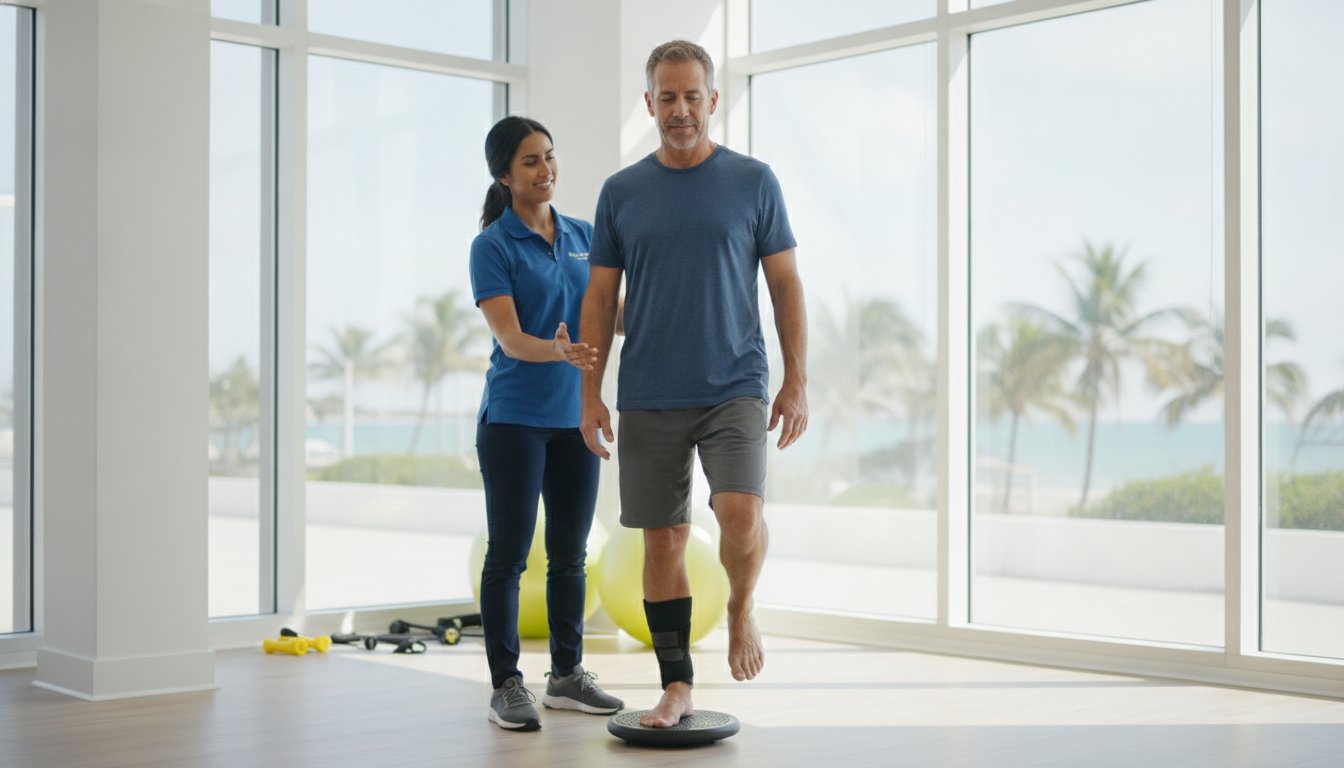
What if the ultimate success of your procedure isn’t decided in the operating room, but in the steady, intentional moments of your rehabilitation? It’s natural to feel a sense of trepidation as you look at your walking boot, wondering when you’ll finally feel stable on your feet again. You might feel frustrated by non-weight-bearing restrictions or worry that one wrong move could lead to re-injury. We recognize that starting physical therapy after ankle surgery can feel like a daunting challenge, especially when you’re eager to return to your career, your sport, or simply a stroll through your neighborhood.
Recovery is a collaborative journey that requires more than just time; it needs a precise, clinical strategy tailored to your unique path. This guide explores the essential phases of ankle rehabilitation, from initial tissue protection to advanced gait retraining. You’ll discover how a personalized plan restores your balance and stability, helping you transition from those first tentative steps to confident, pain-free walking. We’ll outline the specific milestones of your recovery so you can replace confusion with a clear, empowering roadmap toward your long-term vitality and strength.
Key Takeaways
- Learn why a structured clinical approach is essential to prevent long-term complications like ligament laxity or joint stiffness.
- Navigate the specific milestones of your recovery timeline, from managing initial swelling to transitioning toward independent walking.
- Discover how a customized plan for physical therapy after ankle surgery utilizes manual techniques and targeted exercises to restore your range of motion.
- Understand the “kinetic chain” and how retraining your ankle protects your knees, hips, and lower back from overcompensation injuries.
- Gain insights into the benefits of one-on-one care and specialized equipment in restoring your natural balance and gait.
Why Physical Therapy After Ankle Surgery is Non-Negotiable
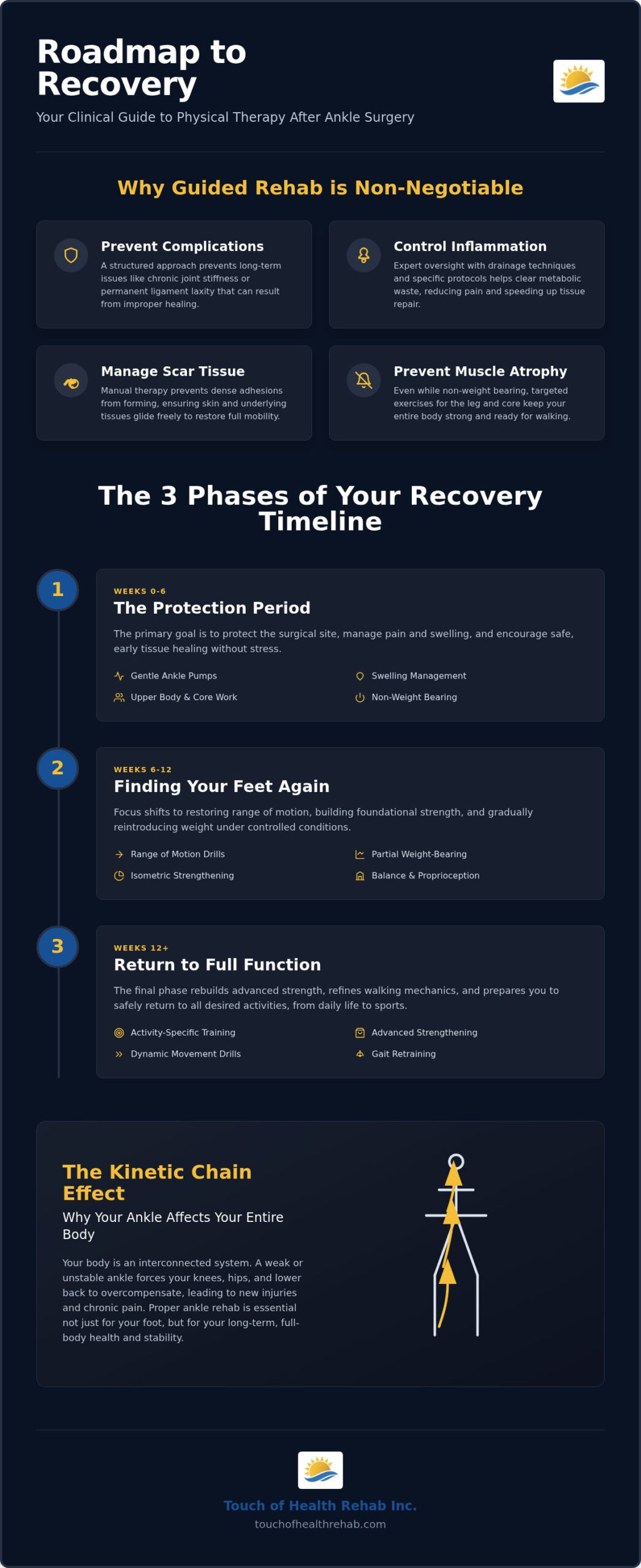
After your surgeon closes the last incision, the real work of restoration begins. Post-surgical ankle rehabilitation is a structured clinical process designed to restore every nuance of your joint’s function, from simple movement to complex gait patterns. Engaging in physical therapy after ankle surgery ensures your recovery is guided by expertise rather than guesswork.
It’s tempting to look for quick fixes online, but “DIY” rehab often backfires. Following a generic video can inadvertently lead to permanent ligament laxity or chronic joint stiffness because it lacks the real-time adjustments your specific body requires. We treat you as an individual rather than a statistic, ensuring each movement aligns perfectly with the current state of your surgical repair.
Your physical therapist also acts as a guardian against excessive post-operative swelling and inflammation. By utilizing specific drainage techniques and elevation protocols, we help clear the metabolic waste that can otherwise slow down the healing of an ankle fracture or ligament repair. This clinical oversight prevents the “stagnant” healing environment that often leads to prolonged discomfort.
Controlled loading is the strategic application of weight and tension to healing tissues to stimulate cellular repair without risking structural failure.
Managing Scar Tissue and Joint Stiffness
Manual therapy is a cornerstone of our approach at Touch of Health, where our clinic serves as a sanctuary for your healing. It prevents dense adhesions from forming around your surgical incisions, which can otherwise tether your skin to the underlying bone and restrict your future mobility. We prioritize early passive range of motion (PROM) within the strict limits set by your surgeon to keep the joint mobile without straining the repair site. You might have heard the phrase “no pain, no gain,” but in early recovery, that’s a dangerous myth. We listen to your body’s signals to ensure we’re promoting healing, not triggering more inflammation.
Preventing Muscle Atrophy During Non-Weight Bearing
Your body is incredibly efficient, which means it starts shedding muscle mass the moment you stop using it. The calf and intrinsic foot muscles can begin to weaken within just a few days of surgery. While your ankle remains immobilized in a boot or cast, we focus on safe ways to engage your quadriceps and glutes during your physical therapy after ankle surgery. This keeps your entire leg ready for the day you’re cleared to walk independently. There’s also a powerful psychological benefit to this active recovery; seeing your strength maintained in other areas provides the confidence you need to stay committed during those initial weeks.
The 3 Phases of Your Ankle Recovery Timeline
Recovery is a collaborative journey that unfolds in distinct clinical stages. While your surgeon provides the structural repair, the success of your outcome depends on how we navigate these phases together. Progression isn’t just about the calendar; it’s about meeting specific clinical milestones such as reduced swelling, improved tissue tolerance, and stable pain levels. By following a structured path for physical therapy after ankle surgery, you ensure that each step forward is safe and sustainable.
Phase 1: The Protection Period (Weeks 0-6)
The first six weeks focus on protecting the surgical site while encouraging early mobility. We prioritize gentle movements like ankle pumps and “alphabets” to maintain circulation and prevent complications like deep vein thrombosis (DVT). During this time, you’ll likely be non-weight bearing, but that doesn’t mean your body stops moving. We incorporate upper body conditioning and core exercises that you can perform while seated or lying down. This approach keeps your cardiovascular health intact while your bone and soft tissues begin the intricate process of post-surgical rehabilitation.
Phase 2: Finding Your Feet Again (Weeks 6-12)
As you enter the second phase, your focus shifts toward strength and gradual weight-bearing. This is often the time you transition from crutches to a walking boot, eventually moving toward partial weight-bearing (PWB). We introduce isometric exercises, which allow you to build muscle tension without moving the joint itself, protecting the surgical repair while fighting atrophy. Balance training becomes a priority here. We work on your proprioception, which is your body’s ability to sense its position in space. This neurological retraining is vital for restoring your confidence and preventing future sprains once you’re back on your feet.
Phase 3: Restoring Full Function (Month 3+)
In the final phase, we move into functional return and agility. This stage is where you regain the ability to run, jump, and return to your favorite sports or daily activities. We utilize closed-chain exercises like squats and lunges that are specifically tailored to your ankle’s stability. A major focus of this phase is gait training. We work diligently to eliminate any lingering “limp” and ensure you’re distributing your weight equally between both legs. This level of detail is especially important for long-term health, as seen in our stability therapy for seniors, where balance is the key to independence.
If you’re ready to move past the limitations of your injury and reclaim your mobility, our team is here to guide you. You can learn more about our personalized approach to physical therapy in Sunny Isles Beach and start your journey toward a full, vibrant recovery today.
Key Modalities Used in Post-Surgical Ankle Rehab
The clinical tools we select for your recovery aren’t chosen by chance. They’re part of a highly individualized strategy designed to address the specific physiological changes your body undergoes following a procedure. By integrating diverse modalities, we ensure that every aspect of your mobility is restored with precision. During your physical therapy after ankle surgery, we focus on combining hands-on care with active movement to create a comprehensive path toward healing.
The Power of Manual Therapy
Manual therapy addresses the physical barriers that exercise alone cannot reach. It’s particularly effective for reducing the “tight” or restrictive feeling many patients experience around their surgical hardware. Our practitioners use joint mobilization and soft tissue massage to maintain flexibility in the surrounding ligaments and prevent scar tissue from limiting your range of motion. We also incorporate manual lymphatic drainage, a gentle technique that helps clear persistent swelling in the foot and ankle. This hands-on approach is a core element of our orthopedic physical therapy, providing you with immediate comfort while setting the stage for more active movements.
Strength is rebuilt through precisely targeted therapeutic exercise. We focus heavily on the calf and peroneal muscles, as these are the primary stabilizers that protect your ankle from rolling. We progress from simple movements to more complex, multi-plane exercises that mimic real-world activities. These are paired with neuromuscular re-education. This process retrains your brain to communicate effectively with the repaired joint, restoring the “automatic” movements you relied on before your injury. It’s a vital step in reclaiming the seamless coordination that allows you to move through your day with complete confidence.
Balance and Gait Training
Surgery often shifts your center of gravity, which can leave you feeling less steady on your feet than before. To fix this, we utilize specialized balance and gait training. We use tools like wobble boards and foam pads to challenge your stability in a safe, controlled environment, forcing your ankle to react and stabilize. Our therapists perform detailed gait analysis to ensure you aren’t overcompensating with your other leg or developing a persistent limp. By correcting these patterns early, we prevent the secondary hip and lower back pain that frequently plagues post-surgical patients. This thorough approach ensures your stride is not just functional, but steady and balanced for the long term.
The Kinetic Chain: Why Your Ankle Surgery Affects Your Whole Body
Your body functions as an interconnected system where every joint relies on the stability of the others. When you undergo surgery, the impact ripples far beyond the initial incision, affecting what clinicians call the “kinetic chain.” If your ankle cannot absorb shock or provide a stable base, your knees and hips must overcompensate to keep you moving. This added stress often leads to secondary pain in the lower back or the opposite leg. Through targeted physical therapy after ankle surgery, we address these systemic shifts to ensure your entire body returns to a state of harmony and health.
An antalgic gait, or limping, creates significant muscle imbalances in the pelvis as your body shifts weight to avoid discomfort. Over time, these imbalances can lead to chronic misalignment and persistent aches that seem unrelated to your foot. We focus on retraining your brain and muscles to move symmetrically, preventing the “wear and tear” that occurs when one side of your body does all the heavy lifting. By restoring your natural stride, we protect the longevity of your other joints.
Postural Education and Alignment
Months of using crutches or a walking boot can change how you carry yourself. You might find yourself leaning to one side or hiking your hip to clear the floor, habits that persist long after the boot is removed. Our approach to postural education and alignment identifies these compensatory movements before they become permanent. We emphasize core strengthening as a vital foundation for ankle stability. By incorporating core work into your physical therapy after ankle surgery, we give your body the trunk control necessary to stay upright and aligned while your ankle regains its full load-bearing capacity.
Preventing Future Injuries
A weak or unstable ankle significantly increases the risk of falls, a concern that is especially pressing for older adults. Our goal is to help you build a resilient ankle that can confidently handle the uneven surfaces of South Florida, from the sandy shores of Sunny Isles Beach to local park trails. This level of comprehensive care mirrors the detailed attention we provide in physical therapy after joint replacement, where restoring the full kinetic chain is essential for total mobility. We don’t just want you to walk; we want you to move with the same vigor and safety you enjoyed before your procedure.
If you’re noticing new aches in your back or hips as you navigate your recovery, it’s time to address the root cause of these imbalances. You can connect with our specialists today to ensure your rehabilitation plan supports your entire body’s health and long-term vitality.
Recovery in Sunny Isles Beach: Personalized Care at Touch of Health
Selecting the right environment for your physical therapy after ankle surgery is as critical as the surgical procedure itself. At Touch of Health Rehab, we provide a sanctuary for healing in Sunny Isles Beach that bridges the gap between high-end clinical expertise and compassionate, personal care. Residents of Sunny Isles Beach, Aventura, and Miami Beach trust us because we prioritize one-on-one sessions with a dedicated physical therapist. This focused attention ensures that every movement is monitored and every milestone is celebrated, instilling the confidence you need to move forward without fear of re-injury. We believe that your recovery is a collaborative journey, and we’re committed to being your dedicated guide every step of the way.
A Personalized Path to Progression
Every ankle is different. Your recovery shouldn’t follow a generic template. We reject “cookie-cutter” protocols because your path to restoration is unique to your body, your lifestyle, and your specific surgical technique. We maintain open communication with your orthopedic surgeon to ensure our clinical phases align perfectly with their surgical intent, creating a seamless transition from the operating room to our clinic. You can meet our team to see the professionals who will guide your specialized gait and balance training with precision and empathy. This partnership ensures that your progress is steady, methodical, and deeply reassuring.
Your South Florida Recovery Partner
Rehabilitation is about more than just the joint; it’s about your entire quality of life. We focus on your overall physical conditioning while your ankle heals, preventing the general fatigue and muscle weakness that often accompany long periods of immobilization. Our success stories are written by real patients who have returned to the vibrant South Florida lifestyle they love, from morning walks on the sand to evening strolls through Aventura. We understand that the goal isn’t just to walk, but to return to the activities that define your vitality.
To begin your journey, we start with a thorough initial evaluation to create your custom recovery roadmap. During this first visit, we utilize specialized gait and balance equipment to get an objective baseline of your current function. We listen to your concerns about stability and your goals for returning to sport or work. This detailed assessment allows us to answer your questions about timelines and return-to-work dates with clinical authority. We want you to feel empowered by the process, knowing that every exercise brings you closer to the life you enjoyed before your injury. Booking your appointment is the first step toward pain-free walking and the attainment of your peak physical health.
Step Toward a Confident and Pain-Free Future
Your surgical procedure was the first step toward a healthier life, but the real transformation happens during your rehabilitation. You’ve learned that effective physical therapy after ankle surgery isn’t just about the joint itself; it’s a comprehensive process that protects your knees, hips, and lower back while restoring your natural gait. By following a structured, clinical roadmap, you can avoid the common pitfalls of stiffness and muscle atrophy that often follow immobilization. We prioritize your long-term wellness by ensuring your body moves with the symmetry and strength it deserves.
At Touch of Health Rehab, we specialize in helping you navigate this journey through individualized therapy plans tailored to your specific needs. Our expert team in Sunny Isles Beach utilizes specialized equipment to restore your full balance and stability, ensuring every step you take is a secure one. Don’t let the frustration of temporary restrictions overshadow your ultimate goal of peak physical health. We’re here to be your dedicated guides, turning your recovery into a collaborative path toward total mobility and renewed vitality.
Schedule your post-surgical evaluation at Touch of Health Rehab today.
Your best days are still ahead of you, and we look forward to walking beside you as you reclaim your active lifestyle.
Frequently Asked Questions
How soon after ankle surgery should I start physical therapy?
Most patients begin their initial evaluation within one to two weeks after their procedure. This early stage focuses on managing inflammation and maintaining circulation while your tissues begin to heal. We coordinate closely with your surgeon in Sunny Isles Beach to ensure every movement respects your specific surgical repair. Early intervention helps prevent the dense scar tissue that can lead to long term stiffness in your joint.
Is physical therapy painful after ankle surgery?
You shouldn’t experience sharp or stabbing pain during your sessions. While some discomfort is normal as we restore your range of motion, our compassionate approach ensures we stay within your body’s tolerance levels. We use manual therapy and gentle mobilization to improve flexibility without causing distress. If an exercise feels overwhelming, we’ll immediately adjust the intensity to keep your progress steady, encouraging, and positive.
How long does a typical physical therapy session last?
A typical session at our clinic in Sunny Isles Beach lasts approximately 45 to 60 minutes. This timeframe allows us to provide one on one manual therapy, guide you through targeted therapeutic exercises, and perform gait analysis. We ensure your time is used efficiently to maximize your recovery. Every minute is dedicated to your personalized roadmap, helping you return to your favorite South Florida activities as quickly as possible.
Will I be able to drive after my ankle surgery?
Your ability to drive depends on which ankle was operated on and the type of vehicle you own. If your right foot was involved, you’ll typically need to wait six to twelve weeks until you have the reaction time and strength for safe braking. We work on specific physical conditioning to ensure you can safely operate a vehicle before you get back behind the wheel in Aventura or Miami Beach.
What happens if I skip physical therapy after my procedure?
Skipping physical therapy after ankle surgery often leads to permanent joint stiffness and chronic muscle weakness. Without professional guidance, you risk developing limping patterns that cause secondary pain in your knees, hips, and lower back. You might also experience ligament laxity, which increases your future risk of falls. Consistent clinical care ensures your entire kinetic chain remains balanced and resilient throughout the healing process.
How can I tell if my ankle recovery is on the right track?
You’re on the right track when you notice consistent improvements in your range of motion and a steady decrease in daily swelling. Meeting clinical milestones, such as transitioning from a boot to independent walking, is a clear sign of success. We use specialized gait and balance equipment to provide objective data on your progress. If you’re feeling more stable and confident during your daily movements, your recovery is moving forward.
Does physical therapy help with the swelling after ankle surgery?
Yes, physical therapy is highly effective at reducing post-operative swelling through manual lymphatic drainage and specific elevation protocols. Persistent fluid in the joint can block your movement and slow down the healing process. Our therapists use hands on techniques to clear metabolic waste and improve circulation in your foot. This clinical support is essential for residents in the warm Miami Beach climate, where heat can often exacerbate swelling.
Can I do my ankle exercises at home instead of coming to the clinic?
While home exercises are a vital part of your adherence, they can’t replace the one on one clinical care provided at our sanctuary for healing. Our clinic offers specialized balance and gait equipment that you won’t have at home. Professional manual therapy and real time adjustments by your therapist ensure you’re performing movements correctly. Coming to the clinic in Sunny Isles Beach provides the expert oversight needed to prevent re-injury.